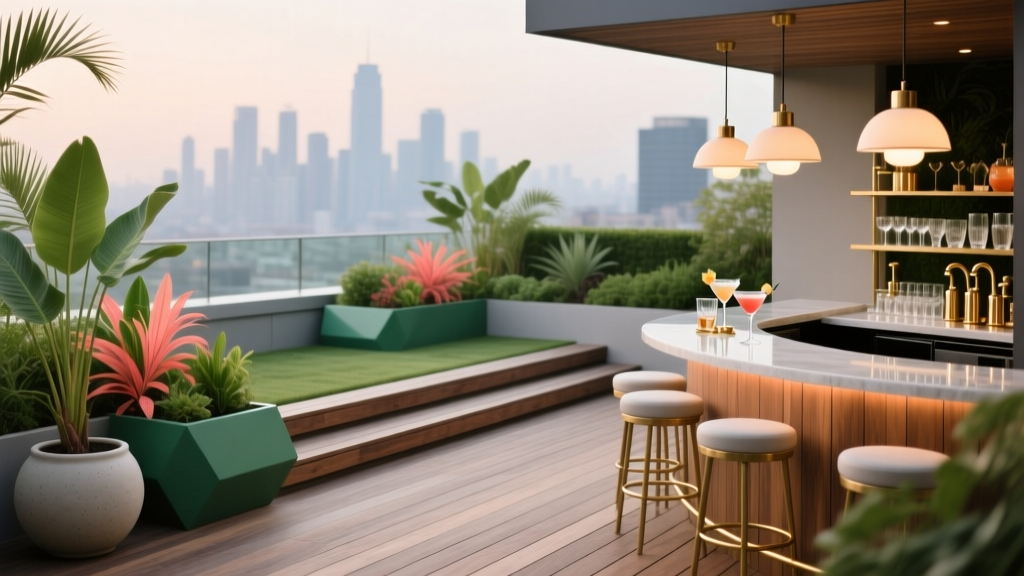
Terrace Cocktail Garden Design
The invitation is for 7:30, and your terrace is doing that familiar thing: a few tired pots clustered by the door, a chair you keep moving to chase the shade, and a blank stretch of railing that could be working harder. You want a drink-worthy view and the ability to pick a lime leaf, crush a mint sprig, and clip a handful of edible flowers without turning hosting into a scavenger hunt. The trick is designing a terrace cocktail garden that feels intentional—like an outdoor bar set—while still being practical to water, move through, and maintain.
I’ll walk you through a layout that functions like a small “production garden” (for herbs, garnishes, and scent) wrapped in a hospitality space (for seating, lighting, and serving). The goal: a terrace that looks styled at 8 p.m. and still works at 8 a.m. when you’re doing a fast watering pass.
Start With the Cocktail Workflow (Not the Plant List)
Before you buy a single plant, map your terrace like a bartender’s station. A good cocktail garden isn’t just pretty—it’s efficient. You’re optimizing three movements: harvesting, rinsing/serving, and relaxing.
Measure and draw your “service triangle”
Use a tape measure and sketch your terrace to scale. Even a rough plan helps. Here are three anchor zones to place in a triangle:
- Harvest zone: where your herbs and garnish plants live.
- Prep zone: a small surface (bar cart, shelf, or bistro table) for cutting and muddling.
- Lounge zone: seating that doesn’t block the harvest path.
On most terraces, you’ll do best if you keep a 30–36 inch (76–91 cm) clear walkway from the door to the seating area. That one dimension prevents the “shuffle-and-bump” problem when guests are carrying drinks.
Sunlight: count hours like an ingredient
Cocktail plants are sun-hungry, but terraces vary wildly due to surrounding buildings. Track direct sun for a weekend. As a practical rule:
- 6+ hours of direct sun = you can grow citrus in pots, basil, rosemary, strawberries, and most flowering garnishes.
- 3–5 hours = you’ll lean on mint, chives, parsley, lemon balm, alpine strawberries, and shade-tolerant flowers like violas.
- <3 hours = focus on scent, foliage, and a few shade herbs; use purchased citrus for juice and make the garden about garnishes and mood.
Light isn’t just about growth—it impacts flavor intensity. Basil grown in thin light can taste watery, while sun-grown basil is concentrated and peppery.
Layout Strategies That Make a Terrace Feel Like a Destination
Design-wise, your terrace should read as one “room” with a clear focal point. Plants are your walls and bar-back; furniture is your floor plan.
Use the railing as vertical real estate
If your terrace has a railing, treat it like a sunny window ledge. A row of planters creates a clean line and frees the floor. Aim for railing boxes that are 24–36 inches long so you can repeat a pattern and keep the look cohesive.
Safety note: choose secure brackets rated for the planter’s wet weight. Wet potting mix is heavy. If you rent, use clamp-on railing planters that don’t require drilling.
Anchor with two “statement containers” instead of many small pots
Small pots dry out fast and look cluttered. Two large containers (think 18–22 inch diameter) create structure and reduce watering stress. Place them like you would tall lamps indoors: one near the lounge zone, one near the prep zone.
Create a garnish runway (a narrow planting strip)
If you have a blank wall, line it with a slim trough planter or a row of identical rectangular pots. Keep the planting height around waist level if possible—harvesting becomes effortless and guests naturally interact with it.
Plan irrigation before you plan romance
Terrace gardens fail from missed waterings more than anything else. Container plants can need water daily in heat. The U.S. Geological Survey notes that “about 30 percent of the water used by the average American household is devoted to outdoor uses” (USGS, 2019). A terrace cocktail garden is smaller than a yard, but efficiency still matters: consistent moisture produces better leaves and less bitter stress-flavor.
If you can, add a simple drip setup with a timer. A basic kit often lands around $35–$80, and it pays you back in fewer dead plants.
Three Real-World Terrace Scenarios (and How I’d Design Each)
Let’s make this concrete. Here are three common terrace situations with workable layouts and plant palettes.
Scenario 1: A narrow rental balcony (4 ft x 10 ft) with 4–5 hours of sun
Design goal: maximize harvest without blocking the walkway.
- Layout: One 30-inch-wide bistro table folds down against the wall as the prep zone. Two railing planters run the long edge for herbs. One tall, narrow pot (12–14 inch diameter) holds a vertical rosemary or bay laurel near the seating end.
- Best containers: railing boxes + 3–5 gallon fabric pots (lightweight for renters).
- Plant focus: mint family, chives, parsley, lemon balm, violas for garnish.
Spacing target: plant mint and lemon balm in their own pots, one plant per 10–12 inch container to prevent takeover.
Scenario 2: A sunny terrace (8 ft x 12 ft) with 7+ hours of sun
Design goal: a true “cocktail bar garden” with citrus, herbs, and flowers.
- Layout: Two 20-inch statement containers flank the lounge area: one with calamondin citrus, one with a compact olive or bay. A bar cart sits near the door. A 36-inch trough planter becomes the garnish runway (basil, Thai basil, edible flowers).
- Best containers: 15–25 gallon pot for citrus (stability + moisture buffer), plus self-watering planters for thirsty herbs.
- Plant focus: basil, rosemary, thyme, strawberries, nasturtiums, calendula.
Budget note: a healthy potted calamondin can run $45–$120 depending on size; it’s a statement plant that earns its footprint.
Scenario 3: A windy high-rise terrace (6 ft x 15 ft) with intense afternoon sun
Design goal: prevent wind scorch and toppled pots; build a microclimate.
- Layout: Put the tallest, heaviest containers at the windward end to act as a living windbreak (bay, rosemary, dwarf bamboo in a contained planter). Place low herbs (thyme, oregano) in wide, heavy bowls near the floor. Use one bench with storage so you can tuck watering gear away.
- Plant focus: tough Mediterranean herbs, sedums, and edible flowers that handle sun.
Material choice: avoid lightweight plastic pots in exposed wind. Use terracotta (with saucers) or composite planters with a wide base. Add gravel at the bottom for stability (but don’t overdo drainage layers—use well-structured potting mix instead).
Plant Selection: Cocktail-Forward Varieties That Thrive in Containers
Great cocktail plants do three things: they smell amazing when brushed, they regrow quickly after harvesting, and they look good at human eye level.
Signature herbs (reliable, high-yield)
- Sweet basil (‘Genovese’): classic for gin cocktails and berry muddles. Grow one plant per 10–12 inch pot; pinch weekly for bushiness.
- Thai basil (‘Siam Queen’): holds up in heat and brings anise notes for creative drinks.
- Mint (‘Mojito’ mint or spearmint): choose one dedicated pot per variety; it spreads aggressively in shared planters.
- Rosemary (‘Arp’ or ‘Tuscan Blue’): woody structure and evergreen presence; also makes fragrant skewers for grilling citrus.
- Thyme (‘English’ thyme): compact, drought-tolerant, and a strong spiller at pot edges.
Edible flowers and garnish plants (the “wow” factor)
- Nasturtium (‘Alaska’ mix): leaves and flowers are peppery; trails beautifully from railing boxes.
- Calendula (‘Pacific Beauty’): golden petals for syrups and ice cubes; handles sun and container life well.
- Violas/pansies (‘Cool Wave’): excellent for partial shade terraces and early/late season color.
- Borage: star-shaped blue flowers that taste faintly of cucumber; give it a larger pot (at least 12–14 inches) because it gets leggy.
Fruiting accents (for actual harvests)
- Calamondin citrus: compact habit, fragrant blooms, and small tart fruits; ideal terrace citrus.
- Alpine strawberry (‘Mignonette’): small, aromatic berries; tolerates part sun and looks charming spilling from a bowl.
- Chili pepper (‘Numex Twilight’): ornamental fruit plus heat for spicy margaritas; needs strong sun.
Why these work in containers
Most herbs prefer sharp drainage and frequent harvesting. Container culture lets you tailor soil and move plants to chase microclimates. For potting soil, remember that peat-based mixes can become hydrophobic if allowed to dry too much. The Royal Horticultural Society emphasizes moisture monitoring for containers, noting that pots can dry quickly in warm weather (RHS, 2023). Self-watering planters or regular mulching with fine bark can smooth out those swings.
“In small gardens, repetition is your strongest tool—repeat containers, repeat plant shapes, and the whole space reads as intentional rather than crowded.” — Deborah Silver, landscape designer and author (Silver, 2019)
A Practical Planting Plan (With Spacing + Dimensions)
Here’s a proven layout that fits many terraces around 8 ft x 12 ft and can be scaled up or down.
- 2 statement pots (20-inch diameter): one calamondin, one rosemary or bay.
- 1 trough planter (36 inches long, 8–10 inches deep): basil + Thai basil + calendula (space basil plants 10–12 inches apart).
- 2 railing boxes (30 inches each): one with nasturtium + thyme; one with violas + parsley.
- 1 dedicated mint pot (12 inches): one mint plant only.
That’s seven containers total—enough variety for interesting drinks, but not so many that watering becomes a chore.
Comparison: Container Choices for a Terrace Cocktail Garden
| Container Type | Best For | Watering Frequency (Summer) | Typical Cost (USD) | Design Notes |
|---|---|---|---|---|
| Terracotta pot (18–22") | Rosemary, thyme, bay | Every 1–3 days | $35–$90 | Classic look; heavier (good for wind) but dries faster |
| Self-watering planter (12–16") | Basil, parsley, violas | Top up reservoir 1–2x/week | $25–$70 | Great for renters; reduces missed-watering stress |
| Fabric grow bag (5–10 gal) | Mint (contained), peppers | Daily in heat | $6–$20 | Lightweight; can look casual—hide in a basket or sleeve |
| Railing planter (24–36") | Nasturtium, trailing thyme | Daily to every 2 days | $18–$60 | Frees floor space; watch weight and wind exposure |
Step-by-Step Setup (A Designer’s Order of Operations)
This sequence prevents expensive re-dos. Build the room first, then fill it with plants.
- Measure the terrace and mark a 30–36 inch main walkway with painter’s tape.
- Place seating first (even if it’s temporary). Confirm doors open fully and you can pass with a tray.
- Position the prep zone within 3–5 steps of the door (bar cart, shelf, or small table).
- Set the two statement containers to frame the lounge area or soften a corner. Fill with potting mix and water thoroughly once to settle.
- Add vertical planting (railing boxes or wall planters). Keep the most frequently harvested herbs closest to where you stand.
- Plant in layers: thriller (citrus/rosemary), filler (basil/parsley), spiller (nasturtium/thyme).
- Mulch lightly (a 1-inch layer of fine bark) to slow evaporation.
- Install irrigation or a watering routine: if hand-watering, stage a slim watering can outdoors so it’s frictionless.
- Light it with warm string lights or a rechargeable lamp so the garden works at cocktail hour. Lighting is part of the design, not an afterthought.
Budget Planning: Splurge Where It Matters, DIY the Rest
A terrace cocktail garden can be built on a modest budget without looking improvised. Here’s a realistic range for a starter setup:
- Lean build ($150–$300): fabric pots + railing planters, small herb starts, one statement plant (rosemary), DIY bar shelf from an outdoor-rated folding table.
- Mid-range build ($350–$700): two large decorative pots, self-watering planters for basil and parsley, bar cart, quality potting mix, and a drip kit ($35–$80).
- High-finish build ($800–$1,500+): large citrus, premium planters, custom trellis or screening panels, and integrated lighting.
DIY alternatives that still look polished:
- Hide fabric grow bags inside woven baskets (add a saucer inside to protect flooring).
- Use matching inexpensive nursery pots, then unify them with one color of pot sleeve or paint.
- Build a “garnish runway” with a simple 36-inch galvanized trough on pot feet—clean, modern, and affordable.
Maintenance Expectations (So the Garden Stays Party-Ready)
Plan for 20–40 minutes per week on average in the growing season, plus a few seasonal tasks. Container gardens are high-reward, but they’re not set-and-forget.
Weekly rhythm (growing season)
- Watering: 3–7 times/week depending on heat and pot size. In a heat wave, small railing planters may need daily water.
- Harvesting/pinching: 5 minutes—pinch basil tips weekly to prevent flowering and keep leaves tender.
- Feeding: liquid fertilizer every 2–3 weeks for heavy growers like basil and strawberries (follow label rates).
- Grooming: remove spent flowers from calendula and violas to keep blooms coming.
Seasonal tasks
- Spring: refresh the top 2 inches of potting mix; check irrigation lines; replant annuals.
- Mid-summer: hard prune leggy basil and replace if needed; watch for aphids on peppers and flowers.
- Fall: take cuttings of basil if you want to overwinter indoors; move citrus inside when nights drop near 45°F (7°C) if you’re in a cold-winter climate.
- Winter: protect terracotta from freeze-thaw if exposed; reduce watering dramatically for dormant plants.
Design Details That Make It Feel Like a Cocktail Bar
This is where the terrace becomes more than a collection of pots.
Use scent as your “entry moment”
Place the most aromatic plants—mint, lemon balm, rosemary—closest to where you walk in. Brushing past them releases fragrance and instantly sets the mood.
Color palette: keep it restrained
Pick one flower color family (sunset orange/yellow with calendula and nasturtium, or cool purple/blue with violas and borage). Herbs are already visually busy; a controlled palette reads upscale.
One dedicated “garnish bowl”
A shallow, wide pot (about 16 inches) filled with alpine strawberries and violas looks abundant and invites snacking. It also photographs beautifully—useful if you like sharing your terrace glow-up.
Citations
USGS (2019). Water Questions & Answers: How much water does the average person use at home per day? United States Geological Survey.
RHS (2023). Container gardening. Royal Horticultural Society guidance on growing in pots and watering considerations.
Silver, D. (2019). Quoted design principle on repetition in small gardens, from designer commentary and published writing/interviews (2019).
When your terrace cocktail garden is working, you’ll notice it in small ways: the basil is always within reach, the mint looks lush instead of battered, the seating feels like it belongs, and you’re no longer apologizing for the space before guests step outside. You’re just clipping a sprig, topping up a glass, and letting the terrace do what it was designed to do—host, glow, and feed the moment.