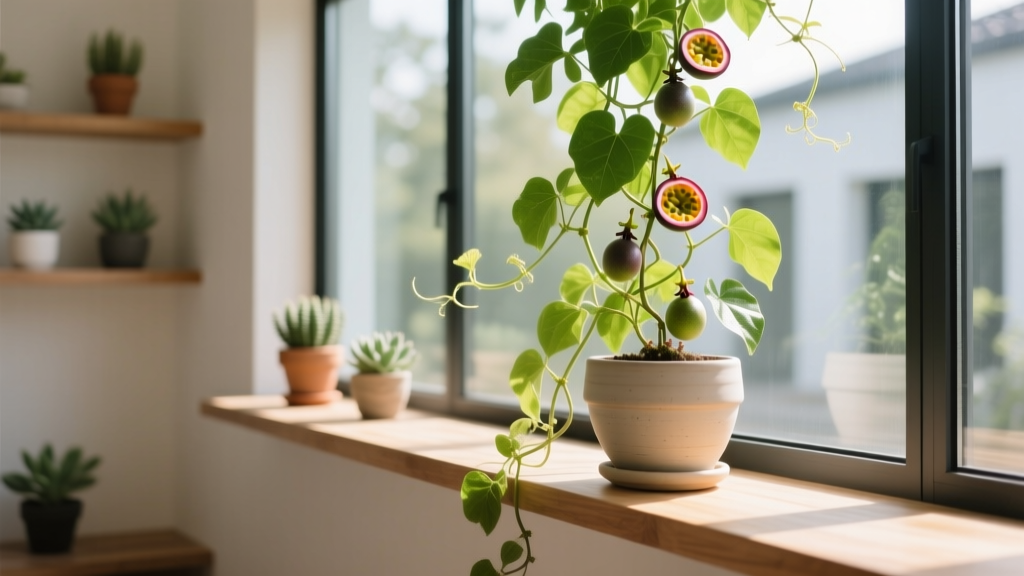
Sunroom Passionfruit Vine Indoor Setup
The first time you notice it, it’s usually in late winter: the sunroom is bright enough to feel like spring, but everything you grow inside looks slightly… stalled. Herbs lean toward the glass. Houseplants stretch. You want something with presence—something that reads “garden” even when the yard is dormant. Then you picture it: a passionfruit vine climbing a clean trellis line, throwing glossy leaves across the window, and—if you set it up right—opening those alien-beautiful flowers right where you drink your morning coffee.
This project is part layout, part engineering, and part restraint. Passionfruit (Passiflora edulis) grows like it means it. In a sunroom it can be a showpiece, a shade screen, and a fruiting vine—if you design a support system, root zone, and pruning plan that match the space you actually have.
Start With the Space You Have: Light, Glass, and Traffic
Before you buy a plant, stand in your sunroom at three times of day—morning, noon, and late afternoon—and watch how the sun moves. Passionfruit wants strong light to flower and fruit. Aim for 6–8 hours of direct sun on the vine in peak season if you’re expecting fruit indoors; you can keep it alive at less, but flowering becomes unreliable.
Measure the “vine zone” like a designer
Designers don’t start with plants; we start with edges and circulation. Measure and mark these three dimensions:
- Footprint: Minimum 24 inches wide for the pot and drip tray, plus 12–18 inches clear space for watering access.
- Climb height: A practical indoor trellis height is 72–84 inches. Higher is fine, but you’ll prune more often.
- Clearance from glass: Keep the trellis 4–8 inches off the window to allow airflow and reduce condensation issues.
If this setup cuts into your walkway, it will annoy you—and anything that annoys you won’t get watered consistently. A good rule: preserve a 30–36 inch walking lane through the sunroom.
Layout Strategies: Three Trellis Plans That Actually Work Indoors
Passionfruit is happiest when it can climb, spread, and be redirected. Your goal is to give it a “plane” to occupy so it doesn’t lasso furniture, curtain rods, and door handles.
Strategy 1: Window-plane trellis (best for fruiting)
This is the classic: a trellis installed parallel to the brightest window. The vine becomes a living screen without crawling across the ceiling. For most sunrooms, plan a trellis that’s 24–36 inches wide and 72 inches tall, anchored either to studs (homeowners) or to a freestanding frame (renters).
Design tip: train the main stem straight up to the top wire, then run two “arms” left and right along the top. Let fruiting laterals hang down like a curtain you can prune.
Strategy 2: Corner tower (best for tight footprints)
If you’re short on wall space, build a vertical tower trellis in a corner: a 16–20 inch diameter pot with a 6-foot tripod or cylindrical trellis. You’ll get flowers, but fruiting is less consistent because you’ll have fewer lateral runs in full sun. Still, for renters with a small sunroom, it’s clean and contained.
Strategy 3: Overhead arch (best for drama, highest maintenance)
An overhead arch can be stunning, but indoors it can quickly become a pruning job you resent. Only choose this if you have 9+ foot ceilings and you’re willing to prune weekly in summer. Keep the vine to a single arch span (for example, 48 inches wide) rather than letting it roam across the entire ceiling.
“Proper pruning is required to maintain a manageable vine structure and encourage flowering on new growth.” — University of Florida IFAS Extension, Passionfruit (2020)
Root Zone Design: Containers, Soil, Drainage, and a Clean Floor
Indoors, the container is your “raised bed.” A passionfruit vine can fruit in a pot, but it needs enough root volume to avoid constant drought stress. Use a container of 15–25 gallons (roughly 18–22 inches wide). Smaller pots work temporarily, but you’ll fight wilt and leaf drop.
Container specs that reduce mess
- Pot: 20-gallon nursery pot inside a decorative cachepot, or a single heavy ceramic pot with drainage.
- Drip control: A boot tray or deep saucer at least 2 inches deep.
- Floor protection: If your sunroom is wood or laminate, add a waterproof mat under the tray.
Soil mix that holds moisture but doesn’t swamp roots
A practical indoor blend is:
- 50% high-quality potting mix
- 25% pine bark fines (for air space)
- 25% perlite or pumice
Passionfruit prefers slightly acidic to neutral conditions; many extensions note best performance around mildly acidic soil. For indoor containers, the bigger issue is drainage and consistent watering—not chasing perfect numbers.
Plant Selection: Passionfruit Varieties That Behave Better Indoors
Not all passionfruit is equally cooperative inside a sunroom. You’re choosing for: flowering under glass, manageable vigor, and pollination potential.
Recommended varieties (and what to expect)
- Passiflora edulis ‘Frederick’ (purple passionfruit): A widely grown selection with good flavor and a reputation for indoor/outdoor adaptability. Purple types can be a bit more tolerant of cooler nights than yellow types.
- Passiflora edulis f. flavicarpa (yellow passionfruit): More vigorous and often more productive in heat; best if your sunroom stays warm and bright. Expect stronger growth and more pruning.
- Passiflora edulis ‘Possum Purple’: Popular in Australia; known for fruit quality. If you can source it, it’s a strong candidate for container culture where flavor is the priority.
If your goal is primarily ornamental flowers with occasional fruit, you can also consider a flowering Passiflora species (like P. caerulea). But for edible fruit, stick with P. edulis forms.
Pollination reality check (and how to handle it)
Many passionfruit benefit from cross-pollination, and pollinator access indoors is limited. The practical indoor approach is hand-pollination. According to University of Florida IFAS Extension, pollination is a key factor for fruit set, and inadequate pollination reduces yield (UF/IFAS, 2020). Plan on spending 5 minutes when flowers are open: use a small paintbrush to move pollen from anthers to stigmas.
Comparison Table: Trellis + Container Options
| Setup Option | Best For | Space Needed | Approx. Cost (DIY) | Maintenance Level |
|---|---|---|---|---|
| Window-plane wire trellis | Flowering + best shot at fruit indoors | 24–36" width, 72–84" height, 4–8" off glass | $40–$120 | Moderate (weekly training) |
| Corner tower trellis | Small sunrooms, renters | 18–24" footprint, 72" height | $25–$80 | Moderate (more frequent pruning) |
| Freestanding arch | High ceilings, dramatic effect | 48" span, 84–96" height | $90–$250 | High (constant containment) |
Step-by-Step: Build the Sunroom Passionfruit Setup
These steps assume a window-plane trellis—the most practical layout for homeowners and renters.
- Pick the brightest wall/window: Choose the spot with 6–8 hours of direct sun in spring/summer, ideally south- or west-facing.
- Mark a trellis rectangle: Tape a 30" wide × 72" tall rectangle on the wall or frame to visualize scale.
- Install a support system:
- Homeowner: Screw eye bolts into studs and run stainless wire in 2–3 horizontal lines (top, middle, lower).
- Renter: Build a freestanding frame from 1×2 lumber (or a metal garment rack) and attach trellis netting.
- Set the container: Use a 20-gallon pot with a deep saucer; elevate slightly on pot feet so drainage holes don’t sit in water.
- Plant and water in: Plant at the same depth as the nursery pot. Water until you see steady drainage, then empty the saucer after 10–15 minutes.
- Train one leader: For the first month, remove side shoots below 18 inches to build a sturdy trunk.
- Create two arms at the top: When the vine reaches 6 feet, pinch the tip and select two laterals to run left and right.
- Add a simple irrigation option (optional): A $15–$35 drip kit or a self-watering insert reduces missed waterings—especially in hot sunrooms.
Three Real-World Sunroom Scenarios (and How I’d Design Each)
Scenario 1: Rental sunroom with strict “no holes in walls” rules
You have a bright window, but you can’t drill. The move: a freestanding trellis frame that sits behind the pot. Use a heavy container (20 gallons) to stabilize the structure, and tie the frame to itself (not the wall) for rigidity. For a clean look, choose black trellis netting so foliage visually pops.
Budget approach: a metal clothing rack ($30–$70) becomes a surprisingly good trellis. Add zip ties and garden twine, and you’ve got a reversible installation you can take with you.
Scenario 2: Narrow sunroom walkway where plants always feel “in the way”
If the sunroom is essentially a corridor, you can’t afford a wide footprint. Go with a corner tower and keep the vine pruned to a vertical column. Choose a pot 18 inches wide, and use a slim tripod trellis. Your biggest design win here is preserving a 36-inch clear path—comfort beats ambition.
Expect fewer fruit indoors in this format, but you can still get flowers and a green screen effect without snagging sleeves and bags as you walk by.
Scenario 3: Homeowner with a large sunroom that overheats in summer
Hot sunrooms can hit extreme temperatures on sunny days. A passionfruit vine can help shade the glass, but you must manage heat stress. Place the pot where roots are shaded (not baking against a south glass wall), and keep the trellis 6–8 inches off the window for airflow. Add a small oscillating fan to reduce fungal issues and strengthen growth.
Here, I’d choose a more vigorous yellow type if your summer temperatures are consistently high—just accept that you’ll prune more often to keep it architectural.
Sunlight, Temperature, and Airflow: The Indoor Reality
Passionfruit is a sun plant, but glass changes the game. Indoors, heat spikes and airflow is limited. A small fan on low speed is not optional if you’re dealing with condensation or still air—especially when foliage thickens. Good airflow reduces mildew risk and helps stems lignify (stiffen) so training is easier.
For temperature, many horticulture references describe passionfruit as a warm-climate crop; it performs best with warmth and ample light. The Royal Horticultural Society notes that many passionflowers prefer sun and shelter, and that training and pruning keep them manageable in gardens (RHS, 2023). Indoors, “shelter” is abundant—light and pruning become your levers.
Budget and DIY Alternatives (So You Don’t Overspend)
A sunroom passionfruit setup can be surprisingly affordable if you focus spending on what matters: container size, drainage, and a sturdy trellis.
- Plant: $20–$60 for a healthy starter vine
- 20-gallon container: $25–$90 depending on decorative finish
- DIY wire trellis: $40–$120 (eye bolts, wire, turnbuckles)
- Soil components: $25–$50
- Optional fan: $20–$45
DIY swap that works: Instead of a decorative pot, use a plain nursery pot inside a basket-style cachepot. You get the look without sacrificing drainage. Another smart swap: use jute twine or soft plant ties rather than rigid clips—passionfruit stems thicken quickly.
Maintenance Expectations: What You’re Signing Up For
Passionfruit rewards attention, but it’s not fussy if you give it a rhythm. Plan on 30–60 minutes per week in peak growth (spring through early fall). In winter, it may drop growth rate and require closer to 10–20 minutes per week, mostly checking soil moisture and pruning stray shoots.
Weekly tasks (growing season)
- Watering: Check moisture 2–3 times per week; water deeply when the top 1–2 inches are dry.
- Training: Tie in new growth weekly so it stays on the trellis plane.
- Pruning: Snip runners that reach beyond your frame; don’t be afraid to shorten shoots.
Seasonal tasks
- Late winter prune (once): Cut back to shape and remove weak growth to push vigorous spring shoots.
- Spring feeding (monthly): Use a balanced fertilizer in small doses; avoid overfeeding nitrogen or you’ll get leaf without flowers.
- Summer pollination checks: If flowers open and drop without fruit, hand-pollinate for a week and observe results.
- Repotting: Every 2–3 years, refresh soil and root-prune lightly if it’s pot-bound.
Pest and Mess Control (Because It’s Inside Your House)
Indoors, the most common issues are spider mites, aphids, and fungus gnats—usually tied to dry air, stressed plants, or overly wet soil. A fan, consistent watering, and avoiding soggy saucers prevent half the problems. For quick control, rinse foliage in the shower or wipe leaves, then apply insecticidal soap if needed.
Mess control is design control. Keep pruning snips and a small bin nearby; if cleanup takes more than 2 minutes, it won’t happen. I like a narrow lidded kitchen compost caddy in the sunroom—trim, drop, done.
Design Details That Make It Feel Intentional
To make a passionfruit vine read like a designed feature—not a plant that took over—repeat materials and keep lines simple. Match the trellis color to window frames (black, bronze, or white). Add one underplanting in the same container if you like a layered look, but keep it minimal: a low spill of trailing thyme won’t compete, while big companions will steal water.
Lighting can also extend the effect. If your sunroom is used at night, a warm LED uplight placed 12 inches from the pot turns the vine into a living sculpture without overheating leaves.
When you get the structure right, the vine stops being a gamble and becomes a feature: a controlled green plane, flowers at eye level, and the occasional fruit that feels almost ridiculous—like the sunroom itself decided to pay rent.
Sources: University of Florida IFAS Extension (2020), Passionfruit; Royal Horticultural Society (RHS) (2023), Passionflower (Passiflora) growing guidance.