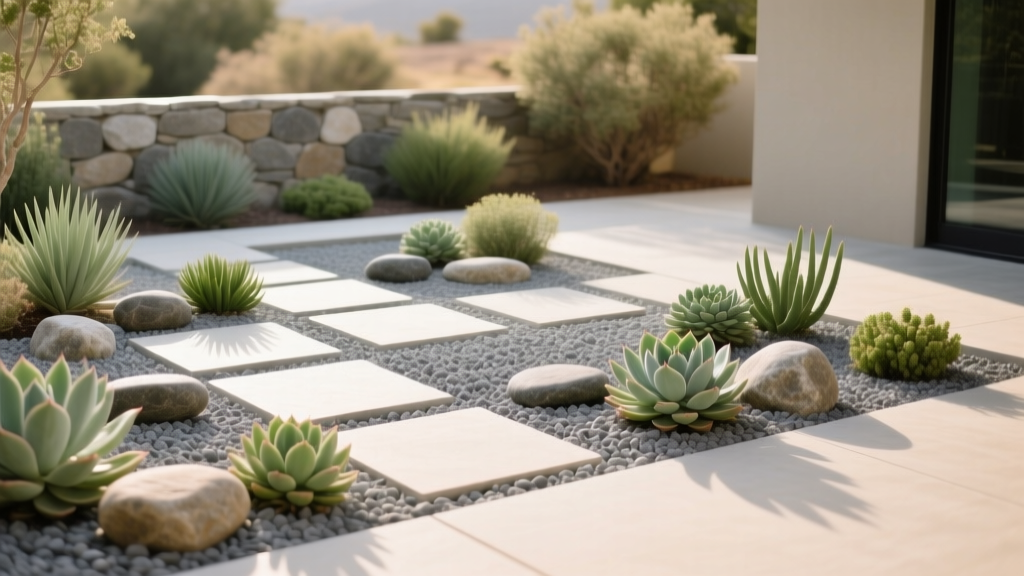
Patio Gravel Garden for Low Water Use
The hose lies coiled like a sleepy snake beside the patio—until the first hot week of summer wakes it up. You step outside with a cup of coffee and see it: tired pots, crispy edges on the annuals, runoff pooling where you don’t want it, and a sense that the patio is asking for a different kind of garden—one that looks deliberate even when you forget to water for a few days. That’s where a gravel patio garden shines: it’s clean, architectural, and genuinely low-water when it’s designed with the right layout, the right plants, and the right soil preparation.
I’m going to walk you through a designer-style approach that works for homeowners and renters. We’ll build a layout that handles heat, reflects light beautifully, and still feels lush—without turning your patio into a desert or a maintenance project.
Design principles that make gravel gardens work (and look intentional)
Start by mapping your “heat zones” and “use zones”
Gravel changes the microclimate. It reflects light, radiates warmth at night, and drains fast. Before you choose a single plant, stand on the patio and note:
- Sun hours: Track direct sunlight. Most patio gravel gardens perform best with 6–8 hours of direct sun, but you can design for 4–5 hours with the right plant list.
- Heat traps: South- and west-facing walls amplify heat. A narrow strip along a brick wall can run 10–15°F hotter than open yard space on the same day.
- Traffic lines: Where do you walk from door to grill, or chair to gate? Treat these like paths in a “room,” not leftover space.
As a rule: design the path first, then the planting pockets around it. That’s how you get a patio garden that feels made, not improvised.
Use the “three-layer” gravel system to keep it tidy
A gravel garden fails when weeds invade and gravel sinks into soil. A simple build-up prevents both:
- Base: compacted decomposed granite (DG) or crushed stone fines for stability
- Separator: a geotextile fabric layer (optional for planted gravel; useful for paths)
- Top layer: angular gravel (not round pea gravel) for a locked-in surface
If you’re planting directly into gravel, use fabric only under paths and seating pads, not everywhere—otherwise plant roots struggle and soil pockets become awkward. For a planted gravel garden, think “gravel mulch over soil,” not “plants stuck in gravel.”
Plan edges like a carpenter, not a gardener
Clean edges are the difference between “stylish courtyard” and “driveway overflow.” Use steel, aluminum, or stone edging to separate gravel from planting pockets and keep it from migrating. Even a 4-inch tall steel edge makes a huge difference visually and functionally.
For renters, edging can be modular: heavy pavers or recycled bricks laid as a border work without digging and can be removed later.
Prioritize shade where people sit
Low water doesn’t mean you have to roast. Add a shade element that doesn’t demand irrigation:
- One large container with a small tree (olive, bay, dwarf citrus in warm climates)
- A simple sail shade over the seating zone
- A trellis with drought-tolerant climbers (in a container) to cool a wall
Design tip: if you can shade 30–40% of the gravel surface near seating, the whole patio feels more comfortable, and containers dry out more slowly.
Layout strategies: three patio templates you can copy
Template A: The 10' x 12' “Outdoor rug” layout
This is my go-to for small patios because it reads as a complete design. Imagine a rug shape of gravel framed by edging, with planting pockets cutting into it like insets.
- Overall area: 10 ft x 12 ft (120 sq ft)
- Path width: keep at least 36 inches for comfortable walking
- Planting pockets: two pockets at 2 ft x 6 ft each, plus one corner pocket at 3 ft x 3 ft
- Gravel depth: 2 inches on top of compacted base for paths; 1–2 inches as mulch over planting pockets
Place one chair pair or a bistro set on a stable pad (pavers or compacted DG) within the gravel “rug.” The planting pockets soften edges and stop the layout from feeling too hard.
Template B: The long, narrow 4' x 20' side patio
Long corridors feel like service areas unless you break them into beats.
- Create two rooms: a 6–8 foot “pause zone” with a bench, then a walking lane.
- Use stepping stones (18" x 18" or 12" x 24") set into gravel to keep feet stable.
- Stagger planting pockets every 5–6 feet to keep the eye moving.
If this space gets only 4–5 hours of sun, choose silver-leaved plants and tough groundcovers that tolerate bright shade.
Template C: The renter-friendly “no-dig” gravel patio garden
If you can’t excavate, you can still get the look. Use containers, troughs, and a thin gravel layer to unify the surface.
- Lay a removable landscape fabric or thick builder’s paper on the patio surface.
- Add 1 inch of fine gravel as a visual “carpet.”
- Cluster 5–7 containers (different sizes, same color family) and leave a clear walking strip.
This version is more about styling and pot selection than in-ground planting, but it still reduces water compared with thirsty annual beds because you’ll use drought-tolerant perennials and succulents.
Step-by-step setup instructions (DIY, with designer checkpoints)
- Measure and sketch. Mark your patio on paper with dimensions. Add doors, hose bibs, and where you want seating. If you have 120 sq ft, plan for at least 40 sq ft of clear usable space (chairs + movement).
- Decide where plants live: pockets or pots. If you can dig, create planting pockets with improved soil; if not, commit to containers and a thin gravel finish.
- Excavate only where needed. For a path base, remove 3–4 inches of soil. For planting pockets, loosen soil to 10–12 inches deep so roots can chase moisture.
- Build the base. Add 2–3 inches of DG or crushed fines, dampen, and compact. A hand tamper works for small patios.
- Install edging. Set steel edging or paver borders before gravel. Check lines from inside the house—this is where “crooked” shows.
- Amend planting soil. Blend compost into planting pockets (roughly 20–30% by volume). For clay soil, add mineral grit for drainage.
- Plant first, gravel second. Set plants, water them in deeply, then apply a 1–2 inch gravel mulch around them (keep gravel off crowns).
- Add a drip line (optional but smart). A simple 1/2-inch poly line with emitters in pockets saves more water than hand watering because it’s targeted.
- Finish with a “furniture plan.” Place seating on a stable surface (pavers or compacted DG). Wobbly chairs are the fastest way to stop using a patio.
Plant selection: specific varieties that thrive in gravel with low water
Gravel gardens look best with plants that have strong structure, fine texture, and a little movement. The goal is a palette that stays attractive when not pampered and doesn’t collapse into floppy green.
Core planting palette (sunny patios: 6–8 hours)
- Lavandula angustifolia ‘Hidcote’ (English lavender): compact form, deep purple, excellent drainage tolerance. Space 18–24 inches apart for a low hedge line.
- Salvia nemorosa ‘Caradonna’: upright purple spikes, drought tolerant once established, great contrast with pale gravel. Space 16–20 inches.
- Nepeta x faassenii ‘Walker’s Low’: soft blue flowers, long season, spills beautifully over edging. Space 24 inches.
- Achillea millefolium ‘Moonshine’: sulfur-yellow blooms, gray foliage, thrives in lean soil. Space 18 inches.
- Stipa tenuissima (Mexican feather grass): movement, heat tolerant, visually light. Space 24 inches; use sparingly in windy areas (it can self-seed in some regions).
- Sedum (Hylotelephium) ‘Autumn Joy’: late-season structure for patios that need fall interest. Space 18–24 inches.
Hot wall “heat-bounce” plants (for west/south exposure)
- Rosmarinus officinalis ‘Arp’ (rosemary): tough, aromatic, evergreen in mild climates; great in a raised pocket or large pot. Give it 3 feet of width.
- Teucrium fruticans (bush germander): silver foliage that doesn’t scorch easily; handles reflected heat. Space 3–4 feet (or choose a compact cultivar).
- Agave attenuata (where hardy): sculptural focal point, minimal water. Allow a footprint of 4–5 feet wide.
Part-sun and bright-shade choices (4–5 hours)
- Geranium ‘Rozanne’: long flowering, tolerant of part sun, great edge softener. Space 24 inches.
- Heuchera ‘Caramel’ or ‘Obsidian’: color in shade, works in gravel-mulched pockets with organic soil below. Space 14–18 inches.
- Carex testacea (orange sedge): warm color, fine texture, strong in containers. Space 18 inches.
Ground-level finishers (to knit gravel and plants together)
- Thymus serpyllum ‘Elfin’ (creeping thyme): fragrant, low, handles lean soil. Plant in small groups 10–12 inches apart.
- Delosperma cooperi (ice plant, where appropriate): vivid flowers, thrives in gravelly soils. Space 12–18 inches.
Practical note: many drought-tolerant plants still need regular water their first season. After establishment, you can back off dramatically, especially with gravel mulch that reduces evaporation.
Material choices and cost planning (with real numbers)
Costs vary by region, but here’s a usable baseline you can scale. For a 120 sq ft patio gravel garden, a 2-inch gravel layer requires about 0.74 cubic yards (because 120 sq ft x 0.167 ft = 20 cu ft ≈ 0.74 yd³). Many suppliers sell by the half-yard or yard.
- Gravel (¾" minus or similar): often $40–$90 per cubic yard plus delivery.
- Decomposed granite base: roughly $50–$120 per cubic yard.
- Steel edging: commonly $2–$5 per linear foot; a 10' x 12' “rug” might use 44 linear feet.
- Drip kit (small patio scale): about $30–$80 depending on complexity.
- Plants: expect $8–$18 per 1-gallon perennial; a simple plan with 12–18 plants lands around $120–$300.
Designer tip: don’t overspend on rare plants at first. Put budget into edges and base prep—those are the bones that keep the garden looking sharp.
A quick comparison: gravel options for patios
| Gravel Type | Best Use | Foot Comfort | Stability | Notes for Low-Water Patios |
|---|---|---|---|---|
| Angular 3/8" crushed gravel | Paths, around planting pockets | Medium | High | Locks together; less migration; great with edging |
| Pea gravel (rounded) | Decorative top layer only | High | Low | Shifts underfoot; can feel messy on patios without borders |
| Decomposed granite (DG) | Seating pads, stable surfaces | High | High | Compacts well; excellent for chairs; may track indoors if loose |
| Crushed stone fines (“minus”) | Base layer | Not applicable | Very high | Use under gravel for a firm, long-lasting foundation |
What “low water” really means here (and the data behind it)
Gravel itself doesn’t save water—design does. Two practical, research-supported concepts help:
First, targeted irrigation and grouping plants by water needs reduce waste. The U.S. Environmental Protection Agency notes that WaterSense-labeled irrigation controllers and smarter scheduling can reduce outdoor water use substantially; outdoor use can account for a significant portion of household water in summer months (U.S. EPA WaterSense, 2023).
Second, mulch reduces evaporation. Gravel acts like a mineral mulch, shading soil and slowing surface drying. As Colorado State University Extension summarizes, mulches help conserve moisture by reducing evaporation and moderating soil temperature (Colorado State University Extension, 2022).
“Mulches reduce evaporation from the soil surface and help maintain more uniform soil moisture.” — Colorado State University Extension, Mulches for the Home Grounds (2022)
Design translation: if you combine gravel mulch in planting pockets with drip irrigation and drought-tolerant plants, you get a patio garden that looks crisp and needs fewer deep soakings once established.
Three real-world scenarios (and how the layout shifts)
Scenario 1: Small condo patio, HOA rules, and reflected heat
You have an 8' x 10' patio, no digging, and a west-facing wall that turns into a radiator at 4 p.m. The plan:
- Use a thin gravel “carpet” layer (1 inch) over removable underlayment.
- Choose 5 containers: two tall (18–20" diameter) for structure, three medium (12–14") for fillers.
- Plant a heat-tolerant focal point (rosemary or dwarf olive where hardy) and underplant with thyme and sedum.
Water strategy: one deep watering every 5–7 days in peak summer for established plants, adjusting for heat waves. Add saucers only if your patio can handle it; otherwise use pot feet so drainage doesn’t stain surfaces.
Scenario 2: Family patio with foot traffic and a grill zone
This is where gravel gets messy unless you design for it. Assume a 12' x 16' patio with constant crossing.
- Create a 42-inch wide main path line (comfortable when carrying plates).
- Use DG or compacted fines under the main traffic zone for stability.
- Keep planting pockets tight and protected by edging so kids and pets don’t kick gravel into beds.
Planting: use sturdier, non-floppy forms—salvia, yarrow, lavender, and a couple of ornamental grasses placed away from the grill so they don’t collect grease smoke.
Scenario 3: Shaded rental patio with morning sun only
Let’s say you get 4 hours of direct sun, then bright shade. Gravel still works, but your palette shifts:
- Use lighter gravel to bounce light (pale gray over tan, if glare isn’t an issue).
- Choose heuchera, geranium ‘Rozanne,’ carex, and a few architectural containers.
- Add one mirror or light-colored wall panel (if allowed) to reflect light and make plants look fuller.
Water strategy: part shade often means less evaporation, so you may water containers every 7–10 days once established, depending on pot size and wind exposure.
DIY alternatives that still look designer
If your budget is tight, you can still get a polished gravel patio garden by focusing on repetition and edges.
- Skip steel edging: Use salvaged brick as a soldier course border. Even a 3.5-inch brick edge creates a crisp line.
- Buy fewer plants, space them correctly: Plant smaller (4" pots) at the same spacing and let them fill in over one season.
- Use local gravel: The most beautiful gravel is often what’s common in your region—it looks natural and is cheaper to deliver.
- Make one “hero” container: Put budget into one large pot (20–24" diameter) and keep the rest simple. A single strong focal point elevates everything.
Maintenance expectations (so it stays crisp, not scruffy)
A well-designed gravel patio garden is not “no maintenance,” but it is predictable maintenance. Here’s what I tell clients to expect:
- Weekly time: about 20–30 minutes for a small patio (quick weed patrol + deadheading + checking irrigation).
- Weeding: fastest when done young; gravel makes weeds easy to spot but also easy to ignore. Aim for a 5-minute pass twice a week in spring.
- Seasonal pruning:
- Late winter/early spring: cut back salvias and nepeta; lightly shape lavender (don’t cut into old wood).
- Mid-summer: shear nepeta after first flush for rebloom.
- Fall: leave seedheads of sedum and grasses if you like winter structure; tidy in early spring.
- Gravel grooming: rake lightly once a month to keep it even, and top up annually where it thins. Many patios need only 1–2 bags of gravel a year in high-traffic spots.
- Irrigation check: if you use drip, inspect emitters monthly in summer for clogs and reposition lines as plants grow.
One practical habit: keep a small handheld broom by the patio door. A quick sweep keeps gravel from tracking indoors and makes the whole space feel cared for.
When you’re done, you should be able to step outside on a hot day and feel like the patio is calmer—less thirsty, less demanding, and more you. The gravel becomes a quiet backdrop; the plants do the talking. And when the hose stays coiled for a few extra days, the garden still looks like it’s exactly where it belongs.
Sources: U.S. Environmental Protection Agency (EPA) WaterSense, outdoor water use and irrigation efficiency resources (2023); Colorado State University Extension, Mulches for the Home Grounds (2022).