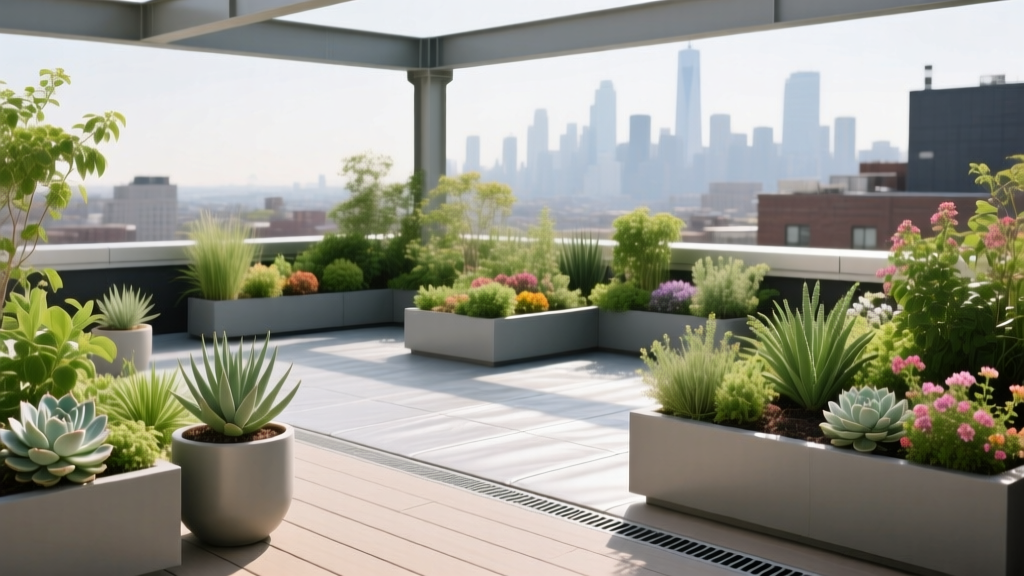
Rooftop Garden Setup: Waterproofing, Weight Limits, and Plant Selection Guide
Before You Start: Check These 3 Things
- Building permit: Most cities require a permit for rooftop structures. Check local codes.
- Weight capacity: Have a structural engineer assess your roof. Typical residential roofs support 20-40 lbs/sq ft (live load). Saturated soil weighs 100+ lbs per cubic foot.
- Access: You need safe, permanent access. A hatch or stairway — not a ladder through a window.
Waterproofing: The Most Critical Layer
Layer Stack (bottom to top):
- Roof surface (concrete, membrane, or metal)
- Root barrier (copper-impregnated fabric — prevents root penetration)
- Waterproof membrane (EPDM rubber or TPO — 60 mil minimum)
- Protection mat (geotextile fabric — prevents punctures)
- Drainage layer (gravel or drainage mats with channels)
- Filter fabric (prevents soil from clogging drainage)
- Growing medium (lightweight mix — see below)
Weight Management
| Component | Weight (saturated) |
|---|---|
| Lightweight soil mix (12 inches deep) | 25-35 lbs/sq ft |
| Standard potting soil (12 inches deep) | 50-70 lbs/sq ft |
| Water in drainage layer (1 inch) | 5 lbs/sq ft |
| Raised bed frame (wood) | 3-5 lbs/sq ft |
| Planters and containers | Variable — weigh each when wet |
Use lightweight soil mix: 40% expanded shale or perlite, 30% compost, 20% coconut coir, 10% vermiculite. This mix weighs 50% less than standard potting soil while maintaining excellent water retention.
Wind Protection
Rooftop wind speeds are 2-3x higher than ground level. Without protection, plants dry out, break, or get uprooted.
- Windbreak panels: Trellis with shade cloth (50% density) on the windward side. Allows airflow while reducing wind speed by 60%.
- Low-profile planting: Keep tall plants in the center, surrounded by shorter ones.
- Heavy containers: Use concrete or stone planters (not plastic) for tall plants.
- Stake everything: Even small plants need support on rooftops.
Drainage
Water must drain freely — pooling causes leaks and root rot. Install French drains or channel drains around the perimeter. Slope the growing surface at 1-2% toward drains. Never block existing roof drains with planters.
Best Plants for Rooftop Gardens
Full Sun Survivors (6+ hours):
- Sedums and succulents (lightest option — 3-4 inches of soil)
- Lavender, rosemary, thyme (Mediterranean herbs love rooftop conditions)
- Ornamental grasses (flexible stems handle wind well)
- Dwarf conifers (slow growing, compact, wind-resistant)
- Tomatoes and peppers (in 5-gallon containers with staking)
Partial Shade Tolerant:
- Hostas, ferns, heuchera (for shaded corners)
- Leafy greens: lettuce, spinach, Swiss chard
- Strawberries (in hanging baskets or railing planters)
Irrigation
Rooftop plants dry out 2-3x faster than ground-level plants. Install drip irrigation with a timer. Use self-watering containers or add water-retaining crystals to soil mix. Collect rainwater in barrels if your building allows it.
Final Thoughts
A rooftop garden is a serious project that requires proper waterproofing, weight management, and wind protection. Start with containers on a small section of roof — once you verify drainage and wind conditions work, expand. Sedum green roofs are the lightest option (15-20 lbs/sq ft) and require almost no maintenance.