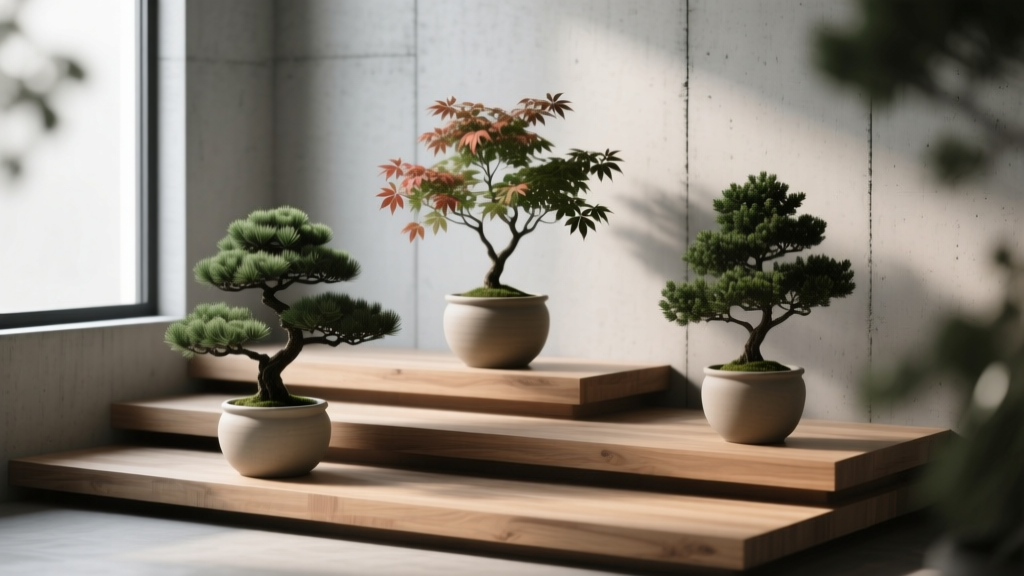
Terrace Potted Tree Selection Guide
The terrace looked perfect on paper: a rectangle of sun-warmed paving, a railing, and a view. In real life, it felt like a frying pan at 2 p.m. and a wind tunnel by dinner. The chairs had nowhere to hide, the neighbors had a direct sightline, and every plant you tried either toppled, crisped, or sulked in shade. This is where potted trees earn their keep—adding height, privacy, and microclimate—if you choose the right species and match it to the constraints of containers, wind, and weight.
I’m going to walk you through this like a small design project: assess the terrace, sketch a layout, pick trees that behave well in pots, and then set up a maintenance rhythm you can actually keep. You’ll see specific varieties, spacing rules, container dimensions, and three real-world scenarios that mirror the problems most terrace gardeners face.
Start With the Site: Three Measurements That Decide Everything
1) Sun hours: your terrace’s “plant budget”
Spend one day noting direct sun exposure (or use a phone sun-tracking app). Most potted trees want 6–8 hours of sun for reliable growth and flowering/fruiting, while shade-tolerant evergreens can manage with 3–5 hours. If you only get 2–3 hours, prioritize foliage texture and wind tolerance over fruit.
2) Wind: the invisible pruning shears
Terraces on upper floors behave like cliffs—gusts dry pots rapidly and can snap soft new growth. Plan on a windbreak (trellis screen, slatted panel, or tall planter wall) and choose trees with flexible branches or smaller leaves where possible. The windier your terrace, the more you’ll benefit from heavier containers and shorter canopies.
3) Weight and space: the practical limits
Before you fall in love with a tree, check building guidelines. Wet potting mix is heavy. A common large setup—60 cm diameter pot with moist mix and a tree—can easily exceed 50–80 kg depending on materials. If you’re renting, plan for containers you can move with a dolly and designs that don’t require permanent anchors.
Layout Strategies: Make Trees Work Like Architecture
Create “rooms” with height and negative space
On terraces, trees act like lightweight walls. Instead of lining pots around the perimeter (which can feel like a fence of foliage), choose two or three anchor trees and let open space do some of the design work. A single multi-stem tree can define a dining area, while a columnar evergreen can shield an outdoor desk without swallowing square footage.
Use the triangle rule for stability and flow
Arrange major pots as a triangle, not a straight line. Triangles make small spaces feel intentional and reduce the “corridor” effect. A good starting template for a medium terrace is:
- 1 large pot (60–70 cm diameter) as the main tree
- 1 medium pot (45–55 cm) as a secondary tree or tall shrub
- 1 slim, tall pot (35–45 cm diameter) as a vertical accent
Keep at least 80–90 cm clear for walking paths. If your terrace is narrow, you can reduce paths to 70 cm, but it will feel tight when chairs pull out.
Build a microclimate: shade, shelter, and reflected heat
Trees on hot terraces are less about “adding plants” and more about changing conditions. Light shade can drop leaf scorch dramatically, and a windbreak reduces transpiration and watering stress. A simple screen plus trees can transform a terrace from brittle to lush within a season.
“Container-grown plants are more susceptible to drought stress than those in the ground because their root systems are confined and the substrate dries out faster.” — Royal Horticultural Society, advice on container cultivation (RHS, 2023)
Pick Containers Like You’re Choosing Furniture
Minimum pot sizes that actually support trees
Forget tiny “tree” pots from big-box stores. For long-term success, use these practical minimums:
- Dwarf citrus / olive / bay: 45–60 cm diameter, 40–50 cm deep
- Japanese maple: 50–65 cm diameter, 45–55 cm deep
- Columnar evergreens: 40–55 cm diameter, 45–60 cm deep
Plan to “pot up” every 2–3 years or root-prune and refresh soil at the same interval.
Drainage and soil: choose structure over richness
Terrace trees fail more often from water mismanagement than from lack of fertilizer. Use a stable, airy mix. Extension guidance emphasizes well-drained media for container performance; UF/IFAS notes that container substrates should drain well while holding enough moisture for roots (UF/IFAS Extension, 2018).
A reliable DIY blend for many terrace trees:
- 60% high-quality potting mix
- 20% fine pine bark or orchid bark
- 20% perlite or pumice
Tree Selection: Varieties That Behave Well in Pots
The best terrace trees share a few traits: compact roots, tolerance of pruning, and leaves that don’t shred in wind. Below are designer favorites that earn their footprint.
Evergreen privacy (year-round screening)
1) Bay laurel (Laurus nobilis)
Why it works: naturally dense, responds well to clipping, aromatic leaves, and looks “architectural” in a pot. Train as a standard (lollipop) or multi-stem screen. Place in sun to part shade (4–8 hours).
2) Italian cypress ‘Totem’ (Cupressus sempervirens ‘Totem’)
Why it works: very narrow profile—ideal for tight terraces. Strong vertical line for modern spaces. Best in full sun (6+ hours) and sheltered from harsh, drying winds.
3) Podocarpus macrophyllus (Buddhist pine)
Why it works: tolerant of pruning and partial shade, glossy foliage, calmer look than many conifers. Excellent for renters who can’t build tall screens.
Small flowering trees (seasonal drama without chaos)
1) Japanese maple (Acer palmatum ‘Bloodgood’ or ‘Sango-kaku’)
Why it works: elegant branching, manageable size in a container, and strong color. Give morning sun and afternoon shade in hot climates; aim for 4–6 hours of gentle sun to reduce leaf scorch. Protect from strong winds—leaves can tatter.
2) Crape myrtle (Lagerstroemia indica ‘Petite’ series)
Why it works: made for heat, flowers in summer, tolerates pruning, and performs well in pots with full sun (6–8 hours). Choose compact cultivars like ‘Petite Orchid’ for smaller terraces.
3) Olive (Olea europaea ‘Arbequina’)
Why it works: thrives in sun, wind-tolerant once established, and the silver foliage reads as “Mediterranean terrace” instantly. Needs excellent drainage and bright conditions (6+ hours).
Edible trees (beauty you can snack on)
1) Lemon ‘Meyer’ (Citrus × meyeri)
Why it works: reliable container citrus with fragrant blooms. Needs sun (6–8 hours) and regular feeding. In colder zones, it’s a perfect candidate for a wheeled pot so you can overwinter indoors.
2) Fig ‘Little Miss Figgy’ (Ficus carica ‘Little Miss Figgy’)
Why it works: bred for compact growth and container life. Loves heat, handles pruning, and gives a lush, bold-leaf look. Provide full sun (6+ hours) and a pot at least 50 cm wide.
3) Pomegranate ‘Nana’ (Punica granatum ‘Nana’)
Why it works: dwarf habit, bright flowers, and good drought tolerance once established. Excellent for warm terraces; use a gritty mix and full sun.
A Quick Comparison Table: Match the Tree to Your Terrace
| Tree (variety) | Best use | Sun needed | Min pot size | Notes for terrace success |
|---|---|---|---|---|
| Bay laurel (Laurus nobilis) | Privacy + clipping into forms | 4–8 hours | 50 cm wide x 45 cm deep | Great for DIY topiary; tolerates pruning and wind better than many broadleaf evergreens. |
| Olive ‘Arbequina’ | Mediterranean focal point | 6+ hours | 60 cm wide x 50 cm deep | Needs sharp drainage; avoid soggy saucers after rain. |
| Japanese maple ‘Bloodgood’ | Color + refined canopy | 4–6 hours (avoid harsh afternoon sun) | 60 cm wide x 50 cm deep | Wind protection matters; use a heavier pot to prevent tipping. |
| Lemon ‘Meyer’ | Edible + fragrance | 6–8 hours | 55 cm wide x 45 cm deep | Feed regularly; consider a wheeled dolly for winter moves. |
| Italian cypress ‘Totem’ | Vertical screen in tight spaces | 6+ hours | 45 cm wide x 55 cm deep | Narrow silhouette; shelter from severe wind and keep evenly moist. |
Three Real-World Terrace Scenarios (and What I’d Plant)
Scenario 1: The windy high-rise (privacy without toppled pots)
The problem: 10th-floor terrace, strong gusts, sun most of the day, lightweight furniture, and plants that dry out too fast.
The layout move: Create a sheltered corner by clustering pots: two tall screens and one main “anchor” tree. Put the tallest planters against the railing to break wind, then step down heights toward the seating.
Tree picks:
- Podocarpus macrophyllus in two matching tall containers for a calm evergreen wall
- Olive ‘Arbequina’ as the focal tree in a heavy pot (stone or thick fiberglass with ballast)
Spacing: Keep screen trees 60–90 cm apart for a connected visual barrier without crowding pots. Allow 90 cm behind seating for circulation.
Scenario 2: The hot, reflective terrace (heat-stress central)
The problem: Pale paving or white walls bounce light upward; plants scorch, and watering becomes a twice-a-day chore in summer.
The layout move: Use a single canopy tree to cast dappled shade over the hottest zone (often the seating). Add underplanting in the same pot to shade the soil surface and slow evaporation.
Tree picks:
- Crape myrtle ‘Petite Orchid’ for heat tolerance and summer bloom
- Fig ‘Little Miss Figgy’ if you want bold leaves and fruit in full sun
Designer trick: Swap a black nursery pot for a light-colored container; darker pots heat up more. Add a 5 cm mulch layer (fine bark) to reduce moisture loss and protect surface roots.
Scenario 3: The shaded rental terrace (nice to look at, easy to move)
The problem: 3–4 hours of sun, mostly bright shade, and no drilling/anchoring allowed. You want privacy from neighbors but also need to move things when the lease ends.
The layout move: Use narrow, tall planters as a “soft wall” and choose a tree that tolerates partial shade and clipping. Put everything on discreet rolling caddies.
Tree picks:
- Bay laurel trained as standards for an instant structured look
- Podocarpus where you need taller screening with less sun
Budget-friendly privacy: Add a simple freestanding trellis panel behind pots and run outdoor-rated zip ties—no drilling required.
Step-by-Step: Set Up a Terrace Potted Tree Like a Pro
- Place the empty pot first. Move it into final position before filling. Check that doors and paths still have 80–90 cm clearance.
- Add drainage protection without blocking flow. Use mesh over holes, not rocks (rocks reduce effective soil volume). If the pot sits on tile, elevate slightly with pot feet for airflow.
- Fill with a structured mix. Leave 3–5 cm at the top as a watering lip to prevent runoff.
- Position the tree at the right height. The root flare should sit slightly above the soil line—don’t bury the trunk.
- Stabilize if needed. In windy sites, use a discreet stake for the first season or add ballast (a flat paver) at the bottom of the pot without blocking drainage.
- Water deeply. Water until it runs out the bottom, wait 10 minutes, then water again to fully hydrate the root ball.
- Mulch and underplant. A 5 cm mulch layer plus low groundcovers (thyme in sun, small ferns in shade) protects soil and makes the pot look finished.
Budget Planning (and Smart DIY Swaps)
Terrace trees can be surprisingly affordable if you spend where it counts: container size, good soil, and a healthy plant.
- Tree cost: A quality 10–15 gallon equivalent tree often runs $60–$180 depending on species and region (olives and citrus tend to be higher).
- Container cost: Large lightweight fiberglass/resin planters often land around $80–$250. Premium terracotta or glazed ceramic can be more, and much heavier.
- Soil and amendments: Expect roughly $25–$60 to fill a large pot with a good mix (more if you buy bagged specialty components).
- Wheeled caddy: A sturdy plant dolly is typically $20–$50 and is a renter’s best friend.
- DIY alternative: Use a food-safe half-barrel liner or a large storage tub disguised inside a decorative outer pot. Just drill multiple drainage holes and keep the tree in a proper nursery container within the outer shell for easy repotting.
One of my favorite cost savers: buy a slightly smaller tree (often half the price), then “cheat” maturity with underplanting and a great container. A well-chosen pot makes a young tree read as intentional, not undersized.
Maintenance Expectations: What You’re Signing Up For
Container trees aren’t difficult, but they are scheduled. In peak season, most people need 30–60 minutes per week for checking moisture, deadheading, and quick pruning. Hot, windy terraces may require extra watering time.
Weekly rhythm (growing season)
- Water: Check moisture 2–4 times/week in warm weather; daily during heat waves. Water deeply rather than little sips.
- Feed: Use a slow-release fertilizer in spring; supplement citrus/edibles with liquid feed every 2–4 weeks during active growth.
- Rotate pots: Turn trees a quarter turn every 2 weeks for balanced growth (especially for citrus and bay).
Seasonal tasks
- Spring: Top-dress with fresh mix, apply slow-release fertilizer, prune for shape before strong growth.
- Summer: Watch for spider mites on stressed plants (especially in dry heat). Mulch and monitor irrigation.
- Autumn: Reduce feeding, check pots for stability before storms, and clean fallen leaves to prevent slippery surfaces.
- Winter: Protect roots from freeze with pot wraps or by clustering containers. Bring tender citrus inside if your nights drop below 2–4°C (36–39°F) consistently.
Design Finishes: Make the Trees Look Like They Belong
A terrace tree can look “plunked down” if it’s the only tall element. I like to finish with three details:
1) Repeat materials. Choose two pot finishes and repeat them—one for main trees, one for supporting plants. Repetition reads as design, even when the plant mix is diverse.
2) Layer heights. Pair a tree with mid-height shrubs (lavender in sun; sarcococca in shade) and trailing edges (creeping thyme, ivy geranium, bacopa). This hides bare stems and makes the container feel integrated.
3) Light it gently. A simple warm LED uplight at the base of a bay or olive turns the tree into nighttime architecture. Solar works in bright terraces; plug-in is more reliable for shade.
If you remember one rule: choose the tree that matches your terrace’s sun and wind first, then choose the style. When the conditions are right, a potted tree stops being “a plant in a pot” and starts acting like a living privacy screen, shade canopy, and focal point—exactly what a terrace needs to feel like a true garden.
Sources: Royal Horticultural Society (RHS), container gardening guidance (2023). University of Florida IFAS Extension, container media and drainage principles for woody plants (2018).