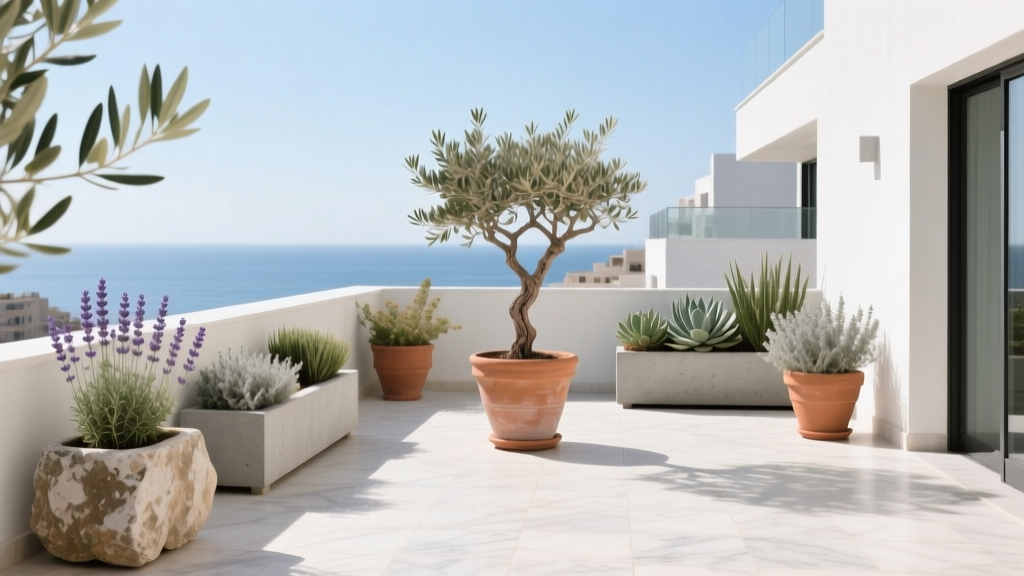
Terrace Mediterranean Container Garden
The wind is up, the sun is already bright by 9 a.m., and your terrace feels like it’s either too exposed or too cramped—sometimes both at once. You’d love the mood of a coastal courtyard: silvery foliage, warm terracotta, herbs you can snip one-handed while you cook. But right now the space is a scatter of mismatched pots, a lonely chair, and that one plant you keep “meaning to repot.” Let’s turn the terrace into a Mediterranean container garden that looks intentional, handles heat, and still leaves room to live.
I’m going to walk you through this like a small design project: we’ll measure, set a layout, choose pots and plants that actually thrive in containers, then build an easy maintenance routine. You’ll see a few real-world scenarios along the way so you can borrow what fits your terrace—whether you rent, own, face full sun, or get blasted by wind.
Start with the bones: sun, wind, water, and movement
Measure and map your “living lane” first
A Mediterranean terrace works best when it’s not just pretty—it’s usable. Before choosing a single plant, reserve a clear walkway and seating zone. On most terraces, a 36 in (91 cm) clear path is comfortable; 30 in (76 cm) is the minimum if space is tight.
Quick mapping method: sketch your terrace to scale on graph paper. For example, a common apartment terrace is 10 ft × 6 ft (3 m × 1.8 m). Mark the door swing, any drains, and where you want to place seating. Then draw a continuous “living lane” from the door to the seat without squeezing past pots.
Know your sun hours (and choose the right Mediterranean look)
Most classic Mediterranean container plants want strong light: 6–8+ hours of direct sun is ideal for lavender, rosemary, thyme, and many citrus. If you have only 3–5 hours, you can still get the look by leaning on shade-tolerant, drought-adapted foliage (like bay laurel in brighter shade, or trailing rosemary with partial sun) and emphasizing pots, gravel mulch, and texture.
Note: true “drought tolerance” doesn’t mean “no water in pots.” Containers dry quickly, especially on a sunny terrace with wind.
Wind is the hidden design brief
Wind is what turns a terrace into a plant casualty ward. Treat it as a design constraint and solve it with layout: place the tallest, heaviest containers on the windward edge to create a sheltering line. If your terrace is exposed, plan for 18–24 in (46–61 cm) tall containers with enough weight (or add gravel at the bottom below the soil line) so they don’t topple.
Water access and drainage: prevent the slow disaster
Confirm where water comes from (hose bib, kitchen sink fill, watering can route). If you rely on a watering can, your design should include fewer, larger containers rather than many small ones. Also confirm drainage rules—many buildings require drip trays to prevent runoff staining below.
Good drainage isn’t optional. The Royal Horticultural Society notes that most Mediterranean herbs prefer free-draining conditions and are prone to problems in waterlogged soil (RHS, 2023).
Layout strategies that make a terrace feel Mediterranean (and functional)
Use a “three-layer” planting structure
Think like a landscape designer, just scaled down to pots:
- Backdrop layer (height): 1–3 tall structural plants in large containers (bay, olive, dwarf citrus, columnar juniper).
- Mid layer (bulk): rounded, aromatic shrubs and grasses (lavender, rosemary, santolina, dwarf fountain grass).
- Edge layer (spill): trailing plants to soften pot rims (creeping thyme, oregano, trailing rosemary, ivy geranium).
This structure stops the “random pot collection” look and gives you that courtyard density while keeping the center open.
Anchor the design with a pair of “statement pots”
Choose two matching large containers to act like columns in the composition. On a 10 ft × 6 ft terrace, a pair of 18–22 in (46–56 cm) diameter pots flanking a seating area instantly reads as intentional. Match material (terracotta-look composite is lighter than clay) and repeat them on both sides of the space, even if the plants differ slightly.
Plan spacing like you’re furnishing a room
Containers need breathing room so air circulates and you can reach in to prune and water. As a rule of thumb:
- Leave 6–8 in (15–20 cm) between small pots.
- Leave 10–14 in (25–36 cm) between medium to large containers.
- Keep at least 18 in (46 cm) clear around a chair’s footprint so you can sit without snagging on rosemary.
Borrow the Mediterranean hardscape feel with top-dressing
The “Mediterranean look” is as much mineral as plant: sunlit stone, gravel, limewash. In containers, you can mimic this with a top-dressing of pale gravel. A 0.5 in (1–1.5 cm) layer reduces soil splash, slows evaporation a bit, and visually unifies mixed plantings. Use pea gravel or crushed granite; avoid limestone gravel if your plants prefer more neutral soil (lavender is fine; some citrus prefer slightly acidic mixes).
“A strong garden design depends more on structure and repetition than on having lots of different plants.” — John Brookes, landscape designer (Brookes, 2011)
Container choices: performance first, romance second
Terracotta is iconic, but on a terrace it can be heavy, fragile, and thirsty. Here’s a practical comparison when you’re deciding what to buy.
| Container Type | Weight | Watering Frequency | Best For | Typical Cost (18–20 in pot) |
|---|---|---|---|---|
| Unglazed terracotta | Heavy | Higher (porous sides) | Herbs, lavender; classic look | $45–$120 |
| Glazed ceramic | Very heavy | Moderate | Feature pots in sheltered spots | $60–$180 |
| Fiberstone / composite | Light–medium | Moderate | Windy terraces; large sizes | $55–$160 |
| Fabric grow bags | Very light | Higher (air-pruning dries edges) | Rental-friendly, budget builds | $8–$25 |
If you rent, composite pots or grow bags are usually the sweet spot: lighter to move, less likely to crack, and easier to store. If you want terracotta without the weight, look for “terracotta-look” resin or fiber clay finishes.
Soil and irrigation: the unglamorous part that makes everything thrive
A Mediterranean container mix that drains but doesn’t collapse
Skip garden soil. Use a quality potting mix and amend for drainage. For most Mediterranean shrubs and herbs in containers, a reliable recipe is:
- 60% high-quality potting mix
- 30% pumice or perlite (pumice is heavier and more stable in wind)
- 10% compost (or worm castings)
For lavender and santolina, push drainage even further by bumping mineral content slightly. For citrus, keep it free-draining but a bit richer; citrus are heavier feeders.
DIY drip irrigation (even if you’re a renter)
If you travel or work long hours, a simple drip setup can protect your plants through heat waves. A basic kit with a small timer typically costs $35–$90, and it’s removable when you move. Aim for 1–2 emitters per large pot (e.g., two 1 GPH emitters) and adjust based on sun and wind.
During peak summer, many Mediterranean container plants still need watering 2–4 times per week in full sun, sometimes daily during extreme heat. The key is deep watering, then letting the top inch dry before watering again—especially for lavender and rosemary.
Plant selection: specific varieties that earn their spot
The goal here is not just “Mediterranean-themed.” It’s plants that stay handsome in containers, tolerate heat and wind, and offer scent and culinary use.
Structural “evergreen” anchors (choose 1–3)
- Olea europaea ‘Arbequina’ (dwarf olive): Silvery foliage, strong Mediterranean identity, and good container performance. Use a 20–24 in pot minimum for stability. Best in 6–8+ sun hours.
- Laurus nobilis (bay laurel), lollipop or cone-trained: Glossy leaves, culinary value, and excellent structure. Tolerates 4–6 sun hours better than many herbs. Great for framing a seating area.
- Citrus ‘Improved Meyer’ lemon (in warm climates or overwintered indoors): Fragrance and fruit. Needs the brightest spot you have and more regular feeding.
Aromatic mid-layer shrubs (pick 3–5)
- Lavandula angustifolia ‘Hidcote’: Compact, deep purple, strong scent, and better cold tolerance than many lavenders. Give it a pot at least 14–16 in wide and avoid soggy soil.
- Rosmarinus officinalis ‘Tuscan Blue’ (now often labeled Salvia rosmarinus): Upright habit, bold presence, and culinary use. Thrives with sun and sharp drainage.
- Santolina chamaecyparissus (cotton lavender): Silvery, finely textured foliage that reads “coastal.” Excellent contrast with glossy bay leaves.
- Salvia officinalis ‘Berggarten’ (sage): Broad, soft gray leaves; holds its form in pots and pairs beautifully with terracotta.
Trailing and edging plants (use to soften rims)
- Thymus serpyllum (creeping thyme): Durable, aromatic, and great at spilling over edges. Also attracts pollinators when it flowers.
- Origanum ‘Kent Beauty’: Ornamental oregano with decorative bracts; gives that “vacation patio” vibe and tolerates sun.
- Pelargonium peltatum (ivy geranium): Classic terrace color—especially in white or deep red—while staying relatively drought-tolerant once established.
Accent plants for texture and heat tolerance
- Stipa tenuissima (Mexican feather grass): Movement in the breeze; use it sparingly so it doesn’t look messy. Great in a 12–14 in pot.
- Agave ‘Blue Glow’ (where hardy or overwinterable): Architectural form; use one as a focal point in a gravel-topped pot.
Plant spacing in mixed containers: for a 20 in pot, plan 1 thriller + 3–5 fillers/spillers. For individual specimen pots (olive, bay, citrus), keep them solo—these look best with a clean soil/gravel surface and room to breathe.
Three terrace scenarios (with layouts you can copy)
Scenario 1: The renter’s 6 ft × 4 ft balcony with strict weight limits
You’ve got a compact 24 sq ft space and a building rule about water runoff. Go light, vertical, and repeat materials.
Layout: Place a slim bench (or folding chair) against the wall. Use three 12–14 in lightweight composite pots along the railing with saucers, and a single 16–18 in anchor pot in the back corner to screen neighbors.
Planting set: bay laurel (corner anchor), ‘Hidcote’ lavender, sage ‘Berggarten,’ and trailing thyme. Add one ivy geranium for color.
Budget: DIY with fabric grow bags can keep the initial spend around $120–$220 including soil and plants; upgrading to composite containers may land closer to $250–$450.
Scenario 2: The 12 ft × 8 ft sunny terrace with wind (the “hot roof” effect)
This is where Mediterranean planting shines—if you design for wind and fast drying.
Layout: Create a windbreak line on the exposed edge with three 20–24 in heavy containers spaced 12 in apart. Keep a 36 in path from the door to seating. Add a small bistro set in the calmer lee side.
Planting set: ‘Arbequina’ olive (center), upright rosemary ‘Tuscan Blue’ (either side), then mid-layer lavender and santolina in medium pots. Use gravel top-dressing across all containers for a cohesive look.
Water strategy: Add a timer + dripline because wind can turn watering into a daily chore. In peak summer, expect watering 3–5 times per week even with drought-tolerant plants.
Scenario 3: The part-sun terrace (4 hours of sun) where you still want the Mediterranean feel
With partial sun, lean into structure, fragrance, and foliage that stays clean in lower light.
Layout: Put the tallest structure (bay) in the brightest corner. Use two matching medium pots near the seating area for symmetry. Choose fewer plants and repeat them.
Planting set: bay laurel, sage, thyme, and a compact rosemary in the sunniest spot. Add white flowering accents like ivy geranium (if you get enough sun) or seasonal white alyssum in shoulder seasons.
Expectation setting: lavender may flower less and grow looser with only 4 hours of sun, so don’t make it the star—use it as a supporting player.
Step-by-step setup (a designer’s install day)
- Mark the living lane: Use painter’s tape to outline a 30–36 in path and your seating footprint.
- Place empty containers first: Put the largest pots where they’ll live. Step back and check sightlines from indoors.
- Add pot feet and saucers: Lift pots slightly to improve drainage and reduce staining. This also helps prevent waterlogged roots.
- Mix soil in a tub: Combine potting mix with pumice/perlite and compost (roughly 60/30/10). Pre-moisten lightly so it settles evenly.
- Plant structure first: Install olive/bay/citrus so heights are set. Keep the root flare slightly above soil level to avoid stem rot.
- Fill in mid-layer shrubs: Lavender, rosemary, santolina, sage—space so mature growth won’t collide immediately.
- Add spillers last: Place thyme/oregano/ivy geranium near pot edges where they can cascade.
- Top-dress with gravel: Apply 0.5 in evenly, keeping gravel away from stems.
- Water deeply: Water until it runs out the bottom, then empty saucers after 20–30 minutes if your building requires it.
- Mulch your maintenance: Put a small snip basket and pruners by the door. This garden style rewards frequent light harvesting.
Costs and budget-smart swaps
A Mediterranean container terrace can be done in phases. Here’s a realistic cost snapshot for a mid-sized terrace with 8–10 containers:
- Containers: $300–$900 (depending on terracotta vs composite; size matters)
- Soil + amendments: $80–$160 (potting mix, pumice/perlite, compost)
- Plants: $200–$650 (olive/bay/citrus cost more; herbs are cheaper)
- Gravel top-dressing: $25–$60
- Drip kit (optional): $35–$90
DIY alternatives that still look designed: Use fabric grow bags tucked into inexpensive baskets (lined with plastic only around the outside, leaving drainage intact). Or buy one or two “hero” pots and pair them with simpler, matching smaller containers painted in a limewash tone. Repetition reads high-end even on a modest budget.
Maintenance expectations (what you’re signing up for)
Plan on 30–60 minutes per week in the growing season for watering checks, deadheading, and light pruning. In very hot spells, watering checks can be 5–10 minutes daily—especially for smaller pots.
Weekly rhythm
- Water: Check moisture by finger or a meter. Water deeply when the top inch is dry; don’t “sip” daily.
- Snip: Harvest thyme, oregano, rosemary tips to keep plants bushy.
- Scout: Look for spider mites on rosemary and citrus, especially in dry heat.
Seasonal tasks
- Spring: Refresh the top 2 in of potting mix on heavy feeders (especially citrus), and start a light feeding program.
- Early summer: Shape lavender lightly after flowering—avoid cutting into old woody stems.
- Late summer: Reduce feeding; keep watering consistent to prevent stress and leaf drop.
- Autumn: Clean up fallen leaves, check drainage, and reduce watering as growth slows.
- Winter (cold climates): Group pots together near a wall for warmth, elevate them off cold ground, and consider frost cloth for tender plants. Citrus may need a bright indoor spot or protected overwintering.
One practical note backed by research: container substrates can become water-repellent when they dry out severely, making re-wetting difficult; once that happens, water can run down the sides and out the bottom without soaking in. The University of Minnesota Extension discusses this “hydrophobic soil” behavior in container media and recommends thorough re-wetting (University of Minnesota Extension, 2020). If a pot suddenly seems impossible to water, soak it slowly or bottom-water temporarily to rehydrate the mix.
Design refinements that make it feel finished
Repeat a color temperature: choose warm terracotta and cream gravel, or cool gray pots and silvery foliage. Don’t mix every finish you own.
Add one lighting layer: a simple warm string light or a single rechargeable lantern makes the terrace usable at night, and Mediterranean gardens are meant to be lived in after sunset.
Keep edits ruthless: if a plant isn’t thriving, swap it. A Mediterranean terrace looks best when plants are healthy and sculptural, not struggling.
Once your anchors are in place—an olive or bay, a couple of confident rosemary and lavender forms, and trailing herbs softening the edges—the terrace stops feeling like an outdoor storage zone. It becomes a small room under the sky: fragrant when you brush past, practical when you cook, and resilient enough that a windy afternoon or a missed watering doesn’t unravel the whole design.
Sources: Royal Horticultural Society (RHS), “Lavender: grow guide” and Mediterranean herb cultivation guidance (2023). University of Minnesota Extension, container media and watering behavior including hydrophobic potting mixes (2020). John Brookes, garden design principles emphasizing structure and repetition (2011).