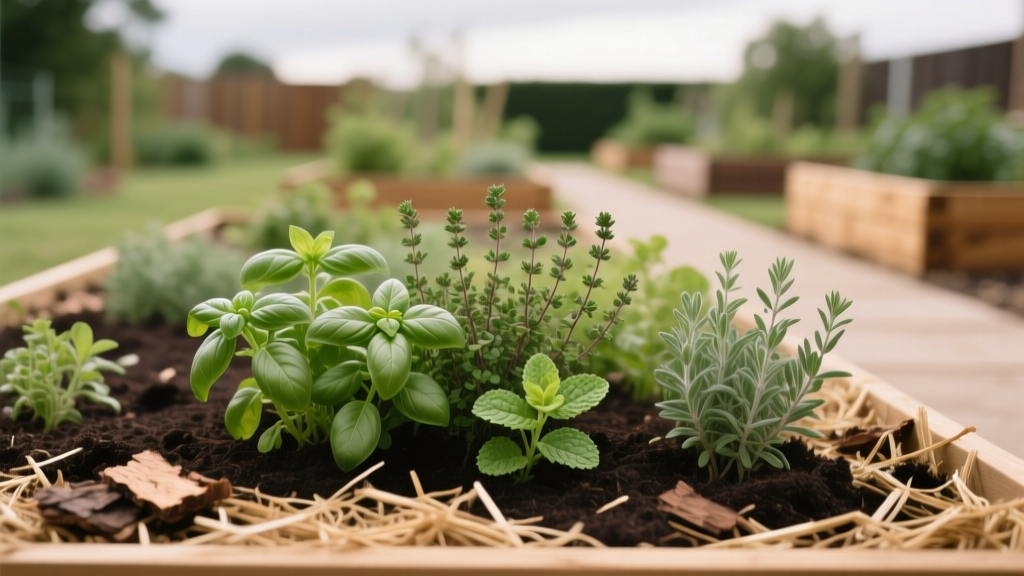
Best Mulching Techniques for Herbs
You water your basil in the morning, step away for a busy day, and by late afternoon it’s limp like it’s given up. Or you’ve got thyme that looked fine in May, but by July the soil is cracked, the flavor is off, and weeds are laughing at you. Here’s the surprising part: in many herb gardens, the problem isn’t “not enough water”—it’s water that can’t stay where the roots need it. Mulch is the quiet fix that stabilizes moisture, cools (or warms) the root zone, and cuts your weeding time in half when it’s done right.
Herbs aren’t all the same, though. Mediterranean herbs (rosemary, thyme, oregano, lavender) want sharp drainage and hate soggy crowns. Leafy herbs (basil, cilantro, parsley, chives) like steadier moisture and richer soil. The best mulching techniques respect those differences—because the “wrong” mulch in the “wrong” spot can rot stems, invite slugs, or keep soil too cool for heat-loving basil.
What mulch actually does for herbs (and when it backfires)
Mulch is a soil cover—organic or mineral—that changes the microclimate at the soil surface. In a home herb bed, it mainly:
- Reduces evaporation, meaning fewer emergency waterings.
- Buffers temperature swings, protecting shallow herb roots.
- Suppresses weeds, which compete hard for water and nutrients.
- Prevents soil splash onto leaves (less disease and grit).
Where it backfires: a thick, wet mulch piled against stems can keep crowns damp and oxygen-poor. That’s how you lose thyme and rosemary to rot after a rainy spell. A good herb mulch plan always includes depth control and a mulch-free collar around stems.
“Keep organic mulches a few inches away from plant stems to help prevent disease and rodent damage.” — University of Minnesota Extension, Mulch and Wood Chips (2023)
Choose the right mulch: organic vs mineral (and which herbs prefer what)
Think of mulches in two families:
Organic mulches (they break down and feed soil)
- Straw (weed-free): light, good for leafy herbs, easy to pull back for sowing.
- Shredded leaves: great moisture control, but matting can happen if applied too thick.
- Fine bark or pine fines: long-lasting, tidy; can hold moisture—use carefully near crowns.
- Compost (as a thin mulch): feeds gently; better for basil/parsley than for rosemary/lavender.
Mineral mulches (they don’t break down; they manage heat and drainage)
- Pea gravel or crushed stone (¼–½ inch size): excellent around Mediterranean herbs because it keeps crowns dry and improves airflow.
- Decomposed granite: good for paths and around drought-tolerant herbs; can crust if compacted.
A mineral mulch can be the difference between lavender thriving for years and collapsing after one wet winter. Many university trials aimed at drought-tolerant plantings note that gravel mulches can reduce crown moisture and improve survival compared with thick organic layers in rainy climates.
Comparison table: common herb mulches (with real numbers)
| Mulch type | Best depth for herbs | Water savings / moisture holding | Soil temperature effect | Best for | Watch-outs |
|---|---|---|---|---|---|
| Straw (weed-free) | 2–3 inches | High (cuts evaporation noticeably) | Cools soil in heat | Basil, cilantro, parsley; summer beds | Can harbor slugs in damp shade; blows in wind |
| Shredded leaves | 1–2 inches | Moderate–high | Cools and buffers swings | Mixed herb beds; fall top-up | Matting if >2 inches; pull back from crowns |
| Fine bark / pine fines | 1–2 inches | Moderate | Cools in summer, insulates in winter | Perennial herb borders | Too thick can keep crowns wet; may tie up nitrogen if mixed into soil |
| Compost (finished) | ½–1 inch | Moderate | Neutral to slight warming | Heavy-feeding leafy herbs; containers | Weeds if compost isn’t fully finished; can stay moist against stems |
| Pea gravel / crushed stone | 1–2 inches | Low–moderate (depends on soil) | Warms quickly in sun | Rosemary, thyme, oregano, lavender, sage | Reflects heat; can dry soil faster in extreme heat; harder to amend later |
Comparison analysis with actual data: If you apply 3 inches of straw around basil in July, you’ll typically stretch watering intervals compared with bare soil. In contrast, 1–2 inches of pea gravel around thyme won’t “hold” water the same way straw does, but it keeps the crown drier and reduces rot risk after a 1-inch rain. Straw favors moisture conservation; gravel favors drainage and crown health. Pick the benefit you need most.
How to mulch herbs the right way (step-by-step)
This is the method I use in teaching gardens because it works across climates and herb types.
- Weed first. Don’t mulch over living weeds—especially creeping ones like Bermuda grass.
- Water deeply before mulching. Aim to moisten the top 6 inches of soil.
- Apply mulch at the correct depth:
- Leafy annual herbs: 2–3 inches straw or leaf mulch.
- Perennial Mediterranean herbs: 1–2 inches gravel or a thin organic layer.
- Leave a mulch-free collar around stems: keep mulch 2–3 inches back from the crown of thyme, oregano, rosemary, lavender, and sage.
- Edge-check after wind and storms. Re-level mulch so it stays even, not piled.
Timing matters. Mulch after soil has warmed in spring—especially for basil, which stalls in cold soil. A practical benchmark: wait until nighttime temperatures are consistently above 55°F (13°C) before applying heavy organic mulch around warm-season herbs.
Watering with mulch: adjust your habits (or you’ll overdo it)
Mulch changes how water moves. It slows evaporation, so the surface stays damp longer—even when deeper soil is drying or vice versa. The fix is simple: check moisture below the mulch.
A reliable watering routine for mulched herb beds
- Pull mulch aside and feel soil 2 inches down.
- If it’s dry at 2 inches, water.
- If it’s cool and slightly damp, wait a day and recheck.
For many home gardens, a good baseline is 1 inch of water per week total (rain + irrigation) during active growth, adjusted for heat and soil type. With mulch, you may water less often but more deeply. Drip irrigation under mulch is ideal because it reduces leaf wetness and delivers water where roots are.
Scenario #1: The heat wave herb bed. When temperatures hit 90–95°F for several days, basil and cilantro in full sun can crash fast in bare soil. A 3-inch straw mulch plus a deep morning watering can keep basil productive. Cilantro still bolts in heat (it’s cilantro), but mulch buys you time and better leaf quality.
Soil and mulch: build the root zone herbs actually want
Mulch is not a substitute for good soil, but it helps you keep soil in its “sweet spot.”
For leafy herbs (basil, parsley, cilantro, chives)
- Soil goal: evenly moist, rich but not soggy.
- Mulch goal: conserve moisture and reduce soil crusting.
- Best mulches: straw (2–3 inches), shredded leaves (1–2 inches), or compost (½–1 inch).
For Mediterranean herbs (rosemary, thyme, oregano, lavender, sage)
- Soil goal: fast draining, airy, never waterlogged.
- Mulch goal: keep crowns dry, prevent soil splash, limit weeds without trapping moisture.
- Best mulches: pea gravel/crushed stone (1–2 inches) or a very thin bark layer kept back from stems.
One detail many gardeners miss: if you have heavy clay, organic mulches can slowly improve soil structure over time, but you still need to avoid “mulch volcanos” around woody herb crowns. If winter is wet where you live, gravel mulching around lavender and rosemary is often the safer long-term bet.
Research and extension guidance consistently emphasize correct placement and depth. Washington State University Extension notes that mulch can conserve moisture and reduce weeds, but incorrect application around stems can increase disease and pest problems (WSU Extension, 2020).
Light and temperature: mulching changes the microclimate
Mulch doesn’t change the sun, but it changes what happens at the soil line—where many herb problems begin.
- Full sun herb beds: organic mulch cools soil and reduces midday stress; gravel can increase reflected heat.
- Part shade beds: go thinner with organic mulches to avoid slug habitat and slow-drying soil.
- Early spring: hold off on thick mulch until soil warms, especially for basil and dill.
Scenario #2: The cool, coastal garden. In mild summers with frequent fog, thick straw mulch around rosemary can keep the crown too damp. The plant looks fine until it suddenly browns at the base. Switching to 1 inch of gravel and widening the mulch-free collar often stops the slow crown rot cycle.
Feeding herbs when you mulch (don’t over-fertilize)
Mulch can reduce nutrient leaching and, in the case of compost, add fertility. But most culinary herbs taste best with moderate feeding. Overfed herbs can get lush and floppy, with weaker flavor.
Simple feeding plan
- Leafy annuals (basil, parsley): top-dress with ½ inch finished compost every 4–6 weeks during heavy harvest, then reapply straw lightly on top if needed.
- Perennial Mediterranean herbs: compost once in spring (¼–½ inch) or use a light, slow-release organic fertilizer at label rate. Keep fertilizer away from the crown.
If you use bark-based mulch, avoid mixing it into the soil. When wood chips are incorporated, microbes can temporarily tie up nitrogen. Used as a surface mulch, this effect is much smaller and usually manageable in herb beds.
For evidence-based mulch guidance, Cornell Cooperative Extension discusses how organic mulches moderate soil temperature, reduce water loss, and influence nutrient cycling (Cornell Cooperative Extension, 2021). Those benefits are real—but only when the mulch layer is kept at an appropriate thickness.
Common problems (and how to fix them fast)
Most mulching problems show up as moisture issues: too wet at the crown, too dry under a heat-reflecting mulch, or pests moving into a comfortable layer. Here are practical troubleshooting patterns I see over and over.
Troubleshooting: herbs wilting even though the soil looks damp
- Symptoms: Basil droops midday; soil surface under mulch feels cool; plant perks up at night.
- Likely causes: Roots are shallow; water isn’t reaching 4–6 inches deep; mulch is shedding water (especially dry straw) and irrigation is running too short.
- Fix:
- Water slowly to wet the soil profile (drip for 30–60 minutes, depending on flow).
- Pull mulch back while watering the first time, then replace it after water infiltrates.
- Add a second watering day during extreme heat (>95°F), especially for containers.
Troubleshooting: thyme/rosemary browning at the base (crown rot pattern)
- Symptoms: Outer stems look okay, but the center browns; stems detach easily near soil line; musty smell.
- Likely causes: Mulch piled against crown; heavy organic mulch staying wet; poor drainage.
- Fix:
- Remove mulch in a 6-inch diameter around the plant.
- Switch to 1–2 inches gravel mulch around the drip line, not the crown.
- If soil is clay, raise the planting area by 4–8 inches with a gritty mix and replant if decline is advanced.
Troubleshooting: slugs/snails chewing basil and parsley
- Symptoms: Ragged holes, shiny slime trails, damage worst overnight; seedlings disappear.
- Likely causes: Thick, damp organic mulch in shade creating slug cover.
- Fix:
- Reduce mulch depth to 1 inch near susceptible herbs.
- Water in the morning so the surface dries by evening.
- Use iron phosphate bait as directed, and set boards/traps for nighttime hiding.
- Create a drier “collar” zone with a ring of coarse material (gravel) around seedlings.
Troubleshooting: weeds punching through mulch
- Symptoms: Bindweed, crabgrass, or nutsedge emerging through a mulch layer within weeks.
- Likely causes: Mulch too thin; weeds not removed first; aggressive perennial weeds.
- Fix:
- Hand-remove perennial roots before mulching (don’t just chop the top).
- Increase mulch to the correct depth: 2–3 inches organic, 1–2 inches mineral.
- In severe cases, lay plain cardboard (no glossy print) under straw in paths—not right around herb crowns—and keep cardboard edges covered.
Best mulching techniques by herb garden setup (3 real-world cases)
Case #1: Raised bed herb mix (basil + parsley + oregano together)
Mixed beds are tricky because oregano likes it drier than basil. The workable compromise:
- Mulch most of the bed with 2 inches shredded leaves or straw.
- Give oregano (and thyme if present) a 6–8 inch wide ring of gravel around the crown area, with the gravel kept 2–3 inches away from stems.
- Place drip lines so basil gets a closer emitter spacing than oregano.
Case #2: Container herbs on a hot patio
Containers dry fast because air hits all sides. Mulch helps, but don’t smother the pot.
- Add 1 inch compost as a top layer, then 1 inch straw or fine bark on top.
- Keep mulch 1 inch away from the main stem.
- On days above 90°F, expect to water containers daily even with mulch—just water deeply until you see drainage.
Case #3: In-ground Mediterranean herb strip (lavender, rosemary, sage)
This is where mineral mulch shines.
- Skip thick compost mulches; use 1–2 inches of pea gravel or crushed stone over the bed.
- Keep a dry crown zone: no mulch touching the woody base.
- Water less often but deeply during establishment: for the first 4–6 weeks, soak once or twice weekly depending on rainfall, then taper.
Seasonal mulch timing: what to do in spring, summer, fall, and winter
Mulch isn’t a one-and-done job. A small seasonal rhythm keeps herbs healthier and reduces pests.
- Spring: Wait to apply thick mulch until soil warms (night lows consistently above 55°F for basil). Refresh perennials with a thin layer, keeping crowns clear.
- Summer: Maintain depth. If straw thins to <1 inch, top it up. Pull mulch back from stems during long wet spells.
- Fall: Use shredded leaves as a light insulating layer around perennials, but don’t bury woody crowns. In wet-winter climates, keep lavender/rosemary on gravel and avoid heavy organic blankets.
- Winter: In freeze-thaw areas, a light mulch can reduce heaving, but soggy mulch can kill Mediterranean herbs. If your winter is rainy, prioritize drainage over insulation.
Quick reference: mulch rules that save herbs
- Depth matters: most herbs do best with 1–3 inches, not 6.
- Keep crowns dry: leave 2–3 inches bare around stems.
- Match mulch to the herb: straw/leaf mulch for leafy herbs; gravel for Mediterranean herbs.
- Check moisture under the mulch: don’t guess from the surface.
- Adjust for shade: thinner organic mulch where slugs thrive.
Once you get mulching right, your herb garden stops acting like a daily emergency and starts behaving like it should: steady growth, fewer weeds, and better flavor. The best sign you nailed it is simple—your basil stays upright through the afternoon, your thyme smells stronger when you brush past it, and you’re harvesting more than you’re rescuing.
Sources: University of Minnesota Extension (2023), “Mulch and Wood Chips”; Washington State University Extension (2020), mulch and landscape management guidance; Cornell Cooperative Extension (2021), mulch effects on soil moisture and temperature.