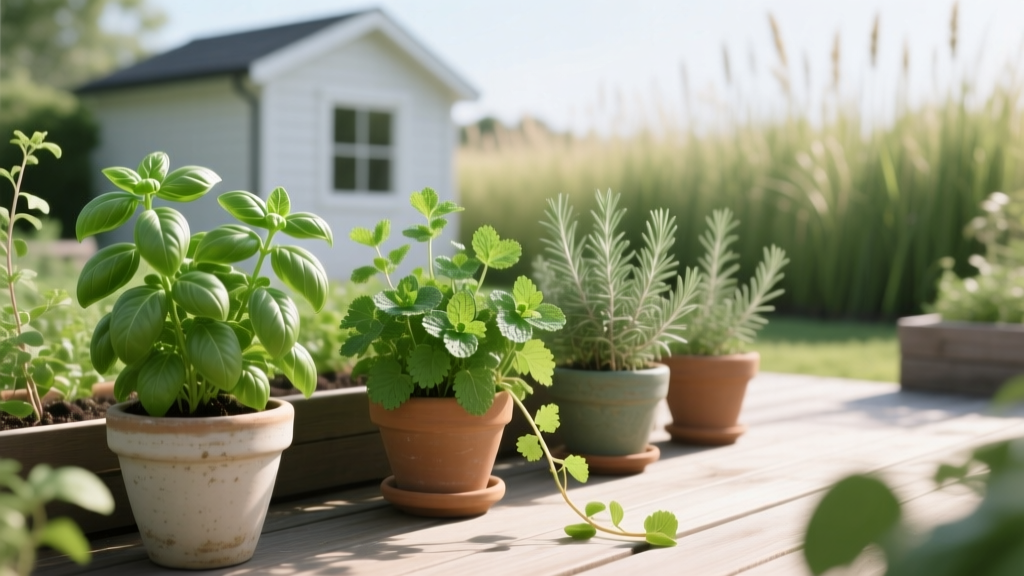
Signs Your Herb Gardens Needs More Light
You bring a fistful of basil inside, expecting that big, sweet summer smell—and instead it barely perfumes the kitchen. The leaves are pale, the stems are long and floppy, and the plant leans hard toward the nearest window like it’s trying to escape. You water, you fertilize, you fuss… and it still looks tired. Nine times out of ten, that’s not a “brown thumb” problem. It’s a light problem.
Herbs are generous plants, but most culinary favorites (basil, rosemary, thyme, oregano, sage) are sun-lovers. When they don’t get enough light, they don’t just grow slower—they grow different: weaker stems, washed-out flavor, and more pest issues. Let’s walk through the clear signs your herb garden needs more light, how to confirm it, and what to do about it without turning your routine upside down.
The big clue: herbs that look “healthy-ish” but taste bland
Light doesn’t just power growth; it drives the oils that make herbs taste like herbs. When light is low, you may still see green leaves, but you’ll often notice:
- Less aroma when you pinch a leaf (especially basil, mint, rosemary).
- Thin, watery flavor—you need more leaves to get the same punch.
- Slow regrowth after harvest even if watering and feeding seem fine.
This is why two pots of basil can get the same water and fertilizer and still perform wildly differently—because one is quietly starving for light.
Light basics for herbs (so the signs make sense)
Most culinary herbs perform best with 6–8 hours of direct sun outdoors. Indoors, “bright” is usually not as bright as you think—glass cuts light, winter sun is weaker, and a window only lights one direction.
A good benchmark: many fruiting or oil-rich herbs do best around 300–600+ µmol/m²/s PPFD at leaf level for strong growth (typical of bright sun or a decent grow light at the right distance). You don’t need to measure PPFD to succeed, but it helps explain why a dim kitchen window often produces leggy plants.
“Leggy growth is a classic sign of insufficient light—plants stretch toward the brightest source, producing long internodes and weaker stems.” — University of Minnesota Extension (2020)
Visual signs your herb garden needs more light
1) Leggy growth (long gaps between leaves)
If the stem length between leaf sets (internodes) gets noticeably longer, your herb is reaching. Basil and cilantro show this fast, often within 7–14 days of low light.
- What you’ll see: tall, spindly stems; leaves clustered near the top.
- What it means: the plant is trading strength for height to find light.
- What to do today: move to a brighter spot and pinch back to force branching.
2) Plants leaning or “necking” toward a window
That hard lean is phototropism: the plant is bending toward the strongest light source. If you rotate the pot and it leans back again within a few days, the light is too directional or too weak.
- Quick fix: rotate pots ¼ turn every 2–3 days.
- Better fix: add a grow light overhead so light comes from above, not the side.
3) Pale leaves (especially new growth)
Low light can cause chlorosis-like paleness, particularly in basil, parsley, and dill. Don’t automatically blame nitrogen—low light reduces the plant’s ability to use nutrients.
Clue it’s light, not feeding: you fertilize and nothing improves within 10–14 days, or growth stays weak and stretchy.
4) Smaller leaves than usual
In low light, many herbs produce smaller, thinner leaves. You’ll notice it when you harvest: you’re picking lots of little leaves instead of fewer big ones.
5) Lower leaves yellowing and dropping
When the top canopy gets the best light, the plant sacrifices shaded lower leaves. Some leaf drop is normal as herbs age, but if it happens quickly and mostly on the lower half, suspect low light (especially indoors).
Three real-world scenarios (and what works)
Scenario 1: Indoor basil on a kitchen counter that “should be bright”
You’ve got basil in a pot about 6 feet from a window. It grows, but it’s leggy and flavor is weak. This is the classic “bright room” trap: human eyes adapt; plants don’t.
- Fix: move basil to within 12–18 inches of the sunniest window, or use a grow light.
- Grow light setting: run 12–16 hours/day; keep LEDs about 8–12 inches above the top leaves (adjust based on heat and plant response).
- Pruning: pinch above a node weekly until it bushes out.
Scenario 2: Patio herb pots that looked great in June, sad in August
Mid-summer your herbs can lose light because of tree leaf-out, an umbrella, or a shifting sun angle. If your thyme or oregano suddenly gets looser and less dense, check whether it’s now receiving only 3–4 hours of sun.
- Fix: relocate pots to regain 6+ hours of direct sun, or prune back shading plants overhead.
- Bonus tip: elevate pots on a bench so they’re not shaded by railings.
Scenario 3: Seedlings on a windowsill that topple over
Cilantro, basil, and dill seedlings grown on a windowsill often stretch and fall. That’s low light plus directional light. A fan helps stems toughen, but it won’t replace photons.
- Fix: start seedlings under a light for 14–16 hours/day.
- Distance: keep the light 2–4 inches above seedlings for many shop LEDs (follow the manufacturer’s guidance and watch for bleaching).
- Support: pot up and bury stems deeper for basil; use small stakes temporarily if needed.
How to confirm it’s a light problem (not water, soil, or feeding)
Herb issues stack: low light often leads to overwatering, nutrient lockout, and pests. Use this quick checklist before you change everything at once.
- Track sun hours for 2 days. Note direct sun time. Under 5 hours for sun-loving herbs is a red flag.
- Do the shadow test at noon. A crisp-edged shadow = strong light; a fuzzy shadow = weak light (handy for patios and windows).
- Check internode length. Compare to a healthy plant photo or last month’s growth.
- Inspect soil moisture habits. Low light = slower drying; if your pot stays wet for 4–6 days after watering, you’re likely overwatering relative to light.
Watering adjustments when light is low (this is where people accidentally kill herbs)
When herbs receive less light, they use less water. If you keep watering on a “summer schedule,” roots sit wet and oxygen-starved. That’s when you see yellowing, droop, fungus gnats, and root rot.
Practical watering rules (containers)
- Water only when the top 1 inch of soil is dry for basil and parsley; for rosemary/thyme, let the top 2 inches dry.
- Water deeply until 10–20% runs out the drainage holes; discard saucer water after 10 minutes.
- If light is reduced (winter window, shade), expect to water 30–50% less often.
If your herb looks limp, don’t assume it needs water. Feel the soil first. Low light limpness and dry-soil limpness can look similar, but they require opposite actions.
Soil and potting: light problems get worse in heavy mixes
In low light, fast drainage becomes even more important. A dense potting mix holds water longer, and the plant can’t “drink it off” through growth.
What good herb soil looks like
- Container mix: a quality potting mix amended with 20–30% perlite or pumice for basil/parsley; for rosemary/thyme/oregano, go up to 30–40% mineral drainage.
- Pot size: most single herbs do well in an 8–10 inch pot; too large a pot indoors can stay wet too long.
- Drainage: always a hole. “Rocks in the bottom” don’t improve drainage in a meaningful way; they just reduce soil volume.
If you’re trying to compensate for low light, don’t do it with heavier soil or more water. That combination is how basil disappears overnight.
Feeding: more fertilizer won’t fix low light (and can backfire)
When light is limiting, extra fertilizer tends to create soft, weak growth or salt buildup rather than robust plants. Think of fertilizer as building materials—without enough light energy, the plant can’t use them well.
Simple feeding targets for common herbs
- Basil/parsley: a balanced liquid fertilizer at ½ strength every 2–4 weeks during active growth, only if light is adequate.
- Rosemary/thyme/oregano/sage: feed lightly—often once every 6–8 weeks in containers is enough.
- Stop feeding if the plant is clearly stretching (leggy) and fix light first.
For indoor herbs, temperature matters too. Many do best around 65–75°F. A warm room with low light often produces the stretchiest growth—warmth pushes growth, light can’t keep up.
Comparison: window light vs grow light (with real numbers)
If you’re deciding whether to buy a grow light, here’s a practical comparison. The goal isn’t gadget collecting—it’s consistent, harvestable herbs.
| Setup | Typical daily light duration | Consistency | What you’ll notice in herbs | Best for |
|---|---|---|---|---|
| South window (no grow light) | Winter: ~3–5 hours strong sun (varies) | Low (clouds, season, window angle) | Often leggy basil/parsley; rosemary may slowly decline | Hardier herbs, short-term holding |
| Basic LED grow light | 12–16 hours/day on timer | High | Denser growth, stronger aroma, faster regrowth after harvest | Year-round kitchen herbs |
| Outdoor full sun | 6–8+ hours direct sun | Medium (weather dependent) | Best flavor and compact growth for most culinary herbs | Peak summer production |
Common problems that show up when herbs don’t get enough light
Powdery mildew and leaf spot (especially basil)
Low light often pairs with lower airflow indoors or crowded pots—perfect conditions for disease. The fix is usually a combination of more light and better spacing.
- Do: thin crowded stems; water the soil, not the leaves; increase light and airflow.
- Don’t: mist herbs to “raise humidity” if disease is present.
Research and extension guidance consistently emphasize light and airflow as key cultural controls for foliar diseases. For home growers, a small fan on low plus better lighting can make a visible difference within 1–2 weeks.
Fungus gnats
Fungus gnats are less about the insect and more about the soil staying wet too long—often due to low light.
- Let the top 1–2 inches dry between waterings.
- Use yellow sticky traps to reduce adults.
- If needed, apply BTi (Mosquito Bits) per label directions.
Aphids and spider mites
Stressed plants attract pests. Low light creates soft, stretched growth that’s easy feeding.
- Rinse pests off with a firm water spray.
- Improve light first; then consider insecticidal soap if pests persist.
- Quarantine indoor plants for 7–10 days when bringing home new herbs.
Troubleshooting: symptom-by-symptom fixes
Symptom: Basil is tall, floppy, and keeps falling over
Likely cause: low, directional light; warm indoor temps.
Fix:
- Move to strongest light or add a grow light 8–12 inches above the plant.
- Pinch stems back to just above a leaf node; repeat weekly until bushy.
- Hold fertilizer for 2 weeks while correcting light; overfeeding can make it floppier.
Symptom: Parsley is slow and pale even though soil is moist
Likely cause: low light + too-wet soil; possibly cool temps.
Fix:
- Increase light exposure; aim for 6 hours direct sun or 14–16 hours under a light.
- Let the top 1 inch dry before watering again.
- Check temperatures—parsley grows best around 60–70°F.
Symptom: Rosemary drops leaves indoors
Likely cause: not enough light combined with wet feet. Rosemary wants bright light and excellent drainage.
Fix:
- Give rosemary the brightest window you have or a dedicated grow light on for 12–14 hours/day.
- Use a gritty mix (add 30–40% perlite/pumice).
- Water only when the top 2 inches are dry; never let the pot sit in water.
Symptom: Cilantro bolts fast and gets thin
Likely cause: cilantro is sensitive to heat and day length; low light can cause weak growth, but bolting is often heat-driven.
Fix:
- Grow in cooler temps: target 50–70°F.
- Provide morning sun and afternoon shade outdoors in hot climates.
- Sow new seeds every 2–3 weeks for steady harvest.
Step-by-step: upgrading light without guesswork
Option A: Move plants to better natural light
- Find the brightest window (often south- or west-facing in the Northern Hemisphere).
- Place herbs within 12 inches of the glass if possible.
- Rotate pots ¼ turn every 2–3 days.
- Wipe dust off leaves and windows monthly—dust can noticeably reduce light.
Option B: Add a simple grow light setup
- Choose an LED grow light sized to your shelf or counter space.
- Put it on a timer for 12–16 hours/day.
- Start with the light 10–12 inches above the canopy; adjust:
- If stems stretch: move light closer by 2 inches.
- If leaves bleach or curl upward: raise light by 2–4 inches.
- Pair with airflow: a small fan on low for a few hours daily strengthens stems.
Method comparison: “More watering” vs “More light” (what actually works)
Gardeners often try to fix low-light herbs by watering more frequently. Here’s the grounded truth from experience: it’s usually the wrong lever to pull.
- More watering (wrong fix): temporarily perks leaves if the plant was dry, but in low light it commonly leads to soggy soil, yellow leaves, fungus gnats, and root rot within 1–3 weeks.
- More light (right fix): improves stem strength, leaf size, aroma, and regrowth. Watering becomes easier because the plant actually uses what you give it.
If you want one simple rule: match your watering to your light. Bright light = faster drying and more frequent watering. Low light = slower drying and less frequent watering.
Citations that back up the “light first” approach
Home herb growing advice is refreshingly consistent across extension programs:
- University of Minnesota Extension notes that leggy plants are a hallmark of insufficient light and advises brighter conditions for compact growth (University of Minnesota Extension, 2020).
- Penn State Extension emphasizes that most herbs require full sun—typically 6 or more hours—for best growth and quality (Penn State Extension, 2023).
Those aren’t abstract guidelines; they line up with what you see in a pot on a windowsill versus a pot in real sun.
A few final, practical pointers from the herb bench
If you only fix one thing, fix the light. Then adjust watering to match. Herbs forgive a lot when the light is right.
Start with a quick audit this week: how many hours of direct sun are your herbs actually getting, and are they leaning or stretching? If you can’t give sun, give time—put a grow light on a timer for 14 hours and watch how quickly basil thickens up and starts smelling like it should.
Once your herbs are growing compact and aromatic again, everything else—watering rhythm, pest resistance, even how often you can harvest—gets noticeably easier. That’s the payoff of good light: not just prettier plants, but better dinner.