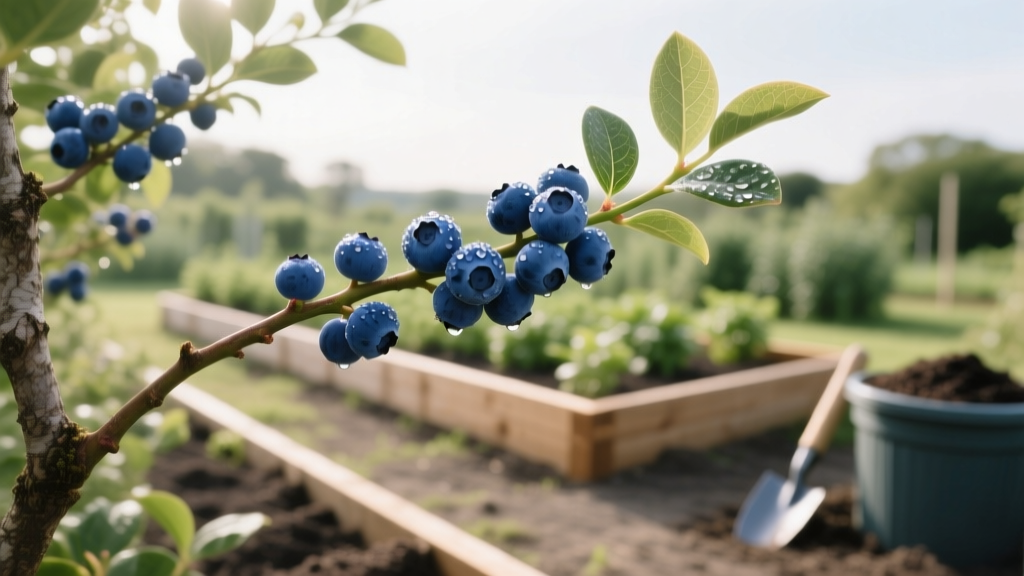
How to Nourish Blueberries Naturally
The first time most gardeners realize blueberries are “different” is when the plant looks healthy enough—green leaves, decent growth—yet the berries are tiny, tart, or never really sweeten. Or worse: the leaves start paling between the veins (classic chlorosis), and you’re left wondering why your neighbor’s bushes are loaded while yours sulk. Here’s the surprising truth I see over and over: blueberries often fail not because they need more fertilizer, but because their roots can’t access what’s already in the soil. Get the soil chemistry and moisture rhythm right, and “feeding” becomes simpler, gentler, and far more natural.
This guide focuses on real, home-garden tactics: what to add (and what to stop adding), when to water, how to mulch like a pro, and how to read your plant’s symptoms before you reach for a bag of something. Blueberries reward steady, boring consistency—especially with acidity, organic matter, and even moisture.
Start with the blueberry root reality (it changes everything)
Blueberries have fine, hair-like roots with very few root hairs. That means they’re not great at scavenging nutrients or water from inconsistent soil. They also rely heavily on fungal partners (mycorrhizae) in a living soil. If the soil pH is too high, iron and other micronutrients become unavailable, even if they’re present. That’s why “natural nourishment” for blueberries is less about dumping nutrients and more about building the conditions where nutrients stay plant-available.
Most home success comes from holding three targets steady:
- Soil pH: 4.5–5.5 (sweet spot for most cultivars)
- Consistent moisture: damp like a wrung-out sponge, not soggy
- Organic matter + mulch: to buffer moisture, feed microbes, and protect roots
As North Carolina State University Extension notes, blueberries perform best in acidic soils, generally around pH 4.5–5.5 (NC State Extension Publication, 2023). If your pH is 6.5 and you “feed” harder, you usually just get greener weeds and a frustrated blueberry.
Soil: the natural foundation (pH, organic matter, drainage)
Test first: the 20-minute step that saves years
Before you add anything, do a soil test. If you can, use a lab test (county extension or reputable lab). If not, use a decent at-home pH test as a starting point. Blueberries are one of the few crops where pH is not optional.
Numbers to aim for:
- pH: 4.5–5.5
- Organic matter: ideally 5%+ in the root zone
- Drainage test: a 12-inch-deep hole should drain within 2–4 hours after filling with water (rough rule of thumb)
Natural ways to acidify (and what actually works)
If your soil pH is above 5.5, you’ll likely need a real acidifying agent. “Natural” does not mean “weak.” The most reliable tool for home gardeners is elemental sulfur, because soil microbes convert it to sulfuric acid over time. This is a chemistry-and-microbe process, not instant magic.
Practical timing: Apply sulfur in fall or early spring so it has time to work before peak summer growth. Retest in 8–12 weeks (warm soils change faster than cold soils).
Common natural acidifiers, compared:
| Method | How fast it changes pH | Reliability | Best use | Notes |
|---|---|---|---|---|
| Elemental sulfur | Moderate (weeks to months) | High | Correcting high pH soils long-term | Needs microbial activity; avoid over-application |
| Pine bark fines / pine needles | Slow (months to years) | Medium | Maintaining acidity + improving structure | Great mulch/soil builder; not a quick fix alone |
| Coffee grounds | Very slow/minor | Low | Small additions to compost/mulch | Often near-neutral after brewing; don’t rely on it for pH correction |
| Vinegar in irrigation water | Fast but temporary | Low | Emergency short-term tweak in containers | Easy to overdo; can harm soil life; not a long-term soil strategy |
For gardeners who like hard numbers: elemental sulfur is the most consistent lever you can pull, but the amount needed depends on soil texture and starting pH. Sandy soils change faster; clay soils take more sulfur. Follow soil test recommendations whenever possible.
“Soil pH drives nutrient availability. With blueberries, pH management is often the difference between a thriving planting and chronic chlorosis.” — University Extension guidance (University of Minnesota Extension, 2022)
Build the “blueberry bed” the way pros do
If you’re planting in ground and your native soil is heavy clay or alkaline, don’t fight it forever. Build a dedicated blueberry zone.
Step-by-step bed recipe (in-ground):
- Create a wide planting area: 3–4 feet across per plant (blueberries like room).
- Mix in pine bark fines or partially composted conifer bark to improve structure.
- Add acidic organic matter: well-aged leaf mold, composted sawdust (only if fully composted), or peat (use thoughtfully; pine bark is a more renewable option).
- Plant slightly high: set the root ball so the crown sits 1–2 inches above surrounding grade to prevent waterlogging.
- Mulch immediately (details below).
Scenario #1 (heavy clay yard): If you have water sitting after rain, blueberries will struggle no matter how “organic” your fertilizer is. In clay, I’ve seen plants yellow, stall, then die back by mid-summer because roots suffocated. The fix is not more feeding—it’s raised planting, bark-amended soil, and careful watering.
Watering: the make-or-break routine
Blueberries want consistent moisture, especially from bloom through harvest. Drought stress at the wrong time shrinks berries and reduces next year’s flower buds. Overwatering, on the other hand, invites root rot and weak growth.
How much water blueberries actually need
A solid home-garden target is 1–2 inches of water per week during the growing season (rain included). During fruiting or hot spells above 85°F, many gardens need closer to the upper end, especially on sandy soil.
Simple ways to measure:
- Place a straight-sided tuna can or rain gauge under the canopy to track irrigation output.
- Check soil moisture by hand: at 2–4 inches deep it should feel cool and slightly moist, not powdery and not muddy.
Best method: drip or soaker under mulch
Overhead watering can work, but it wastes water and increases leaf wetness (more disease pressure). Drip lines or soaker hoses beneath mulch keep the root zone steady.
Practical schedule (starting point):
- Cool spring: 1–2 deep waterings weekly
- Hot summer: 2–4 waterings weekly depending on soil
- Containers: often every 1–2 days in hot weather
Scenario #2 (containers on a sunny patio): Container blueberries fail fast when the pot dries out once, then gets flooded. In a 10–15 gallon pot, moisture swings are dramatic. The most “natural” thing you can do is control that swing: use a chunky acidic potting mix, mulch the surface, and water thoroughly until you see drainage—then don’t water again until the top inch is just starting to dry.
Light and temperature: fruit production depends on it
Blueberries are sun-lovers. You can keep a plant alive in partial shade, but you won’t “nourish” it into heavy fruiting without enough light.
- Full sun target: at least 6–8 hours of direct sun daily
- Heat note: in regions with intense afternoon heat (regularly above 90°F), light shade after 3 p.m. can reduce stress—if morning sun is strong.
Scenario #3 (edge-of-woods garden): I’ve worked with gardeners who swear they “feed and water,” yet yields stay low. Then we look up: two hours of sun, maybe three. The fix is either pruning overhead trees (if possible) or relocating the blueberry. Fertility won’t replace sunlight.
Feeding blueberries naturally (without overdoing it)
Natural feeding is about slow, steady nutrition and supporting soil biology. Blueberries are light feeders compared to many fruit crops, and they’re sensitive to salts and over-fertilization.
Mulch: your most important “fertilizer”
If you only do one thing, do mulch. A 2–4 inch layer keeps roots cool, holds moisture, and breaks down into gentle nutrition.
Best mulch choices:
- Pine bark nuggets/fines (my top pick for long-term structure)
- Pine needles (excellent as a topper; slow to break down)
- Wood chips (best if partially aged; keep off the crown)
Mulch rules:
- Keep mulch 2–3 inches away from the base of the stems to prevent rot and vole damage.
- Refresh yearly; blueberries like a “forest floor” feel.
Natural nutrient sources that play nicely with blueberries
If your pH is right and mulch is in place, many gardens only need light supplemental feeding. When you do feed, aim for gentle nitrogen and avoid high-salt products.
Good natural options:
- Composted pine bark + leaf mold: slow nutrition and biology
- Fish emulsion: quick, mild nitrogen (use lightly)
- Blood meal or feather meal: stronger nitrogen—use sparingly
- Worm castings: mild, microbe-rich top dressing (best in containers)
Timing that works in real gardens:
- Early spring: first feeding when buds swell
- Late spring: optional second light feeding after bloom
- Stop by mid-summer: avoid pushing tender growth late; in many climates, stop around late June to mid-July
Michigan State University Extension emphasizes soil pH management and careful fertilization practices for blueberries, noting that improper soil conditions can lead to nutrient issues even when fertilizer is applied (MSU Extension Bulletin, 2020).
Comparison: compost-only vs targeted natural feeding (what changes in the plant)
Here’s what I typically see when gardeners compare two “natural” approaches over a season. These are practical outcomes, not lab promises:
| Approach | What you do | Likely plant response | Best for |
|---|---|---|---|
| Compost-only topdressing | 1–2 inches of compost in spring + mulch | Steady growth, but may be pale if pH is off or N is low | Established plantings with correct pH |
| Targeted natural N + mulch | Light fish emulsion or meal-based N in spring + mulch | Greener leaves, stronger new canes, better berry sizing (if water is consistent) | Young plants, sandy soils, heavy fruiting years |
Notice the “if water is consistent” part. Feeding without steady moisture often gives you a flush of soft growth that wilts quickly and invites pests.
Common problems (and what they’re really telling you)
Blueberries communicate clearly once you know the signals. The key is to match symptoms to root causes—pH, moisture, and timing are frequent culprits.
Troubleshooting: yellow leaves with green veins (chlorosis)
Symptoms: New leaves turn pale yellow while veins stay greener; growth slows; berry set may be poor.
Most common causes:
- Soil pH too high (iron becomes unavailable)
- Roots stressed from waterlogging
- Cold, wet spring soils slowing nutrient uptake
What to do (in order):
- Test soil pH near the root zone (not just a random yard spot).
- Improve drainage and stop frequent shallow watering.
- If pH is high, use elemental sulfur per test guidance; mulch with pine bark.
- For a short-term rescue in containers, consider a one-time acidified watering, but treat it as a bridge—not the plan.
Troubleshooting: leaf edges brown or scorched
Symptoms: Crispy leaf margins, especially during hot weather.
Likely causes:
- Drought stress (most common)
- Salt buildup from over-fertilizing or hard water
- Root damage from waterlogged soil followed by heat
Fix:
- Switch to deep, consistent irrigation; aim for 1–2 inches/week.
- Mulch 2–4 inches to stabilize soil temperature and moisture.
- If in containers and you suspect salt buildup, flush the pot with clean water until it drains freely for several minutes, then let it drain completely.
Troubleshooting: lots of leaves, few berries
Symptoms: Lush growth but minimal fruit; or heavy bloom but poor set.
Common causes:
- Not enough sun (under 6 hours)
- Too much nitrogen early (encourages leaves over flowers)
- Poor pollination (single variety, bad weather during bloom)
- Pruning mistakes (removing too much fruiting wood)
Solutions that work:
- Increase sun exposure if possible; relocate if needed.
- Go lighter on nitrogen; prioritize mulch and pH correction.
- Plant at least two compatible varieties for better pollination and yields.
- Prune in late winter: remove the oldest canes gradually, not all at once.
Troubleshooting: berries shrivel or stay small
Symptoms: Berries form, then stall; some shrivel before ripening.
Causes:
- Inconsistent watering during fruit fill
- Too much competition from grass/weeds at the base
- Root zone too hot and dry (no mulch)
Fix: Weed a 2–3 foot diameter circle around each plant, mulch it well, and water consistently. If you do nothing else during fruiting season, keep the moisture steady. That’s how you get plump berries.
Natural nourishment through seasons (what to do and when)
This is the yearly rhythm that keeps blueberries productive without heavy-handed inputs.
Late winter to early spring
- Prune: remove dead wood and 1–2 of the oldest canes if the bush is mature.
- Check mulch depth; refresh to 2–4 inches.
- First light feeding at bud swell (especially on young plants).
Spring bloom to early summer
- Water consistently—don’t let plants cycle from dry to drenched.
- Watch for chlorosis on new growth; test pH if it appears.
- Optional second light feeding after bloom if growth is pale and slow.
Mid-summer
- Stop nitrogen by late June to mid-July in many climates.
- Maintain 1–2 inches of water per week; more during heat.
- Keep mulch intact; this is when it earns its keep.
Fall
- Soil test if you’re correcting pH.
- Apply elemental sulfur (if needed) to adjust pH for next year.
- Top up mulch going into winter for root protection.
Three real-world fixes I’d bet on
Case A: The “I added compost and it got worse” bed. This often happens when compost raises pH over time (some composts are neutral to alkaline), or when compost is added without addressing drainage. Fix: test pH, switch to pine bark-based mulch, and correct pH with sulfur if needed. Compost is still useful—just don’t let it be the only lever you pull.
Case B: The “chlorosis every summer” plant. If yellowing returns each year in early summer, look at watering and pH. Many gardeners water shallowly every day, keeping roots near the surface where heat spikes and salts accumulate. Fix: deeper, less frequent watering (still consistent), and a serious mulch layer. Retest pH; don’t guess.
Case C: The “monster bush, no berries” situation. Usually too much shade, too much nitrogen, or pruning that removes fruiting wood. Fix: increase light to at least 6–8 hours, go gentle on feeding, and prune with a light hand—remove only the oldest canes and crowded interior stems.
Common mistakes that sabotage “natural” blueberry care
- Using ashes or lime anywhere near blueberries: both raise pH fast.
- Letting turf grow up to the crown: grass steals water and nutrients.
- Fertilizing to solve a pH problem: it’s like turning up the radio to fix a flat tire.
- Skipping mulch: without it, you’ll fight water stress and weeds all season.
- Overwatering heavy soils: blueberries hate “wet feet.”
If you take one master-gardener habit from all this, let it be this: measure and observe. Check pH, track how much water you apply (in inches, not guesswork), and watch the newest leaves for early signals. When blueberries are nourished naturally—acidic soil, steady moisture, living mulch—they stop acting finicky and start acting like the resilient shrubs they’re meant to be.
Once you’ve got the pH in range, mulch in place, and watering dialed to that steady 1–2 inches per week, you’ll find you don’t need a complicated fertilizer program. Most seasons, your “feeding” becomes topping up mulch, keeping weeds back, and giving a light spring boost only when the plant actually asks for it. That’s the kind of natural care blueberries respond to year after year.