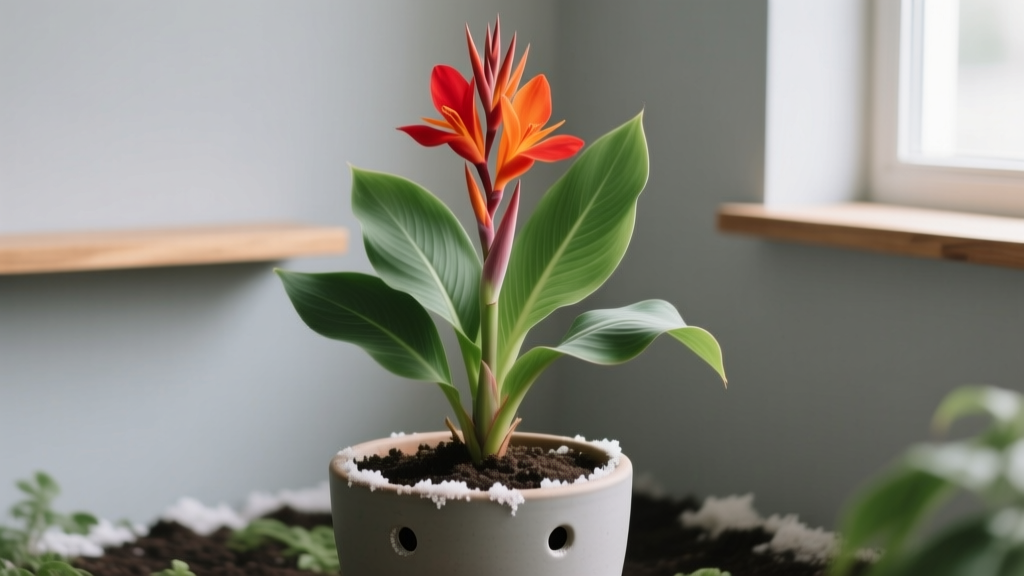
Preventing Salt Buildup in Canna Lilies Pots
You water your potted canna lilies faithfully, the leaves look great for a while, and then—almost overnight—the tips brown, the leaf edges crisp, and the blooms get smaller. You might blame heat or pests, but a surprisingly common culprit is salt buildup from fertilizer and mineral-heavy water. It’s sneaky because it accumulates gradually, then shows up as “mystery stress” right when your cannas should be hitting their stride.
I’ve seen this play out in three very real situations: a patio gardener using softened tap water, a container grower feeding weekly with a high-salt synthetic fertilizer, and a homeowner overwintering cannas indoors who “sips” water all winter. Different routines, same end result—salts concentrate in the pot and cannas protest.
The good news: salt buildup is preventable and fixable. The trick is to treat containers like a closed system. What goes in (fertilizer salts, dissolved minerals) must come out (through leaching and drainage), or it stays behind and rises to levels that stress roots.
What salt buildup looks like in potted cannas
Salts don’t always show up as a white crust—though that’s the obvious sign. More often, you see plant symptoms first. Cannas are heavy feeders, so gardeners tend to fertilize generously, and that’s where trouble starts if watering and drainage don’t flush the excess.
Common symptoms
- Brown leaf tips and scorched edges, especially on newer leaves
- Slow growth even in warm weather (cannas love heat)
- Wilting despite moist soil (salts make it harder for roots to pull in water)
- White crust on soil surface or pot rim
- Yellowing between veins that doesn’t improve after feeding (because the issue isn’t “lack of fertilizer”)
One practical note: if the plant looks thirsty right after you fertilize, that’s a classic high-salt clue. Fertilizer salts can cause “physiological drought”—water is present, but roots can’t use it efficiently.
“Excess soluble salts in container media can reduce water uptake and cause leaf burn symptoms even when moisture is adequate.” — University of Florida IFAS Extension publication on soluble salts in container production (2023)
Watering practices that prevent salt buildup
Watering is the #1 lever you control in a pot. The goal is to water deeply enough that you flush salts out of the root zone, not just wet the top few inches.
Use the “10–20% runoff” rule
Most seasons, I aim for 10–20% drainage runoff each time I water. That means if you apply 1 gallon of water, you want roughly 0.1–0.2 gallons to drain out the bottom. This carries dissolved salts out with it.
How often? In peak summer growth, cannas in containers often need water every 1–2 days, especially in full sun and wind. In cooler weather, it may be every 3–5 days. Frequency matters less than depth and drainage.
Step-by-step: watering cannas in pots to minimize salts
- Check moisture 2–3 inches down. If it’s dry at that depth, water.
- Water slowly until you see steady drainage from the bottom.
- Pause 2–3 minutes, then water again briefly (this “double soak” improves flushing).
- Empty saucers after 10–15 minutes. Don’t let the pot sit in runoff.
Leach (flush) the pot on a schedule
Even with good watering habits, salts can creep up during hot weather and frequent feeding. A planned leach keeps you ahead of it.
- Routine leach: Every 4–6 weeks during active growth (late spring through summer).
- How much water: Run a volume of water equal to 2–3× the container volume through the pot. Example: for a 5-gallon pot, apply 10–15 gallons slowly so it drains through.
- Best timing: Morning, when the plant can recover quickly and you’re not cooking wet roots in late-day heat.
This aligns with standard container leaching guidance used in horticulture to reduce soluble salts. North Carolina State Extension notes that allowing leachate (drainage) is key to preventing fertilizer salt accumulation in containers (NC State Extension, 2022).
Scenario #1: You use softened water (and cannas decline mysteriously)
If your outdoor spigot is tied into a water softener, you may be watering with higher sodium. Sodium doesn’t help plants, and it contributes to salt stress. In this case:
- Switch to an unsoftened tap line, rainwater, or filtered water.
- Do a 3× container-volume leach once to reset the pot.
- Top-dress with 1 inch of fresh potting mix after leaching if the surface crust persists.
Soil and container choices that resist salt accumulation
A canna’s potting mix isn’t just “dirt.” It’s your buffer against salt spikes. Dense mixes hold salts tighter and drain poorly; airy mixes flush better and protect roots.
Choose a container mix that drains fast but holds moisture
Look for a peat/coir-based potting mix with perlite or bark. Avoid using straight garden soil in pots—it compacts and encourages salt concentration because water doesn’t move evenly.
A practical target: after watering, the pot should drain freely and not stay waterlogged for hours. Cannas love moisture, but they hate stagnant, salty root zones.
Pot size matters more than people think
Small pots concentrate salts quickly. For most cannas, I recommend:
- Minimum pot size: 12–16 inches diameter for compact varieties
- Better for tall varieties: 18–24 inches diameter or 10–15 gallons
Bigger soil volume dilutes salts and stabilizes moisture—two huge wins.
Don’t block drainage holes
This sounds basic, but it’s a common mistake. Pebbles in the bottom don’t “improve drainage” in containers; they reduce soil volume and can raise the perched water table. Use a pot with multiple holes and a simple mesh screen if you need to keep mix from washing out.
Scenario #2: The pot sits in a saucer on a balcony
Balcony growers love saucers to protect surfaces, but if runoff sits there, salts wick right back up. The fix is routine:
- Water until you get runoff, then empty the saucer after 10–15 minutes.
- If you can’t access the saucer easily, switch to pot risers and a larger catch tray you can drain.
Light and heat: how they influence salt stress
Salt problems get worse when the plant is already under stress—especially heat and intense sun. Cannas love bright light, but container roots can overheat and dry quickly, which concentrates salts.
Ideal light
Most cannas perform best with 6–8 hours of direct sun. In very hot climates, afternoon shade can reduce leaf scorch and lower water demand—making salt management easier.
Root-zone temperature matters
Dark pots in full sun can push root temperatures into the stress zone. If your pot feels hot to the touch by mid-afternoon, consider:
- Using a light-colored pot or placing the pot inside a larger decorative cachepot (with airflow and drainage).
- Shading the container (not the plant) with a small screen.
- Mulching the surface with 1 inch of bark fines to reduce evaporation and crusting.
Feeding cannas without creating a salt problem
Cannas are hungry plants. The goal isn’t to starve them—it’s to feed in a way that doesn’t spike soluble salts.
Know what “salts” actually means
Most fertilizers are salts in the chemistry sense (water-soluble ions). That’s normal. Problems happen when fertilizer concentration is too high, applied too often, or not flushed with proper watering.
Best feeding rhythm for potted cannas
- Slow-release option: Incorporate a controlled-release fertilizer at label rate, typically lasting 8–12 weeks in warm weather.
- Liquid option: Feed at 1/4 to 1/2 strength every 7–14 days during active growth, and leach monthly.
If you’re already seeing leaf-tip burn, pause feeding for 2 weeks and focus on flushing and consistent moisture.
Comparison table: feeding methods and salt risk (with real-world numbers)
| Method | Example schedule | Typical salt buildup risk | Leaching recommendation | Best use case |
|---|---|---|---|---|
| Full-strength liquid feed | Every 7 days at label rate | High (fast salt accumulation in pots) | Every 3–4 weeks; 2–3× pot volume | Only if you’re very consistent with runoff watering |
| Reduced-strength liquid feed | Every 7–14 days at 1/4–1/2 strength | Medium | Every 4–6 weeks; 2× pot volume | My go-to for most patio cannas |
| Controlled-release fertilizer | Once every 8–12 weeks (per label) | Low to medium (depends on heat and watering) | Every 6 weeks; 2× pot volume | Busy gardeners; steadier growth |
| Organic top-dress (compost + mild organic fertilizer) | 1/2–1 inch compost + light feed monthly | Low (usually gentler, but not “salt-free”) | As needed; ensure 10–20% runoff watering | Gardeners who prefer slower, steadier feeding |
Scenario #3: You fertilize “a little every time” and the plant still looks hungry
This is a classic trap. If salts are high, the plant can’t take up water and nutrients efficiently, so it looks underfed. Adding more fertilizer makes it worse. Instead:
- Leach with 2–3× container volume.
- Resume feeding at 1/4 strength after new growth looks normal.
- Make sure each watering produces 10–20% runoff.
Utah State University Extension notes that excess fertilizer in containers is a common cause of soluble salt injury and recommends leaching to correct it (USU Extension, 2020).
Common salt-related problems in potted cannas (and what to do)
Here’s the troubleshooting section I wish every container gardener had taped to the potting bench. The fastest fix comes from matching the symptom to the cause, then acting decisively.
Symptom: Brown leaf tips and edges (especially after fertilizing)
- Likely cause: Fertilizer salt burn and/or uneven watering
- Fix now:
- Flush the pot with 2× container volume of water.
- Skip fertilizer for 10–14 days.
- Switch to 1/4–1/2 strength feeding going forward.
- Prevent repeat: Water to 10–20% runoff consistently; leach every 4–6 weeks.
Symptom: White crust on soil surface or pot rim
- Likely cause: Evaporation leaving minerals behind (hard water) and/or fertilizer residue
- Fix now:
- Scrape off the top 1/2 inch of crusted mix and discard.
- Replace with fresh potting mix (not compost alone).
- Do a slow leach with 2–3× container volume.
- Prevent repeat: Use rainwater when possible; mulch lightly to reduce evaporation.
Symptom: Wilting even when soil is damp
- Likely cause: High soluble salts causing “physiological drought,” or roots damaged by repeated salt stress
- Fix now:
- Move the pot to bright shade for 2–3 days.
- Leach thoroughly.
- Check drainage holes—make sure water exits freely.
- Next step: If wilting persists, slide the root ball out and inspect. Brown, mushy roots indicate rot (often from poor drainage compounded by salts). Trim rot and repot in fresh mix.
Symptom: Small leaves, stunted growth, fewer blooms
- Likely cause: Salt accumulation, root restriction, or not enough light
- Fix now:
- Confirm light: aim for 6–8 hours sun.
- Check pot size: upgrade to 10–15 gallons for tall varieties.
- Leach, then feed gently (1/4–1/2 strength).
How to “reset” a salty pot (without losing the plant)
If you suspect significant salt buildup—crust, repeated tip burn, stalled growth—the quickest path back is a reset. You have two choices: leach in place or repot. I’ll pick based on severity and time of year.
Option A: Deep leach (fastest, least disruptive)
- Use 2–3× container volume of water.
- Apply slowly over 20–40 minutes so the mix fully saturates and flushes.
- Do it outdoors where runoff won’t stain.
Option B: Repot (best when crust is heavy or drainage is poor)
- Remove the plant and gently loosen the outer 1–2 inches of the root ball.
- Trim any dead roots.
- Replant in fresh potting mix in a clean pot with open drainage holes.
- Water in thoroughly to runoff, then wait 7 days before feeding.
If you repot mid-summer, provide bright shade for 48 hours to reduce transplant stress.
Seasonal salt management: what changes from spring to winter
Salt control isn’t a one-time fix. It’s seasonal maintenance—especially with cannas, which swing from explosive summer growth to winter rest.
Spring (wake-up and early growth)
- Start feeding only when you see strong new growth (usually once nights are reliably above 55°F).
- Use a gentle fertilizer rate early; salts are more damaging when roots are just getting started.
Summer (peak growth and highest salt risk)
- Water deeply and often enough to get 10–20% runoff.
- Leach every 4–6 weeks, more often if you feed frequently or use hard water.
Fall and overwintering (where people accidentally concentrate salts)
If you overwinter cannas in pots indoors or in a garage, the common mistake is tiny sips of water that never flush. That concentrates salts all winter.
- If storing dormant rhizomes, reduce watering sharply and stop fertilizing entirely.
- If keeping them as houseplants, water thoroughly when needed (still allowing drainage), and leach lightly every 6–8 weeks.
As a rule: no fertilizer during low-light winter conditions. It’s not used efficiently and salts accumulate faster.
Quick checklist: your salt-buildup prevention routine
- Water to 10–20% runoff most of the time
- Empty saucers after 10–15 minutes
- Leach with 2–3× container volume every 4–6 weeks in summer
- Use 1/4–1/2 strength liquid fertilizer or controlled-release per label
- Use bigger pots (10–15 gallons for tall cannas) and a fast-draining mix
- Avoid softened water; consider rainwater if crusting is recurring
Once you get the hang of it, salt management becomes part of the rhythm: feed, water to runoff, leach on schedule, and keep the root zone breathing. Cannas reward that consistency with big, lush leaves and flowers that look like they belong at a tropical resort—right there on your patio.
Sources: University of Florida IFAS Extension publication on soluble salts in container media (2023); North Carolina State Extension guidance on container watering and leaching fraction to prevent fertilizer salt buildup (2022); Utah State University Extension report on soluble salts injury and leaching in container plants (2020).