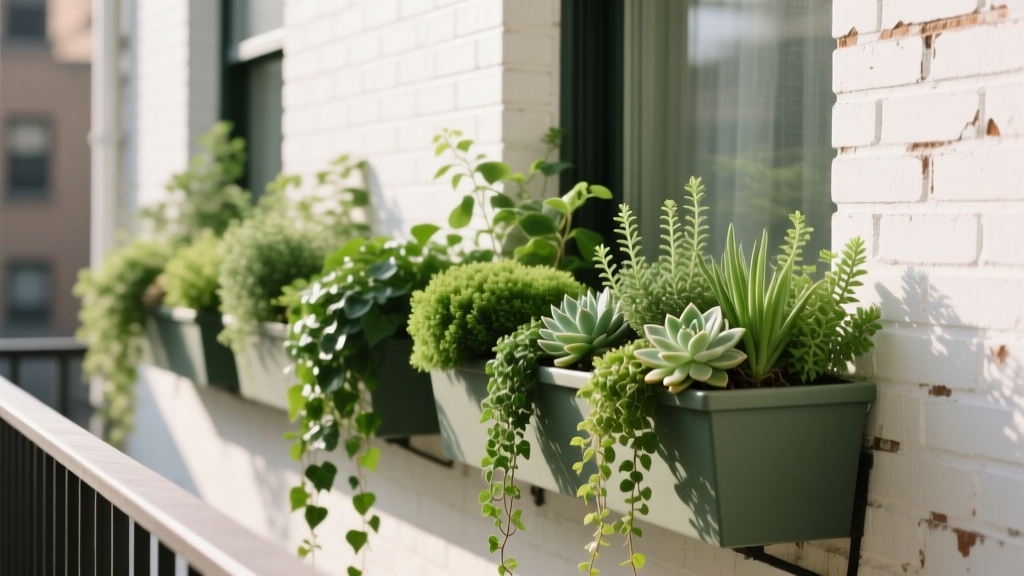
Sea of Green Method for Window Boxes
You set up a window box in May. Two weeks later it’s doing great—then a hot weekend hits, the middle dries out, the edges stay soggy, and by mid-June you’ve got leggy plants, yellow leaves, and a box that looks patchy from the street. The frustrating part? You didn’t “forget” to garden—you just ran into the classic window-box problem: tiny soil volume, big weather exposure, and plants that don’t knit together fast enough to shade the soil.
The Sea of Green (SOG) method fixes that by borrowing a simple idea from intensive planting: instead of a few bigger plants spaced far apart, you plant many smaller plants closer together to create a living canopy quickly. In a window box, that canopy shades the soil, reduces evaporation, and gives you a thick, finished look weeks earlier—if (and this is the important part) you adjust watering, soil, and feeding to match the higher plant density.
Below is how I run SOG in window boxes in real homes—windy second-story sills, baking south-facing brick, and the “I’m away Friday to Sunday” schedule—without turning your box into a high-maintenance science project.
What “Sea of Green” Means in a Window Box
In window boxes, SOG means “tight spacing + fast canopy + planned inputs.” You’re aiming for a continuous carpet of foliage and flowers that covers the soil surface by about week 3–5 after planting (depending on temperature and plant choice). That canopy is your secret weapon: it keeps roots cooler, reduces splash-back disease, and makes the whole box look intentional.
Window box size and spacing targets (numbers that matter)
Use the box length to decide how many plants you need. For a typical 24-inch (61 cm) window box, SOG usually means 6–10 plants total, depending on species and growth habit. For a 36-inch (91 cm) box, think 10–14 plants.
- Small, fast fillers (alyssum, bacopa, lobelia, calibrachoa): 4–6 inches apart
- Medium mounding plants (petunia, verbena, impatiens in shade): 6–8 inches apart
- Upright accents (salvia, compact coleus, dwarf grasses): 8–10 inches apart, and use fewer of them
A helpful reality check: most nursery tags assume garden-bed spacing. In window boxes, you can tighten spacing because you’re willing to feed and water more deliberately.
Soil: The Make-or-Break Factor in Dense Window Boxes
Regular garden soil compacts in a narrow box and turns into a brick. With SOG, you’re also packing in more roots, so you need a potting mix that holds moisture but still breathes.
The potting mix recipe I trust
Start with a high-quality potting mix labeled for containers (not raised beds). Then tweak it for window-box reality:
- 80% container potting mix
- 20% extra drainage/aeration (perlite or fine pine bark)
- Optional: a handful of compost per box for biology (don’t exceed 10% of total volume—too much compost can hold water and shrink over the season)
Why not straight compost? In small containers it can swing wet/dry too hard and contributes to settling. A settled box exposes roots, and exposed roots dry out fast.
Depth and drainage
A window box should be at least 6–8 inches deep for mixed plantings; 8–10 inches is noticeably more forgiving in summer. Make sure there are drainage holes. If there aren’t any, drill 1/4-inch holes every 4–6 inches along the bottom.
Research on container watering emphasizes that drainage and air-filled pore space are crucial for avoiding root stress in pots (University of Illinois Extension publication on container gardening, 2022).
Light: Matching Plants to a Hot, Windy Microclimate
Window boxes aren’t “normal sun.” They’re often sun + reflected heat + wind. Before you pick plants, track your window’s direct sun.
- Full sun: 6+ hours direct sun (south/west exposures often behave like 7–9 hours in summer)
- Part sun: 3–6 hours
- Shade: under 3 hours (north exposure or blocked by buildings)
Also watch night temperatures early in the season. Many warm-season annuals sulk if nights are consistently below 50°F (10°C). If you plant too early, your SOG spacing backfires—plants stall, and the canopy never closes.
“In container plantings, the biggest performance gains come from matching plant choice to exposure and watering capacity—more than any fertilizer trick.” — University of Minnesota Extension, container gardening guidance (2023)
Practical plant mixes that SOG well
- Hot sun box: calibrachoa + verbena + creeping zinnia (Sanvitalia) + one upright salvia
- Part sun box: petunias + bacopa + compact coleus (if morning sun/afternoon shade)
- Shade box: impatiens + lobelia + bacopa (or torenia) for spill
Watering: Keeping a Dense Canopy Alive Without Rotting It
SOG window boxes dry out faster because there are more leaves transpiring and more roots drinking. But they can also stay wet in the center if the canopy blocks rainfall and you only “sip” water from a small can. The fix is a consistent method.
How much water is “enough”?
As a starting point, a densely planted 24-inch box in summer typically needs 0.5–1.0 gallon (2–4 liters) per watering. In a heat wave (90°F / 32°C+ with wind), it may need that daily.
Your goal is to water until you see steady drainage from the bottom for 5–10 seconds. That flushes salts and ensures the whole root zone is wet, not just the top inch.
My step-by-step watering routine (takes 2 minutes)
- Check moisture with a finger: push 2 inches down near the middle of the box.
- If it’s dry at 2 inches, water thoroughly until it drains.
- Wait 60 seconds, then water again briefly (a “second pass” helps re-wet peat-based mixes that dry out).
- On very hot days, water early (before 10 a.m.) to reduce stress.
Three real-world watering scenarios
Scenario 1: South-facing brick wall, second story. Expect faster dry-down from reflected heat. In July, plan on daily watering during hot spells, and consider a drip line on a timer set for 5–8 minutes early morning.
Scenario 2: You’re gone Friday night to Sunday. SOG can still work, but you need help: add a 1–2 inch mulch layer (fine bark or cocoa hull alternatives safe for pets), install a simple drip kit, or switch to more drought-tolerant plants (calibrachoa, verbena) rather than thirsty impatiens.
Scenario 3: Covered porch window box that never gets rain. You must be the rain. Water volume matters more than frequency—deep soak every time so roots grow downward instead of hovering near the surface.
Feeding: Dense Planting Needs Predictable Nutrition
A crowded box looks lush because it’s converting water and nutrients into growth quickly. That means you can’t rely on “potting mix with fertilizer” past the first month or so.
Two feeding systems that work
System A: Slow-release + occasional liquid.
- Mix in a slow-release fertilizer at planting (follow label rate; as a ballpark, many products land around 1–2 tablespoons per gallon of potting mix).
- Supplement with a liquid feed every 2–3 weeks once plants start flowering heavily.
System B: Weekly weak liquid feed.
- Skip slow-release and use a water-soluble fertilizer at 1/4 to 1/2 strength every 7–10 days.
- This is great if you’re already out there watering often and want steady control.
Salt buildup is a real issue in containers. Purdue Extension notes that soluble salts can accumulate in potting media and harm roots; periodic leaching (watering enough to drain) helps manage it (Purdue Extension container media and soluble salts guidance, 2020).
Comparison analysis: SOG vs traditional spacing in a 24-inch box
| Factor (24-inch window box) | Sea of Green (8–10 plants) | Traditional spacing (4–5 plants) |
|---|---|---|
| Time to “full” look (canopy closes) | ~3–5 weeks (in warm weather) | ~6–9 weeks |
| Peak summer watering | Often daily at 90°F/32°C | Every 1–2 days at 90°F/32°C |
| Fertilizer demand | Higher; weekly or biweekly support | Moderate; every 2–3 weeks |
| Weed pressure | Lower once canopy forms | Higher (more exposed soil) |
| Risk profile | Higher risk if watering is inconsistent | More forgiving, slower payoff |
That’s the honest trade: SOG gives faster beauty and better shading, but it’s less forgiving when you miss watering.
Common Problems in Sea of Green Window Boxes (and What to Do)
When a dense box struggles, it usually shows you the problem in a pattern—edges, center, newest leaves, oldest leaves. Use those clues before you reach for a random spray or more fertilizer.
Troubleshooting: symptoms and solutions
-
Symptom: Wilting at midday, but soil is damp.
Likely cause: Root stress from heat or early root rot (wet mix + warm temps).
Fix: Water early morning only; ensure drainage holes are open; remove saucers; thin the densest area by 1–2 plants if needed; add shade for 3–5 days during extreme heat. -
Symptom: Leaves yellowing from the bottom up, slow growth.
Likely cause: Nitrogen depletion (common after week 4–6).
Fix: Start weekly feeding at 1/4 strength for 3 weeks, then reassess; also check that you’re watering deeply (dry cycles can mimic deficiency). -
Symptom: Crispy brown leaf edges, especially on windy days.
Likely cause: Underwatering or salt buildup (both “burn” edges).
Fix: Do one thorough leaching watering (drain freely for 30–60 seconds total); then keep a steadier schedule; avoid over-fertilizing. -
Symptom: Patchy growth—some plants thriving, others stalling.
Likely cause: Uneven watering (water hits the front edge only) or root competition from one aggressive plant.
Fix: Water slowly across the whole surface; rotate plants in future designs (don’t put vigorous petunias next to delicate lobelia); prune the bully plant by 1/3 to rebalance. -
Symptom: Mildew (white powder) on leaves in late summer.
Likely cause: Crowded airflow + warm days/cool nights, common on petunias and verbena.
Fix: Shear affected plants back by 25–40%; remove worst leaves; water the soil (not foliage) in the morning; consider switching to mildew-tolerant varieties next season.
Insects: what you’ll actually see in window boxes
Dense plantings hide pests. Make it a habit to check under leaves once a week.
- Aphids: Sticky leaves, clusters on soft tips. Spray with a strong water jet in the morning; repeat every 3 days for 2 weeks.
- Spider mites: Fine webbing, stippled leaves in hot/dry spots. Increase humidity by watering earlier and reducing drought stress; use insecticidal soap, 2 applications spaced 5–7 days apart.
- Fungus gnats: Tiny flies when you water. Let the top inch dry slightly between waterings; use sticky traps; avoid constantly wet soil.
How to Plant a Sea of Green Window Box (Step-by-Step)
If you want the canopy to knit fast without collapsing into a tangled mess, planting technique matters.
- Pre-moisten your potting mix so it’s evenly damp (not dripping). Dry mix repels water and creates dry pockets.
- Add mix to the box, leaving 1 inch of headspace at the top so water doesn’t run off.
- Arrange plants tight before planting—aim for your planned spacing (often 4–8 inches apart).
- Tease roots lightly if they’re circling; in dense planting, circling roots become fast failures.
- Plant so the top of each root ball sits about 1/2 inch below the final soil surface.
- Water until it drains, wait 60 seconds, then water again briefly.
- For the first week, protect from harsh wind if possible. The fastest canopy forms when plants never stall.
Pinching and pruning: the secret to a true “carpet”
SOG isn’t just crowding—it’s managing shape. At about 10–14 days after planting (once roots grab), pinch or snip back the fastest growers by 1–2 inches. This forces branching and helps the canopy fill evenly.
- Pinch petunias, calibrachoa, verbena for more stems.
- Don’t pinch slow starters (lobelia, bacopa) too hard early—let them establish.
Seasonal Care: What Changes From Spring to Late Summer
Most window boxes look best in June, then fade in August because nobody adjusts care as the plants mature.
Spring (weeks 1–4)
- Water to establish roots; avoid soggy soil in cool nights below 50°F (10°C).
- Start light feeding once you see new growth (often week 2).
Early summer (weeks 5–8)
- Increase feeding as flowering ramps up (weekly weak feed works well).
- Deadhead or shear bloomers to keep them cycling.
Late summer (weeks 9+)
- Plan one “reset” trim: shear back by 25–40%, feed, water deeply, and you’ll often get a strong rebound in 10–14 days.
- Watch for mildew and mites; they love tired plants.
If you’ve ever wondered why your neighbor’s box looks freshly planted in late August, it’s usually because they’re willing to do that midsummer haircut—and they water deeply enough afterward to support regrowth.
Sea of Green in window boxes is dense, yes—but it’s not fussy when you set it up right: airy potting mix, predictable deep watering, and steady nutrition. Once you see that canopy close and the soil disappear under a living quilt of foliage, you’ll never want to go back to four lonely plants rattling around in a hot, drying box.