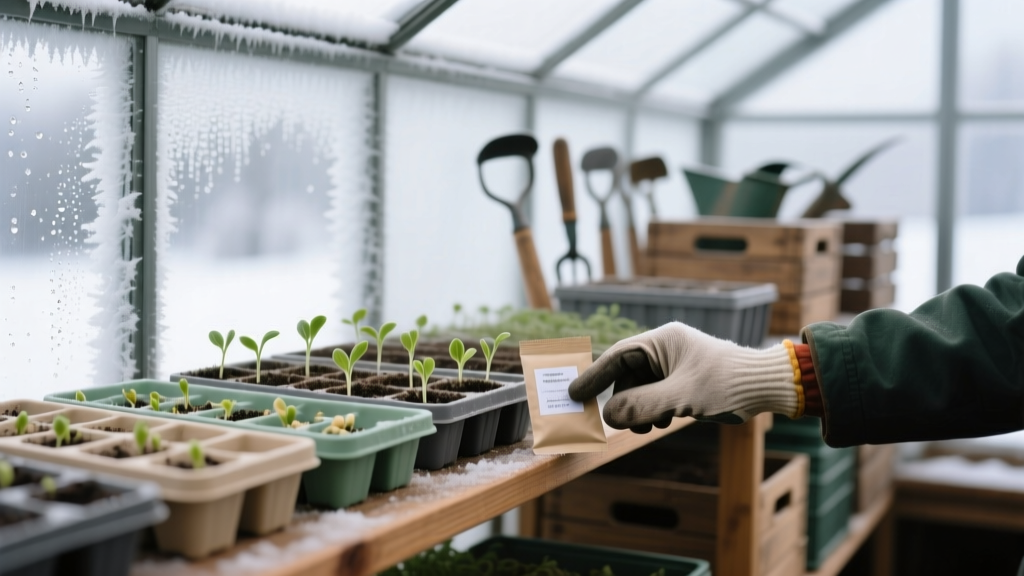
Winter Garden: Seed Viability Testing and Inventory
Winter is the narrow window when a 10-minute task can save you an entire growing season. If you wait until your local last frost is two weeks away and then discover your tomato seed is dead, you’ll either overpay for replacements, miss your best sowing date, or start transplants late. Right now—while beds are resting and daylight is short—you can test seed viability, clean up your inventory, and build a sowing calendar that matches your frost dates and indoor-start timetable.
This guide is organized by priority: what to plant (only what makes sense right now), what to prune, what to protect, and what to prepare—centered on seed viability testing and inventory so your spring starts on time.
Priority 1: What to prepare now (seed inventory + viability testing)
Week 1 (this week): Pull every seed packet and build a simple inventory
Start by gathering seeds from every location: garage shelf, kitchen drawer, greenhouse bench, coat pocket. Winter is when “I think I have basil” turns into “I have six basil packets from 2017 and none are labeled.”
Use a notebook, spreadsheet, or a note app. Record:
- Crop/variety (e.g., ‘Sungold’ tomato)
- Pack year (or your best guess)
- Source (seed company, saved seed, swap)
- USDA hardiness zone relevance (for perennials)
- Quantity left (estimate is fine: “<25 seeds”)
- Location (box, bin, drawer)
- Status: “test,” “good,” “replace,” “use up,” “discard”
Timing target: finish the inventory by January 15 in cold-winter zones (USDA Zones 3–6), or by February 1 in milder winter zones (Zones 7–10). That keeps you ahead of the first indoor sowing dates, which often begin 8–12 weeks before last frost.
Week 2: Run germination tests on anything questionable (or valuable)
Test seeds that are old, poorly stored, home-saved, or simply too important to gamble on (peppers, onions, certain flowers, pricey hybrids). Even a quick test can tell you whether to sow normally, sow thickly, or replace.
Paper towel (ragdoll) germination test is the most practical at home:
- Count out 10 seeds (or 20 if you have plenty). Counting makes the math easy.
- Moisten a paper towel so it’s damp, not dripping.
- Place seeds on the towel, fold, and slide into a labeled zip-top bag (leave a little air).
- Keep warm: most vegetables germinate well at 70°F (21°C). Use the top of the fridge or a seedling heat mat.
- Check daily; re-moisten if needed. Note sprouts with visible radicles.
- Stop the test when most seeds that will germinate have done so (often 7–14 days, but slower crops may take longer).
Calculate germination percentage: (sprouted ÷ total) × 100.
- 80–100%: sow normally
- 60–79%: sow a bit thicker or start extra cells
- 40–59%: sow thickly, consider replacement
- <40%: replace unless you’re willing to oversow heavily
“A simple home germination test—counting seeds and recording the percentage that sprout—lets gardeners adjust seeding rates or replace seed before planting time.” — University Extension guidance on seed testing (home methods), 2019
Timing numbers to use: set your test start date so results are back before ordering deadlines. If you want seeds in hand by February 15, start germination tests no later than January 31 to allow a week for testing and shipping time for replacements.
How long do seeds last? Use storage history, not hope
Seed longevity varies by crop and by storage conditions (cool, dry, dark extends life). Extension publications consistently emphasize that viability declines faster under warm, humid storage.
Use these rules of thumb for typical home-stored seed:
- Onion, parsnip: often decline sharply after 1 year
- Corn, peppers: commonly 2 years
- Beans, peas, tomato: often 3–4+ years
- Cucumber, squash: frequently 4–5 years if well stored
For authoritative references on storage and viability expectations, see extension seed-storage guidance such as Michigan State University Extension (2018) and University of Minnesota Extension seed-saving and storage resources (2020), both of which highlight cool/dry storage and crop-to-crop differences.
Make a replacement plan based on your frost dates (with real numbers)
Inventory without a sowing calendar is only half the job. Match your seed plan to your local last spring frost date and the crop’s indoor-start window.
Concrete timing examples:
- If your last frost is May 10 (common in many Zone 5 locations), start tomatoes indoors around March 15–April 1 (6–8 weeks prior).
- If your last frost is April 1 (many Zone 8 areas), tomato starts often begin early February.
- If you garden where winter sowing outside is possible and soil is workable at 35–40°F (2–4°C), peas can often be direct-sown 4–6 weeks before last frost.
- Many cool-season seeds germinate best at 50–65°F (10–18°C) soil temps; warm-season crops often need 70–85°F (21–29°C).
- Plan to finalize seed orders by February 15 to avoid popular varieties selling out.
Checklist: 60-minute seed triage
- Sort into four piles: Start soon, Direct sow, Test, Replace
- Circle any packet with no year or unknown storage history
- Mark short-lived seeds (onion/parsnip) for testing first
- Write your top 10 “non-negotiable” crops and test those immediately
- Set a calendar reminder: “Order replacement seed” by Feb 1–Feb 15
Priority 2: What to plant right now (limited, but strategic)
Winter planting is region-dependent. The goal is to use winter’s pause to get a jump where climate allows, not to force growth when light and temperatures are working against you.
Scenario A: Cold-winter climates (USDA Zones 3–6) with frozen ground
If your ground is frozen and nighttime lows are regularly below 20°F (-6°C), focus on indoor and protected sowing rather than outdoor planting.
- Microgreens indoors: sow now under a bright window or LED. Harvest in 10–21 days.
- Alliums from seed (long-season onions/leeks): start indoors in late January through February (often 10–12 weeks before transplanting).
- Winter sowing in jugs (if you use this method): many hardy flowers and brassicas can be started outdoors in covered containers around January–February depending on your typical lows.
Scenario B: Mild-winter climates (USDA Zones 7–9) with workable soil
Where soil can be worked and daytime highs regularly reach 50–60°F (10–16°C), winter is prime time for cool-season planting.
- Direct sow: peas, spinach, carrots (if soil isn’t waterlogged)
- Transplant: lettuce, kale, broccoli starts if you can protect them from cold snaps
- Succession sowing: every 2–3 weeks for salad greens while nights stay mostly above 28°F (-2°C)
Scenario C: Warm-winter climates (USDA Zones 9–10) and coastal areas
If you’re gardening where frost is rare and your “winter” is the main growing season, seed viability still matters—but planting is active now.
- Continue sowing cool-season crops through February in many locations.
- Start warm-season transplants only if nights are consistently above 50°F (10°C) (otherwise growth stalls and pests increase).
Priority 3: What to prune (and how it ties back to seed inventory)
Pruning is a winter task because it reduces disease carryover and makes spring work faster—freeing up time for sowing and transplanting. The key is pruning at the right temperature window and avoiding cuts that invite damage.
Fruit trees: prune during dormancy, but avoid extreme cold
For apples and pears, many growers prune in late winter while trees are dormant, often when temperatures are above 20°F (-6°C) so wood isn’t brittle. In Zones 3–6, that often means February to early March. In Zones 7–8, pruning may happen earlier.
- Remove dead, damaged, and crossing branches first.
- Sanitize tools between trees if fire blight or cankers are present.
- Don’t rush peach/stone fruit pruning too early in very cold regions; late winter timing can reduce winter injury risk.
Berry canes and vines: remove disease and reset structure
Raspberries and blackberries benefit from winter cane management. Grapes are often pruned in late winter as well.
- Cut out canes with obvious disease lesions or dieback.
- Dispose of prunings (don’t compost diseased canes).
Perennials and ornamental grasses: leave some standing for insulation
If you haven’t cut everything back, that’s not a failure—standing stems can protect crowns from freeze-thaw. In colder zones, wait until late winter to tidy, especially where cycles around 32°F (0°C) cause heaving.
Priority 4: What to protect (seeds, overwintering plants, and your future soil)
Protect your seeds first: temperature + humidity control
Seed viability loss accelerates with warmth and moisture. Move seed storage to a stable, cool, dry spot. Aim for:
- Storage temperature around 40°F (4°C) if possible (a dry basement or refrigerator works if humidity is controlled).
- Relative humidity kept low using a desiccant packet or a jar with dry rice/silica gel.
- Clearly labeled airtight containers.
Keep seeds out of garages that swing from 15°F to 60°F during winter warm-ups. Those fluctuations pull moisture in and out, shortening life.
Protect overwintering vegetables and perennials from freeze-thaw
Mulch is less about warmth and more about stability. When temperatures fluctuate above and below 32°F (0°C), plants can heave out of the soil, breaking roots.
- Apply 2–4 inches of mulch after the ground has cooled (not early fall).
- Use leaf mold, straw, or shredded leaves around garlic, strawberries, and perennial herbs.
- On windy sites, pin down row cover so it doesn’t abrade leaves.
Protect against winter pests and disease carryover
Winter is when you can reduce spring pest pressure with sanitation and monitoring—especially in milder zones where pests remain active.
- Rodents: check mulch near young fruit trees; use trunk guards to prevent girdling.
- Slugs/snails (Zones 7–10, wet winters): remove boards/pots that create hiding spots; hand-pick on damp evenings.
- Fungal disease inoculum: remove mummified fruit, diseased leaves, and cankered twigs from under fruit trees.
- Damping-off prevention for indoor starts: clean trays, use fresh mix, and ensure airflow—especially when starting seeds at 70–75°F (21–24°C) where fungi thrive.
Seed viability testing methods (choose the right one for your winter schedule)
Use the simplest method that gives you a decision. You’re not running a lab—you’re deciding whether to sow, sow thicker, or replace.
Method comparison table
| Method | Best for | Time to results | Supplies | Limitations |
|---|---|---|---|---|
| Paper towel in bag | Most vegetables, quick decision-making | 3–14 days (often) | Paper towel, bag, label, warmth | Can mold if too wet; roots tangle if left too long |
| Soil/tray test | Seeds sensitive to handling; testing real growing conditions | 7–21 days | Seed mix, tray/pots, light | Takes more space and mix; harder to count sprouts cleanly |
| Cut test (inspect embryo) | Large seeds (beans/corn) as a fast rough screen | Same day | Knife/razor, magnifier | Does not confirm germination; destroys seed |
Practical thresholds: when to sow extra thick
If your test shows 50% germination and you need 12 plants, don’t sow 12 seeds—sow 24–30 to allow for weak seedlings and transplant selection. For crops that hate root disturbance (cucumbers, squash), consider replacing low-viability seed rather than over-sowing and thinning.
Recordkeeping that pays off next winter
On each packet, write:
- “Tested: 70% on Jan 28”
- “Sow thickly” or “Replace 2026”
This one note prevents repeating the same uncertainty next year.
Monthly winter schedule (seed testing + garden tasks)
| Month | Seed tasks | Garden tasks | Trigger conditions |
|---|---|---|---|
| December | Gather packets; start inventory; check storage containers | Mulch for freeze-thaw stability; rodent guards on trunks | After consistent cold; before repeated 32°F swings |
| January | Test old/valuable seed; draft sowing calendar based on frost date | Tool cleaning; sanitize seed trays; prune on mild days | Prune when above 20°F; indoor germination target 70°F |
| February | Order replacements by Feb 15; begin earliest indoor sowing (region-dependent) | Finish dormant pruning; prep seed-start area lighting/heat | Start seeds 8–12 weeks before last frost |
Regional timing notes: match the work to your winter reality
Upper Midwest / Northern Plains (Zones 3–4): Expect long stretches below 10°F (-12°C). Plan indoor seed-starting infrastructure now: lights, heat mats, and shelving. Do viability tests by January 15–31, because your first starts (onions, leeks, celery) may begin in late February for a mid-to-late May last frost.
Mid-Atlantic / Interior West (Zones 6–7): Winters often oscillate above and below freezing. Focus on protecting perennials from heaving and keeping seed storage stable. Get pruning done during calm stretches above 20°F (-6°C). If your last frost falls around April 15, many gardeners start tomatoes indoors around mid-February to early March.
Pacific Northwest / Coastal climates (Zones 8–9, wet winters): Mold and rot are the limiting factors, not deep cold. Seed testing is still essential, but also prioritize sanitation: clean greenhouse corners, remove decaying vegetation, and manage slugs. Avoid compacting wet soil; do container sowing or wait until beds are workable. Cool-season sowings can continue if daytime highs hold near 50°F (10°C).
Deep South / Gulf Coast (Zones 8–10): Winter is active growing season. Inventory quickly and test what you’ll plant soon (peas, greens, brassicas). Watch for aphids and fungal issues during warm spells. Don’t rush summer crops until nights are reliably above 50°F (10°C)—early plantings often become pest magnets.
Pest and disease prevention for winter seed-starting (don’t carry problems into spring)
The most common winter “pest” is damping-off disease in indoor seedlings. Prevention beats treatment.
- Wash trays and domes with hot soapy water; sanitize if reusing. Extension recommendations commonly include sanitation to reduce pathogen carryover (see University of Minnesota Extension, 2020).
- Use fresh seed-starting mix for small-seeded crops.
- Run a small fan for airflow; avoid keeping surfaces constantly wet.
- Bottom-water when possible; let the surface dry slightly between waterings.
- Don’t overcrowd; thin promptly.
For stored seed, keep insects out by using sealed containers. If you suspect pantry pests, freeze seed (dry seed only) in an airtight container for 48–72 hours, then return it to cool, dry storage to avoid condensation.
Fast timelines you can follow
7-day timeline: from messy seed pile to a working plan
- Day 1: Gather all seeds; sort into Test/Replace/Good/Start Soon
- Day 2: Build inventory list; note missing years and low quantities
- Day 3: Start paper towel tests for onions, peppers, tomatoes, and anything older than 2–3 years
- Day 5: Check and record sprouts; re-moisten if needed
- Day 7: Compute germination percent; update packet notes; draft replacement order
30-day timeline: set yourself up for spring sowing
- Finalize inventory and storage system by week 2
- Complete all viability tests by week 3
- Place seed orders by week 4 (target Feb 1–Feb 15)
- Clean seed-starting area and test lights/heat mats before your first sowing date
Winter seed inventory checklist (printable-style)
- Seeds stored in airtight container with desiccant
- Packets labeled with year and source
- Test results written on packet (percent + date)
- Short-lived seed flagged (onion, parsnip)
- Replacement list made with quantities (not just varieties)
- Sowing calendar mapped to last frost date (start dates set 8–12 weeks prior where needed)
- Indoor setup ready: lights, timer, fan, trays, fresh mix
- Pruning and sanitation scheduled for mild days above 20°F
By the time seed catalogs start feeling urgent and your local garden center displays appear, you’ll already know which packets are worth sowing, which need extra seed per cell, and which need replacement. That’s the real winter advantage: calm, clear decisions now—so spring planting runs on schedule instead of on guesswork.
Sources: Guidance consistent with extension recommendations on seed storage and home germination testing, including Michigan State University Extension (2018) seed storage principles and University of Minnesota Extension (2020) seed starting/sanitation practices, plus additional university extension home-testing advisories (2019) emphasizing simple germination counts to inform seeding rates.