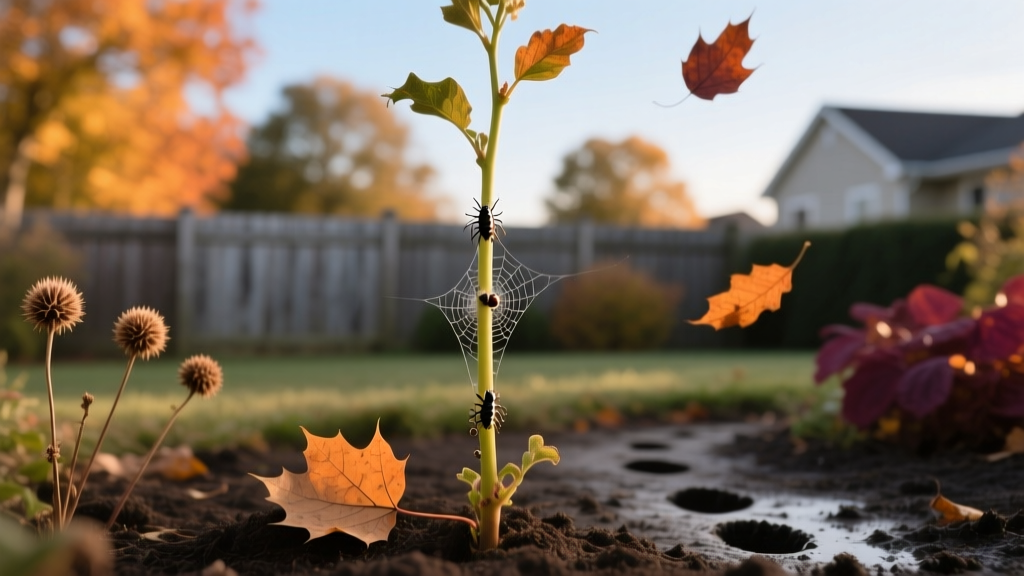
Fall Pest Control: Overwintering Prevention
The window for fall pest control is short and high-stakes: what you leave behind now becomes next spring’s first infestation. Many common garden pests (and the diseases they vector) survive winter as eggs on twigs, pupae in soil, adults tucked into debris, or spores on fallen leaves. If you interrupt those life cycles before consistent hard freezes, you start next season weeks ahead—often without spraying later.
Use this as a “do-it-now” fall checklist with timing cues. Aim to finish the highest-impact tasks 2–4 weeks before your average first hard frost (around 28°F/-2°C). If you don’t know your date, use your local average first frost and count backward. For many gardeners, that’s mid-September to early November, depending on USDA zone and region.
Priority 1 (This Week): Remove overwintering sites fast
What to prepare: a 60-minute sanitation sweep
Before you prune, plant, or mulch, do one pass that removes the easy overwintering shelters. This is the single best “right now” task.
- Pick up fallen fruit under apples, pears, peaches, plums, and crabapples. Mummified fruit is a winter hotel for pests and disease.
- Pull spent annuals and vegetable vines (especially cucurbits and tomatoes) and remove them from the garden.
- Lift boards, pots, and weeds along fence lines—slugs, earwigs, and sowbugs shelter there.
- Clean out tall grass and leaf piles near beds where rodents and insects overwinter.
Compost or trash? If plants were healthy, hot composting is fine. If you had heavy disease pressure (powdery mildew, blight, scab, rust), err on the side of municipal yard waste or trash unless you maintain hot compost temps of 131–160°F (55–71°C) consistently.
“Sanitation is one of the most effective, least disruptive tools for reducing disease and insect pressure the following season—especially when infected leaves and fruit are removed from the site.”
—Extension plant pathology guidance (Cornell Cooperative Extension, 2019)
What to protect: manage leaf litter strategically (not automatically)
Leaf litter can be garden gold, but around disease-prone plants it’s also a spore bank. Use a targeted approach:
Remove or hot-compost leaves from under apples/pears (apple scab), roses (black spot), and any plants that had visible disease. Apple scab overwinters on fallen leaves; reducing that leaf litter lowers spring spore release. Cornell Cooperative Extension notes sanitation (leaf removal or leaf shredding) as a key step to reduce apple scab inoculum (Cornell Cooperative Extension, 2019).
Shred and spread elsewhere if leaves are clean. A mower pass that chops leaves fine speeds decomposition and reduces habitat for pests compared with whole leaves.
Priority 2 (Next 7–14 Days): Prune and clean for pest interruption
What to prune: timing rules that prevent more problems
Fall pruning can either reduce overwintering pests or trigger tender growth that winter-kills. Follow these rules:
- Prune out dead, diseased, damaged wood anytime you see it. This is sanitation pruning.
- Hold structural pruning for late winter on most deciduous trees and shrubs in cold-winter regions (Zones 3–6). You’ll avoid stimulating growth before freezes and can see branch structure better.
- Exception: remove “pest magnets” now—water sprouts, suckers, and crossed branches that trap moisture in fruit trees can be thinned lightly after leaf drop.
What to prepare: scrape and wrap where it matters (and skip where it doesn’t)
Tree bands and wraps: If you use trunk wraps for sunscald or rodent protection, install them after leaf drop and remove in spring (don’t leave them year-round—wraps can shelter insects).
Sticky bands: In areas with winter moth or spring cankerworm issues (common in parts of the Northeast/PNW), sticky bands placed late fall can intercept females walking up trunks to lay eggs. Monitor weekly and replace when dirty.
What to protect: fall oil sprays—only at the right moment
Dormant or delayed-dormant oils can reduce overwintering scales, mites, and aphid eggs on fruit trees and some ornamentals—but timing is everything.
- Apply only when trees are dormant or at least post–leaf drop, and when temperatures will stay above 40°F (4°C) for 24 hours (check your product label).
- Don’t apply to drought-stressed plants; water first if soil is dry.
- Avoid applying ahead of a freeze or on windy days.
University extension programs commonly recommend dormant oils as part of integrated pest management for scale and mite suppression (e.g., University of California IPM guidelines, 2020).
Priority 3 (Before First Hard Frost): Protect the soil without sheltering pests
What to plant: cover crops that reduce overwintering problems
Fall planting isn’t just about harvest—it’s about breaking pest cycles. Cover crops can suppress winter annual weeds (which host aphids and viruses), improve soil, and reduce splash-borne diseases by keeping soil covered.
- Cereal rye: great for weed suppression; sow roughly 3–6 weeks before first frost for establishment.
- Oats: winter-kills around 10–20°F (-12 to -7°C), leaving a tidy mulch; sow 4–8 weeks before first frost.
- Crimson clover (Zones 6–9): fixes nitrogen; sow 6–8 weeks before first frost for strong rooting.
Vegetable garden tip: If you had cucumber beetles or squash bugs, avoid leaving cucurbit residue. Cover crops are most effective after you’ve removed vines and fruit debris.
What to protect: mulch depth and placement (a common fall mistake)
Mulch can either protect roots or protect pests. Use it carefully:
- Keep mulch 2–3 inches deep in ornamental beds for winter insulation, but avoid piling it against stems or trunks.
- Pull mulch back 3–6 inches from woody crowns (roses, hydrangeas, young trees) to reduce rodent gnawing and crown rot.
- In slug-heavy gardens, avoid thick, wet mulch layers going into a mild winter; use a thinner layer and focus on debris removal.
Apply winter mulch after the ground begins to cool—often when nighttime lows are consistently near 32°F (0°C)—so you’re insulating, not creating a warm shelter for pests.
Priority 4 (After Harvest / After Leaf Drop): Prepare for a cleaner spring
What to prepare: a fall “reset” for tools, trellises, and beds
Many diseases overwinter on supports and tools, not just plants. A simple reset prevents reintroducing problems next year.
- Disinfect tomato cages and stakes (especially if you had blight). Wash soil off first, then sanitize with an appropriate disinfectant per label directions.
- Clean pruners and loppers and oil moving parts.
- Empty and scrub containers where soilborne issues appeared; refresh potting mix for next year.
What to prune: perennial cutback with pest biology in mind
Not all perennials should be cut down in fall, and not all should be left standing. Decide based on what you battled this season:
- Cut back plants that had heavy fungal leaf spots or mildew (phlox, bee balm, peonies) to reduce overwintering inoculum.
- Leave standing sturdy stems for beneficial insects in low-disease areas—but remove any stems with visible egg masses or cankers.
- Dispose of infected material off-site when disease was severe.
Balance is the goal: preserve habitat for beneficial insects where it’s clean, and remove material that clearly carries disease or pest eggs.
Monthly schedule: what to do when (adjust for your frost date)
| Timing window | Temperature / date cue | Top pest-prevention tasks | Watch-outs |
|---|---|---|---|
| Early fall (Weeks 1–2) | ~6–8 weeks before first frost; nights 50–55°F (10–13°C) | Sanitation sweep; remove fallen fruit; pull diseased vines; seed cover crops | Don’t compost heavily diseased leaves cold; don’t mulch heavily yet |
| Mid fall (Weeks 3–5) | ~4–6 weeks before first frost | Leaf management under fruit trees; light thinning of pest-prone shoots; clean supports | Avoid heavy pruning that triggers growth |
| Late fall (Weeks 6–8) | After leaf drop; apply only if above 40°F (4°C) | Dormant oil timing (if needed); install wraps/guards; finalize bed cleanup | Never oil-spray ahead of freeze; remove wraps in spring |
| Pre-winter | First hard frost near 28°F (-2°C); soil cooling toward 32°F (0°C) | Mulch after cooling; store hoses; reduce winter shelter sites | Mulch volcanoes invite rodents and rot |
Real-world scenarios: adjust your fall pest plan by region and zone
Scenario 1: Mild-winter coastal climates (USDA Zones 8–10)
In warm coastal areas, overwintering often means “overactive all winter.” Aphids, whiteflies, and fungal diseases can persist because there’s no prolonged kill period.
- Keep weeds down continuously—winter weeds can host aphids and virus vectors.
- Do smaller, repeated cleanups every 2 weeks rather than a single fall cleanup.
- Mulch lightly to avoid creating a humid slug zone; prioritize air flow and drip irrigation.
- Consider winter crop rotation (e.g., don’t follow summer cucurbits with winter cucurbits in the same bed).
Scenario 2: Cold-winter interiors (USDA Zones 3–5)
Cold helps, but it doesn’t solve everything. Snow cover insulates pests in soil and leaf litter.
- Finish sanitation earlier: aim for by October 1–15 in many Zone 4–5 locations, or 4 weeks before first hard frost.
- Focus on leaf removal under fruit trees before snow makes it impossible.
- Use rodent guards on young trees and shrubs; voles girdle bark under snow.
- Skip fall nitrogen on lawns and garden beds if it pushes soft growth; tender growth invites winter injury and spring stress.
Scenario 3: Wet autumns (Pacific Northwest, parts of Northeast/Upper Midwest)
If fall is rainy, fungal and bacterial diseases linger longer, and cleanup can be muddy and difficult.
- Prioritize airflow: remove dense, disease-riddled growth and fallen leaves from crowded areas.
- Get plant debris out of contact with soil: bag diseased leaves; don’t leave them in paths to decompose slowly.
- Time pruning for dry days (wait for at least 24–48 hours without rain when possible) to reduce pathogen spread.
- Use stepping stones or boards to avoid compacting wet soil—compaction worsens root diseases.
Pest-and-disease targets: what fall prevention actually stops
Fruit trees: scab, codling moth habitat, scale, mites
Apple scab: Focus on fallen leaves. Remove, shred, or hot-compost. This reduces the spore source that kicks off infections during spring rains.
Codling moth and other fruit pests: Remove fallen fruit weekly in late season and don’t leave “mummies” on branches. Clean up bark crevices and debris at the base of trees where larvae pupate.
Scale and mite eggs: If you had outbreaks, plan dormant oil after leaf drop and above 40°F (4°C), following label directions.
Vegetable beds: squash bugs, cucumber beetles, blights, and soil carryover
Squash bugs: Adults hide under debris and boards. Remove vines, lift shelter objects, and keep bed edges clean. In heavy-pressure gardens, rotate cucurbits to a different bed next year and avoid leaving strawy shelters in place over winter.
Tomato/pepper diseases: Pull plants promptly after final harvest; don’t leave stakes and cages dirty. If blight was present, remove plant material from the site.
Soil health as pest prevention: A cover crop plus compost (applied thinly, 0.5–1 inch) helps build microbial competition that can reduce some disease pressure over time.
Ornamentals: rose black spot, powdery mildew, borers, and canker cleanup
Roses: Rake and remove infected leaves from beneath plants. If black spot was severe, don’t mulch over infected leaf litter—remove it first, then mulch.
Powdery mildew perennials: Cut back and remove the worst foliage. Leave clean, sturdy stems for winter interest only where disease pressure was low.
Borers and trunk pests: Keep trees vigorous going into winter—water deeply if fall is dry until the ground freezes. Stress makes trees more attractive and less resilient.
Fall pest control checklists (printable-style)
48-hour “high impact” checklist
- Pick up fallen fruit and remove mummies from trees
- Pull and remove diseased vegetable vines (tomato, squash, cucumber)
- Rake disease-prone leaf litter (apples, roses) and dispose appropriately
- Lift boards/pots at bed edges; remove weed mats harboring pests
- Clean and store supports; disinfect if disease was present
Before your first hard frost (~28°F / -2°C)
- Seed cover crops 3–8 weeks before frost (rye, oats, clover as appropriate)
- Install rodent guards on young trees; keep mulch off trunks
- Finish light sanitation pruning (dead/diseased wood)
- Mulch after soil cools (near 32°F / 0°C nights) to avoid pest sheltering
After leaf drop (and above 40°F / 4°C for sprays, if used)
- Apply dormant oil only where scale/mites were a known issue (follow label)
- Dispose of remaining diseased leaves; don’t bury them in beds
- Wrap/guard trunks for sunscald and rodents; remove in spring
Quick decision guide: what stays, what goes
Remove: diseased leaves under apples/roses; mummified fruit; tomato/cucurbit vines; any plant material with visible cankers, egg masses, or heavy spotting.
Can stay (selectively): clean perennial stems for beneficial insects; shredded healthy leaves used as mulch away from disease-prone plantings.
Handle with care: thick mulches in slug or vole hotspots; fall pruning that stimulates growth.
Notes on timing and frost dates (use these numbers to plan)
Anchor your work to your local averages, then adjust for the year:
- Plan core cleanup 2–4 weeks before first hard frost.
- Use 28°F (-2°C) as a practical “hard frost” threshold for many annual pests and tender growth.
- Apply dormant oils only when temperatures stay above 40°F (4°C) for the period required on the label.
- Time winter mulch after repeated nights near 32°F (0°C) so you’re insulating cold soil, not warming it.
- Hot compost targets: 131–160°F (55–71°C) to reduce pathogens and weed seeds.
USDA zones help you predict how long pests remain active. In Zones 7–10, many insects stay active well into late fall and even winter, so sanitation and weed control continue later. In Zones 3–6, early freezes shorten activity, but snow cover can protect pests in soil and leaf litter—making fall removal even more valuable.
Two habits make the biggest difference by spring: (1) removing the exact materials pests and spores overwinter in, and (2) timing mulch and oils so you protect plants without giving pests a warm shelter. Do those consistently, and you’ll notice fewer “mystery outbreaks” when growth resumes.
Citations: Cornell Cooperative Extension plant pathology guidance on sanitation and leaf litter management for disease reduction (Cornell Cooperative Extension, 2019). University of California Statewide IPM Program guidance on dormant oil use and timing for overwintering pest suppression (UC IPM, 2020).