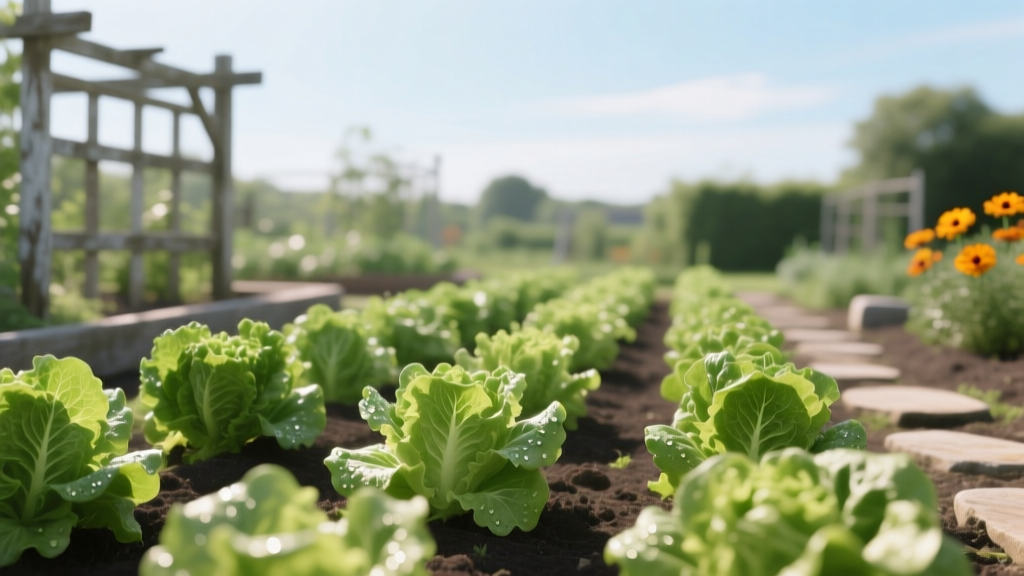
Summer Garden: Creating a Cut-and-Come-Again Lettuce Patch
The window for lush, tender lettuce in summer is shorter than most gardeners think—and it closes fast when nights stay above 70°F and the soil surface bakes dry. If you act now, you can keep salads coming by shifting from “one-and-done heads” to a cut-and-come-again patch that tolerates heat better, recovers quickly after harvest, and stays productive with steady re-sowing. The goal is simple: keep plants in a mild microclimate, keep growth continuous, and harvest on a schedule before bitterness and bolting take over.
This is a right-now plan: pick the right cultivars, plant in the right spot, protect seedlings from heat and pests, and harvest like a pro so the patch regrows for weeks.
Priority 1: What to plant this week (and next)
Choose lettuce that actually performs in summer
In summer, crisphead types struggle unless you have cool coastal air or high elevation. Build your patch around looseleaf and romaine types bred for heat tolerance and resistance to bolting. You want quick regrowth after cutting and leaves that stay sweet longer.
- Best for cut-and-come-again: looseleaf (red/green), oakleaf, butterhead mini types, baby romaine.
- Look for “slow-bolt” and “heat tolerant” on packets. In many regions, this matters more than color or texture.
- Seed mixes: Mesclun blends are efficient for succession sowing and fast harvests.
Timing trigger: If your forecast shows 3+ consecutive days above 88°F, plant under shade cloth or choose the coolest bed you have (more on that below). Lettuce germination drops as soil temperatures rise.
“Lettuce seed germinates best at cool temperatures (about 55 to 65°F) and germination can be inhibited when soil temperatures are above about 75°F.” — University of California Agriculture & Natural Resources (UC ANR), 2015
Direct sow vs. transplants (use both strategically)
For a steady patch, combine direct sowing (for volume) with a small flat of transplants (as insurance). Summer weather is unpredictable—one heat wave can wipe out a direct sowing, while transplants help you fill gaps immediately.
- Direct sow when you can keep the top 1/2 inch of soil evenly moist for 5–10 days.
- Transplant when daytime highs are consistently above 85°F or when you’re fighting flea beetles or slugs—bigger plants tolerate stress better.
Planting dates and intervals (put numbers on the calendar)
Use these concrete targets, then adjust based on your USDA zone and local forecast:
- Succession sowing: sow a small section every 10–14 days to keep leaves young and sweet.
- Germination watch: expect sprouts in 3–8 days when soil is cool; up to 10–14 days when it’s warm.
- First cut: begin baby-leaf harvest about 25–35 days after sowing (variety and heat dependent).
- Regrowth cycle: plan to harvest the same planting every 7–12 days once established.
- Fall bridge: in many regions, start ramping up sowing again about 8–10 weeks before your first fall frost date to ensure strong plants as nights cool.
Quick layout: build a patch that keeps producing
A cut-and-come-again patch works best as a set of narrow bands you can re-sow. Think in “lanes” you can harvest and replant without disturbing the whole bed.
- Bed width: 3–4 feet wide max so you can reach the center without stepping on soil.
- Rows/bands: sow 6–12 inch-wide bands; leave 6 inches between bands for airflow and harvest access.
- Spacing: for baby leaf, sow densely and thin to 1–2 inches. For larger leaves, thin to 6–8 inches.
Regional reality check: three common summer scenarios
Scenario A: Hot interior summers (USDA Zones 7–10; daytime highs 90–105°F). Plant where you can guarantee afternoon shade or use 30–50% shade cloth. Favor heat-tolerant leaf types, and prioritize transplants. Plan for more frequent sowings because heat speeds maturity and bitterness.
Scenario B: Humid summers with heavy storms (Zones 6–9 in much of the East/Midwest). Disease pressure is your main enemy. Increase spacing, water early, and use mulch to prevent soil splash. Choose resistant varieties when possible and keep leaves dry overnight.
Scenario C: Cool coastal or high-elevation gardens (Zones 3–6, or marine influence). You can grow broader variety ranges, but still protect seedlings from wind and keep sowing every 2 weeks. Growth may be slower; stretch harvest windows by using low tunnels on cool nights below 50°F.
Priority 2: What to prune (and harvest) to keep it cut-and-come-again
Harvest method matters more than fertilizer
Cut-and-come-again success depends on leaving the plant’s growing point intact. If you scalp too low, regrowth stalls or rots.
- Baby leaf method: use clean scissors and cut leaves 1–2 inches above the soil line.
- Leaf-by-leaf method: snap outer leaves at the base, leaving the center to keep producing.
- Best time of day: early morning, when leaves are crisp and hydrated.
After each harvest, remove any yellowed leaves and any slug-chewed, ragged tissue. Summer pests and disease capitalize on damaged foliage.
Thin early, then “reset” sections
If seedlings are crowded, thin when they have 2–3 true leaves. Crowding in summer leads to humidity pockets, mildew risk, and thin, bitter leaves.
When a section starts tasting bitter or throwing a seed stalk, don’t fight it—pull and re-sow. In peak heat, many patches perform best with a “reset” every 4–6 weeks (variety dependent).
Weed control is pruning-by-another-name
Weeds steal moisture from shallow-rooted lettuce fast. Hand-weed weekly, especially the first 3 weeks after sowing, when lettuce is slow to canopy over.
Priority 3: What to protect (heat, sun, pests, and disease)
Manage heat with microclimate, not wishful thinking
Summer lettuce is less about “full sun” and more about controlled light and stable moisture.
- Shade strategy: install 30–50% shade cloth once highs exceed 85–90°F. Use hoops or a simple frame so cloth doesn’t touch leaves.
- Afternoon shade: plant on the east side of taller crops (tomatoes, corn, trellised beans) so lettuce gets morning sun and afternoon protection.
- Mulch: apply 1–2 inches of clean straw or chopped leaves once seedlings are up and established (don’t bury tiny sprouts).
Temperature threshold to watch: consistent nights above 70°F accelerate bolting and bitterness. If that’s your pattern, shift sowings to shadier spots and prioritize heat-tolerant varieties.
Watering: steady moisture, shallow roots, zero drama
Lettuce has shallow roots and responds immediately to moisture swings. Your goal is evenly moist soil, not cycles of soaking and drying.
- Target: keep the top 1–2 inches consistently moist during germination.
- Drip irrigation is ideal; it keeps leaves dry and reduces disease pressure.
- Schedule: water early morning. In heat waves, a brief midday “cooling mist” can help seedlings, but avoid soaking foliage late in the day.
Colorado State University Extension notes that lettuce is a cool-season crop and tends to become bitter and bolt under heat stress; steady moisture and cooler conditions help maintain quality (Colorado State University Extension, 2020).
Pest prevention: summer’s usual suspects
Aphids
Aphids spike during warm, lush growth. Check the undersides of leaves twice weekly.
- Blast off with a firm morning spray of water.
- Encourage beneficials by avoiding broad-spectrum insecticides.
- If needed, use insecticidal soap, following label directions, and spray at dusk to reduce leaf burn.
Slugs and snails
Even in summer, irrigated lettuce patches create slug habitat.
- Water in the morning so the surface dries by night.
- Use iron phosphate baits where allowed; keep bait dry and refresh after heavy irrigation.
- Reduce hiding spots: boards, dense weeds, and thick mulch touching the crown.
Flea beetles (especially on young seedlings)
Pinholes in leaves are cosmetic on mature greens but can stunt seedlings.
- Use lightweight row cover immediately after sowing (remove for harvest or when heat is extreme).
- Transplant sturdier starts to bypass the most vulnerable stage.
Disease prevention in summer: keep leaves dry, keep air moving
In humid regions, downy mildew and leaf spots can move quickly when foliage stays wet overnight. Your prevention plan is cultural first.
- Spacing: don’t let mature plants overlap heavily; thin aggressively.
- Morning watering: so leaves dry fast.
- Mulch: reduces soil splash that spreads pathogens.
- Sanitation: remove infected leaves and discard (don’t compost if disease is active).
University of Minnesota Extension emphasizes sanitation, crop rotation, and watering practices to reduce foliar disease pressure in vegetable gardens (University of Minnesota Extension, 2019).
Priority 4: What to prepare (soil, supplies, succession schedule)
Soil prep that pays off within two weeks
Summer lettuce needs fast, steady growth. That comes from soil that holds moisture while draining well, with enough nitrogen for leafy production.
- Compost: incorporate 1–2 inches of finished compost into the top 6 inches of bed before sowing.
- Fertility: if growth is pale or slow, side-dress with a nitrogen source after the first harvest (follow product rates; avoid overdoing it in heat).
- pH range: lettuce generally performs best around 6.0–7.0. If you haven’t tested soil in 2–3 years, put it on your list now.
Set up a “summer germination station”
If your soil is too warm for reliable germination (common in Zones 7–10), start seeds where you can control temperature.
- Start seeds indoors at 60–70°F, under lights, then transplant at 2–3 true leaves.
- Or pre-cool the seed zone outdoors: water the bed in the evening, then sow at dawn and cover with a board for 2 days (check daily). Remove as soon as sprouts appear.
Keep a rolling succession plan (use this schedule)
Use this as a template and shift earlier/later based on your first frost date and heat pattern. In many gardens, June–August is managed lettuce mode; September becomes prime time again.
| Month | Primary action | Planting interval | Protection focus | Harvest expectation |
|---|---|---|---|---|
| June | Start patch; sow heat-tolerant leaf lettuces | Every 10–14 days | Shade cloth readiness above 85°F | First baby cuts in 25–35 days |
| July | Maintain with transplants + small direct sowings | Every 7–14 days (smaller batches) | Heat, aphids, germination failures above 75°F soil | Frequent cuts every 7–12 days |
| August | Reset tired sections; begin fall ramp-up | Every 10–14 days; increase volume late month | Row cover for pests; ventilation for humidity | Regrowth slows in extreme heat, improves as nights cool |
| September | Major sowing push (most regions) | Every 14 days until 4–6 weeks before frost | Protect from early chills below 50°F at night | Best flavor; longer harvest windows |
Tools and supplies to stage now
- 30–50% shade cloth and clips (or an old sheer curtain in a pinch)
- Row cover (lightweight insect barrier)
- Drip line or soaker hose + timer
- Clean scissors/harvest knife (sanitize between beds if disease is present)
- Slug bait (iron phosphate) and yellow sticky cards for monitoring flying pests
Timelines you can follow without overthinking
This weekend checklist (60–90 minutes)
- Pick the coolest bed or the east side of a taller crop for afternoon shade.
- Amend with 1–2 inches compost; level and firm the seedbed.
- Sow one band (6–12 inches wide) and label with date.
- Water gently; keep the surface evenly moist for the next 5–10 days.
- Install shade cloth if highs are forecast above 88°F for multiple days.
Next 2 weeks checklist
- Thin seedlings at 2–3 true leaves.
- Scout twice weekly for aphids and flea beetle damage.
- Mulch lightly after seedlings are established.
- Sow the next band at day 10–14 (or transplant a backup batch).
Weeks 4–8: keep it producing
- Start harvesting baby leaves at 25–35 days; cut 1–2 inches above soil.
- After each harvest, water and consider a light side-dress if leaves are pale.
- Remove bitter/bolting plants promptly; re-sow that band.
- As your first frost date approaches, increase sowing volume 8–10 weeks out so fall harvests overlap summer output.
Fine-tuning by USDA zone and local frost dates
Zones 3–5 (short summers, early frost): Your summer lettuce patch is often easier because nights cool down. The key is timing for fall: if your first frost is around September 15, start your fall ramp-up by mid-July (8–10 weeks prior). Keep row cover handy for sudden cool nights below 50°F.
Zones 6–7 (classic four-season zones): Summer lettuce is doable with shade and irrigation discipline. If your first frost is around October 15, begin heavier sowing by mid-August. July sowings may need indoor starts or heavy shade if soil temps run hot.
Zones 8–10 (long, hot summers; mild winters): Treat summer lettuce as a protected crop. Shade cloth, transplants, and morning sun/afternoon shade placement are non-negotiable when daytime highs push 95°F. In many parts of these zones, your best lettuce seasons are spring and fall through winter; summer production is possible, but it’s a managed microclimate project.
Common summer problems (and the fastest fixes)
Problem: Seeds won’t sprout.
Fast fix: Soil is likely too warm or drying out. Pre-moisten bed, sow at dawn, cover lightly with vermiculite or fine compost, and shade the seed zone for 2–3 days. Consider indoor starts at 60–70°F.
Problem: Leaves are bitter.
Fast fix: Harvest younger, increase shade, water more consistently, and re-sow in smaller batches every 10–14 days. Pull plants that are starting to bolt—bitterness rarely improves once stress compounds.
Problem: Leaves rot near the base after cutting.
Fast fix: You’re cutting too low or crowns are staying wet. Cut higher (1–2 inches above soil), improve airflow, and water at the soil line in the morning.
Problem: Holes everywhere (flea beetles or caterpillars).
Fast fix: Use row cover for new sowings, handpick caterpillars, and keep plants growing fast with steady moisture. Most lettuce can outgrow cosmetic damage if growth is uninterrupted.
Summer lettuce rewards gardeners who treat it like a repeating harvest crop, not a one-time head crop. Sow small, protect from heat, harvest high, and reset sections before they decline. Keep your patch on a 10–14 day sowing rhythm, and you’ll have tender leaves on the table even when the rest of the garden is sweating.
Sources: UC ANR (2015); Colorado State University Extension (2020); University of Minnesota Extension (2019).