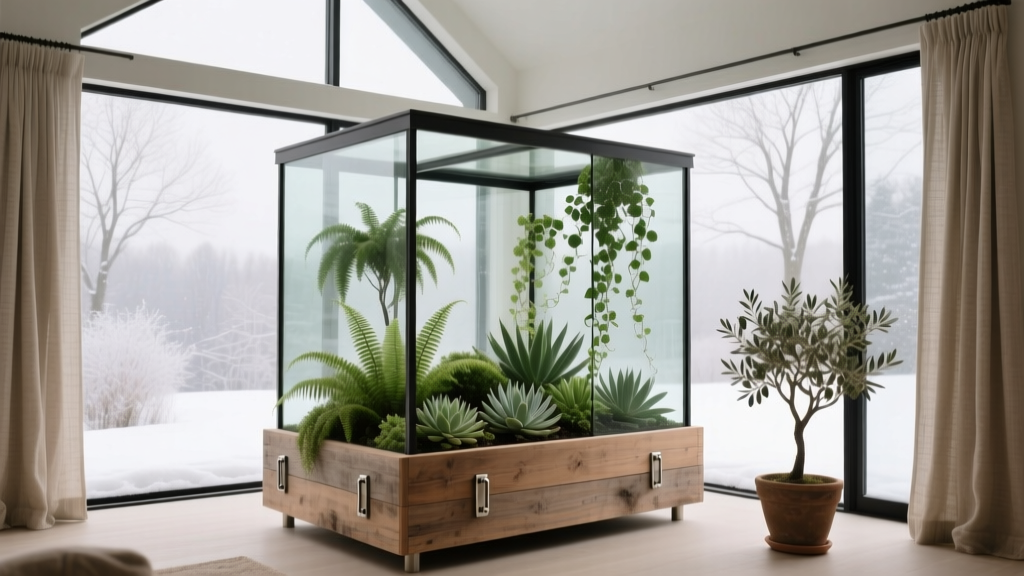
Winter Garden: Building Garden Structures Indoors
The shortest days are your best chance to get ahead. While the beds outside sit frozen or saturated, your indoor workspace can turn winter downtime into spring speed: cold frames built now are ready for late-winter sowing, trellises and cages built now prevent frantic hardware-store runs in April, and a cleaned, organized propagation area reduces damping-off and fungus gnats before seedlings ever emerge. If your average last frost is still 10–16 weeks away, this is the window to build what your garden will need.
Use this guide like a seasonal almanac: start with the projects that unlock earlier planting and better protection, then move into long-lead tasks (pruning plans, pest prevention, and seed-starting infrastructure). You’ll see dates and temperature thresholds so you can time builds to your USDA zone and your local frost calendar.
Priority 1: What to Prepare (Structures that buy you weeks of growing time)
Build a cold frame indoors (then set it outside on the next mild stretch)
A cold frame is the fastest “season expander” you can build in winter. Build the box indoors where it’s warm and square, then install it outside when the ground is workable or during a thaw.
Timing cues (use at least two):
- Install when daytime highs regularly reach 35–45°F and the soil surface can be scraped (not solid ice).
- Start sowing cold-tolerant greens inside the frame 6–8 weeks before your average last frost date.
- Vent the lid whenever the interior climbs above 70°F on sunny days (cold frames can overheat even when it’s freezing outside).
Materials that work: exterior screws, 2x10 or 2x12 lumber, and an old storm window or twin-wall polycarbonate. If you’re in windy areas, add a simple prop stick plus a hook-and-eye latch.
Build notes you’ll appreciate in March:
- Make the back wall 2–4 inches taller than the front so the lid sheds water and snow.
- Seal corners with exterior caulk; winter winds find gaps.
- If you garden in USDA Zones 3–6, plan a removable inner cover (row cover fabric over hoops) for nights below 20°F.
“Cold frames can heat rapidly in full sun and must be ventilated to avoid cooking plants.” — University of Minnesota Extension (2020)
Indoor build checklist:
- Measure the lid (storm window/polycarbonate) first; build the box to fit.
- Pre-drill screw holes to prevent winter-dry lumber from splitting.
- Paint or seal the exterior surfaces; leave interior surfaces unpainted if you prefer a more natural soil contact.
- Cut a vent prop stick (12–18 inches) and attach a simple latch.
Assemble low hoops and row-cover kits (store them bundled and labeled)
Row cover is protection you can deploy in minutes—if you’ve built the kit in advance. Indoors, cut and bundle hoops, label them by bed width, and pre-cut cover fabric.
- Hoop material: 1/2-inch EMT conduit (use a hoop bender) for durability, or 1/2-inch PVC for lighter duty.
- Cover options: lightweight spunbond for frost protection; heavier fabric for insect exclusion in spring.
- Temperature threshold: cover tender transplants when a forecast calls for 32°F or lower; add a second layer or inner cover when it drops below 28°F.
Labeling tip: Use painter’s tape on each hoop bundle: “4-foot bed: 6 hoops, 6-foot spacing.” You will not remember in April.
Build seed-starting shelving with lights (prevents leggy seedlings and fungal issues)
If you start seeds, winter is the time to build a stable, washable setup. A basic wire shelf with LED shop lights is enough; the key is adjustability and cleanliness.
Timing cues:
- Plan to start onions and leeks 10–12 weeks before last frost (common in Zones 4–7).
- Start tomatoes and peppers 6–8 weeks before last frost.
- Keep the seed-starting area at 65–75°F for most crops; use heat mats for peppers if your room runs cooler than 70°F.
Pest prevention now: fungus gnats love damp potting mixes indoors. Store potting mix sealed, let trays dry slightly between waterings, and consider a thin top-dressing of coarse sand on seedling trays. Clean shelves with a disinfectant solution before the first sowing.
Build trellises, cages, and supports (so you’re not hammering posts into mud)
Tomatoes, peas, beans, cucumbers, and even floppy flowers benefit from supports built before the rush. Winter building also lets you standardize sizes so covers and netting fit.
- Tomato cages: concrete reinforcing wire (CRW) cylinders; make them 18–24 inches wide and 5–6 feet tall.
- Pea trellis panels: cattle panel or nylon netting stretched on a simple wood frame.
- Insect net frames: rectangular frames sized to beds so you can drop netting over brassicas in spring.
Safety note: Wear eye protection when cutting wire. Crimp or cap sharp ends now—future you will thank you during midsummer harvesting.
Priority 2: What to Plant (Indoors and under protection)
Start long-season seedlings indoors (by calendar, not by hope)
Use your average last frost date as the anchor. If you don’t know it, look it up by ZIP code and write it on your seed-starting shelf.
Suggested winter sowing windows (adjust by your frost date):
- 10–12 weeks before last frost: onions (from seed), leeks, celery.
- 8–10 weeks: brassicas for early spring transplant (broccoli, cabbage) if you can harden off under protection.
- 6–8 weeks: tomatoes, peppers, eggplant (peppers often closer to 8–10 weeks in cool homes).
Disease prevention: damping-off is most common in warm, wet, still air. Run a small fan on low, water from the bottom when possible, and avoid reusing unwashed cell packs. Penn State Extension notes that sanitation and avoiding overwatering are key for preventing damping-off (Penn State Extension, 2019).
Sow in a cold frame or unheated greenhouse (for hardy greens)
If you can keep the soil workable, you can sow earlier than you think. In many regions, spinach, mache, arugula, and hardy lettuces can germinate in cool soil and sit patiently until longer days arrive.
- Soil temperature cue: spinach can germinate in soils around 40°F, though it’s slower; protection helps maintain steadier temps.
- Ventilation threshold: open the cold frame when interior temps exceed 70°F to prevent bolting and fungal growth.
Real-world scenario: In maritime Pacific Northwest winters (Zones 7–9), rain and slugs are the bigger problem than cold. Build your cold frame with a tight lid and add copper tape or slug traps nearby. In colder continental climates (Zones 4–6), your challenge is temperature swings—double up with an inner row cover on clear, frigid nights.
Force bulbs and grow herbs on a bright windowsill (for quick wins)
These aren’t just “nice indoors”—they keep you harvesting while you build. Pot up parsley, chives, and thyme; or force paperwhites and amaryllis away from your seed-starting lights.
- Keep forced bulbs cooler (around 60–65°F) for sturdier stems.
- Rotate herb pots weekly for even growth; winter light is directional and weak.
Priority 3: What to Prune (Only what’s safe—and what helps structures later)
Prune dormant fruit trees on mild days (and prep supports)
Winter pruning is about structure: opening the canopy, removing dead wood, and setting branch angles so spring growth is strong. Choose a dry day when temperatures are not dangerously low.
- Temperature threshold: avoid pruning when temps are below 20°F; brittle wood tears and wounds may be slower to compartmentalize.
- Focus on removing dead, diseased, and crossing branches first.
- Disinfect pruners between trees, especially if fire blight was present last season.
Build tie-downs indoors: Cut and prepare soft tree ties and stakes now. Come spring, you can train young branches to wider angles (stronger crotches, less breakage under fruit load).
Hold off on spring-blooming shrubs (prune after flowering)
Forsythia, lilac, and many hydrangeas set buds on old wood. Winter pruning can remove your entire bloom. If you need to remove storm damage, do only what’s necessary and mark the plant for proper pruning later.
Regional variation: In Zones 8–10, some shrubs break dormancy early—late-winter pruning may push tender growth into a cold snap. In Zones 3–5, pruning too early can expose stems to desiccating winds. When in doubt, wait for a stable warming trend.
Priority 4: What to Protect (Plants, soils, and the structures you’re building for)
Prevent winter burn and desiccation (evergreens and broadleaf shrubs)
Cold wind plus sun can dry foliage when roots can’t replace water. If you’re seeing browning on arborvitae, rhododendron, or boxwood, protection now can reduce late-winter damage.
- Water during midwinter thaws when soil is unfrozen and temperatures are above 40°F.
- Use burlap windbreaks on the windward side; avoid wrapping too tightly against foliage (airflow matters).
- Refresh mulch to 2–3 inches, keeping it a few inches away from trunks to discourage rot and rodents.
Rodent protection: guards, traps, and tidy edges
Voles and rabbits work under snow cover and mulch. This is the season to prevent girdling and root chewing.
- Install trunk guards on young fruit trees (hardware cloth cylinders are effective).
- Keep mulch pulled back from the base of trees and shrubs.
- Store bird seed in sealed containers; spilled seed increases rodent pressure near beds.
Disease and pest prevention in the indoor build zone (seedlings and tools)
Your indoor workspace is part of the winter garden. If you build structures where you start seeds, you’re also building a sanitation system.
- Wash pots and trays; sanitize with a dilute disinfectant solution and rinse well.
- Quarantine houseplants near seedlings—many carry aphids or spider mites that explode under lights.
- Use yellow sticky cards early if fungus gnats appear; reduce moisture and improve airflow.
Research-based reminder: The University of Maryland Extension emphasizes sanitation—clean pots, tools, and surfaces—as a primary step to prevent damping-off and other seedling diseases (University of Maryland Extension, 2021).
Indoor Build Schedule (by month) with outdoor tie-ins
| Month | Indoor Structure Focus | Outdoor Action on Mild Days | Timing/Threshold |
|---|---|---|---|
| December | Design cold frame; inventory screws, hinges, lights; build storage hooks | Check mulch depth; install trunk guards | Do outdoor work when temps are above 35°F and ground is safe |
| January | Build cold frame box; assemble hoop bundles; set up seed-starting shelves | Prune dead wood on fruit trees (if appropriate) | Avoid pruning below 20°F |
| February | Finish trellises/cages; prep labels; sanitize trays and tools | Place cold frame; start sowing hardy greens under cover | Start sowing 6–8 weeks before last frost; vent above 70°F |
Three regional scenarios (what to do right now where you live)
Scenario A: Cold-winter continental (USDA Zones 3–5; deep freezes, snow cover)
Right now: build indoors and stage materials for rapid deployment during thaws. Your outdoor season expands most with robust structures and layered protection.
- Cold frame: plan for an inner row cover; aim for a tight latch against wind.
- Hoops: choose EMT conduit for snow load and longevity.
- Seed-starting: prioritize strong lighting and airflow to prevent leggy growth in low winter light.
Watch-out: mice nesting in stored straw bales or potting supplies. Keep materials off the floor and sealed.
Scenario B: Mild-winter coastal or maritime (USDA Zones 7–9; wet winters, fewer hard freezes)
Right now: focus on moisture management and slug barriers. You can often install structures earlier, but you’ll battle rot and fungal pressure.
- Use rot-resistant lumber or seal cuts thoroughly.
- Add drip edges on cold frame lids to shed heavy rain.
- Vent frequently—humid air drives mold.
Watch-out: algae and moss on lids reduce light; clean glazing before sowing.
Scenario C: High-elevation or windy sites (Zones vary; rapid temperature swings)
Right now: build for wind first. A cold frame that isn’t anchored becomes a kite, and row covers shred fast without secure fastening.
- Anchor frames with ground stakes or screw-in anchors when soil allows.
- Use spring clamps and sandbags for row cover edges.
- Plan ventilation you can secure (hook-and-eye plus prop stick).
Watch-out: sun-driven overheating. Even at 25°F ambient, interior temperatures can spike on bright days—venting is non-negotiable.
Comparison table: Which indoor-built structure pays off fastest?
| Structure | Best For | Build Time (Typical) | Season Payoff | Common Failure to Avoid |
|---|---|---|---|---|
| Cold frame | Earlier greens, hardening off transplants | 2–4 hours | Gains 2–6 weeks in late winter/early spring | Overheating (no vent plan) |
| Hoop + row cover kit | Frost protection, insect exclusion | 1–2 hours | Prevents crop loss at 32°F events | Poor edge sealing (wind lifts fabric) |
| Seed-start rack + lights | Stocky seedlings, predictable starts | 1–3 hours | Improves transplant success; reduces leggy growth | Lights too far from seedlings |
| Trellises/cages | Tomatoes, peas, beans, cucumbers | 2–6 hours | Less disease, easier harvest, higher yield potential | Weak joints; sharp wire ends |
Timelines you can follow this week (pick one and start)
This weekend (2–4 hours): Build the “early planting starter kit”
- Assemble one cold frame box or one hoop kit for a single bed.
- Pre-cut row cover fabric and label it by bed length.
- Stage stakes, clamps, and a thermometer near the door.
Next 7 days: Set up a clean seed-starting zone
- Install lights with adjustable chains; set lights 2–3 inches above trays.
- Sanitize trays and pots; set up a small fan for airflow.
- Write your last frost date on a label and stick it to the shelf.
Within 14 days (choose a mild day): Deploy and test
- Place the cold frame on level ground; add a soil thermometer and max/min thermometer.
- Do a “sun test” on a bright day: check temps at 10 a.m., 1 p.m., and 4 p.m.
- If the interior exceeds 70°F, adjust venting (prop height, lid angle, or temporary shade cloth).
Expert winter notes that prevent spring headaches
Don’t build without measuring your storage. Cold frames and trellis panels are easy to build and annoying to store. If you can’t store them, build them in modular sections: panels that bolt together, hoops bundled by bed, cages that nest.
Keep soil and potting supplies sealed. Winter is prime time for mouse damage and contamination. A tight lid on potting mixes also reduces fungus gnat outbreaks.
Plan for ventilation as part of the structure. A cold frame without reliable venting is a plant cooker. A hoop tunnel without good anchoring is shredded fabric. Build the “weak point” first: latches, props, clamps, and anchors.
Use winter to standardize. If all your beds are the same width and your covers are cut to match, you’ll actually use them when an April cold snap hits.
By the time your forecast starts teasing the first 40–50°F afternoons and the calendar creeps within 6–8 weeks of last frost, you’ll be ready to plant under protection instead of shopping for it. Winter structure-building is quiet work—but it shows up loudly in spring: earlier harvests, fewer losses to frost and pests, and a garden that runs on systems instead of scramble.
Citations: University of Minnesota Extension (2020); Penn State Extension (2019); University of Maryland Extension (2021).