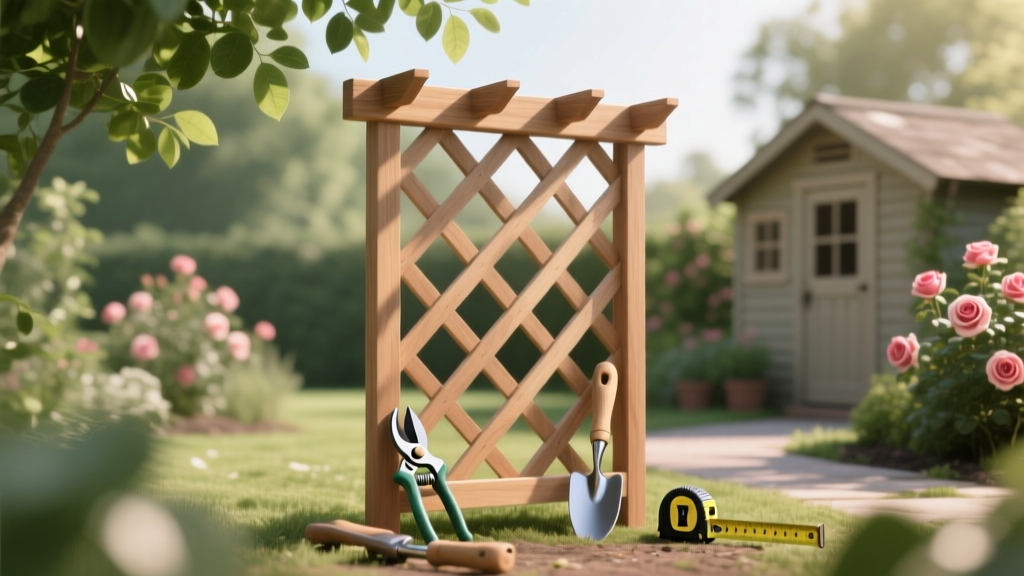
8 Garden Hacks for Garden Trellis Building
The most common trellis mistake isn’t “using the wrong material”—it’s building something pretty that can’t handle wet, fruit-loaded vines. A tomato plant can easily weigh 20–40 lb once it’s loaded and rain-soaked, and that’s before a gust of wind turns your trellis into a sail. If your posts aren’t deep enough or your connections are flimsy, it won’t fail gently; it’ll fail on the first stormy week in July.
Below are eight field-tested hacks I lean on when I want a trellis that’s fast to build, cheap to maintain, and strong enough to survive real weather and real crops.
Build It Strong First (So You Don’t Rebuild It Later)
1) The 1/3-Depth Rule: Set Posts Deeper Than You Think
Hack headline: Bury posts at least 1/3 of their above-ground height, and never less than 18 inches.
If you want a 6-foot-tall trellis, you’ll get a much calmer season by sinking your posts about 2 feet deep (24 inches) instead of “a shovel blade or two.” In loose or sandy soil, aim for 30 inches, or use a gravel base (about 4 inches) so water drains away from the post.
Real-world example: On a windy side yard with cucumbers, a pair of 8-foot T-posts driven 24 inches down held fine all season, while a neighbor’s 6-foot wooden stakes set only 12 inches deep leaned by mid-June and snapped during a thunderstorm.
2) Angle Bracing Beats “Bigger Posts” (And Costs Less)
Hack headline: Add a simple diagonal brace instead of upgrading every post.
A cheap 2x4 brace at a 45° angle (even a scrap piece) stiffens a trellis dramatically because it prevents racking (side-to-side wobble). Fasten the brace with two exterior screws at each end (3-inch screws are ideal), and your structure will behave like it’s made from thicker lumber.
Real-world example: For pole beans on a 10-foot run, using standard 4x4 end posts plus diagonal 2x4 braces was steadier than upgrading to thicker posts with no bracing—and the brace option saved roughly $12–$25 depending on lumber prices in your area.
3) Use “Mechanical” Connections: Screws + Washers + Staples
Hack headline: Don’t rely on knots alone—use hardware that won’t slip when wet.
String trellises fail when knots loosen after repeated wet/dry cycles. Instead, anchor wires or heavy twine with fencing staples (for wood), or use exterior screws with washers to trap wire loops in place. This keeps tension stable and avoids that slow sag that smothers plants.
Helpful detail: If you’re tensioning wire, 12.5-gauge high-tensile wire stays straighter than light utility wire; a $10–$20 wire tightener (in-line strainer) is worth it on long runs.
Choose Materials That Work With Your Weather (Not Against It)
4) Pick the Right Mesh Size: It Changes How Fast You Harvest
Hack headline: Match the opening size to the crop: 6-inch squares for big hands and big fruit, 4-inch for lighter vines.
Cattle panels (often 50 inches x 16 feet) are a favorite because they’re rigid and quick to install, but the 6-inch openings are the real win: you can reach through to harvest without tearing leaves. For peas or small cucumbers, 4-inch welded wire offers more grip points so tendrils find support sooner.
Real-world example: A gardener growing luffa gourds switched from plastic netting (which tangled) to a cattle panel arch; harvest time dropped because fruit was visible and reachable from both sides—no more wrestling vines off a sagging net.
| Material | Typical cost (USD) | Strength & lifespan | Best for | Fastest build? |
|---|---|---|---|---|
| Cattle panel (50" x 16') | $30–$60 per panel | Very strong; 10+ years | Tomatoes, squash, gourds, arches | Yes (2 posts + panel) |
| Concrete reinforcing mesh (remesh) | $15–$35 per 7' x 3.5' sheet | Strong; can rust over time | Beans, cucumbers, peas | Yes (zip-tie to posts) |
| Wood lattice | $25–$60 per panel | Medium; warps outdoors | Light vines, ornamentals | Medium |
| Nylon trellis netting | $8–$20 per roll | Low–medium; UV degrades | Peas, light cucumbers | Yes (but needs tight framing) |
5) Weatherproof Wood the Lazy Way: “End Grain First” Treatment
Hack headline: Protect the cut ends of wood posts—end grain is where rot starts.
If you’re using wood, treat the bottom 24 inches (especially the cut end) because that’s the rot zone. A quick, practical approach is brushing on a wood preservative or exterior sealant heavily on end grain and letting it dry 24 hours before installing. It’s not fancy, but it’s the difference between a 2–3 year post and a 6–10 year post in many climates.
DIY alternative: If you’re avoiding chemical preservatives in a vegetable garden, use cedar or black locust posts (often pricier up front) and set them in gravel instead of concrete so they dry faster after rain.
Design for Easy Training (So Plants Behave)
6) The “One-Hand Tie” System: Pre-Install Tie Points Every 12 Inches
Hack headline: Install tie points before plants need them, spaced about 12 inches apart.
When vines explode in growth, you won’t have time to invent a tying system. Staple short loops of soft tie tape, jute, or plant clips along your trellis uprights at 12-inch intervals so you can secure stems in seconds with one hand. This prevents the classic mid-season breakage when a long leader flops in the wind.
Real-world example: In a community garden plot, pre-looping ties on a tomato trellis cut weekly training time from about 20 minutes to 7 minutes for six plants—because everything needed was already within reach.
7) A Trellis Is Also a Microclimate Tool: Aim Rows for Sun + Airflow
Hack headline: Put tall trellises on the north side of beds (in the Northern Hemisphere) and leave a 18–24 inch air gap behind dense vines.
Trellises can accidentally shade the rest of your garden. If you place your tallest structures on the north side, shorter crops won’t be robbed of light. Also, an 18–24 inch buffer behind heavy foliage improves airflow, which helps reduce leaf disease pressure.
Expert-backed note: Many extension services emphasize spacing and airflow to reduce foliar disease risk; the University of Minnesota Extension (2019) highlights that good air movement and avoiding prolonged leaf wetness can reduce common garden diseases.
“Most fungal leaf diseases need moisture on the leaf surface to infect. Improving air circulation helps leaves dry faster and can reduce disease problems.” — University of Minnesota Extension (2019)
Fast Builds and Smart Shortcuts (My Favorite “Cheat Codes”)
8) Two Fast Trellis Builds That Beat Over-Engineering
Hack headline: When you want speed, choose a cattle panel arch or a single-wire “Florida weave” frame—both are proven and quick.
Option A: Cattle panel arch. Drive two T-posts on each side of a bed, about 4 feet apart across the path, then bend a 16-foot panel into an arch and attach with heavy zip ties or wire. It creates a walk-through harvest tunnel and uses vertical space efficiently—great for cucumbers, small squash, and even indeterminate tomatoes if you keep them pruned.
Option B: Florida weave-inspired string trellis. For tomatoes in a row, set sturdy end posts and a stake every 2 plants (roughly every 4 feet), then weave twine around plants as they grow, adding a new layer every 8–10 inches of growth. It’s fast, cheap (a $6–$12 roll of tomato twine can handle a long row), and it’s a standard approach recommended by multiple extension programs for supported tomatoes.
Source note: Clemson Cooperative Extension (2020) describes trellising and support systems (including stringing methods) as practical ways to improve air circulation and fruit quality in home vegetable production.
Real-World Scenarios: What I’d Build in Three Common Gardens
Scenario 1: Tiny Raised Bed (4' x 8') With Tomatoes + Basil
You don’t have space for bulky cages that steal square footage. Use a single sturdy trellis line on the north long side: two 4x4 end posts set 24 inches deep, one top rail, and drop strings down to each tomato. Budget: roughly $35–$80 depending on lumber choice, plus $10 for twine and screws.
Keep tomatoes about 18–24 inches apart, and run strings straight down so pruning and tying stay simple. Basil can live at the front edge without getting shaded out.
Scenario 2: Windy Yard With Pole Beans (And Kids Who Treat Trellises Like Goals)
Go for strength and forgiveness: T-posts plus welded wire (or cattle panel) beats a delicate wooden teepee. Drive posts at least 24 inches, use two zip ties per connection point, and add one diagonal brace on each end if the run is longer than 8–10 feet.
Cost hack: a used panel from a farm sale can be half price, and T-posts often last a decade. If a kid bumps it, it springs back instead of snapping like dry wood.
Scenario 3: Balcony or Patio Containers With Cucumbers
Containers tip easily when vines get top-heavy, so the trellis must attach to the container or wall. Use a 6-foot piece of remesh or a compact fan trellis and bolt it to the pot’s wooden frame or strap it to a railing with UV-rated ties. Keep the trellis 2–3 inches inside the pot edge so wind leverage doesn’t pry it outward.
Quick training routine: as soon as the vine hits 10–12 inches, clip it gently to the trellis to prevent that first windy-day snap.
Bonus Micro-Hacks I Use Constantly (Steal These)
Label your trellis, not your plant. Use a paint marker on the post (“Cherokee Purple,” “Lemon Cuke”) so labels don’t disappear under mulch or get eaten by the mower. It sounds silly until you’ve got four identical vines and no clue what’s what.
Build for your shoulders. Put the main tie-in points between 24 and 60 inches high, where your arms naturally work. If you set everything low, you’ll hunch all summer; if it’s too high, you’ll skip maintenance and the plant will win.
Plan removal on day one. If you’re using netting, attach it with clips or ties you can cut quickly in fall. Fighting frozen knots in October is the price of ignoring this.
Timing trick: Put trellises in before transplanting whenever possible. Installing posts later can spear roots; tomatoes and cucumbers hate root disturbance once they’re growing fast. Give yourself a 15-minute head start and save weeks of plant sulking.
Quick Checks Before You Call It “Done”
Grab the top of the trellis and shake it hard. If it wobbles more than 1–2 inches at the top, add a brace or deepen the posts. Look at attachment points: if any wire or twine rubs on a sharp edge, wrap that spot with a scrap of old hose or a few layers of tape—friction is a silent failure that shows up right when fruit is heaviest.
And if you’re trying to keep costs down, focus spending on the parts you’ll reuse: posts, panels, and anchors. Twine and clips are the cheap consumables. When you build it like that, next year’s “new trellis” is usually just a $10 refresh instead of another weekend project.
Sources: University of Minnesota Extension (2019), guidance on reducing plant disease through airflow and leaf drying; Clemson Cooperative Extension (2020), home garden vegetable support and trellising practices that improve plant management and fruit quality.