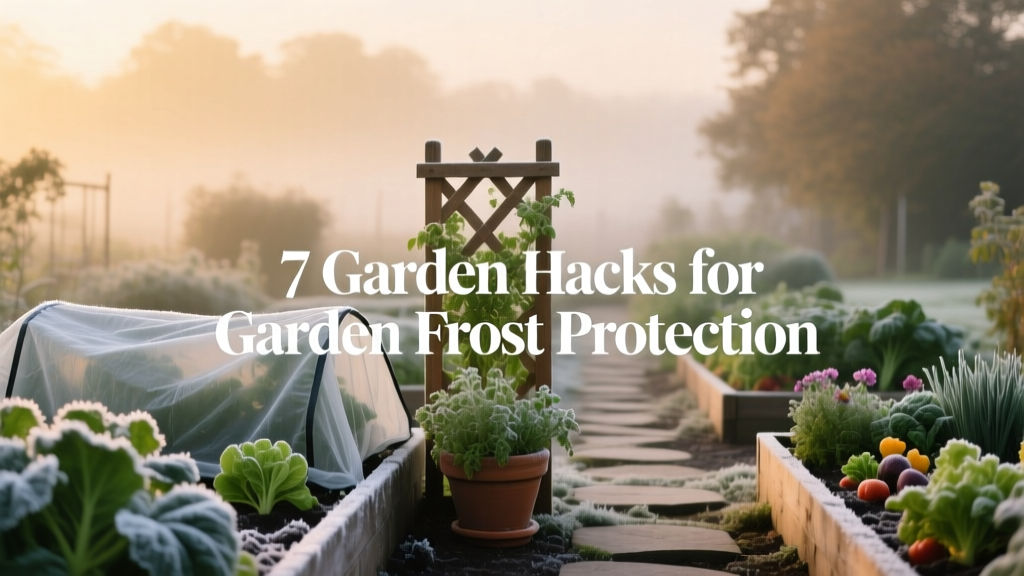
7 Garden Hacks for Garden Frost Protection
The most common frost-protection mistake isn’t “forgetting to cover plants.” It’s covering them wrong—like tossing a sheet over foliage at 10 p.m. and leaving gaps for cold air to pour in, or using plastic that touches leaves and actually causes freeze burn. Frost protection is less about heroics and more about microclimates, timing, and a few cheap materials used correctly.
Before we get into the hacks: frost is usually a radiational cooling event (clear, calm nights). Heat escapes from soil and plants into the sky, the air near the ground gets cold, and water vapor condenses/freezes on surfaces. Windy nights are a different beast (advective freezes) and need heavier tactics. If you know which one you’re facing, you’ll save effort and plants.
One quick “rule of thumb” that’s surprisingly reliable: anything under 40°F (4°C) is your cue to prepare for tender crops—because a forecast of 40 often becomes 34 at plant level in a low spot. And yes, your front-yard weather app is measuring higher than your lettuce.
Group 1: Use the ground’s heat (it’s your best free heater)
1) Water the soil on purpose (but at the right time)
Hack: Water soil (not foliage) in late afternoon—ideally 2–4 hours before sunset—to store extra heat in the ground. Moist soil holds and releases more heat overnight than dry soil, sometimes making a meaningful difference right at plant level. Aim for a deep watering of roughly 0.5–1 inch for beds (enough to moisten several inches down, not create puddles).
Real-world example: A community-garden plot in Denver had basil and peppers survive a surprise 30°F night simply because the gardener watered the beds at 4 p.m. and covered with fabric at dusk; the neighboring dry bed under the same cover saw blackened basil tips. This “wet soil + cover” combo is more powerful than either step alone.
University and extension guidance commonly recommends watering before a frost to reduce injury during radiational events (for one example, see University of Minnesota Extension, frost protection resources, 2020).
2) Add thermal mass with cheap water jugs (micro-heaters you already own)
Hack: Place dark, capped water containers near tender plants to act as thermal batteries. A few 1-gallon jugs (painted black or wrapped in a dark T-shirt) absorb heat during the day and release it slowly at night. Put them on the north side of plants so they don’t shade sun-loving crops.
Real-world example: In a raised bed of early tomatoes, four black gallon jugs tucked under a low hoop bought about a half-season’s worth of peace of mind. The gardener measured 2–4°F warmer air inside the mini-tunnel at 5 a.m. compared with the uncovered bed—enough to prevent leaf burn when the forecast flirted with freezing.
Cost note: This hack is often free if you reuse jugs. If you buy new, a 4-pack of opaque water containers might run $12–$20, still cheaper than replacing one frost-killed tomato transplant at $4–$6 each.
3) Mulch like a “frost blanket” for roots, not as a heat trap
Hack: Use mulch strategically: keep it pulled back from warm-season stems before a frost (so the soil can absorb daytime heat), then pull it in around the base after the cold night passes. A 2–3 inch layer of straw or shredded leaves protects root crowns and reduces freeze-thaw stress, especially for strawberries and fall transplants.
Real-world example: A home gardener in Michigan lost less overwintered parsley when they mounded shredded leaves around the crown after first frost—while parsley in bare soil heaved out during repeated freeze/thaw cycles. The mulch didn’t make the air warmer; it made the plant more resilient to the cold swings.
Group 2: Cover smarter (materials, spacing, and timing matter more than you think)
4) Build a “double-skin” cover: fabric + plastic, with an air gap
Hack: For nights expected to hit 28–32°F, use two layers: an inner frost cloth (or old sheet) and an outer plastic layer that never touches leaves. The air gap between layers is the insulation—think of it like double-pane windows. Use hoops (PVC, wire, or even bent saplings) to keep covers off foliage and avoid freeze burn.
Specific setup: Space hoops about 3–4 feet apart, and aim for at least 6–12 inches between the top leaves and the cover. Seal the edges to the ground with boards, rocks, or soil to trap warmer air.
Real-world scenario: A backyard grower protecting a late pepper patch before a weekend trip used frost cloth under a clear tarp supported by hoops. Nighttime low hit 27°F; peppers survived with minor leaf damage, while uncovered neighbors’ plants turned to mush. The “double-skin” bought just enough buffer to keep stems alive.
“Row covers can provide several degrees of frost protection, but effectiveness depends on sealing edges and keeping the cover from direct contact with foliage.” — Guidance echoed across land-grant extension recommendations, including University of California ANR resources (2019)
5) Use buckets, tote bins, and cloches—then vent early
Hack: For single plants, upside-down buckets, storage totes, or DIY cloches are ridiculously effective because they trap ground heat fast. Put the container on before dusk (not after the garden is already cold), and place a brick or rock on top so wind doesn’t launch it. The next morning, vent as soon as temps rise above 40°F or you’ll cook seedlings in surprise sun.
DIY alternative: Cut the bottom off a clear 1–2 liter soda bottle and push it an inch into the soil as a mini cloche. Leave the cap on for frost nights, cap off during the day for airflow.
Real-world example: A gardener in the Pacific Northwest saved a tray of hardened-off brassica starts during a sudden cold snap by covering each cell pack with an upside-down tote at 6 p.m. The next morning was sunny; they cracked the totes open at 9 a.m. to prevent condensation and overheating. No losses, no fancy gear.
6) Choose the right fabric (and know what it actually buys you)
Hack: Not all “covers” are equal. A thin old sheet might only give 2–4°F protection, while commercial frost cloth can offer roughly 4–8°F depending on weight, fit, and wind. The key trick: drape covers to the ground and secure the perimeter—warmth leaks like water through gaps.
Money-saving specifics: Frost cloth typically costs about $0.20–$0.60 per square foot depending on weight and roll size. If you’re protecting a 4 ft x 10 ft bed (40 sq ft), that’s roughly $8–$24. Compare that to replacing 8 pepper starts at $5 each: $40 gone in one bad night.
| Protection method | Typical frost buffer | Best use | Watch-outs | Rough cost |
|---|---|---|---|---|
| Old bed sheet | ~2–4°F | Light frost, quick emergency | Soaks up water, can sag onto plants | $0–$10 (repurposed) |
| Frost cloth (row cover) | ~4–8°F | Reliable for repeated cold nights | Needs edges sealed; can tear in wind | $0.20–$0.60/sq ft |
| Plastic tarp alone | Varies; often poor if touching foliage | Outer layer over fabric; rain shield | Leaf burn if it touches plants; condensation | $5–$25 |
| Bucket/tote cloche | ~3–7°F (small space warms fast) | Single plants, transplants | Must vent early; wind can dislodge | $0–$15 each |
Extension publications repeatedly emphasize that cover performance depends on installation details—especially sealing edges and avoiding contact—more than the brand name (see Penn State Extension frost/freeze protection materials, 2021).
Group 3: Win the microclimate game (location beats labor)
7) Block the “cold-air river” and plant on the warm side
Hack: Cold air flows downhill and pools in low spots like water. If you’ve got a small yard, you can create a warmer pocket by adding a simple windbreak/air dam on the downhill side: a 2–3 ft tall row of straw bales, a temporary snow fence, or even a line of patio chairs with a tarp. Then place tender pots and beds on the uphill or south-facing side where cold air is less likely to settle.
Real-world scenario: A gardener with a sloped driveway noticed their lowest bed frosted first every time. They moved containers up onto a south-facing patio within 6 feet of the house wall, and overnight lows there routinely ran a few degrees warmer. That’s free heat from the building mass—no electricity, no extra covers most nights.
Bonus microclimate move: If you grow in raised beds, even a modest height change helps. A bed raised 12–18 inches can avoid the coldest air that hugs the ground during radiational frosts, especially when paired with a cover.
Quick-play scenarios (what to do when frost is actually in the forecast)
Sometimes you don’t need seven tactics—you need the right two at the right time. Here are a few “real life” playbooks that save plants without turning you into an all-night weather watcher.
Scenario A: A surprise late spring frost hits after you’ve planted tomatoes and peppers
If the forecast says 33–36°F and skies are clear: water the soil mid-late afternoon, then set hoops and use a single layer of frost cloth sealed to the ground. If it’s predicted 28–32°F, add the double-skin trick (fabric + plastic outer) and toss a couple of 1-gallon jugs inside for extra thermal mass.
Skip fertilizing the day before a frost—fresh, tender growth is easier to damage. If you must choose between covering and watering because you’re short on time, cover first, then water what you can.
Scenario B: You’re protecting blossoms on strawberries, blueberries, or stone fruit
Flowers are often more frost-sensitive than leaves. For strawberries, a fluffy straw layer pulled over blossoms for the night can prevent damage, then gets pulled back in the morning. For blueberries in pots, move them against the house and cover with frost cloth; a simple tote “hat” over the top can protect blooms when the plant is small enough.
Many fruit crops have critical temperature thresholds at bloom and fruit set; local extension charts are worth bookmarking for your area (University of California Agriculture and Natural Resources publishes crop frost resources, 2019).
Scenario C: You have a big bed of greens and no time to baby individual plants
Greens are the perfect candidates for low tunnels. Keep a pre-cut length of frost cloth and a handful of clips in your shed so setup takes 10 minutes, not an hour. A single low tunnel can cover a 4 ft x 10 ft bed; add a second layer only when forecasts dip below 30°F.
Even if outer leaves get nipped, the growing point often survives. Harvest damaged leaves the next day to prevent rot under the cover.
Small details that make these hacks actually work
Put covers on early. The goal is to trap heat that’s still in the soil. If you wait until everything is already cold, you’re basically putting a blanket on an ice cube.
Keep plastic off leaves. If you only own plastic, use it as an outer shell over fabric, supported by hoops. Plastic touching foliage is a classic way to get those black, water-soaked spots even when the air temperature didn’t seem that bad.
Set a morning alarm. On sunny days, covered plants can overheat fast. Vent around 9–10 a.m. or earlier if the sun is strong—especially with totes, clear plastic, or cloches.
Don’t ignore wind. A calm 32°F night is much easier to manage than a windy 36°F night. Wind strips away the warm boundary layer around plants and can turn a “light frost” setup into a disappointment. In windy forecasts, prioritize tight edge-sealing and sturdier supports.
Invest once where it counts. If you only buy one thing, make it a roll of frost cloth wide enough to reach the ground with slack. Most gardeners get multiple seasons from it, and it’s faster (and lighter) than wrestling tarps.
Frost protection feels like a scramble until you realize it’s mostly repeatable systems: store a little heat, trap it with the right cover, and place plants where cold air doesn’t settle. Once you’ve got a hoop set, a cloth ready, and a couple of jugs on standby, frost night turns into a quick routine—then you go back inside while everyone else is out there panic-draping sheets over tomatoes.