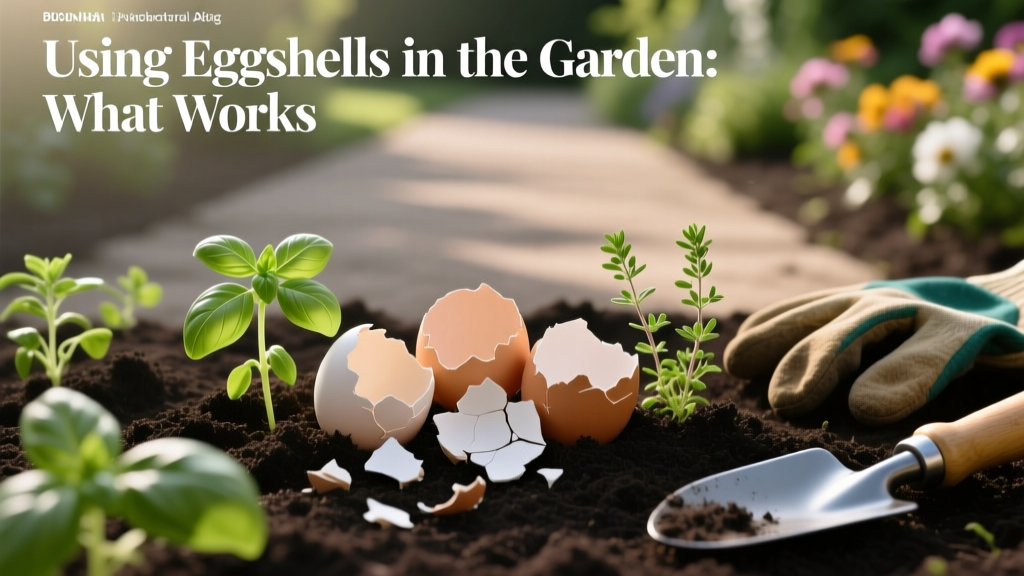
Using Eggshells in the Garden: What Works
Eggshells are one of the most overconfident “free fertilizers” in gardening: people crush a few shells, sprinkle them around a sad tomato, and expect blossom-end rot to disappear by next week. The surprise is that eggshells do contain a lot of calcium—but they release it painfully slowly unless you prep them the right way, and they rarely fix an urgent calcium problem in-season.
If you want eggshells to actually pull their weight, treat them like a slow-release mineral amendment and a physical tool (mulch texture, seed-starting containers, even pest barriers) rather than an instant cure-all. Below are the eggshell hacks that consistently work—and the ones that mostly just make us feel productive.
First, what eggshells can (and can’t) do
Tip: Know the real ingredient—calcium carbonate, not “plant vitamins”
Eggshells are mostly calcium carbonate (similar to agricultural lime), plus trace minerals. That means they can help nudge soil calcium over time, especially in compost or when ground very fine. But they’re not a balanced fertilizer: they won’t supply meaningful nitrogen, potassium, or phosphorus by themselves.
Tip: Don’t use eggshells as a fast fix for blossom-end rot
Blossom-end rot is usually triggered by uneven watering and calcium transport issues in the plant, not just a lack of calcium in soil. Tossing shells around the base won’t correct that in days; calcium carbonate needs time and contact with soil acids to break down. For tomatoes and peppers, steady moisture (mulch + consistent watering) does more in the short term than any eggshell sprinkle.
“Blossom-end rot is caused by a calcium deficiency in the developing fruit… Fluctuations in soil moisture, not a lack of calcium in the soil, are the most common cause.” — University of Minnesota Extension (2019)
Real-world example: If your first tomatoes show black leathery spots, add a 2–3 inch mulch layer and water to keep the top 6 inches of soil evenly moist. Keep the eggshells for your compost or next season’s soil prep.
Prep work that makes eggshells actually useful
Tip: Bake, then blitz for a “fastest possible” eggshell powder
Rinse shells, let them dry, then bake at 250°F for 10 minutes to make them brittle and easier to grind (and to cut down on smell). Grind in a coffee grinder until it’s closer to flour than confetti. The finer the particle, the more surface area—so soil acids can break it down quicker.
Example: I keep a thrift-store coffee grinder ($8–$15) labeled “garden only.” One dozen shells yields roughly 1/2 cup of powder, enough to dust a few planting holes or add to a small compost bucket.
Tip: If you don’t want to grind, use shells only in compost
Big eggshell chunks can sit in soil for years—harmless, but not doing much. In compost, though, time and microbial activity help soften them, and they become less of an eyesore. If your shells are chunky, treat them like “compost-only” material and let the pile do the slow work.
Tip: Skip the vinegar “calcium spray” unless you understand what you’re making
Soaking shells in vinegar dissolves calcium carbonate and makes calcium acetate in solution. That can be useful as a liquid calcium source, but it’s acidic and easy to overdo around seedlings or in already-acidic soil. If you try it, dilute heavily and treat it as an occasional supplement—not a weekly tonic.
Simple ratio: fill a jar with clean, crushed shells, cover with vinegar, let it finish fizzing (about 24–72 hours), then dilute 1 tablespoon per 1 gallon of water for a cautious trial on established plants. If you garden on acidic soil (pH under ~6), this is a “maybe,” not a default.
Where eggshells shine: slow, steady soil improvements
Tip: Add eggshell powder to planting holes for long-season crops
For tomatoes, peppers, broccoli, cabbage, and kale, a small dose of very fine eggshell powder can contribute calcium over the season. Mix it into the soil where roots will actually touch it—don’t leave it on the surface. A practical amount is 1–2 teaspoons of eggshell powder per planting hole, blended with the backfill.
Case example (raised bed tomatoes): In a 4x8 bed, mix 1 cup of eggshell powder into the top 4–6 inches before planting. It won’t replace proper watering, but it does help maintain calcium levels over time in beds that get lots of compost (compost can be relatively low in calcium).
Tip: Use eggshells as a “micro-lime” only if your soil is acidic
Because eggshells are calcium carbonate, they can gently raise pH in acidic soil—but they’re far weaker than agricultural lime per season because they break down slowly. If your soil test shows pH below 6.0, eggshell powder can be part of your long game. If your pH is already near neutral, skip it and focus on balanced fertility.
Practical shortcut: don’t guess. Many county extension offices offer soil tests for around $15–$30, and that single test can save you years of chasing nutrient ghosts.
Tip: Add eggshells to compost to buffer odor and improve texture
Eggshells don’t “activate” compost like magic, but they add grit and help keep compost from going sour when you’ve got lots of wet kitchen scraps. Toss shells into your countertop container, then into the pile; they’ll also discourage compaction. If you want quicker breakdown, crush them in your hand before adding.
Example: If you compost a lot of coffee grounds and fruit scraps (both can mat), adding a handful of crushed shells weekly helps keep air pockets. Aim for shells to be no more than 5% of your total compost volume—think “seasoning,” not “main ingredient.”
Physical garden uses that outperform the “fertilizer” myth
Tip: Use coarse eggshells as a temporary seedling collar against soft-bodied pests
Crushed shells can act as a scratchy barrier for slugs and snails, but only when they’re dry, coarse, and maintained. Spread a ring about 1–2 inches wide and keep it off the stem to avoid rot. The moment it’s wet or pressed into soil, it loses the edge.
Case example (slug-prone hostas): In a shady bed where beer traps were messy, a refreshed eggshell ring helped reduce overnight chewing on new shoots—until a rainy week flattened the barrier. Treat it as a “nice extra,” not your only defense.
Tip: Make eggshell “starter pots” for a tiny batch of seedlings
Half-shells work as mini seed-starting cells for small batches of herbs or flowers. Poke a drainage hole with a pin, fill with seed-starting mix, and set in an egg carton for stability. When transplanting, crush the shell gently before planting so roots can push through.
Specifics: Use shells for seedlings you’ll pot up quickly—around 2–3 weeks after germination—because the cell is small and dries fast. Basil, thyme, and alyssum are great candidates.
Tip: Add eggshells to potting mixes only if they’re powdered (and only as a minor component)
Chunky shells in containers don’t break down and can interfere with moisture consistency. If you’ve got a fine powder, mix it lightly: 1 tablespoon per 1 gallon of potting mix is plenty. For containers, you’ll still want a complete fertilizer since eggshells contribute basically no nitrogen.
Example: For patio tomatoes in 10-gallon grow bags, eggshell powder is “background nutrition.” Pair it with a balanced organic fertilizer applied at label rates every 2–4 weeks.
What’s a waste of time (or backfires)
Tip: Don’t top-dress big shell shards and expect results
Shell confetti on the soil surface mostly sits there, bleaches white, and gets kicked aside by watering or birds. It can look tidy for a week, but it’s not feeding your plants in any meaningful timeframe. If you’re not grinding or composting, you’re mostly decorating.
Tip: Don’t rely on eggshells as your only slug control
In dry weather, eggshell rings can help, but slugs will cross almost anything when conditions are right (especially if shells are damp or pressed in). If slugs are a real problem, combine methods: hand-pick at dusk, use boards as traps, and consider iron phosphate bait where appropriate. Eggshells are the “bonus layer,” not the whole plan.
Tip: Avoid adding eggshells to alkaline soils
If your soil is already alkaline (common in arid regions), extra calcium carbonate can nudge pH higher and make iron and manganese harder for plants to access. Yellowing leaves with green veins (iron chlorosis) can get worse. This is another reason a soil test is worth the small fee.
Method comparison: fastest results vs least effort
| Eggshell method | Effort | How fast it helps | Best use | Notes |
|---|---|---|---|---|
| Compost whole/crushed shells | Low | Months | General soil building | Chunks may remain visible; still fine |
| Bake + grind to powder | Medium | Weeks to months | Planting holes, bed amendments | Needs a dedicated grinder; best payoff |
| Vinegar extract (calcium acetate), diluted | Medium | Days to weeks | Trial supplement for established plants | Acidic; don’t overuse; not a cure-all |
| Coarse shell ring for pests | Low to medium | Immediate (weather-dependent) | Short-term seedling protection | Fails in wet weather; refresh often |
Three real garden scenarios (and what I’d do)
Scenario 1: Blossom-end rot hits your first tomatoes in June
Skip the eggshell panic. Remove the damaged fruits, add 2–3 inches of mulch, and aim for consistent moisture—especially during heat spikes. If you suspect low calcium long-term, work 1 cup of eggshell powder (or a tested calcium amendment) into the bed after the season, not as an emergency mid-fruit fix.
Money-saving note: A small bag of garden lime might cost $5–$10 and acts more predictably than kitchen-shell scatter, but only apply lime if a soil test suggests you need it.
Scenario 2: You compost, but your kitchen scrap bucket gets stinky and soggy
Keep a container for shells, let them dry, then crush them and add a handful each time you dump the bucket. Pair that with a “brown” like shredded cardboard (about 2 parts brown to 1 part kitchen scraps by volume) to reduce odor fast. Eggshells help with texture, but the cardboard does the heavy lifting.
Scenario 3: Slugs demolish your basil and lettuce seedlings overnight
Use eggshell rings only as a backup. Put down a board or damp newspaper as a slug trap and check it every morning for a week; you’ll be shocked how many you remove. If pressure stays high, use iron phosphate bait according to label directions and keep the eggshell barrier for extra bite around your most vulnerable transplants.
DIY upgrades and smarter substitutes
Tip: Make “eggshell grit” for worm bins and small composters
If you vermicompost, worms benefit from grit to help process food in their gizzards. Bake and grind shells to a sandy texture (not flour), then sprinkle lightly—about 1 teaspoon per week for a typical small home worm bin. This is one of the most reliable uses because the shells function mechanically, not just chemically.
Tip: If you need calcium now, use a tested amendment—not guesswork
For immediate calcium availability, gypsum (calcium sulfate) is often used because it adds calcium without raising pH much, unlike lime/eggshells. The right product depends on your soil test and what you’re trying to correct. Eggshells are great for slow maintenance; they’re not the emergency room.
Tip: If grinding isn’t your thing, trade shells for compost value
No grinder, no problem: keep shells in a freezer bag and drop them into your compost bin on compost day. Freezing makes shells more brittle, so they crush easily in your hand when you toss them in. It’s the zero-cost, zero-fuss option that still keeps waste out of the trash.
Source-backed reality check (so you don’t chase myths)
University extension guidance consistently points out that calcium problems in fruiting crops are usually tied to water management and calcium movement in the plant, not a quick soil calcium fix. The University of Minnesota Extension (2019) explicitly connects blossom-end rot to moisture fluctuations and calcium uptake issues rather than simply “not enough eggshells.” Penn State Extension also emphasizes that eggshells break down slowly and are not a quick calcium source unless finely ground and well incorporated (Penn State Extension, 2023).
If you love the thriftiness of eggshell gardening (same), keep it grounded in what shells can do well: add slow-release calcium carbonate over time, improve compost texture, and provide a handy physical material for small jobs.
Citations: University of Minnesota Extension (2019), “Blossom-End Rot.” Penn State Extension (2023), guidance on eggshells/composting and calcium availability.
My rule of thumb: if you can crush it into powder, eggshells become a legitimate soil amendment. If it’s chunky, treat it as compost material or a short-term barrier—and don’t expect miracles by next weekend. That’s how eggshells stop being garden folklore and start being a real (free) tool you’ll actually notice.