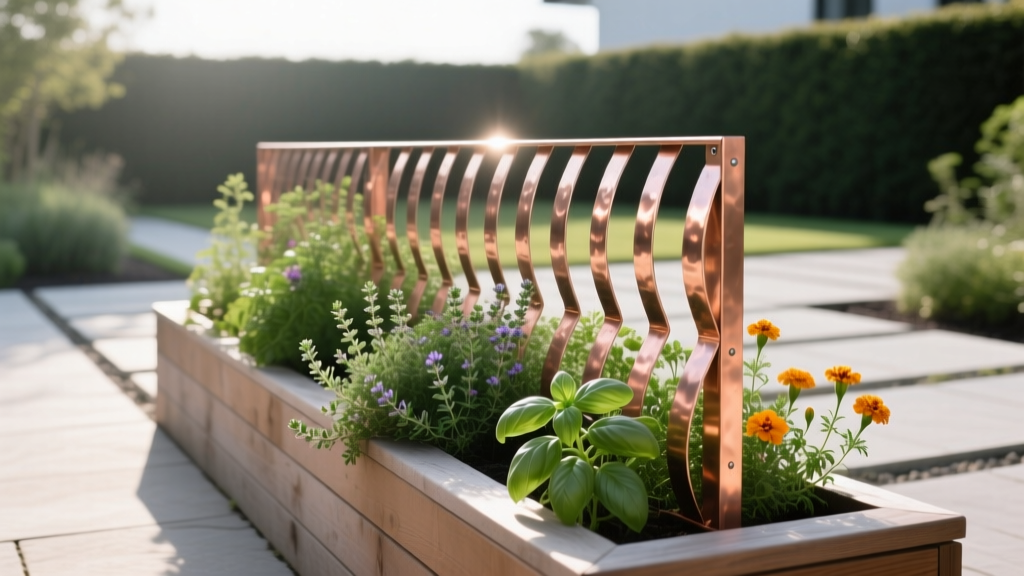
DIY Garden Pest Barrier from Copper
Most slug “barriers” fail for a boring reason: gardeners leave a tiny bridge. One wet leaf drooping over the edge of a pot, a clump of mulch touching the rim, or a label leaning across the band—and slugs and snails stroll right over like the copper isn’t even there. Copper works, but it’s picky about setup, surface condition, and where you place it.
This article is all about getting copper to actually earn its keep—without wasting money on the wrong tape width or installing it where it can’t possibly help. You’ll see a few builds (from $6 fixes to sturdier setups), plus quick troubleshooting when you swear the slugs “don’t care” about copper.
First: How Copper Barriers Really Work (So You Don’t Install It Backwards)
Tip: Put copper where the pest must cross—no detours allowed
Copper is a “contact barrier,” meaning it helps only when the pest physically touches it. Install it on the only route into the plant area: around the rim of a pot, the top edge of a raised bed, or a continuous ring around a hosta clump. If there’s soil piled up, mulch touching the band, or foliage creating a ramp, you’ve accidentally built a bypass.
Example: If your lettuce is in a 20-inch pot, place the copper band on the outer rim and keep the pot’s sides clear of stacked bricks, saucers, or weeds that touch the rim.
Tip: Go wider than “decorative”—aim for 2 inches minimum
Very narrow copper strips can be crossed more easily, especially if they’re dirty or if the slug can reach over it. A practical target is 2 inches (5 cm) wide for pots and 2–4 inches for bed edging, so the slug must stay in contact long enough to be deterred. Wider also gives you room to clean and refresh the surface without losing coverage.
Money note: A 2-inch copper tape roll (typically 15–30 ft) often costs $12–$25, while 1/2-inch “craft” copper can be cheaper but tends to underperform and needs more fussing.
Tip: Don’t rely on copper alone in peak slug season
Copper works best as part of a system—especially in rainy stretches when slugs are abundant and everything stays wet. University and extension resources consistently recommend integrated approaches for slugs (barriers, sanitation, trapping, and in some cases bait). For example, UC IPM (University of California Integrated Pest Management, 2020) highlights combining physical barriers with habitat reduction and trapping for best results.
Example: If you’re protecting seedlings in March or April and you have heavy spring rains, pair copper with nightly hand-picking for 7–10 days to break the cycle.
Materials That Work (and the Ones That Quietly Waste Your Time)
Tip: Choose copper tape with conductive adhesive—or use mechanical fastening
For pot rims and smooth surfaces, look for copper tape with strong adhesive; “conductive” adhesive is common for gardening tapes and electronics tapes, and it tends to hold up better outdoors. For rough wood beds, skip relying on glue alone: use small 3/8-inch stainless staples or short screws with washers every 6–8 inches so it doesn’t peel in heat or rain.
Example: On cedar beds, staple the tape under the top lip so irrigation splash doesn’t constantly hit the edge and lift it.
Tip: Buy copper flashing for raised beds—cheaper per foot
If you need long runs, copper flashing is usually a better deal than “garden tape.” A 10-inch x 10-foot roll can often be found around $25–$45 depending on copper prices; you can cut it into four 2.5-inch strips with tin snips. That’s 40 feet of barrier from one roll—often less cost per foot than specialty tape.
Scenario: A 4 ft x 8 ft raised bed needs about 24 feet of perimeter coverage; one flashing roll can cover that bed and still leave extra for a second project.
Tip: Avoid copper “paint” and tiny wire as primary barriers
Copper paint sounds clever, but thin coatings weather quickly and are hard to keep continuous. Thin copper wire stapled around a bed looks tidy, but it provides too little contact area and is easy to bridge with debris. If you love the wire look, use it as a secondary line above a wider copper strip—not the main defense.
Build #1: The 10-Minute Copper Tape Barrier for Pots (Most Bang for Your Buck)
Tip: Clean first, then stick—adhesive fails on dusty pots
Wipe the pot rim with rubbing alcohol or soapy water, then dry it fully before applying tape. Press firmly along the entire run, especially at the seam where the tape overlaps. If you skip cleaning, the tape lifts within a week—usually right after the first watering.
Specifics: Overlap the tape ends by 1 inch to avoid a tiny gap that becomes the “doorway.”
Tip: Place the band high—right under the lip
Position tape as close to the top edge as possible so slugs can’t climb the pot and then reach soil without crossing copper. On some pots, placing the tape mid-body lets slugs climb above it using a leaf draped from the plant. High placement also keeps it out of constant splash, which slows tarnish buildup.
Example: For basil in a patio pot, run copper around the upper 1 inch of the container and trim lower leaves so none hang to the ground.
Tip: Keep a “no-bridge zone” of 3 inches
Maintain at least 3 inches of clearance around the copper line: no mulch piled to the rim, no plant tags leaning, no garden twine draped across. Think of copper like an electric fence—useless if a branch falls on it. This one habit fixes most “copper doesn’t work” complaints.
Build #2: Copper on Raised Beds (Durable, Clean, and Less Fiddly)
Tip: Mount copper on the outside edge, not flat on top
Flat copper on the bed’s top rail gets buried under soil and mulch fast, and you’ll constantly scrape it while planting. Mount it vertically on the outside face, right below the top edge, so pests must cross it to enter. This also makes it easier to wipe clean once a month.
Specifics: Cut strips 2–4 inches tall; fasten every 6–8 inches with staples or screws.
Tip: Protect corners with a slight overlap—corners are the failure point
Slugs love corners because debris collects there, creating bridges. Wrap corners with a 1–2 inch overlap and fasten extra well. If you’re using tape, add one small screw-and-washer at each corner to prevent peeling.
Scenario: A gardener in the Pacific Northwest noticed slugs only “got in” at the bed corners—after adding corner overlaps and clearing corner mulch, damage dropped within a week.
Tip: Add a drip edge above the copper in very rainy climates
If your bed gets hammered by rain, a simple wood trim strip above the copper helps reduce constant wetting and grime buildup. Even a 1x2 board mounted as a cap can act like an awning so the copper stays cleaner longer. Cleaner copper usually performs more reliably because slugs make direct contact with copper rather than a film of mud.
Keep It Working: Maintenance That Takes Minutes (and Saves Your Seedlings)
Tip: Clean copper monthly with a quick vinegar wipe
Oxidation and garden grime reduce contact. Once every 3–4 weeks during slug season, wipe the copper with vinegar on a rag, then rinse and dry. You’re not polishing for looks—you’re restoring a clean surface so the barrier is consistent.
Example: Set a recurring reminder for the first weekend of each month from April to September, especially if you irrigate overhead.
Tip: Remove “ladder leaves” after pruning or storms
After a windy day, check for any leaf or stem touching from the ground to above the copper line. Slugs are opportunists; one fallen lettuce leaf can become a ramp overnight. Make this a 2-minute walk-around at dusk when slugs are active.
Tip: Watch for soil splash and mulch creep
Soil that splatters onto copper dries into a gritty bridge. Keep mulch pulled back so it doesn’t touch the copper—leave a bare ring of 1–2 inches near the barrier. If you top-dress beds, re-check that the copper is still exposed afterward.
Real-World Scenarios (and Exactly What to Do)
Scenario 1: Hostas shredded overnight in a shade bed
Hostas are slug magnets, and shade beds stay damp. Create a copper ring using 2-inch copper flashing formed into a circle around the crown, leaving a 6–8 inch radius from the plant center so leaves don’t droop across. Pair it with removing boards, rocks, and dense groundcover within 2 feet of the plant to reduce daytime hiding spots (a standard slug-management principle noted in UC IPM, 2020).
Shortcut: If flashing feels too stiff, use copper tape on a plastic plant collar (cut from a nursery pot) and stake it into the soil as a removable ring.
Scenario 2: Lettuce seedlings disappearing in a raised bed
Seedlings are most vulnerable when they’re under 4 inches tall. Install a 3-inch copper strip around the bed’s exterior, then set beer traps or yeast-water traps at soil level just outside the bed for 7 nights to reduce local pressure. The copper blocks new arrivals; the traps mop up the ones already nearby.
Example trap mix: 1 cup water + 1/2 teaspoon active dry yeast + 1 teaspoon sugar in a shallow container; refresh every 2–3 days.
Scenario 3: Container strawberries on a patio—ants and slugs
Slugs climb pots, but ants often “farm” aphids and can use any bridge too. Wrap the pot rim with 2-inch copper tape and keep the pot from touching walls, trellises, or stacked pots. If ants are marching up, also apply a sticky barrier (like horticultural adhesive) on a separate band below the copper—don’t coat the copper itself, because you’ll reduce direct contact.
Cost saver: One 30 ft roll of 2-inch copper tape can do about 10–12 medium pots (depending on diameter), often cheaper than replacing chewed strawberry starts.
Make Copper Stronger with Simple Add-Ons (No Fancy Gadgets)
Tip: Add a second line 2 inches above the first in high-pressure areas
In gardens with heavy slug populations, a double band can help because it reduces the chance that debris bridges both. Place the second strip about 2 inches above or inside the first, depending on your surface. This is especially useful on rough wood where grime can collect.
Example: On a compost-adjacent bed (classic slug habitat), two 2-inch bands spaced apart held up better than a single wide band that got muddy.
Tip: Use copper mesh to plug gaps around irrigation lines
Where drip tubing or trellis legs enter a bed, slugs sometimes bypass the main barrier. Stuff copper mesh (often sold for pest exclusion) around those penetration points, creating a small “collar.” Mesh is also handy for protecting the base of a prized seedling if you can’t ring the entire bed.
Specifics: Cut a 4x4 inch square of mesh, wrap loosely around the stem area (not tight on the plant), and anchor with a U-pin.
Tip: Combine with night patrol for 3 evenings after installation
When you first install copper, it blocks newcomers—but the pests already inside your bed still feast. Do a quick night check for 10 minutes on 3 consecutive evenings, remove slugs/snails, and you’ll see results much faster. Timing matters: go out 30–60 minutes after sunset or right after watering.
What Copper Can’t Do (So You Don’t Expect Magic)
Tip: Don’t use copper to stop insects that fly or jump
Copper barriers are mainly for crawling pests like slugs and snails. They won’t stop cabbage moths, flea beetles, or leafhoppers, so don’t wrap a bed and wonder why kale still has holes. If the damage is higher on leaves and you see tiny shot-holes, you likely need row cover, not copper.
Tip: If the area is constantly flooded, fix drainage first
Waterlogged soil increases slug activity and makes every surface grimy faster. If your bed stays soggy, add drainage or raise the bed height before investing heavily in copper. Even an extra 4–6 inches of bed height can reduce constant saturation around the perimeter.
“The most effective slug control usually comes from combining methods—reducing hiding places, using barriers where they must cross, and monitoring when conditions are wet.” — UC Statewide Integrated Pest Management Program (UC IPM), 2020
Copper Barrier Options Compared (So You Buy the Right Stuff Once)
| Option | Best for | Typical cost | Durability | Common failure |
|---|---|---|---|---|
| 2-inch copper tape | Pots, smooth plastic/ceramic rims | $12–$25 per 15–30 ft | Medium (1–2 seasons depending on weather) | Peeling from dirty surface or heat |
| Copper flashing (cut into strips) | Raised beds, long runs | $25–$45 per 10 ft roll (yields ~40 ft of 2.5-inch strips) | High (multiple seasons) | Sharp edges if not hemmed; corner gaps |
| Copper mesh | Gaps around pipes, small collars | $8–$15 per roll (varies by size) | Medium | Compresses/opens if not anchored |
| Copper wire | Secondary line, light deterrent | $6–$15 per spool | High | Too little contact area; easy bridges |
Money-Saving Hacks (Because Copper Isn’t Cheap)
Tip: Use copper only where it has the highest payoff
You don’t need to wrap the whole garden. Target high-value and high-damage zones: seedlings, hostas, strawberries, and container herbs by the back door. Many gardeners get better results protecting 1–2 beds well than doing a sloppy perimeter around everything.
Tip: Salvage copper from remodeling leftovers—carefully
If you can get scrap copper flashing or pipe off-cuts, you can flatten and cut them into strips. Just avoid copper that’s painted, heavily lacquered, or contaminated with construction adhesives. File sharp edges and aim for the same practical width: 2 inches or more for a real barrier.
Tip: Hem the top edge of flashing to prevent cuts (and make it stiffer)
A simple fold-over (about 1/4 inch) along the top edge makes flashing safer to handle and less likely to warp. Use pliers and a straight board as a brake. This tiny step turns “flimsy metal strip” into a sturdy bed accessory you can reuse for years.
Troubleshooting: When Slugs Still Get Through
Tip: If you see slime trails over copper, clean and check for bridges the same day
Slime trails across the barrier usually mean the slug didn’t have to make full contact with copper—or the surface is coated in grime. Clean with vinegar, remove any leaf bridges, and pull mulch back 1–2 inches from the copper line. Also check the seam overlap; even a 1/8-inch gap can become the preferred entry point.
Tip: If only one corner is breached, treat it like a leak
Most failures are localized: a corner, a gate area, a spot where a trellis touches the bed. Reinforce that one area with an extra patch of copper and physically eliminate the bridge. Think like water pressure—pests find the weak point and keep using it.
Tip: If you’re battling snails (not just slugs), widen the barrier and reduce nearby shelter
Snails often operate from hard shelter like edging stones, boards, and dense groundcover. Give them fewer places to hide within 3 feet of your protected area, and use a 3–4 inch copper strip when possible. For additional guidance on mollusk management, resources like the Royal Horticultural Society (RHS), 2021 emphasize reducing hiding places and combining controls rather than relying on a single method.
Copper is one of those garden tools that feels “iffy” until you install it like a pessimist: assume the slugs will find any shortcut you leave them. Build a clean, wide band where they must cross, keep a small clearance zone, and do a quick maintenance wipe on a schedule. Once it’s set up right, copper becomes the rare pest-control trick that saves time instead of adding chores—especially for containers, seedling beds, and those irresistible hostas that slugs seem to RSVP to every year.