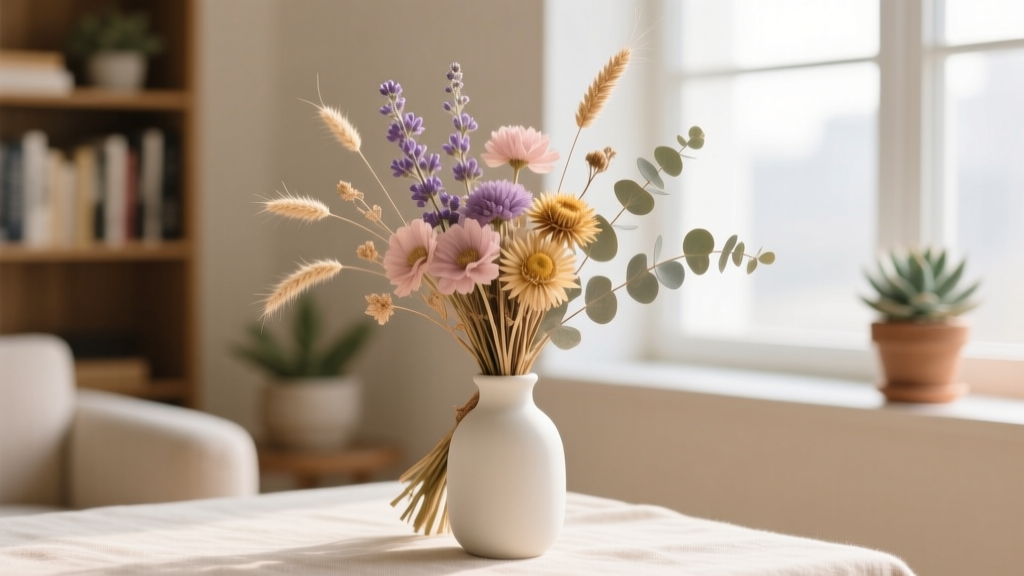
Dried Flower Arrangements: How to Preserve Garden Blooms for Year-Round Beauty
Why Dry Flowers?
A fresh bouquet lasts 5-7 days. A well-made dried arrangement lasts 1-3 years. Dried flowers bring garden beauty indoors year-round, require zero maintenance, and cost nothing if you grow the flowers yourself. Plus, the muted, vintage aesthetic of dried arrangements has become one of the biggest interior design trends.
6 Drying Methods Compared
| Method | Best For | Time | Color Retention |
|---|---|---|---|
| Air drying (hanging) | Roses, lavender, statice | 1-3 weeks | Good (muted) |
| Silica gel | Peonies, roses, full blooms | 2-7 days | Excellent |
| Pressing | Flat flowers, ferns, leaves | 1-4 weeks | Good |
| Glycerin preservation | Eucalyptus, hydrangea, foliage | 2-6 weeks | Excellent (slightly darker) |
| Desiccant (borax/cornmeal) | Zinnias, marigolds, daisies | 1-2 weeks | Good |
| Freeze drying | Everything (best quality) | 24-48 hours | Perfect |
Method 1: Air Drying (Easiest)
- Harvest flowers when they're just past their peak (not fully fresh — they shrink)
- Remove all leaves from stems
- Bundle 5-10 stems together, secure with rubber band (stems shrink as they dry)
- Hang upside down in a dark, dry, well-ventilated room
- Wait 1-3 weeks — flowers are ready when petals feel papery and stems snap
Best varieties: Lavender, statice (sea lavender), baby's breath, globe amaranth, strawflower, celosia, yarrow
Method 2: Silica Gel (Best Color)
- Buy silica gel crystals from a craft store ($15 for 5 lbs, reusable)
- Fill a container with 1 inch of silica gel
- Place flowers face-up on the gel
- Gently pour more silica gel around and over the flowers, supporting petals
- Seal the container and wait 2-7 days depending on flower size
- Carefully brush off crystals with a soft paintbrush
Best varieties: Roses, peonies, ranunculus, dahlias, zinnias, hydrangeas
Method 3: Glycerin (Best for Foliage)
- Mix 1 part glycerin with 2 parts warm water
- Split the bottom inch of stems with a knife
- Place stems in the solution
- Plants absorb glycerin over 2-6 weeks, replacing water in cells
- Leaves become soft, flexible, and maintain their color indefinitely
Best varieties: Eucalyptus, oak leaves, hydrangea, beech, magnolia
12 Best Flowers and Plants to Dry
| Plant | Best Method | Color When Dried | Longevity |
|---|---|---|---|
| Strawflower | Air dry | Retains bright colors | 2-3 years |
| Lavender | Air dry | Purple, fades slowly | 1-2 years |
| Roses | Silica gel | Muted version of fresh | 1-3 years |
| Statice | Air dry | Excellent color retention | 2+ years |
| Baby's breath | Air dry | White/cream | 2-3 years |
| Eucalyptus | Glycerin | Silver-green, stays flexible | 3-5 years |
| Hydrangea | Silica or glycerin | Antique green/pink | 2-3 years |
| Lunaria (money plant) | Air dry | Silvery translucent | 3+ years |
| Celosia | Air dry | Retains vibrant reds/yellows | 2+ years |
| Globe amaranth | Air dry | Purple/pink, excellent | 2-3 years |
| Ornamental grasses | Air dry | Natural tan/gold | 2+ years |
| Pampas grass | Air dry, then hairspray | Cream/white | 3-5 years |
Arrangement Ideas
1. Monochromatic Minimal
Single variety in a clear glass vase. 15-20 stems of lavender or strawflower in a narrow-necked bottle. Modern and clean.
2. Wildflower Meadow
Mix 5-7 varieties in varying heights. Include ornamental grasses for movement. Use a wide-mouth ceramic vase.
3. Framed Pressed Flowers
Press flowers between glass in a floating frame. Arrange by color gradient or botanical family. Hang in bathroom or hallway.
4. Wreath
Wire dried flowers to a grapevine or straw wreath base. Mix textures: fluffy grasses, round statice, and spiky lavender.
Display and Care
- Avoid direct sunlight: UV fades colors rapidly
- Low humidity rooms: Bathrooms and kitchens cause moisture damage
- Dust monthly: Use a hair dryer on cool, low setting from 12 inches away
- Spray with hairspray: A light coat of unscented hairspray prevents shedding
- Never water: Moisture causes mold on dried flowers
Final Thoughts
Start a dried flower garden this season. Plant strawflower, statice, and lavender — the three easiest and most colorful flowers to dry. Harvest throughout summer, dry in batches, and by fall you'll have enough material for arrangements that last through winter and beyond.