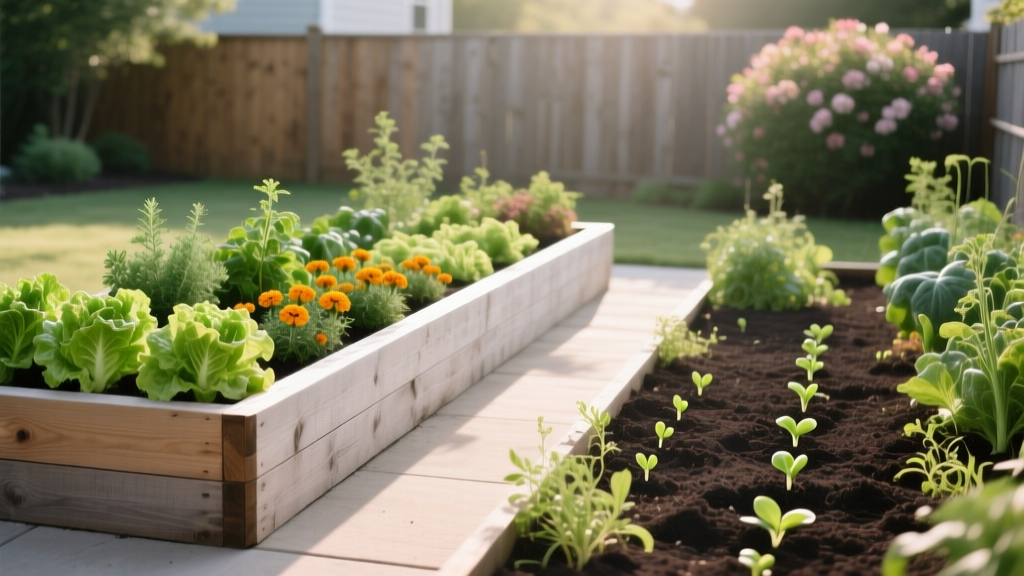
Raised Beds vs In-Ground Planting: Pros and Cons
The mistake I see over and over: gardeners build a gorgeous raised bed, fill it with “good dirt,” and then wonder why everything dries out twice as fast and needs constant babysitting. A raised bed isn’t automatically better soil—it’s a different microclimate, with different drainage, temperature swings, and long-term costs. If you match the method to your site (and your schedule), both raised beds and in-ground planting can produce ridiculous harvests.
Below are practical, proven tricks to help you decide—and to make either option work like it’s been dialed in for years.
Start with the site (not the Pinterest photo)
Tip: Do the “8-inch dig test” before you commit
Before you spend a dollar on lumber or start turning sod, dig a hole 8 inches deep and about a shovel wide in the exact spot you want to garden. If you hit rocks, hardpan, construction debris, or sticky clay that smears like pottery, raised beds may save you years of frustration. If the soil crumbles, has roots and earthworms, and drains reasonably, in-ground planting is often the fastest, cheapest win.
Real-world example: A backyard with 3 inches of topsoil over compacted subsoil will stunt carrots and parsnips in-ground; a 12-inch raised bed filled with a loose mix fixes that immediately.
Tip: Use a drainage stopwatch (it’s faster than guessing)
Fill that same 8-inch hole with water and time how long it takes to drain. If it still has water after 4 hours, you’re working with slow drainage—raised beds or mounded rows will reduce root rot on crops like tomatoes and peppers. If it drains in under 30 minutes, you’ll need extra organic matter either way, but raised beds can dry out especially fast in hot weather.
Number to remember: 30 minutes = very fast drainage; 2–4 hours = slow drainage.
Tip: Confirm your sun with one day of “shadow notes”
Raised beds don’t create sunshine. Track sun/shade at 9 a.m., noon, and 3 p.m. on a clear day; you want at least 6 hours for fruiting crops (tomatoes, peppers, squash). If you’re stuck with 3–5 hours, go in-ground under a deciduous tree’s edge for greens and herbs instead of investing in raised beds you’ll constantly “fix” with fertilizer.
Real-world example: A 4-hour site can grow lettuce and cilantro in-ground beautifully, while a raised bed there often becomes an expensive spinach graveyard once summer heat hits.
Soil & fertility: where raised beds shine—and where they bite back
Tip: Treat raised beds like containers (because they behave like them)
Raised beds drain and warm more like giant planters than like native soil, especially if they’re 10–12 inches tall and filled with lightweight mixes. That means nutrients wash out faster, and you’ll typically top-dress more often. Plan on adding 1 inch of compost each season (spring or fall) instead of “set it and forget it.”
Source: Washington State University Extension notes raised beds improve drainage and early soil warming but can dry out faster than in-ground beds (WSU Extension, 2020).
Tip: Skip the “pure compost fill” (it shrinks and burns)
Filling a raised bed with straight compost is a common expensive mistake: it settles hard, can release too much nitrogen early, and drops in volume as it decomposes. A steadier DIY blend is 50% screened topsoil + 30% finished compost + 20% aeration (pumice, perlite, or coarse pine fines). This mix holds water, feeds plants, and doesn’t collapse dramatically after the first rainstorm.
Number to remember: Expect 2–4 inches of settling in the first season if your mix is heavy on fluffy organic matter.
Tip: In-ground gets better every year if you feed the soil surface
In-ground planting rewards patience: you can build rich soil without hauling a truckload of mix. Add a 2–3 inch layer of compost on top each fall, then mulch (leaves, straw) to protect it. Earthworms do the mixing for free, and you avoid the “raised bed refill” cycle.
Source: Cornell Cooperative Extension recommends adding organic matter like compost annually to improve soil structure and water-holding capacity (Cornell Cooperative Extension, 2019).
Tip: If you have clay, choose “mound-in-ground” as a stealth third option
You don’t always need lumber to get raised-bed benefits. For clay sites, mound soil into 6–8 inch-high rows and plant on top; you’ll improve drainage without buying materials. Top with 2 inches of compost and 2–3 inches of mulch to prevent crusting.
Real-world example: A heavy clay yard that puddles in spring can still grow productive potatoes on mounded rows—without building a single frame.
“Soil organic matter is a key driver of soil health—improving aggregation, water infiltration, and nutrient cycling.”
—USDA Natural Resources Conservation Service (NRCS), Soil Health resources (2017)
Water: the quiet dealbreaker for a lot of gardens
Tip: Budget irrigation differently for raised beds vs in-ground
Raised beds usually need more frequent watering because the soil is elevated, warmer, and exposed on the sides. In-ground beds (especially with mulch) hold moisture longer once established. If you travel or forget to water, in-ground often forgives you more.
Practical number: In peak summer, many raised beds need watering every 1–2 days; in-ground mulched beds often stretch to every 3–5 days depending on soil type and heat.
Tip: Install drip with a repeatable layout (and stop hand-watering yourself into resentment)
For a 4 ft x 8 ft raised bed, a simple, effective layout is three drip lines running the 8-foot length, spaced 12–16 inches apart. For in-ground rows, run a single line per row and pin it down every 3–4 feet so it doesn’t snake around. Use a battery timer set for early morning—start with 20–30 minutes, then adjust based on how deep moisture reaches (aim for 6 inches).
Money saver: A basic timer + 50 ft of dripline often costs less than replacing one season of struggling tomato plants.
Tip: Mulch thickness is different for each method
Raised beds benefit from a slightly thicker mulch layer to slow evaporation—think 3 inches of shredded leaves, straw, or fine wood chips (keep it 1–2 inches back from stems). In-ground beds can do well with 2 inches because the surrounding soil mass already buffers temperature and moisture. If slugs are a problem, switch from straw to leaf mold or composted bark and water in the morning so the surface dries by evening.
Real-world example: A raised bed with 3 inches of leaf mulch can cut summer watering noticeably compared to bare soil—especially in windy yards.
Temperature, season length, and what you can plant earlier
Tip: Use raised beds to “cheat” spring by 1–3 weeks
Raised beds warm faster in spring because they drain better and have more air exposure. That can translate to earlier sowing of peas, spinach, and carrots—often 7–21 days earlier depending on your climate and bed height. The shortcut: cover the bed with clear plastic or a low tunnel for 10 days before planting to pre-warm the soil.
Source: University of Minnesota Extension notes soil temperature strongly affects germination timing and early growth, and raised beds can warm sooner in spring (University of Minnesota Extension, 2021).
Tip: In hot climates, in-ground can outperform raised beds mid-summer
Warmth is great—until it isn’t. In very hot regions, raised beds can push root zones too warm and dry, stressing lettuce, cilantro, and even peppers. If your summer highs are regularly above 90°F, consider in-ground planting with afternoon shade cloth (30–40%) for cool-season greens.
Real-world example: A gardener in a 90–100°F summer area often gets longer lettuce harvests in-ground under light shade than in a sun-baked raised bed.
Cost, labor, and longevity: the stuff nobody wants to talk about
Tip: Price a raised bed by volume, not by “one bed”
The sneaky cost is soil. A 4 ft x 8 ft bed that’s 12 inches tall holds about 32 cubic feet of mix (roughly 1.2 cubic yards). If bagged soil/compost averages $6–$8 per 1.5–2 cu ft bag, you can easily spend $120–$200 just filling one bed—before lumber, hardware, or irrigation.
Money-saving hack: Order bulk soil/compost by the cubic yard when possible; it’s often half the price per volume compared to bags.
Tip: Consider a “no-frame raised bed” to cut costs
If you want raised-bed performance without lumber, mound soil into a crisp rectangle, then edge it with stones, bricks, or even thick mulch berms. You’ll lose the tidy look, but you keep the improved drainage and loose planting zone. This is a great way to test whether you even like raised-bed gardening before committing to wood that eventually rots.
Real-world example: A renter can build two 3 ft x 10 ft no-frame beds with compost + topsoil and move on later with zero wasted lumber.
Tip: If you build with wood, build for 7–15 years (not 2–3)
Cheap, thin boards bow fast and rot where soil stays wet. If you want longevity, use thicker lumber (like 2-inch thick boards) and avoid ground contact where possible. Cedar can last 10–15 years in many climates; untreated pine might last 3–7 years depending on moisture and soil contact.
DIY alternative: Corrugated metal panels with a simple wood frame can last longer than cheap boards and won’t bow as easily on long runs.
Weeds, pests, and ergonomics (aka: how your back feels in July)
Tip: In-ground wins for “free space,” raised beds win for “weed boundaries”
In-ground planting gives you unlimited room to spread out, rotate crops, and plant cover crops—great for big gardens. Raised beds create crisp edges that make mulching and weeding faster, especially if you keep paths covered with cardboard + 3 inches of wood chips. If you hate weeding, raised beds plus mulched paths can cut the time dramatically.
Real-world example: A 12-inch mulched path between beds can stay mostly weed-free for a season; bare soil paths become weed nurseries in a month.
Tip: Use hardware cloth only when the problem is real (voles are expensive)
If you have voles or gophers, raised beds can become salad bars unless you add a barrier. Staple 1/2-inch hardware cloth to the bottom before filling, and extend it up the sides a couple inches. If you don’t have burrowing pests, skip it—hardware cloth costs add up fast across multiple beds.
Scenario: A suburban yard with vole tunnels benefits hugely from hardware cloth; a fenced urban yard with no burrowing signs can save that money for compost.
Tip: Match bed height to your body (and your actual weeding style)
A 10–12 inch bed is great for soil quality, but it doesn’t magically eliminate bending. If you want true ergonomic benefits, consider 18–24 inches tall for less stooping, or even taller for accessible gardening—but remember taller beds cost more to fill. The hack is to build taller walls and “cheat fill” the bottom with logs/branches (hugelkultur-style) only if your climate isn’t extremely dry.
Number to remember: Every extra 6 inches of height adds a lot of soil volume—and cost—across a 4x8 footprint.
Which method fits your situation? Three real-life setups
Scenario 1: New construction yard with compacted subsoil
If your soil feels like concrete and water runs off instead of soaking in, raised beds (or mounded beds) save you from fighting compaction for years. Start with a 12-inch raised bed and fill with a stable mix (50/30/20 as above), then plant deep-rooted cover crops (daikon radish, clover) in nearby in-ground areas to slowly rehab the native soil. Budget for drip irrigation from day one, because compacted sites tend to bake hard around the beds.
Scenario 2: Older home with decent loam and lots of space
If your soil already crumbles nicely and you have room to rotate crops, in-ground planting gives you the best return for the least money. Sheet-mulch new beds with cardboard + 3 inches of compost and mulch on top, then plant right through it. Use the savings (compared to lumber and soil fill) on quality compost, a soil test, and a drip system.
Scenario 3: Small urban yard or patio-adjacent garden
When space is tight, raised beds help you intensify production and keep things tidy. A single 4x8 raised bed can handle a high-output layout: 2 tomatoes on a trellis, 6–8 pepper plants, basil, and a border of green onions—if you keep fertility and water consistent. Put the bed close to the house so you notice problems early (wilting, pests) and you’re more likely to harvest.
Comparison table: quick reality check
| Factor | Raised Beds | In-Ground Planting |
|---|---|---|
| Upfront cost | Higher (wood/metal + soil fill) | Lower (compost + mulch) |
| Soil control | Excellent (you choose the mix) | Variable (depends on native soil) |
| Water needs | Often higher; dries faster | Often lower with mulch; more buffered |
| Spring warming | Faster; earlier planting by ~7–21 days | Slower; depends on soil moisture |
| Weed management | Easier edges; cleaner paths | Can be easy with sheet mulch, but edges spread |
| Longevity/maintenance | Frames can rot; soil settles 2–4 inches first year | Improves over time with compost top-dressing |
| Best fit | Bad soil, drainage issues, small spaces | Good native soil, large areas, low cost |
Smart hybrid strategies (my favorite “best of both” shortcuts)
Tip: Put raised beds where soil is worst, and go in-ground everywhere else
You don’t have to pick one method for your entire yard. Use 1–2 raised beds for carrots, onions, and early spring crops where loose soil matters most. Grow sprawling crops (squash, pumpkins, potatoes) in-ground where they can roam, and improve those areas gradually with compost and mulch.
Real-world example: Two raised beds handle salad greens and roots; a big in-ground patch handles corn and squash—less watering stress and far lower soil-fill costs.
Tip: Standardize bed width for faster work
Make beds (raised or in-ground) 3–4 feet wide so you can reach the center from either side without stepping on soil. This single decision reduces compaction and makes weeding, harvesting, and drip layout predictable. Length is flexible, but consistent widths make your garden feel “easy” instead of chaotic.
Tip: Do a soil test once every 2–3 years (especially for raised beds)
Raised beds can drift in pH and nutrient balance faster because they’re fed heavily and leach more. A basic lab soil test every 2–3 years keeps you from overdoing phosphorus (a common compost side effect) and helps you target amendments. If tests aren’t accessible, at least track what you add (compost inches, fertilizers) in a notebook so you’re not guessing.
Tip: Use “compost as a mulch” to simplify fertilizing
Instead of mixing fertilizers into soil, top-dress with 1 inch of finished compost around plants and water it in. In raised beds, this helps counter settling and nutrient loss; in-ground, it steadily improves soil tilth. It’s not magic, but it’s a reliable, low-effort system that prevents the feast-or-famine effect of occasional heavy feeding.
If you’re deciding right now: choose raised beds when your native soil is fighting you (compaction, rocks, drainage, contamination concerns), and choose in-ground when your soil is already decent and you’d rather spend your budget on compost, mulch, and irrigation. The real “insider move” is noticing what your site is already good at, then building your garden to cooperate with it instead of forcing a one-style-fits-all setup.
Cited sources: Washington State University Extension (2020); Cornell Cooperative Extension (2019); USDA NRCS Soil Health resources (2017); University of Minnesota Extension (2021).