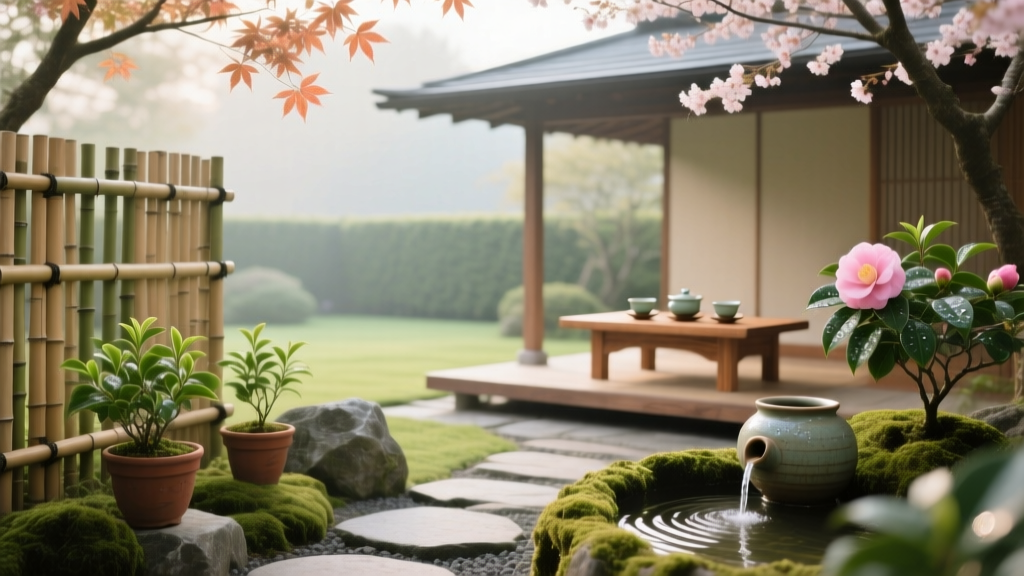
8 Garden Hacks for Tea Garden Setup
Most “tea gardens” fail for a boring reason: people plant everything in the same sunny bed and water it the same way. Tea herbs don’t want that. Lemon balm gulps water, thyme sulks in wet soil, and true tea (Camellia sinensis) has its own rules—acidic soil, steady moisture, and patience. Set your tea garden up like a tiny neighborhood with microclimates, and you’ll harvest more leaves with less babysitting.
Below are eight hacks I’ve used (and seen other gardeners use) to make a tea garden feel effortless—more sipping, less scrambling. Each one is specific, cheap to do, and designed around what tea plants actually need.
Group 1: Build the right “tea zones” first (so plants stop fighting each other)
1) Hack: Plant by “mug mix” microclimates, not by theme
Instead of a single tea bed, create three mini-zones: Moist & leafy (mint family, lemon balm), Dry & resinous (thyme, sage, lavender), and Acid & steady (Camellia sinensis, or acid-loving companions like blueberries). This prevents the classic mistake of drowning Mediterranean herbs just to keep mint happy. Use physical separation—containers, edging, or a narrow path—so irrigation can match each zone.
Real-world example: In a 4 ft x 8 ft bed, split it into two 4 ft x 4 ft halves with a stepping-stone strip. Put “moist & leafy” on the side closest to the hose and “dry & resinous” on the far side with extra grit mixed in.
2) Hack: Use a $10 soil test to stop guessing (and hit the tea sweet spot)
If you’re growing Camellia sinensis, pH matters more than most gardeners expect. Aim for pH 5.5–6.5 and keep soil consistently moist but not swampy. A basic soil test kit often costs $10–$20, and it’s cheaper than replacing an unhappy tea plant a year later.
For quick corrections: incorporate 1–2 inches of pine bark fines or peat-free acid compost into the top 6 inches of soil. For raising pH in a “dry herb” zone, a light dusting of garden lime (follow label rates) works, but only after testing—over-liming is hard to undo.
Source note: Soil pH directly affects nutrient availability and plant performance; state extension guidance emphasizes testing before amendments (University of Minnesota Extension, 2020).
3) Hack: Build a “tea spine” trellis for climbers and shade lovers
A simple vertical “spine” gives you more harvest in less footprint: run a 6-foot cattle panel or wire trellis down the north side of a bed. Grow chamomile or lemon balm on the sunny side and put shade-tolerant pots (like mint) on the slightly shaded side to reduce midsummer stress. This also creates a handy place to hang drying bundles later.
Real-world example: One gardener I worked with used a $35 16-ft cattle panel cut in half to make two 8-ft trellises—one for lemongrass pots (windbreak effect) and one for a “drying wall” with hooks.
Group 2: Water and weeds—do it once, then let it run
4) Hack: Install a $25 gravity drip line for the “moist & leafy” zone
Mint, lemon balm, and ginger-like tea plants are happiest with steady moisture, but hand-watering invites inconsistency (and bitterness from stress). Use a 5-gallon bucket on a stand (or stacked cinder blocks) as a reservoir and run 1/4-inch drip tubing with two emitters into your “moist & leafy” section. Refill every 2–4 days during hot spells; less often in mild weather.
DIY alternative: Punch two tiny holes in a milk jug, bury it near roots with the cap off, and fill it—an old-school slow-release irrigation trick that costs basically nothing.
Case example: A patio gardener in Phoenix switched from daily sprinkling to a bucket-drip setup and stopped frying lemon balm by midday; harvest went from “a few sprigs” to enough for 3–4 mugs a week.
5) Hack: Mulch like a tea farmer—thin, topped up, and targeted
Mulch isn’t just for looks in a tea garden; it’s how you stabilize moisture and keep leaves clean for harvesting. Use 1–2 inches of fine mulch (shredded leaves, pine needles, or partially composted bark) around moisture-lovers, and only 1 inch (or none) around dry herbs that hate damp crowns. Keep mulch pulled back 2 inches from stems to prevent rot.
Real-world example: In a rainy-spring climate like the Pacific Northwest, gardeners often lose thyme to crown rot. A thin gravel “collar” (a 3–4 inch ring of pea gravel around the stem) keeps the crown dry while the rest of the bed can still be mulched.
6) Hack: Weed-proof with living “tea carpet” instead of landscape fabric
Landscape fabric is a pain once herbs spread, and it traps organic debris that turns into soil on top—hello weeds. A better hack is a living groundcover that you also use in tea: low-growing thyme (for dry zones) or strawberry (for moist edges) acts like a weed-suppressing carpet. Plant plugs 8–12 inches apart and let them knit together.
Source note: Organic mulches and living covers are commonly recommended for weed suppression and soil health in home gardens (University of California Agriculture & Natural Resources, 2019).
| Weed control method | Up-front cost (typical) | Best for | Downside |
|---|---|---|---|
| Living “tea carpet” (thyme/strawberry) | $12–$30 for plugs | Long-term beds you’ll harvest for years | Takes 1 season to fill in |
| Shredded leaf mulch (1–2 inches) | $0–$15 | Moisture control + weed suppression | Needs topping up 2–3x/year |
| Landscape fabric + mulch | $20–$60 | Temporary paths, not herb beds | Hard to replant; weeds root on top |
| Cardboard sheet mulch + compost cap | $0–$25 | New beds over lawn | Can repel water at first if it dries out |
Group 3: Harvest and flavor—small tweaks that make “tea” actually taste good
7) Hack: Harvest on the right clock (and use the “two-cut rule”)
For most tea herbs, harvest after morning dew dries but before midday heat—usually 9–11 a.m.—when leaf oils are high and leaves aren’t waterlogged. Then use the “two-cut rule”: never take more than 1/3 of a plant at once, and leave at least 2 sets of leaves below your cut so it rebounds fast. This keeps plants productive instead of stalling after a big haircut.
Case example: A community garden plot in Ohio switched from “random snipping” to weekly 9–11 a.m. harvests and the plants stayed bushy; they filled a drying rack every Saturday without the midseason slump.
“The best-quality culinary herbs are typically harvested just before flowering, when essential oil content is highest.” — Penn State Extension (2018)
8) Hack: Use a “shade-to-dry” station to lock in aroma without fancy gear
Most people ruin tea herbs by drying them too hot (oven) or too slow (humid kitchen). Make a simple station: hang bundles in a shaded, airy spot for 48–72 hours, then finish in paper bags indoors for another 3–7 days until leaves crumble. Store in labeled jars away from light; for best flavor, use within 6–12 months.
DIY alternative: If you don’t have hanging space, lay herbs on a window screen set on two chairs; airflow from below speeds drying without heat. A $5 box fan on low across the room (not directly on the herbs) helps in humid weather.
Real-world example: A small-apartment gardener in Miami used the screen-on-chairs method and stopped getting moldy mint—she now dries enough for 20+ tea bags per month in summer.
Bonus: Three common tea garden setups (and what to steal from each)
Scenario 1: The tiny balcony tea garden. Go container-heavy and treat it like a “mobile microclimate.” Put mint in its own 10–12 inch pot (it will take over anything smaller), thyme in a terracotta pot for fast drainage, and chamomile in a wider planter box. One saucer under the lemon balm pot acts like a moisture buffer; no saucer for thyme.
Scenario 2: The suburban raised bed. Use the zone method and make the bed do the work. Mix the dry side with an extra 25–30% coarse sand or grit by volume for drainage (especially if you have clay). Run a single drip line only on the moist side so you’re not tempted to water the entire bed evenly.
Scenario 3: The “I want real tea leaves” setup. If you’re in a cooler climate, consider growing Camellia sinensis in a large container you can protect in winter. Choose at least a 15–20 gallon pot, use an acidic mix, and keep it evenly moist; expect light harvests for the first 2–3 years. The payoff is big if you enjoy experimenting with pan-firing or simple air-drying for green-style teas.
Quick shopping list (cheap, not fancy)
If you want a practical starter kit without overspending, here’s what I’d actually buy: a $10–$20 soil test kit, a pack of 1/4-inch drip tubing ($15–$25), a cheap pruner you keep clean for harvest ($12), and a stack of paper bags for drying ($3–$6). The rest—mulch, screens, hooks—can be scavenged or improvised.
One last insider move: keep a tiny notebook or phone note with three lines—date planted, first harvest, best-tasting harvest window. After one season, your tea garden stops being a guessing game and turns into a rhythm you can repeat every year.
Sources: University of Minnesota Extension (2020) soil testing and amendment guidance; University of California Agriculture & Natural Resources (2019) home garden mulching/weed suppression principles; Penn State Extension (2018) herb harvest timing and quality guidance.