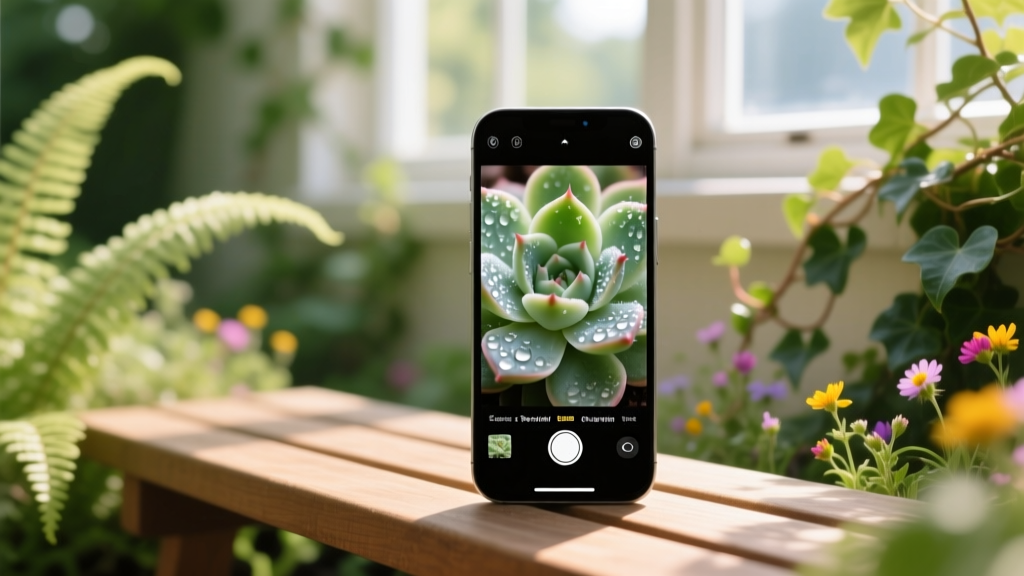
Garden Photography Tips: Take Stunning Plant Photos With Just Your Smartphone
Your Phone Is a Powerful Garden Camera
Modern smartphone cameras have 48+ megapixel sensors, macro modes, and computational photography that rival dedicated cameras for garden shots. The difference between amateur snapshots and stunning garden photos isn't gear — it's technique, timing, and an eye for detail.
Timing: The Golden Windows
Early Morning (6-8 AM)
The best garden photography happens in the first 2 hours after sunrise. Light is soft, warm, and directional. Dew drops on leaves and spider webs catch light like diamonds. Flowers are fully open and fresh. No harsh shadows or blown highlights.
Overcast Days
Cloud cover is nature's softbox — it eliminates harsh shadows and reveals true color saturation. Colors that look washed out in midday sun become vivid under overcast skies. This is the ideal time for photographing flowers and foliage.
Avoid Midday Sun (11 AM - 3 PM)
Direct overhead sun creates harsh shadows under leaves, blown-out highlights on petals, and unflattering contrast. If you must shoot midday, move subjects into open shade (shadow of a tree or building).
Composition Techniques for Garden Photos
1. Rule of Thirds
Enable grid lines on your camera. Place your main subject (a flower, a bee, a dewdrop) at grid intersections rather than dead center. This creates visual tension that draws the eye.
2. Leading Lines
Use garden rows, fence lines, vine tendrils, or pathways to lead the viewer's eye toward your subject. Diagonal lines create more energy than straight ones.
3. Shallow Depth of Field
Tap your subject to focus, then slightly adjust exposure. Many phones have "portrait mode" that blurs the background — use it for single flowers or details. The blurry background (bokeh) makes your subject pop.
4. Get Low
Most garden photos are taken from standing height — the same boring angle. Get down to the plant's level. Lie on the ground. Shoot upward through flowers. This perspective makes small plants look dramatic and reveals details invisible from above.
5. Frame Within a Frame
Shoot through foreground elements — other leaves, flowers, or stems — to create natural framing. This adds depth and layers to your image.
Macro and Detail Shots
Using Your Phone's Macro Mode
Many phones (iPhone 13+, Pixel 7+, Samsung S22+) have dedicated macro modes that focus at 2-4 cm. Move slowly — even a millimeter of movement throws off focus at macro distances. Use burst mode (hold shutter) to capture 10+ shots and pick the sharpest one.
What to Photograph Up Close:
- Dew drops on spider webs and leaf tips
- Flower centers — pistils, stamens, pollen patterns
- Leaf textures and vein patterns
- Insects on flowers (bees, butterflies, ladybugs)
- Seed pods and fruit textures
- Bark patterns and lichen on tree trunks
Lighting Tricks Without Equipment
- White foam board reflector: Hold a piece of white foam board opposite the sun to bounce light into shadows on the shaded side of a flower
- Black cloth: Hold black fabric behind a flower for dramatic, studio-like backgrounds
- Water spray bottle: Mist flowers with water for artificial dew drops that catch light
- Diffuser: Hold a white umbrella or sheer fabric between sun and subject to soften harsh light
Editing for Garden Photos
Use free apps like Snapseed, Lightroom Mobile, or your phone's built-in editor:
- Shadows: Lift by 10-20 points to reveal detail in dark areas
- Highlights: Reduce by 10-20 points to recover blown-out petals
- Vibrance (not saturation): Increase by 15-25 — vibrance boosts muted colors without oversaturating already-vivid ones
- Sharpening: Apply selectively to flower centers and textures
- Crop: Remove distracting elements at edges. Tighter crops often make stronger images
Seasonal Photo Calendar
| Season | Best Subjects | Unique Opportunities |
|---|---|---|
| Spring | Bulbs, blossoms, new growth, rain | Dew on emerging leaves, blossom fall |
| Summer | Flowers, pollinators, harvest | Golden hour sun through seed heads |
| Fall | Foliage color, seed pods, frost | Backlit leaves, morning frost crystals |
| Winter | Bark, berries, evergreen structure | Snow on branches, ice patterns |
Final Thoughts
The best garden photograph tells a story — of growth, decay, relationship between organisms, or the passage of seasons. Look for those stories rather than just pretty flowers. A wilted rose with a single bee still visiting is more compelling than a perfect bloom with no context.