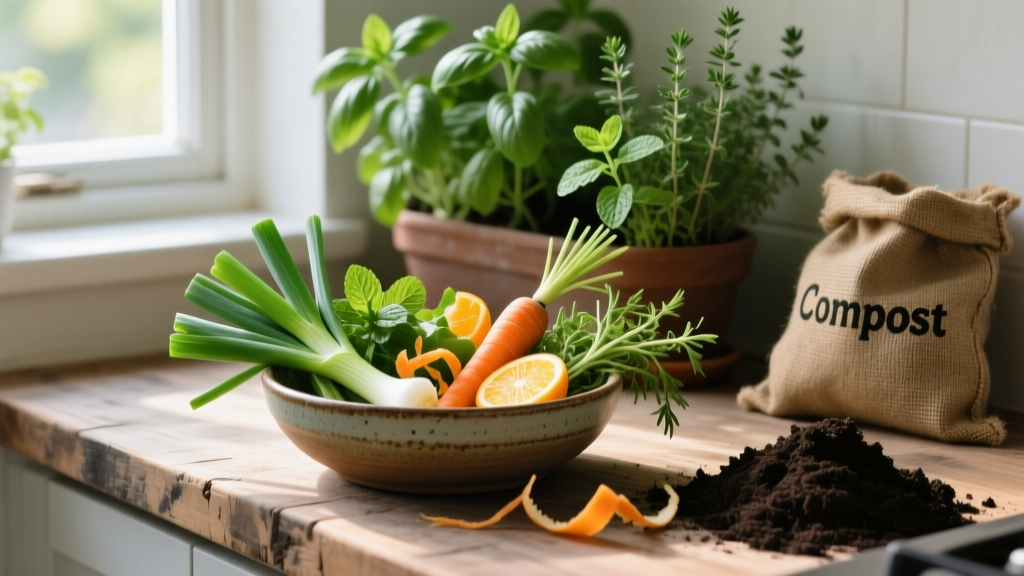
Kitchen Scrap Composting: Turn Food Waste Into Garden Gold Without a Backyard
Why Compost Kitchen Scraps?
The average household throws away 300 pounds of food scraps per year. Composting transforms this waste into nutrient-rich soil amendment that costs $0 and outperforms any store-bought fertilizer. You don't need a backyard — indoor composters work in apartments, on balconies, and under kitchen sinks.
Method 1: Vermicomposting (Worm Bin)
Setup Cost: $40-80
- Container: opaque plastic bin (10-18 gallons) with drainage holes
- Bedding: shredded newspaper, cardboard, or coconut coir (moistened like a wrung sponge)
- Worms: 1 pound of red wigglers (Eisenia fetida) — NOT earthworms from your garden
- Location: under sink, in closet, or on balcony (55-80°F ideal)
What to Feed:
- ✅ Fruit and vegetable scraps, coffee grounds, tea bags, crushed eggshells
- ❌ Meat, dairy, oily foods, citrus (too acidic), onions (too pungent for small bins)
Maintenance:
- Feed 1/2 pound scraps per pound of worms per day
- Harvest castings every 3-4 months
- Properly maintained bin has no odor — smells like rich soil
Method 2: Bokashi Bucket
Setup Cost: $50-70
Bokashi is a Japanese fermentation method that pickles food waste using inoculated bran (containing effective microorganisms). Unlike traditional composting, it handles ALL food waste including meat and dairy.
- Layer food scraps with bokashi bran (1 tablespoon per inch of scraps)
- Press down to remove air pockets, seal lid tightly
- Drain liquid every 2-3 days (dilute 1:100 for plant fertilizer)
- When full, bury contents in soil — decomposes in 2-4 weeks
- Completely sealed — no smell, no flies
Method 3: Countertop Electric Composter
Setup Cost: $300-500
Electric composters (Lomi, Vitamix FoodCycler, Mill) grind and dehydrate food scraps into dried compost in 4-8 hours. The output is not true compost but a concentrated organic amendment.
- Mix output with soil at 1:10 ratio before planting
- Handles most food scraps including small bones
- Uses about 1 kWh per cycle (20 cents)
- Zero odor with activated carbon filter
Method 4: Tumbler Bin (Balcony/Patio)
Setup Cost: $60-120
Sealed tumbling bins work on balconies and patios. Add equal parts green scraps (food) and brown material (shredded paper, dried leaves). Rotate 3 times per week. Compost ready in 6-8 weeks.
What You Can and Cannot Compost
| ✅ YES | ❌ NO |
|---|---|
| Vegetable and fruit peels | Meat and bones (except bokashi) |
| Coffee grounds and filters | Dairy products (except bokashi) |
| Eggshells (crushed) | Oily or greasy foods |
| Tea bags (remove staple) | Pet waste |
| Stale bread and rice | Diseased plant material |
| Nut shells (crushed) | Glossy paper or magazines |
Using Your Compost
- Potting mix: Mix 1 part compost with 3 parts potting soil
- Top dressing: Spread 1/4 inch on lawn or garden beds
- Compost tea: Steep 1 cup compost in 1 gallon water for 24 hours, water plants
- Seed starting: Use worm castings at 20% of mix for strong seedlings
Final Thoughts
Start with a worm bin if you have space under your sink, or bokashi if you want zero maintenance. Both produce excellent compost within weeks. The key is consistency — add scraps daily and maintain the right moisture and carbon balance.