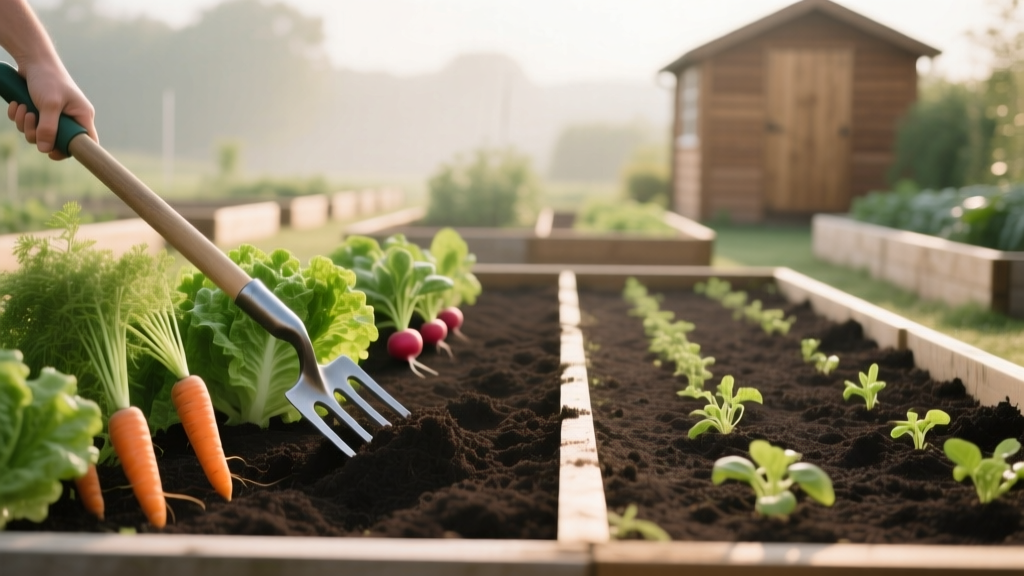
Why You Should Rotate Your Garden Beds Every Year
The most common “mystery problem” in home gardens isn’t a bad seed packet or a weird weather year—it’s planting the same crop family in the same bed over and over. The result looks like random bad luck: tomatoes suddenly get blight every July, squash wilts right when it starts producing, carrots turn forked and stubby. Most of the time, it’s not luck at all—it’s a predictable build-up of pests, diseases, and nutrient imbalances that rotation can break.
Garden bed rotation sounds like something only farmers with tractors need, but it’s one of the best shortcuts for small gardens, raised beds, and even container setups. Done right, it reduces pest pressure, steadies yields, and can cut your fertilizer spend without sacrificing growth. Here’s how to rotate in a way that actually works (and doesn’t require a spreadsheet the size of your patio).
The real reason rotation works (and why “just add compost” doesn’t fix everything)
Tip: Rotate by plant family, not by crop name
Tomatoes, peppers, potatoes, and eggplants are all in the nightshade family—so moving tomatoes but planting peppers in the same bed isn’t rotation. Pests and diseases often specialize by family, not by the exact vegetable. Real-world example: if you had early blight on tomatoes, planting potatoes in that same bed next season is basically inviting the same problem back.
Tip: Use rotation to slow soilborne diseases—because they don’t “wash out” in winter
Many disease organisms overwinter in soil or plant debris and can persist for years, especially in beds that stay moist and heavily mulched. A 3–4 year break from the same plant family is a standard recommendation to reduce recurring disease cycles for common home-garden crops (Cornell Cooperative Extension, 2019). If you only have a couple beds, even a 2-year break is better than none—think of it as turning the volume down on disease pressure rather than expecting total silence.
“Crop rotation is one of the most effective and economical cultural practices for managing pests and maintaining soil health.” — USDA Natural Resources Conservation Service (NRCS), 2011
Tip: Rotation prevents “nutrient hangovers” that cause weak, pest-prone growth
Different plant families pull different nutrients at different rates. Brassicas (broccoli, cabbage) are heavy feeders, while beans and peas can contribute nitrogen through symbiosis with soil bacteria. If you keep running heavy feeders in the same bed, you’ll end up compensating with fertilizer—often overshooting nitrogen and getting lush leaves with fewer fruits (classic tomato problem).
The easiest rotation system that works in real gardens (even 2–4 beds)
Tip: Use the “4-group” rotation: fruiting, leafy/brassica, roots, legumes
This is the simplest rotation that covers most home gardens without turning your plan into a puzzle. Group your crops into: (1) fruiting crops (tomatoes, peppers, cucumbers, squash), (2) leafy/brassicas (lettuce, kale, broccoli, cabbage), (3) roots/alliums (carrots, beets, onions, garlic), and (4) legumes (peas, beans). Each year, move each group to the next bed—so every bed gets a different “job” each season.
Tip: If you only have 2 beds, rotate “fruiting” away from “same-family” and call it a win
Two-bed gardens can’t do perfect 4-year breaks, but you can still avoid the biggest mistakes. Keep nightshades out of the same bed two years in a row, and keep cucurbits (cucumber/squash/melons) from following cucurbits. Example: Bed A grows tomatoes this year and beans next year; Bed B grows brassicas this year and cucumbers next year.
Tip: Mark beds with a cheap, permanent label so you don’t rely on memory
Rotation fails because we forget. A $3 weatherproof paint marker and a $2 pack of aluminum tags beats “I think this was the pepper bed?” every spring. Write the plant family and the year (e.g., “Nightshades 2026”) and tuck the tag under the bed edge or attach to a corner screw.
Tip: Keep a 12-month “bed log” in your phone with 4 details
Instead of long notes, track: crop family, major pest/disease issue, amendment added, and planting date. You’ll spot patterns fast (like “cabbage worms always show up when I plant brassicas after July 15”). It takes 30 seconds per bed and saves hours of troubleshooting later.
Bed-by-bed rotation tactics that actually reduce pests and disease
Tip: Break the tomato disease loop with a 3-year gap from nightshades
If you’ve had recurring blight, wilt, or nematode issues, aim for a 3-year break from all nightshades in that bed (tomato, pepper, potato, eggplant). Cornell Cooperative Extension notes multi-year rotations are especially helpful for reducing disease carryover (2019). Example schedule for one bed: Year 1 tomatoes → Year 2 beans → Year 3 carrots/onions → Year 4 cabbage/kale → back to tomatoes.
Tip: Treat cucurbits like they’re magnetized to pests—rotate them aggressively
Cucumber beetles, squash vine borers, and powdery mildew thrive when cucurbits return to the same spot. Move cucumbers/squash/melons at least one bed away each year, and don’t compost visibly mildewed vines unless your pile reliably hits 130–160°F. Real-world hack: if you only have one “cucumber trellis” location, keep the trellis but move the soil (use a 20–30 gallon fabric grow bag beside it) so the roots aren’t in the same bed.
Tip: Don’t follow brassicas with brassicas—clubroot risk is real
Brassicas include broccoli, cauliflower, cabbage, kale, collards, and many mustards. Clubroot and other brassica diseases can persist in soil; rotating away reduces the chance of a repeat outbreak (University of Minnesota Extension, 2020). Example: if spring was broccoli, make fall planting something unrelated like bush beans or spinach (spinach is not a brassica).
Tip: Use alliums as a “reset crop” after messy beds
Onions and garlic are great after beds that had heavy feeding or disease-prone crops because they’re relatively light feeders and easy to keep clean (less sprawling foliage). Plant garlic in fall (often 4–6 weeks before ground freezes in many climates) and it occupies the bed through early summer, giving you time to plan the next rotation. Bonus: you’ll disturb the soil less, which helps keep weed seeds buried.
Soil fertility hacks: rotate to feed the bed instead of buying more inputs
Tip: Put legumes before heavy feeders and cut nitrogen fertilizer
Beans and peas can contribute nitrogen through root nodules, especially if inoculated with the right rhizobia. A practical approach: follow spring peas with fall brassicas, or follow bush beans with leafy greens. Money saver: if you typically apply a $12 bag of organic nitrogen fertilizer each season, rotating legumes ahead of heavy feeders can let you reduce that by 25–50% in some beds—without starving plants.
Tip: Match compost amounts to the crop group (don’t blanket-apply)
A solid rule: add about 1 inch of finished compost for heavy feeders and about 1/2 inch for light feeders (measured as a layer over the bed, not mixed into a potting ratio). For a standard 4x8 bed (32 sq ft), 1 inch is roughly 2.7 cubic feet of compost. Example: save your best compost for tomatoes and cabbage, and give carrots a lighter touch to avoid excessive forking from overly rich soil.
Tip: Rotate root crops into the “cleanest” bed for straighter harvests
Roots (carrots, parsnips, beets) do best in a bed that wasn’t freshly manured and isn’t packed with half-decomposed chunks. Put them after a crop where you removed a lot of plant material and didn’t add bulky amendments. Example: carrots after garlic is a classic pairing—garlic harvest leaves a relatively tidy, low-residue bed by midsummer.
How to rotate when your garden doesn’t look like a textbook
Tip: Small raised-bed scenario (2 beds): use “A/B rotation + containers” to fake a 3rd zone
If you have two 4x4 beds, you can still rotate families by using containers as a pressure-release valve. Example: Year 1 Bed A = tomatoes; Bed B = brassicas. Year 2 Bed A = beans; Bed B = cucurbits. Put peppers (nightshade) into two 15–20 gallon pots that year so you don’t re-contaminate Bed A too soon. Cost comparison: two fabric pots and a bagged soil refresh might run $30–$60, which is often cheaper than repeatedly battling disease with sprays.
Tip: One-bed scenario: rotate within the bed by “thirds” and move problem families
If you only have one bed, divide it into three zones with string lines or a couple of thin boards. Rotate families clockwise each year within those zones, and move your most disease-prone crops (often tomatoes and cucurbits) into containers every other year. Example: Zone 1 tomatoes → beans → roots; Zone 2 roots → brassicas → tomatoes (in a pot instead if disease was bad).
Tip: Community garden scenario: assume the plot has history and rotate more conservatively
In shared gardens, you rarely know what was grown in your plot last year. Start with lower-risk crops: onions/garlic, leafy greens, and bush beans, then move into tomatoes and cucurbits only after you’ve watched pest pressure for a season. Real-world example: if three nearby plots grew tomatoes last year, your best “shortcut” is not joining the party—grow beans and greens and let other people be the blight experiment.
Rotation planning shortcuts (so you’ll actually do it every year)
Tip: Build a rotation map once, then reuse it for 4 years
Sketch your beds and assign each bed a group number (1–4). Year 1: Bed 1 fruiting, Bed 2 leafy/brassica, Bed 3 roots/alliums, Bed 4 legumes. Each year, move the groups to the next bed number. You only need to decide details like “cucumber or zucchini?”—the big rotation decision is already made.
Tip: Use “anchor crops” to lock the rotation in place
Pick one anchor crop per bed that you plant most years (like tomatoes, garlic, or a big patch of beans). Rotate the anchor, and the rest of the bed follows naturally. Example: if garlic is always your fall planting, decide which bed garlic moves to each year and build the spring/summer crops around that location.
Tip: Time rotations around planting windows, not the calendar year
Rotation is about what occupied the soil—not what happened on January 1. If you follow spring peas with fall broccoli in the same bed, that bed technically hosted two families in one year, so next season treat it as “brassica-following,” not “pea-following.” A simple rule: the last major crop family in a bed sets the rotation for next season.
Rotation vs. “plant wherever it fits”: a quick reality check
| Approach | What it looks like | Best for | Tradeoffs |
|---|---|---|---|
| Strict 4-bed family rotation | Each bed gets a different crop group every year (4-year cycle) | People who grow a little of everything | Requires enough beds (or containers) to separate families |
| 2-bed “avoid same family” rotation | Swap families and keep nightshades/cucurbits from repeating | Small raised-bed gardens | Shorter break means some disease/pest pressure can persist |
| “Plant where it fits” (no rotation) | Tomatoes end up in the sunniest bed every year | Very casual gardens or ornamental-heavy beds | Higher risk of recurring pests/disease; often more fertilizer and sprays |
Three real-world rotation fixes that save seasons (and money)
Case: The “tomatoes always die in July” backyard bed
Scenario: A gardener plants tomatoes in the same 4x8 bed for 5 years because it’s the sunniest spot. By mid-July, leaves spot, yellow, and collapse; fruit production drops. Fix: move tomatoes to a different bed (or 20–30 gallon containers) for 2–3 years, rotate that original bed through beans → carrots/onions → brassicas, and remove all tomato debris at season’s end. Cost note: a $40–$80 investment in two large containers can be cheaper than replacing plants and buying fungicides every year.
Case: The squash vine borer disaster that repeats like a horror movie
Scenario: Zucchini looks perfect until it suddenly wilts; stems show frass and collapse. If zucchinis go back into the same bed, borers often show up earlier and worse. Fix: rotate cucurbits as far as possible (even to the front yard bed), and use a physical barrier early—wrap the lower 12 inches of stem with foil or a stem sleeve until vines toughen. Example: gardeners who rotate and protect stems typically get harvests past the “collapse window” that hits in mid-summer in many regions.
Case: The community garden plot with “mystery soil issues”
Scenario: New plot, unknown history, inconsistent results. Fix: Year 1 plant resilient, fast crops (bush beans, lettuce, onions) and observe. If disease shows up on any family, mark it and avoid that family in the same soil the next year; rotate to a less related group immediately. Timing tip: bush beans can go in after soil warms (often late spring) and give you a quick read on soil performance without committing your best tomato starts.
DIY moves that make rotation even more effective
Tip: Solarize a problem bed during peak heat—then rotate anyway
If a bed is truly disease-loaded, solarization can help reduce pathogens near the surface. Wet the bed, cover tightly with clear plastic, and leave it for 4–6 weeks during the hottest part of summer (soil needs to heat up consistently). After that, still rotate—solarization is a reset button, not a license to plant tomatoes there forever.
Tip: Make “leaf mold” and save your best compost for heavy feeders
Leaf mold is basically decomposed leaves—cheap, effective, and perfect for beds heading into root crops or greens. Stuff fall leaves into a wire bin, keep them damp, and in 6–12 months you’ll have a dark, crumbly amendment. Money saver: using free leaf mold for light-feeding beds can reduce how much purchased compost you need for the whole garden.
Tip: Use a simple cover crop only in the bed that needs it
You don’t have to cover-crop everything. If one bed is tired or weedy, sow a quick cover like oats/peas (cool season) or buckwheat (warm season) and terminate before it sets seed. Example: buckwheat can be cut down around 30–40 days after sowing, adding organic matter without derailing your next rotation slot.
Common rotation mistakes that quietly sabotage you
Tip: Don’t rotate only the “main crop” and forget the volunteers
Volunteer tomatoes, potatoes, and squash count as the same family—and they keep pests and disease cycles going. Pull volunteers early, especially potatoes (which can harbor diseases and pests) and volunteer squash (often attracts the same beetles). Example: if volunteer tomatoes pop up in your “bean bed,” you’ve just punched a hole in your rotation plan.
Tip: Don’t confuse “different variety” with “different rotation”
Switching from ‘Roma’ to ‘Brandywine’ doesn’t change the plant family. Pathogens and pests don’t care about the cultivar name. If your bed had pepper issues last year, eggplant is not a clean break—even if it’s a totally different-looking plant.
Tip: Don’t bring contaminated soil back into the rotation loop
If you dump old potting soil from diseased tomato containers into a “clean” bed, you’ve moved the problem right along with it. Either refresh container soil separately (mix old soil with compost and rest it for a season) or solarize it in a black bag in the sun. Example: keep a “quarantine” pile for suspect soil and only reuse it under ornamentals or after a heat treatment.
Rotation is one of those gardening habits that feels optional—until you do it for two or three seasons and notice how much calmer your garden gets. Fewer repeating problems, more predictable harvests, and less money spent trying to patch issues mid-season. Start simple: rotate by family, label your beds, and give your most troublesome crops (usually tomatoes and squash) the longest break you can manage—even if that means using a couple of big containers as your secret weapon.
Sources: Cornell Cooperative Extension (2019); University of Minnesota Extension (2020); USDA NRCS (2011).