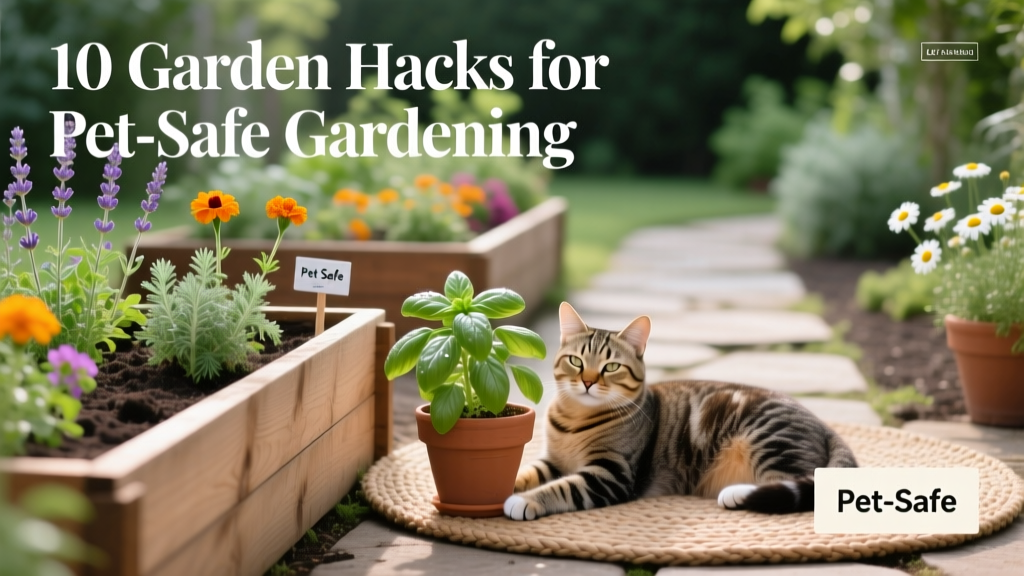
10 Garden Hacks for Pet-Safe Gardening
The most common pet-garden “oops” isn’t a toxic plant—it’s a perfectly normal garden habit done at the wrong time. Plenty of pet poisonings happen because dogs (and some cats) sniff, lick, or walk through a freshly treated area before it’s dry, or because fertilizer gets tracked indoors on paws and then licked off later. The good news: you don’t need a sterile, boring yard to keep pets safe. You just need a few smart systems that prevent access, reduce residue, and swap risky products for safer stand-ins.
Below are 10 garden hacks I lean on when clients want a lush garden and a yard that doesn’t make their dog’s stomach the “compost bin.” I grouped them so you can tackle the highest-impact changes first.
First, control access (because you can’t supervise 24/7)
1) Use a “two-step gate” system for your garden beds
If you do one thing, do this: create a simple airlock so a pet can’t bolt into the garden when you open a gate. Add a small holding zone (even 3 ft x 3 ft) with a second latch, or use two baby gates in a staggered line. It’s the same trick used in dog parks—cheap insurance against a moment of distraction.
Example: A client with a 60 lb Labrador added two $18 pressure-mounted baby gates to block the bed area during planting days; no more “stolen” bulbs and no more muddy pawprints on seedlings.
2) Lay down a temporary pet barrier the day you apply anything
Even pet-safer products can irritate paws or stomachs if licked. Keep a roll of 24-inch garden fence or plastic poultry netting on hand and pin it with 6-inch landscape staples; it takes 5 minutes to create a “no-go” perimeter for 24 hours. For sprays, block until the foliage is fully dry—often 2–4 hours in warm weather, longer if it’s humid.
Real-world scenario: After applying an iron-based slug bait, one gardener forgot her terrier loves to “taste test” mulch. A simple pop-up barrier would have prevented a stressful evening of monitoring for GI upset.
3) Build one designated digging zone (and make it more fun than your beds)
If your dog digs, they’ll dig somewhere—so give them a legal option. Fill a 2 ft x 3 ft corner with loose sand/soil mix (50/50 works well) and bury a few durable toys 2–3 inches deep. Reward your pet for digging there and interrupt digging elsewhere; within a week, many dogs default to the “approved” pit.
Cost note: A 40 lb bag of play sand is often $6–$8, and a small digging box can be built from scrap lumber or an old raised-bed frame.
Swap inputs: safer soil, mulch, and pest control with fewer “gotchas”
4) Ditch cocoa mulch—use pine fines or shredded bark instead
Cocoa hull mulch smells like chocolate, which is exactly why it’s risky around dogs. Dogs may eat it, and cocoa contains compounds related to theobromine that are dangerous to pets. Choose pine fines, shredded pine bark, or cedar-free wood mulch; these don’t have the chocolate attraction and are widely available.
Example: One homeowner replaced 8 bags of cocoa mulch with pine fines (about $5 per bag) and immediately stopped their beagle’s mulch-snacking habit.
5) Make a pet-safer weed killer with vinegar—then use it like a surgeon
For cracks in hardscapes (not garden beds), a targeted vinegar spray is a handy shortcut. Mix 1 gallon of 5% white vinegar with 1 tablespoon of dish soap to help it stick, then apply only to weeds on a sunny day; you’ll usually see wilt within 24 hours. Keep pets off until dry, and avoid spraying where runoff could reach desirable plants.
DIY tip: Use a cheap $3 foam paintbrush to “paint” vinegar onto weeds near pet areas instead of spraying—less drift, fewer paw exposures.
6) Choose iron phosphate for slugs/snails—and still treat it like medicine
Slug baits vary widely in pet risk. Products with iron phosphate are generally considered lower-risk than older baits (like metaldehyde), but “lower-risk” doesn’t mean “snackable.” Apply at dusk (when slugs emerge) and scatter lightly—think a few pellets per square foot, not a pour-and-pray pile.
Expert-backed caution: The ASPCA Animal Poison Control Center notes that some slug and snail baits can be highly toxic, especially metaldehyde formulations, and recommends keeping pets away from treated areas and storing products securely (ASPCA APCC, accessed 2025).
7) Use physical pest barriers first: tulle, insect netting, and collars
Before reaching for any spray, block pests out. Wrap brassicas with fine insect netting, use tulle bags over ripening fruit, and place cardboard or copper collars around tender transplants to discourage cutworms and slugs. This is pet-safe by default and often cheaper: a $12 roll of tulle can protect multiple beds for a season.
Example: A gardener with two indoor-outdoor cats protected strawberries by draping tulle over hoops; no sprays, no residue, and the cats stopped stealing berries because the barrier removed the “easy snack.”
Fertilizer and compost: the biggest “smells good, must eat” risk
8) Switch to “less yummy” fertilizers, and apply with a broom (seriously)
Many dogs love the smell of blood meal, fish emulsion, and some bone meal blends—and that’s where trouble starts. If you fertilize near pet access, pick a low-odor option like composted plant-based blends or coated slow-release granules, and always sweep granules off hard surfaces so paws don’t track them inside. Water it in with about 1/4 inch of irrigation so it moves into the soil, not on top where noses find it.
Money saver: A 20 lb bag of slow-release lawn fertilizer can cost $30–$45; a DIY alternative is a 1-inch top-dressing of finished compost in spring, which often replaces at least one feeding for garden beds.
9) Lock down compost: no food scraps pets can grab, and no access to “hot” piles
Compost piles smell like a buffet, especially if you toss in meat, oils, or dairy (which you shouldn’t compost in an open pile anyway). Use a lidded bin or a wire enclosure with 1/2-inch hardware cloth, and keep it behind a closed gate. If you hot-compost, aim for 131–160°F for several days to kill pathogens—then let finished compost cure at least 4 weeks before using it where pets roll or graze.
Citation: Cornell Waste Management Institute explains that effective hot composting reaches at least 131°F (55°C) to reduce pathogens and weed seeds (Cornell WMI, 2020).
Plant choices: you don’t need a toxic-plant panic, just a plan
10) Put “high-risk plants” in containers or fenced micro-zones
Some ornamentals are common in landscapes and problematic if chewed. Instead of ripping everything out, isolate: place questionable plants in tall containers (18–24 inches high) or behind a short decorative fence pets can’t reach through. If you have a known chewer, treat the garden like toddler-proofing—hazards go up high or behind barriers.
Real-world scenario: A family with a puppy who mouthed everything moved their daffodils and lilies to a fenced side yard and swapped front-yard color to pet-friendlier annuals. Same curb appeal, far less stress.
“The dose makes the poison—many exposures happen because pets get repeated access to small amounts of chemicals, fertilizers, or toxic plants over time.” — Adapted from core toxicology guidance commonly cited by veterinary toxicology resources and extension safety materials
Quick comparison table: choose the safer “default” option
When you’re standing in the garden aisle, these swaps reduce the chance of a pet problem without making your garden harder to manage.
| Garden task | Method A (higher risk / more hassle) | Method B (pet-safer default) | Notes (cost/timing) |
|---|---|---|---|
| Mulching beds | Cocoa hull mulch (attractive smell) | Pine fines or shredded bark | Often $4–$7 per bag; refresh 1–2x/year |
| Slug control | Metaldehyde bait | Iron phosphate bait + dusk application | Block pet access until next day; store sealed |
| Weeds in cracks | Broadcast herbicide spray | Vinegar + soap “paint-on” method | 1 gallon vinegar + 1 Tbsp soap; results in ~24 hrs |
| Fertilizing near pets | Fish/blood meal (high odor) on surface | Finished compost top-dress or slow-release granules watered in | Water in ~1/4 inch; sweep spills immediately |
Three common yard situations (and how these hacks solve them)
Scenario #1: The “everything goes in the mouth” puppy. Start with access control: two-step gates (Tip #1) and a digging zone (Tip #3). Then remove the most tempting smells: skip blood/fish meals (Tip #8) and keep compost locked (Tip #9). Your goal isn’t perfection—it’s reducing opportunities when the puppy brain kicks in.
Scenario #2: The dog who eats mulch and gets stomach upset. Swap cocoa mulch immediately (Tip #4), then add a temporary barrier after re-mulching so the novelty wears off (Tip #2). Most mulch-eaters are novelty chewers; if they can’t practice the habit for a week, it often fades.
Scenario #3: The cat that prowls garden beds at night. Physical barriers are your friend: low hoops with insect netting protect seedlings (Tip #7), and fenced micro-zones protect any plants you don’t want nibbled (Tip #10). Bonus: these barriers also reduce pest pressure, so you’ll spray less overall.
A few insider “micro-hacks” that make everything easier
Label your “pet hold” time right on the product. Use painter’s tape on the container and write “Pets off until dry + 24 hrs” (or whatever the label states). In the moment, you won’t have to re-read tiny print while your dog is doing zoomies.
Keep a paw-wipe station by the back door. A shallow tray, an old towel, and a bowl of water prevents fertilizer granules, wet mulch, and soil amendments from becoming a midnight lick-fest. This is especially useful after you top-dress compost or apply any granular product.
Measure once, apply less. Overapplication is where “pet-safe-ish” turns into “uh oh.” If a bag says cover 5,000 sq ft, actually measure your space (even a rough 50 ft x 20 ft = 1,000 sq ft) so you’re not applying 5x the amount.
Source notes you can trust (and why they matter)
Two reliable references worth keeping bookmarked:
Cornell Waste Management Institute (2020) explains target temperatures for hot composting (around 131°F and up) to reduce pathogens and weed seeds—important if pets have access to areas where compost is used.
ASPCA Animal Poison Control Center highlights that some slug/snail baits and garden products can be highly toxic and emphasizes prevention and secure storage—critical because many pet incidents are ingestion-based, not skin-contact-based.
If you want one personal rule that covers most of pet-safe gardening: assume anything that smells interesting will be tasted. Build barriers for short windows, choose inputs that aren’t alluring, and you’ll end up with a garden that’s safer for pets and easier for you.