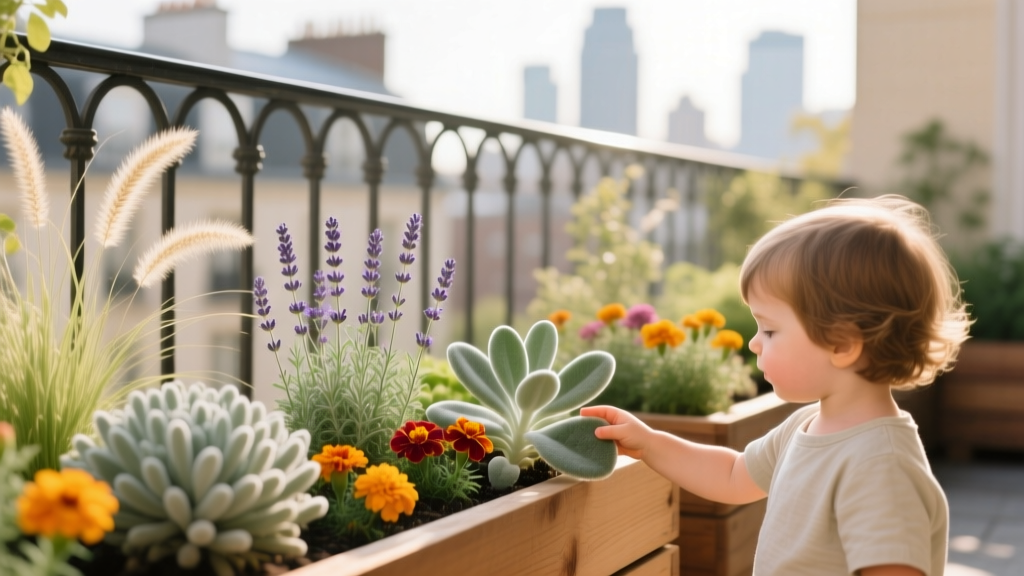
Patio Sensory Garden for Kids
The back door sticks a little as you nudge it open with your hip—one hand holding a cup of sidewalk chalk, the other trying not to spill a watering can. A kid trails behind you, already bored. The patio is practical: a grill, a couple of chairs, maybe a lonely pot that dries out every summer. The question isn’t “Do we have space for a garden?” It’s “Can this hard, sunny (or shady) slab become a place where kids actually want to linger—touching, smelling, tasting (safely), and listening—without turning your life into a maintenance marathon?”
A sensory garden answers that by designing for curiosity. On a patio, the trick is to make every square foot do double duty: plants that invite hands, containers that become edges and pathways, and a layout that lets kids move without knocking everything over. Below is the project I’d sketch for a client—scaled for homeowners and renters, with real measurements, plant varieties, and a few budgets.
Design principles for a patio sensory garden (kid-led, adult-proof)
1) Design for the five senses—then add movement
A sensory garden isn’t one “special” plant; it’s a mix of experiences placed where kids can reach them. I design a patio sensory garden around six zones:
- Touch: soft, fuzzy, crinkly, or springy foliage at hand height.
- Smell: aromatic leaves where brushing past releases scent.
- Taste: edible plants only, clearly separated from non-edible ornamentals.
- Sight: high-contrast colors, seasonal change, pollinator activity.
- Sound: grasses, seed pods, a small water feature, or wind chimes out of reach.
- Movement: stepping stones, a “loop” path, a spot to crouch and observe.
Design note: kids learn by repeating actions—rub leaf, smell hands, snap a sprig, watch a bee, water again. Build in redundancy (two mint pots, two soft plants) so one rough day doesn’t wipe out the experience.
2) Start with a tight, safe layout: the “U-shape + loop”
Most patios feel like furniture islands. For a sensory garden, I like a U-shaped planting edge with a clear loop for movement. It creates boundaries without fencing kids in.
Minimum workable footprint: a 6 ft x 8 ft patio corner (48 sq ft) can hold a meaningful sensory setup. If you have 10 ft x 10 ft (100 sq ft), you can add a small water bowl and a digging tub.
Clearance rule: keep a 30–36 inch walkway so a child and adult can pass without snagging plants or tipping pots. This aligns with common accessibility guidance for comfortable passage (36 inches is a widely used standard for clear pathways).
3) Layer by height so kids can reach—and plants can thrive
Think of containers like stadium seating:
- Front edge (0–18 inches high): low pots and troughs with touch/smell plants.
- Middle (18–30 inches): larger containers with herbs, strawberries, compact shrubs.
- Back (30–60 inches): trellis planters for climbers, plus one tall “anchor” plant for shade and drama.
Keeping the most interactive plants at the front prevents kids from reaching through prickly stems. It also keeps watering simple: you can spot-water the thirstiest pots without moving everything.
4) Soil volume is your secret weapon
On a patio, plants live and die by container volume. Small pots heat up fast and dry out quickly. For kid-touched plants (which get stressed), I plan for generous soil:
- Herbs: at least 10–12 inch diameter pots.
- Strawberries: 12–14 inch bowls or a railing planter with 8 inches soil depth.
- Dwarf blueberry: 18–24 inch pot.
Budget-friendly tip: use lightweight plastic or resin for big containers, then top with a nicer rim pot if you want the look without the weight and cost.
Layout strategies that make a patio feel like a tiny garden world
The “sensory stations” plan (works for renters)
Instead of trying to plant everything everywhere, create 4–6 stations. Each station is one container (or a cluster) with a theme and a label. Labels matter: they encourage kids to “check in” with the garden, and they keep grown-ups from accidentally trimming the snack plants.
Example station list for a 6 ft x 8 ft patio corner:
- Smell station: pot of lavender + pot of chocolate mint.
- Touch station: lamb’s ear + bunny tail grass.
- Taste station: strawberries + basil (sweet variety) + cherry tomato in a cage.
- Sound station: fountain bowl or a water bubbler plus rustling grass.
- Pollinator station: dwarf zinnia or compact salvia for constant bloom.
The “water-smart” plan (for hot, full-sun patios)
If your patio bakes, your design should reduce water stress. Use fewer, larger containers; group thirstier plants together; and add a simple drip line.
Concrete numbers that make a difference:
- Choose 3 containers at 18–24 inches wide instead of 9 small 8-inch pots.
- Plan for 6+ hours of sun for tomatoes, strawberries, lavender, and most flowering annuals.
- Use 2 inches of mulch (straw for edibles, bark for ornamentals) to slow evaporation.
- Install a basic drip kit for around $25–$60 (often enough for 6–10 pots).
The “shade-friendly” plan (for north-facing or covered patios)
Shade patios can still be sensory-rich. In 3–4 hours of bright indirect light, shift toward foliage texture and gentle fragrance: mints, lemon balm, some ferns, and shade-tolerant flowers like begonias. Add a reflective surface (a light-colored wall panel or mirror placed safely out of reach) to boost brightness.
Step-by-step setup instructions (a weekend build)
- Measure and sketch: mark your patio footprint and decide on a 30–36 inch clear loop path. Use painter’s tape on the patio to mock it up.
- Choose containers: for a starter garden, aim for 6–8 containers: two large (18–24"), four medium (12–14"), and one trough for touch plants.
- Create two zones: keep edibles on one side and ornamentals on the other. This helps with safety and teaches kids “snack side vs. look-only side.”
- Fill with the right potting mix: use a high-quality container mix; avoid heavy garden soil. For most pots, mix in slow-release fertilizer per label directions.
- Plant with spacing in mind: for herbs, plant 1 plant per 10–12 inch pot; for strawberries, 3 plants per 14–16 inch bowl; for dwarf zinnias, space 8–10 inches apart in a wide container.
- Add sensory “tools”: one sturdy step stool (supervised), a small hand mister, and a soft brush for “leaf dusting” games.
- Mulch and label: mulch to 2 inches deep and add plant labels (wood craft sticks work fine).
- Set a watering rhythm: week one, check daily; after roots settle, you’ll usually water 2–4 times/week in heat (more for small pots, less for large).
Plant selection: specific varieties that invite touch, smell, taste, and sound
When kids interact with plants, durability matters as much as beauty. I’m picking varieties that bounce back, stay reasonably compact in containers, and offer a clear sensory payoff.
Touch plants (soft, fuzzy, or playful)
- Lamb’s ear (Stachys byzantina ‘Helen von Stein’): famously soft, more resilient than some smaller cultivars. Place in a wide bowl where hands naturally land.
- Bunny tail grass (Lagurus ovatus): soft seed heads and gentle movement; doubles as a “sound” plant in breezes.
- Creeping thyme (Thymus serpyllum ‘Elfin’): a tiny-leaf texture plant that releases scent when gently brushed; works in a shallow trough.
Smell plants (best when placed at brushing height)
- Lavender (Lavandula angustifolia ‘Hidcote’ or ‘Munstead’): compact, container-friendly, and reliable fragrance in sun. Needs excellent drainage.
- Chocolate mint (Mentha × piperita ‘Chocolate’): strong scent and kid appeal. Keep in its own pot—mint spreads aggressively.
- Lemon balm (Melissa officinalis): bright lemon scent, shade-tolerant compared with lavender; also best contained in a pot.
Taste plants (safe, snackable, and patio-productive)
- Strawberry (Fragaria × ananassa ‘Albion’ or ‘Seascape’): everbearing types give multiple harvests. Great for kid motivation because rewards come fast.
- Cherry tomato (Solanum lycopersicum ‘Sungold’ or ‘Tiny Tim’): ‘Tiny Tim’ stays compact for containers; ‘Sungold’ is famously sweet but needs a bigger pot and support.
- Basil (Ocimum basilicum ‘Genovese’ or ‘Aroma 2’): forgiving, fragrant, and productive. Pinching leaves becomes a sensory activity.
- Blueberry (Vaccinium ‘Jelly Bean’ dwarf): a patio-friendly edible shrub. Needs acidic soil (ericaceous mix) and steady moisture.
Sight + pollinators (color that also teaches ecology)
- Zinnia ‘Profusion Cherry’: compact, heat-tolerant, long bloom period—excellent for kid “count the butterflies” games.
- Salvia ‘Mystic Spires Blue’: strong color, pollinator magnet, holds up well in containers with sun.
- Nasturtium ‘Alaska’: edible flowers and variegated leaves; a two-for-one sensory plant. Trails nicely from pots.
Sound plants (movement, rustle, drip)
- Feather reed grass ‘Karl Foerster’ (Calamagrostis x acutiflora): more upright than many grasses; use only if you have room for a larger container.
- Simple water bowl: a 12–16 inch shallow bowl with a small recirculating pump creates gentle sound. Keep cords secured and always supervise children.
“A well-designed sensory garden layers stimuli in a way that feels inviting, not overwhelming—using repetition, clear paths, and plants that can handle interaction.” — adapted from common sensory landscape design practice; see the American Horticultural Therapy Association’s framing of therapeutic garden features (AHTA, 2020).
Why cite horticultural therapy? Because sensory gardens overlap with therapeutic garden research: structure and predictability (clear paths, stations) help kids engage longer. The American Horticultural Therapy Association discusses how gardens can support learning and wellbeing through purposeful interaction (AHTA, 2020).
For plant safety, cross-check any plant you bring home. The ASPCA’s toxic/non-toxic plant lists are a practical starting point for households with pets and children (ASPCA, 2024). Even “non-toxic” doesn’t mean “edible,” so keep the edible zone distinct and labeled.
Comparison table: container options for patios (kid durability vs. cost)
| Container type | Typical cost (USD) | Durability with kids | Heat in sun | Best use |
|---|---|---|---|---|
| Resin/plastic pot (14–24") | $15–$45 | High (lightweight, won’t shatter) | Medium | Large anchor plants, herbs, strawberries |
| Terracotta (10–16") | $12–$35 | Low–Medium (can crack if tipped) | High (dries fast) | Lavender, thyme (plants that like sharper drainage) |
| Fabric grow bag (10–25 gal) | $6–$18 | Medium (can be tugged, but safe) | Low–Medium (air-pruning cools roots) | Tomatoes, potatoes, “dig box” style planting |
| Wood planter box (DIY) | $30–$120 (materials) | High (stable if built wide) | Medium | Sensory troughs, mixed herb “stations” |
Three real-world scenarios (and what I’d change for each)
Scenario 1: A renter with a 5 ft x 10 ft balcony, windy and bright
Wind is the main problem: it dries pots, snaps tall stems, and knocks over light containers. I’d keep the layout low and heavy.
Design moves: choose rectangular troughs pushed against the railing, and put two 18-inch resin pots at the ends as anchors. Skip tall grasses and go with compact plants.
Plant picks: ‘Munstead’ lavender (in terracotta for drainage), strawberries ‘Seascape’ in a bowl, nasturtium ‘Alaska’ trailing, and chocolate mint in a sturdy pot placed in a sheltered corner.
DIY alternative: use milk crates lined with landscape fabric as planters (cheap, movable, surprisingly sturdy). Add a 5 lb bag of pea gravel in the bottom of anchor pots (sealed in a sack) for ballast.
Scenario 2: A small concrete patio (8 ft x 8 ft) with a toddler and a dog
Here, safety and durability lead. I’d avoid spiky plants, anything with irritating sap, and fragile pots.
Design moves: create a 36-inch loop with planters forming the outer edge and a soft play mat or outdoor rug in the middle for supervised sitting. Keep the water feature out unless you can fully supervise.
Plant picks: lamb’s ear ‘Helen von Stein’ (touch), lemon balm (smell), basil (taste), and zinnia ‘Profusion Cherry’ for color. For the dog, keep the edible station slightly elevated on a bench or plant stand.
Cost reality: a kid-proof container set might run $120–$250 for 6–8 pots if bought new. Thrift stores and neighborhood buy-nothing groups often cut that in half.
Scenario 3: A townhouse patio (10 ft x 12 ft) that gets only 3–4 hours of sun
This is the “it’s too shady” myth. You can still build sensory richness—just shift away from sun-demanding fruiting plants.
Design moves: prioritize foliage texture and fragrance, add a light-colored backdrop, and include a kid-height shelf for “garden treasures” (seed pods, smooth stones, a magnifier).
Plant picks: lemon balm, mint (contained), creeping Jenny (for trailing texture), wax begonia for color, and a small pot of chives (edible, tough). If you want strawberries, try them anyway, but expect fewer berries in low sun.
Budget options: from scrappy DIY to designer-finished
Budget build (around $75–$150)
Use 4–6 upcycled containers (buckets with drainage holes, grow bags, crates), one bag of potting mix, and a tight plant list: mint, lemon balm, basil, strawberries, and one flower pack like zinnias. Expect to spend about $8–$15 per plant for small starts, or less if you buy herbs in multipacks.
Mid-range build (around $200–$400)
This is the sweet spot for most patios: 6–8 matching or coordinated containers, quality potting mix, mulch, a small trellis, and a basic drip kit ($25–$60). You’ll get a cleaner layout and less daily watering stress.
Higher-finish build (around $500–$900)
Add a compact recirculating water feature, larger statement pots, and one dwarf shrub (like dwarf blueberry in an 18–24 inch container). This tier is about longevity: bigger containers last through heat and missed waterings.
Maintenance expectations (so the sensory garden stays fun)
Patio gardens fail when they’re “extra chores.” I aim for a rhythm that fits real life.
Weekly time: plan on 30–60 minutes/week in mild weather and 60–90 minutes/week during peak summer heat, mostly watering and quick harvesting.
- Watering: in summer, many patios need watering 2–4 times per week, sometimes daily for small pots during heat waves.
- Deadheading: zinnias and salvias look better with a 5-minute snip once a week.
- Harvesting: pick herbs often—this is both maintenance and sensory play.
- Pest check: take 3 minutes to look under leaves for aphids or caterpillars. A strong spray of water often solves early issues.
Seasonal tasks (quick and realistic)
- Spring (1–2 hours total): refresh potting mix top 2 inches, add compost, replant annuals.
- Summer (15 minutes/week extra): add mulch to keep moisture steady; adjust drip emitters.
- Fall (1 hour): cut back tired annuals, bring tender herbs inside if you want to overwinter.
- Winter (30 minutes): group pots against a wall for protection, reduce watering, and let kids save seed heads (zinnia seed saving is a great patio activity).
Small details that make kids actually use the garden
Make it interactive on purpose: keep a spray bottle for misting leaves, a kid-sized scoop for topping mulch, and a “sniff jar” activity (rub mint, then smell the jar later). Add a small chalkboard sign where kids can write what they noticed: “2 bees,” “strawberry red,” “lavender smells like soap.”
Control chaos with edges: define the garden boundary using a line of pots or a low bench. Kids respect borders better when they can see them. A 12–16 inch high bench also becomes your potting table and their “garden stage.”
Keep one empty pot: an empty container invites seasonal experiments—marigolds one month, a sunflower challenge the next, or a “mystery seed” project. It’s also your backup when a plant inevitably needs replacing.
The patio sensory garden that works best isn’t the one with the most plants—it’s the one with a clear path, sturdy containers, and a handful of varieties that beg to be touched and smelled every time the door opens. Build it like a small outdoor room, let kids leave evidence of play (labels, chalk marks, a few muddy fingerprints), and the space stops being a slab of concrete and starts acting like a garden.
Citations: American Horticultural Therapy Association (AHTA), 2020; ASPCA toxic and non-toxic plant listings, 2024.