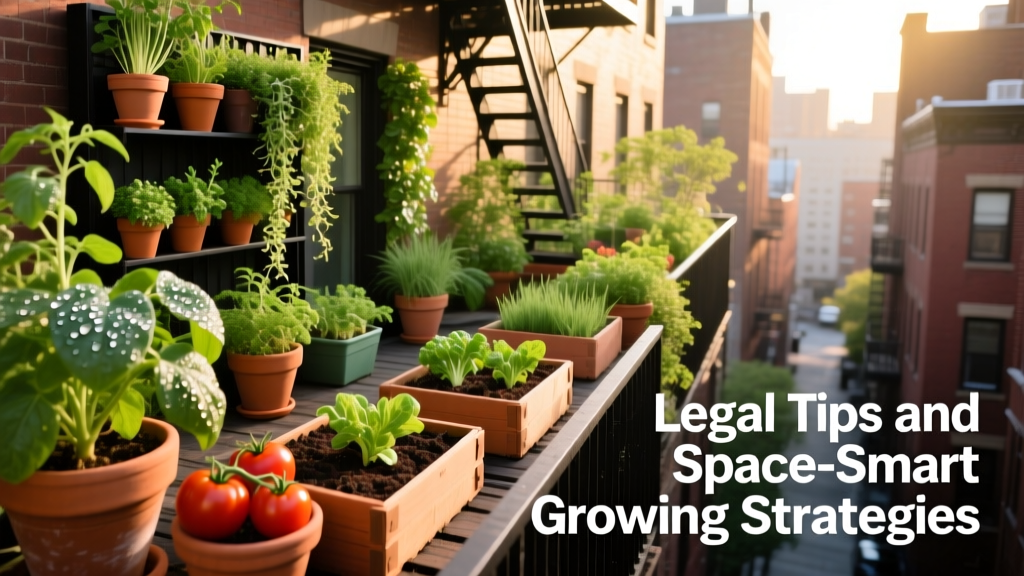
Fire Escape Garden: Legal Tips and Space-Smart Growing Strategies
Is Gardening on a Fire Escape Legal?
Fire escape gardening exists in a legal gray area in most cities. Fire escapes are emergency egress routes, and blocking them with heavy planters can violate building codes. However, lightweight, well-organized containers that leave clear passage are generally tolerated. Always check your local fire code and lease agreement before starting.
Weight Limits and Safety First
Most fire escapes are rated for 100 pounds per square foot of live load. A single 12-inch pot filled with wet soil can weigh 30-40 pounds. Keep total weight under 50% of the rated capacity. Use lightweight containers (fabric pots, resin, or recycled plastic) and lightweight potting mixes with perlite and coco coir to reduce weight by 40% compared to garden soil.
Best Containers for Fire Escape Gardens
Fabric grow bags are ideal — they're lightweight, breathable, and fold flat for storage. Self-watering containers reduce maintenance and weight from excess water. Rail planters that hang over the railing maximize space without adding floor weight. Avoid terra cotta (heavy and fragile) and ceramic (too heavy).
Wind Protection Strategies
Fire escapes are exposed to strong winds that can topple containers and dry out plants rapidly. Use zip ties or bungee cords to secure containers to the railing. Install a wind screen made from shade cloth attached to the railing with cable ties. Choose compact, bushy varieties over tall plants. Stake tomatoes and peppers with short bamboo stakes secured to the railing.
Best Crops for Fire Escape Gardens
Focus on compact, high-yield crops: cherry tomatoes (determinate varieties), bush peppers, dwarf herbs (basil, thyme, oregano), leafy greens (lettuce, spinach, arugula), and strawberries. Avoid vining crops that need extensive support and large plants like full-size squash or corn.
Watering Solutions Without Indoor Access
If you don't have easy water access from inside, consider: self-watering containers with large reservoirs (last 5-7 days), rain barrel collection (if allowed), drip irrigation kits with battery-powered timers connected to a spigot, or ollas (unglazed clay pots buried in soil that slowly release water).
Seasonal Transition Tips
In fall, bring container herbs and greens inside before frost. Swap summer crops for cold-hardy options like kale, Swiss chard, and winter lettuce varieties. In spring, start seedlings indoors 6 weeks before transplanting to the fire escape. Use row cover fabric to extend the season by 2-3 weeks on each end.