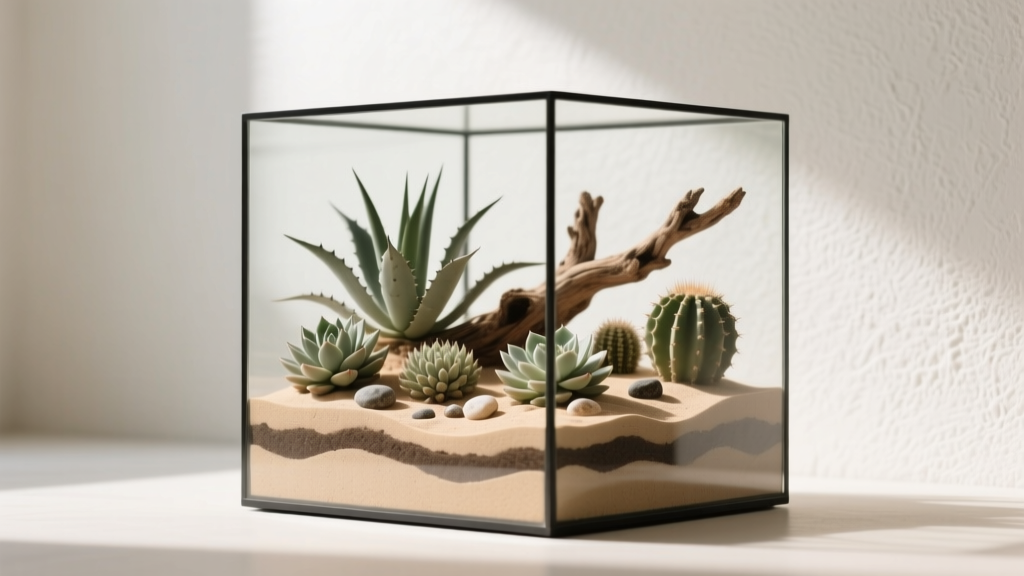
Sunroom Desert Biome Terrarium
At 2:17 p.m., the sunroom is doing what it always does: flooding one corner with harsh light and turning the other into a lukewarm shadow. Your favorite chair is parked in the bright spot because that’s where the mood is best—until you notice the tired houseplants leaning away from the glass, scorched on one side and sulking on the other. You want greenery in this room, but not a rotating parade of pots and dead leaves. A desert biome terrarium turns that challenge into a design advantage: it’s built to love bright sun, tolerate dry air, and read like a miniature landscape instead of a collection of mismatched containers.
Think of this project like designing a small courtyard garden under glass: sculpted terrain, controlled drainage, and plants that thrive on benign neglect. You’ll end up with a sunroom focal point that looks intentional, stays tidy, and doesn’t demand daily attention.
Start with the room’s reality: light, heat, and viewing angles
Desert plants are forgiving, but the layout has to honor the sunroom’s microclimates. Spend one day watching the light; you’ll design faster and buy fewer “maybe” plants.
Measure sunlight hours and intensity
Most desert terrarium plants want bright light—often 6–8 hours of strong sun or equivalent artificial lighting. In a sunroom, direct rays through glass can be intense; you’re not just feeding plants, you’re also managing leaf scorch and overheating.
- Direct sun zone: within 18 inches of south- or west-facing glass. Great for cacti and tough succulents.
- Bright indirect zone: 2–6 feet back from the glass. Ideal for haworthia, gasteria, and small aloes that prefer protection from peak heat.
- Edge shade zone: behind furniture legs, under shelves, or north-side corners—use this for rocks, negative space, and the lowest-water plants (not shade plants).
If your sunroom regularly exceeds 90°F on sunny afternoons, plan for a vented container or a lidless open terrarium style. The Royal Horticultural Society notes that many succulents “need good light” and “do not like to sit wet,” which is why airflow and drainage matter as much as sun (RHS, 2023).
Choose the viewing side first
Desert terrariums are landscapes. Decide where you’ll most often see it—so the “front” has the best slope, the cleanest negative space, and the most sculptural plant silhouettes. If the terrarium sits on a console table, design it to read from 36–60 inches away (standing view) and from 18–30 inches away (seated view).
Container and scale: designing the “site”
Your container size sets everything: soil depth, slope stability, and how many plants you can fit without crowding.
Practical container dimensions (that actually work)
For a sunroom statement piece, I like a footprint that’s large enough to create terrain changes but still movable for deep cleaning. Three proven sizes:
- Console-top panorama: 36 in L × 10 in W × 10 in H glass tank (often sold as reptile/aquarium style). Ideal for a “desert wash” layout with a dry river channel.
- Coffee-table anchor: 24 in L × 18 in W × 12 in H low glass terrarium. Great for layered rockwork and clustered cacti.
- Rental-friendly compact: 12 in diameter bowl or 14 in L × 8 in W open glass trough. Easy to move, easy to rehome.
Aim for 4–6 inches of mineral-heavy planting medium depth. Less than 3 inches dries too fast and limits roots; more than 6 inches adds weight and invites overwatering.
Open vs. closed: don’t trap humidity
Classic closed terrariums are for ferns and moss. Desert biomes want ventilation. Go open-top, or use a lid that stays propped with 1–2 inches of airflow gap. The University of Georgia Extension emphasizes that cacti and succulents require “excellent drainage” and careful watering to avoid rot (UGA Extension, 2019).
Layout strategies: build a believable desert scene
Good desert design is about restraint: clean lines, intentional emptiness, and textures that repeat.
Use a “rule of thirds” ridge line
Place your highest ridge or rock outcrop at roughly one-third of the container length, not dead center. This creates a natural focal point. In a 36-inch long tank, the peak lands around 12 inches from one end.
Design with three layers: base, bones, botanicals
This keeps the terrarium stable and easy to maintain.
- Base (drainage + separation): 1.5–2 inches of pumice or expanded clay aggregate. Add a mesh screen (window screen works) to keep soil from migrating downward.
- Bones (hardscape): rocks, gravel, and a “dry wash” line. Use larger stones first, then lock them with smaller gravel.
- Botanicals (plants + top dressing): plant in clusters, then finish with gravel top dressing to keep leaves dry and the design crisp.
Create a dry river wash to control visual clutter
A sinuous band of lighter gravel (think decomposed granite color) instantly reads “desert.” Make it 2–3 inches wide in a medium terrarium, tapering narrower as it recedes to fake depth.
Spacing rule: plant for year one, not week one
Overcrowding is the fastest way to lose the clean desert look. Use these spacing targets:
- Small rosette succulents (haworthia/gasteria): 3–4 inches apart.
- Clumping succulents (sedum, small aloe offsets): 4–6 inches apart.
- Small cacti: 4–8 inches apart depending on mature width.
“The most common mistake I see in small-scale arid designs is overplanting. Leave breathing room—negative space is part of the composition and part of plant health.” — Debra Lee Baldwin, succulent design author and photographer (Baldwin, 2017)
Materials list, costs, and smart DIY swaps
You can build this as a premium glass showpiece or a renter-friendly project that still looks designer. Here are real-world budget ranges (prices vary by region and season):
- Glass terrarium/tank: $45–$160 (used aquarium markets are excellent)
- Pumice or LECA (10–20 qt): $18–$35
- Cactus/succulent mix (8–16 qt): $12–$28
- Top dressing gravel (10 lb): $10–$22
- Hardscape rocks: $0–$40 (free fieldstone where legal; or purchased lava rock/dragon stone)
- Plants (8–14 small specimens): $40–$140
DIY alternatives: Use a shallow plastic storage bin as a hidden liner inside a decorative tray (especially for rentals). Swap expensive decorative gravel for rinsed pea gravel. Use window screen offcuts as soil barrier mesh.
Step-by-step setup (designer workflow)
Plan for 2–3 hours start to finish for a medium terrarium, not counting plant shopping.
- Dry fit the hardscape: Place your largest rocks first, building a ridge line. Step back every few minutes—this is where the design happens.
- Add drainage layer: Pour in 1.5–2 inches pumice/LECA. Level it.
- Install mesh barrier: Cut screen to fit; keep it flat so soil doesn’t sift down.
- Add planting medium: Build depth: 4 inches at the low end, 6 inches under the ridge. Lightly firm, don’t compact.
- Plant in clusters: Group 3s and 5s. Keep spines away from the glass by at least 2 inches for cleaning access.
- Top dress: Apply 0.5–1 inch gravel. Keep it off crowns of rosettes to prevent rot.
- Water sparingly: First watering is a settling sip. For a 24 × 18 inch terrarium, start with 1–2 cups distributed around root zones, not a full soak.
- Settle and adjust: After one week, you’ll see which plants want slightly more shade or space. Small moves now save replacements later.
Plant selection: varieties that stay proportional and thrive in sunrooms
The best desert-biome terrarium plants share three traits: they tolerate indoor dryness, grow slowly enough to stay in scale, and handle bright sun without stretching.
Structural “anchors” (choose 1–3)
- Aloe ‘Hedgehog’ (Aloe humilis): Compact, spiky, architectural. Handles bright light; offsets slowly for controlled clustering.
- Haworthia cooperi (window haworthia): Great for the bright-indirect zone; stays small and looks jewel-like against gravel.
- Gasteria ‘Little Warty’: Thick leaves, slow growth, excellent indoor tolerance, reads as “desert” without needing punishing sun.
Mid-layer massing (choose 3–6)
- Crassula ovata ‘Hobbit’: Mini tree form; prune to keep it under 8–10 inches. Strong silhouette from across the room.
- Sedum rubrotinctum (jelly bean plant): Easy, colorful tips in strong light, ideal for softening edges near rocks.
- Echeveria ‘Lola’ or ‘Perle von Nürnberg’: Rosette drama, but place where air circulates. Avoid crowding the crown with gravel.
Accent cacti (choose 1–4, carefully)
- Mammillaria gracilis ‘Thimble Cactus’: Clusters, stays relatively small, great texture contrast.
- Gymnocalycium mihanovichii (moon cactus, ungrafted green types): Compact, ribbed form; good for bright light without extreme heat.
- Rebutia species: Small globes, often bloom with enough sun; keep watering conservative.
Plants to avoid in most sunroom desert terrariums
- Fast-growing aloes (outgrow scale quickly)
- Most string succulents (e.g., string of pearls) in intense sunroom glare—they scorch easily against glass heat
- Large columnar cacti (become awkward, heavy, and dangerous to service)
Comparison table: open desert terrarium options
| Setup Type | Best For | Typical Size | Watering Rhythm | Estimated Cost | Risk Level |
|---|---|---|---|---|---|
| Open glass trough | Renters, easy moves, quick refresh | 14 in × 8 in × 6–8 in | Every 2–4 weeks | $70–$180 | Low (good airflow) |
| Repurposed aquarium (lidless) | Statement piece, deeper hardscape | 24 in × 18 in × 12 in | Every 3–5 weeks | $120–$320 | Medium (overwatering) |
| Vented terrarium with partial lid | Homes with very dry HVAC, better temp buffering | 20 in × 10 in × 10 in | Every 4–6 weeks | $150–$400 | Medium-High (humidity pockets) |
Three real-world scenarios (and how the layout shifts)
Scenario 1: South-facing sunroom, intense afternoon glare
The problem: The terrarium looks great at noon, but by late day the glass turns into a magnifying lens. Tips scorch, and the substrate bakes.
Design fix: Pull the terrarium back 24–36 inches from the glass and design a taller ridge on the window side to create self-shade. Use heat-tolerant anchors (Aloe humilis, Mammillaria). Consider a sheer curtain that reduces peak intensity without turning the room dim.
Planting note: Put echeverias on the “morning sun” side if possible; they color up but can scorch in harsh western exposure.
Scenario 2: Bright sunroom, but winter light is short and slanted
The problem: From November to February, growth stretches and rosettes open up.
Design fix: Integrate a discreet grow light above the terrarium on a timer. A small LED bar can add 10–12 hours of consistent light in winter while keeping the look clean. Mount it under a shelf or within a simple black metal frame.
Planting note: Favor haworthia and gasteria, which handle indoor seasonal swings gracefully, and keep the most light-hungry cacti near the brightest edge.
Scenario 3: Rental apartment sunroom with limited floor load and no drilling
The problem: You want a desert landscape, but you can’t haul a heavy tank or mount lights.
Design fix: Use a 12-inch bowl or shallow trough on a sturdy sideboard. Build a lower-profile landscape with one strong rock outcrop and a narrow gravel wash. Keep total weight manageable by using pumice and a thinner soil profile (3.5–4 inches), then plant slower growers.
Planting note: Skip spiky, high-maintenance cacti near edges; choose haworthia, gasteria, and one small mammillaria centered safely away from hands and sleeves.
Scenario 4: Family home where fingers (and pets) are curious
The problem: Spines and toddlers don’t mix, and cats love to investigate.
Design fix: Go cactus-light and spine-soft. Use aloe and gasteria as structural plants, place any cactus behind a rock “barrier,” and keep the terrarium on a 40+ inch tall stand or console. Choose heavier top dressing gravel so it’s not easily kicked out.
Maintenance expectations: what this terrarium asks of you
A desert biome terrarium should feel calm to own. If it’s high-stress, it’s usually overwatered or underlit.
Weekly (10–15 minutes)
- Scan for wrinkling (underwatering) vs. translucency/mush (overwatering).
- Rotate the container 90 degrees every 1–2 weeks if light comes from one direction to prevent leaning.
- Brush gravel back off rosette crowns and remove dropped leaves.
Monthly (20–30 minutes)
- Check moisture with a wooden skewer: if it comes out clean and dry at 2 inches deep, you can water.
- Water deeply but infrequently: most setups land at every 3–5 weeks, adjusting for season and HVAC.
- Wipe interior glass with a microfiber cloth to keep the “gallery” look.
Seasonal tasks (45–60 minutes)
- Spring: light prune crassula tips for shape; re-top-dress bare spots.
- Summer: watch heat spikes; increase airflow (fan on low nearby) if the sunroom regularly exceeds 90°F.
- Fall/Winter: reduce watering frequency; add supplemental light if stretching appears.
Troubleshooting by design (small fixes that prevent plant loss)
If you see fungus gnats: your mix is staying too wet. Increase mineral content (pumice), reduce watering, and keep top dressing dry. Gnats are a sign your desert is acting like a rainforest.
If plants lean hard: rotate the terrarium weekly or shift the tallest plants slightly back from the brightest pane. Leaning is a lighting design problem, not a moral failing.
If you get algae on rocks: too much moisture and not enough airflow. Go lidless, water less, and remove any decorative moss (it holds humidity).
Make it feel like a real desert: finishing details that matter
The difference between “pots in a box” and a desert biome is the finish. Use two gravel sizes (a fine decomposed-granite look plus a small pebble) and one accent boulder. Keep a consistent color palette—warm tan + charcoal rock, or pale gravel + rust-toned lava rock.
Add one subtle “story” element: a tiny driftwood fragment that reads like desert scrub, or a line of darker stones that suggests an old wash bank. Keep it minimal; the plants and shadows are the main characters.
Once it’s in place, sit in that favorite chair again around mid-afternoon. If the terrarium reads as a complete landscape from across the room—clear ridge line, calm negative space, repeating textures—you’ve solved the sunroom’s harsh-light problem with a design that looks better every month, not worse.
Sources: Royal Horticultural Society (RHS), “Cacti and succulents: houseplant care” (2023). University of Georgia Extension, guidance on succulent/cactus indoor care and drainage emphasis (2019). Debra Lee Baldwin, quoted from succulent design guidance and interviews published in her work (2017).