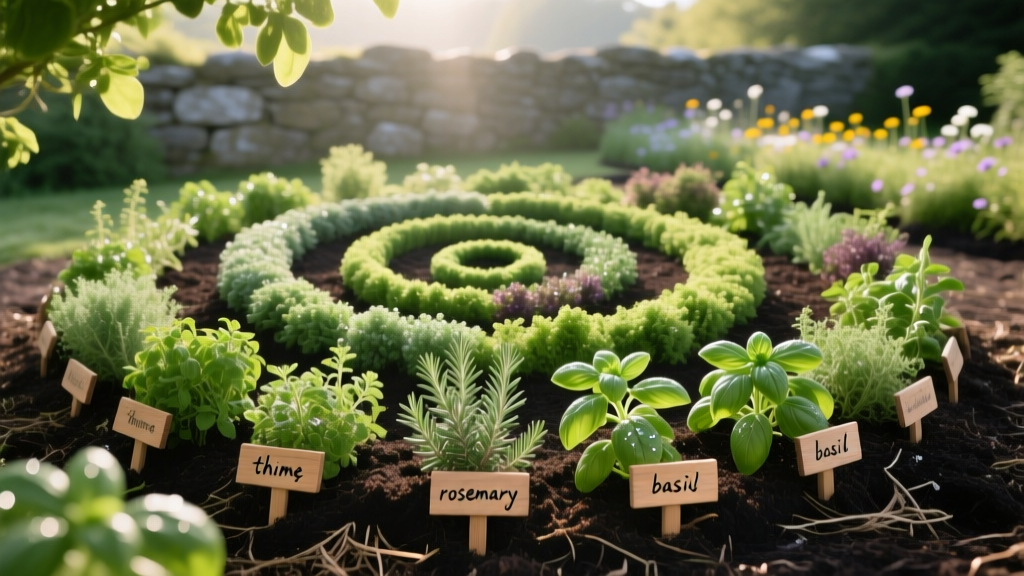
Herb Spiral Garden: Grow 15 Herbs in a 6-Foot Circle Using Permaculture
What Is an Herb Spiral?
An herb spiral is a permaculture design that stacks growing space vertically. A 6-foot diameter circle rises to 3 feet at the center, creating a spiral path of soil. Different heights and orientations create microclimates — sunny and dry at the top, shaded and moist at the bottom — allowing you to grow herbs with conflicting needs in one structure.
Why It Works
- Space efficiency: 30 sq ft of footprint = 60+ linear feet of growing edge
- Microclimates: South-facing top (hot, dry) vs north-facing bottom (cool, moist)
- Drainage: Gravity pulls water down — top stays dry, bottom stays moist
- Access: Every plant is within arm's reach from the outside
- Beauty: Sculptural focal point for any garden
Materials Needed
- 200-300 bricks, rocks, or concrete blocks (for the wall)
- 2 cubic yards of garden soil mix
- Gravel or rubble (for core drainage)
- Landscape fabric (optional, to reduce soil loss through gaps)
- Mulch (straw or wood chips)
Construction Steps
- Mark a 6-foot diameter circle on level ground
- Lay the first course of bricks/stones along the circle
- Begin the spiral: create a wall that starts at ground level on one side and rises to 3 feet at center
- Fill the core with gravel/rubble (drainage)
- Fill the spiral with soil mix (60% topsoil, 30% compost, 10% sand)
- Water thoroughly and let settle for 2-3 days
- Top up soil as needed, then plant
Plant Placement Guide
Top of Spiral (Hot, Dry, Full Sun, Excellent Drainage)
- Rosemary, lavender, thyme, oregano, sage
- These Mediterranean herbs thrive in dry, sunny conditions
Middle (Moderate Sun, Moderate Moisture)
- Basil, cilantro, dill, chives, tarragon
- Standard culinary herbs with moderate water needs
Bottom (Shade, Moist, Rich Soil)
- Parsley, mint (contain in pot!), lemon balm, chervil
- Moisture-loving herbs that prefer partial shade
Trailing Down the Sides
- Creeping thyme, nasturtium, strawberry
Maintenance
- Water the top sparingly (once a week), bottom more often (2-3x/week)
- Harvest frequently to encourage bushy growth
- Replace annuals (basil, cilantro, dill) each spring
- Prune perennials (rosemary, lavender, thyme) annually
Final Thoughts
An herb spiral is a one-weekend build that produces fresh herbs for years. It's the most efficient use of space in any garden — and it looks stunning. Start with the five Mediterranean herbs at the top and expand from there.