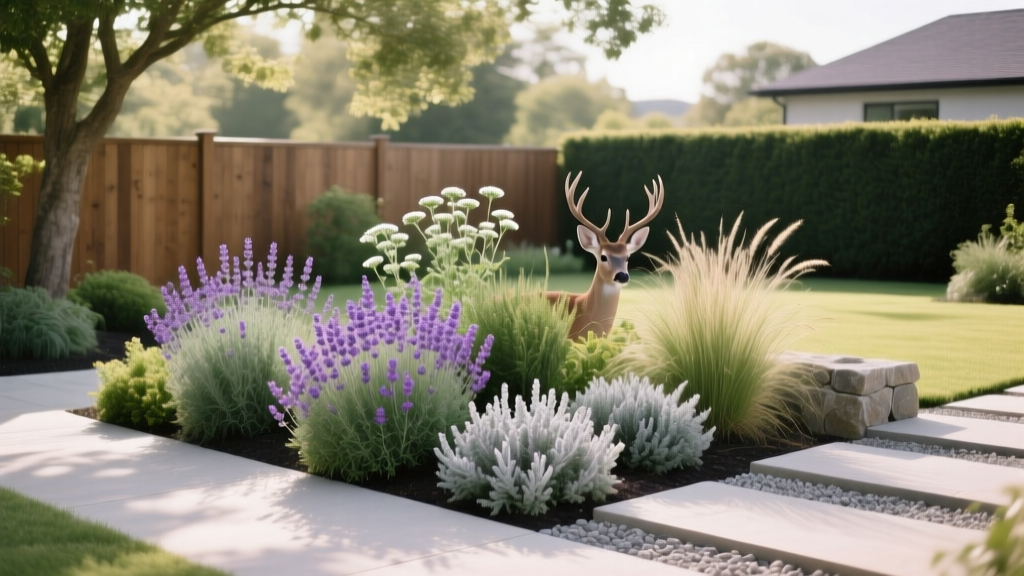
Front Yard Deer-Resistant Plant List
The first bite always looks small—like a neighbor’s dog nibbled a leaf on the way past. Then you step closer and see the clean, angled tear marks and the missing flower buds. Overnight, your front-yard “welcome” bed turned into a deer salad bar. If this sounds familiar, the fix isn’t just swapping one plant for another. The real win comes from designing a front yard that guides deer away from the good stuff, while still looking intentional from the curb.
I’m going to walk you through a practical designer’s approach: a layout that reads tidy and inviting, plant choices that deer typically avoid, and a plan you can adapt to a narrow rental walkway or a full suburban lawn. You’ll get specific varieties, spacing, sunlight targets, cost ranges, and maintenance expectations—because “deer-resistant” only works when it’s also realistic to install and care for.
Design principles that make deer resistance actually work
Start with the deer logic: edge browsing and easy access
Deer prefer quick, low-risk meals. They browse along edges—near hedges, wooded borders, or anywhere they can retreat fast. Your front yard often has a straight shot from street to shrubs, especially if there’s a side yard path or open lawn.
Design goal: make the most tempting plants harder to reach and less obvious, while using strongly scented or prickly plants as “speed bumps” along approach lines.
Use a “three-zone” layout: curb, mid-bed, foundation
Think of your front planting like a theater stage with three depths. Each zone gets different plant traits and spacing so the bed looks layered and deer pressure is reduced.
- Zone 1 (Curb/sidewalk edge): dense, aromatic, or textured plants deer dislike; low height for sightlines.
- Zone 2 (Mid-bed): the workhorse perennials and grasses; repetition for a designed look.
- Zone 3 (Foundation/near porch): taller structure plants and a few “risk” ornamentals closer to human activity.
For a typical 6 ft deep foundation bed, a clean starting ratio is: 18–24 inches for Zone 1, 24–36 inches for Zone 2, and the remaining 24+ inches for Zone 3. If your bed is only 4 ft deep, compress Zone 2 and keep Zone 1 intact—because the deterrent edge matters most.
Spacing strategy: tighter edges, roomier mid-bed
Deer are more likely to sample isolated “specimens.” Instead, plant deer-resistant varieties in drifts so the bed reads as a mass (and the deer encounter the same unpleasant flavor repeatedly).
Use these practical spacing rules:
- Edgers (lavender, catmint): 12–18 inches on center for a continuous band.
- Medium perennials (salvia, yarrow): 18–24 inches on center.
- Ornamental grasses (switchgrass, fountain grass): 24–36 inches on center depending on mature width.
Pick a sunlight “target” before you pick plants
Many deer-resistant favorites are sun lovers. Take one day and note sunlight in your front bed. Aim to classify it like this:
- Full sun: 6+ hours of direct sun.
- Part sun/part shade: 3–6 hours.
- Shade: under 3 hours.
You’ll get better performance (and fewer “weak” plants deer might test) if you match plants to light. Rutgers Cooperative Extension notes deer resistance is not absolute—local pressure and hunger levels matter—so plant health and smart placement stack the odds in your favor (Rutgers NJAES, 2023).
“No plant is 100% deer-proof. When deer populations are high, or food is scarce, deer will eat almost anything.” — Rutgers Cooperative Extension, “Deer-Resistant Plants” (2023)
Layout strategies you can copy (with dimensions)
The 6' x 18' foundation bed blueprint (classic suburban front)
Let’s design a bed that runs 18 ft along the house and extends 6 ft out. That’s 108 sq ft—big enough for layers, small enough for a weekend install.
- Edge band (Zone 1): Plant a 18-inch-deep ribbon of aromatic perennials along the front edge. Example: 12 Nepeta ‘Walker’s Low’ at 15 inches on center across 15 ft (leave 1.5 ft gaps at ends for curves or a mailbox planting).
- Mid-bed repeats (Zone 2): Add 7 Salvia nemorosa ‘Caradonna’ at 20 inches on center, staggered behind the nepeta for a woven look.
- Structure (Zone 3): Use 3 Panicum virgatum ‘Northwind’ (switchgrass) spaced 30 inches apart as upright anchors, plus 2 compact evergreens if you need winter presence (see plant list below).
- Mulch and edging: Install a crisp edge and add 2–3 inches of mulch. For 108 sq ft, that’s roughly 1 cubic yard of mulch at a 3-inch depth (a common bulk-yard purchase).
Cost reality check: If 1-gallon perennials average $12–$18 each and 3-gallon grasses run $25–$45, a 108 sq ft bed often lands around $350–$900 in plants depending on sizes. Bulk mulch commonly runs $35–$60 per cubic yard (delivery varies by region). These numbers help you decide where to splurge (structure plants) and where to save (fast-fill perennials).
The 3' x 12' “renter strip” (small, high visibility, low commitment)
If you rent or you’re working with a narrow strip by a walkway, the design has to be clean and removable. Use repeated containers or a thin in-ground ribbon with easy division plants.
- Keep it tight: A 36-inch depth allows a 12-inch edge band and a 24-inch mid-band.
- Choose 2 plants only: One edger + one vertical accent. Example: lavender + dwarf feather reed grass.
- Use pots if digging isn’t allowed: Three 18-inch diameter planters spaced 36–42 inches apart can read like a designed “set,” not random pots.
Budget option: start with 3 containers at $20–$40 each, fill with a bagged potting mix, and plant smaller sizes. You’ll spend less upfront, and you can take the garden with you.
The corner lot or open lawn (where deer feel bold)
Deer are bolder in open spaces because they can see danger coming. On a corner lot, you need a stronger perimeter cue.
Strategy: create a visible “scent fence” with repeated aromatic plants at the outermost edge, then tuck any moderately deer-resistant plants closer to the house and front steps where human activity is higher.
Also consider a simple 4 ft tall decorative fence segment around the most vulnerable bed. It’s not a full exclusion fence, but it can interrupt deer movement—especially when paired with pungent plantings.
Deer-resistant plant selection (specific varieties and why they work)
Deer tend to avoid plants that are strongly aromatic, fuzzy, bitter, toxic, or spiny—though local deer can still surprise you. Penn State Extension emphasizes that “deer-resistant” means less likely to be damaged, not immune, and browsing increases when deer are hungry (Penn State Extension, 2021).
Top performers for the front edge (Zone 1)
These are your curbside bouncers—low enough to keep sightlines open, tough enough for heat reflected off sidewalks, and usually unappealing to deer.
- Nepeta (catmint) ‘Walker’s Low’ (sun, 18–24" tall): aromatic foliage; long bloom; plant 15–18" apart.
- Lavandula (lavender) ‘Hidcote’ (sun, ~18" tall): intensely fragrant; thrives in well-drained soil; plant 18" apart.
- Salvia nemorosa ‘Caradonna’ (sun/part sun, 18–24" tall): pungent leaves; vertical purple spikes; plant 18–24" apart.
- Achillea (yarrow) ‘Moonshine’ (sun, 18–24" tall): aromatic, drought-tolerant; plant 18–24" apart.
- Stachys byzantina (lamb’s ear) (sun/part sun, 8–12" tall): fuzzy leaves; plant 12–18" apart (note: can spread).
Mid-bed workhorses (Zone 2) that look designed in repeats
- Echinacea ‘PowWow Wild Berry’ (sun, 18–24" tall): strong structure; pollinator-friendly; plant 18" apart. Deer may browse flowers in high pressure areas, so use behind a scented edge.
- Perovskia atriplicifolia ‘Denim ’n Lace’ (Russian sage; sun, 24–36" tall): aromatic, airy, drought-tolerant; plant 24–30" apart.
- Hemerocallis (daylily) (sun/part sun): commonly eaten by deer in many regions—skip it if your deer are persistent. This is where “local proof” matters.
- Ornamental onion: Allium ‘Millenium’ (sun, ~15" tall): onion-scented foliage; tidy mound; plant 12–18" apart.
- Panicum virgatum ‘Northwind’ (switchgrass; sun, 4–5 ft tall): upright screening; typically less palatable; plant 30–36" apart.
Foundation/porch zone (Zone 3): structure shrubs and evergreens
Near the house, you can place your tallest plants and a few “maybe” plants because foot traffic and lights help. Still, choose shrubs deer usually avoid.
- Buxus (boxwood) ‘Green Velvet’ (sun/part shade, 3–4 ft): deer sometimes browse boxwood in winter in some regions, but it’s often more resistant than tender broadleaf evergreens. Plant 30–36" apart for a low hedge.
- Ilex glabra ‘Strongbox’ (inkberry holly; part sun, 2–3 ft): native option, good structure; plant 30–36" apart.
- Juniperus (juniper) ‘Blue Star’ (sun, 2–3 ft): prickly texture; strong deterrent; plant 36" apart.
- Leucothoe fontanesiana ‘Zeblid’ (Scarletta) (shade/part shade): evergreen-ish in mild winters; deer often avoid; plant 36" apart.
A quick comparison table: choose plants by deer resistance + design role
| Plant (Variety) | Best Zone | Sunlight | Spacing | Why deer usually avoid it |
|---|---|---|---|---|
| Nepeta ‘Walker’s Low’ | Zone 1 | 6+ hours | 15–18 in | Aromatic foliage; strong oils |
| Lavender ‘Hidcote’ | Zone 1 | 6+ hours | 18 in | Intense fragrance; tough texture |
| Salvia ‘Caradonna’ | Zone 1–2 | 6+ hours | 18–24 in | Pungent leaves; not very juicy |
| Allium ‘Millenium’ | Zone 2 | 6+ hours | 12–18 in | Onion scent; unpalatable |
| Panicum ‘Northwind’ | Zone 2–3 | 6+ hours | 30–36 in | Coarse blades; less preferred browse |
| Juniper ‘Blue Star’ | Zone 3 | 6+ hours | 36 in | Prickly foliage; resinous scent |
Three real-world scenarios (and the plant list that fits each)
Scenario 1: The narrow walkway bed that gets cooked by afternoon sun
Site: 2.5 ft wide x 20 ft long strip along a front walk; reflected heat; 7–8 hours sun in summer.
Design move: one clean ribbon planting—no fussy mix that looks messy from the sidewalk.
Plant recipe:
- Front 12": Lavender ‘Hidcote’ at 18" spacing (about 13 plants for 20 ft, allowing gaps)
- Back 18": Panicum ‘Northwind’ at 36" spacing (6–7 plants)
Why it works: Lavender handles heat and discourages browsing; switchgrass adds vertical structure without blocking visibility. Maintenance is mostly a spring cutback for grass and a light lavender trim after bloom.
Scenario 2: A shady front foundation under mature trees (deer love this path)
Site: 5 ft deep bed under canopy; 2–4 hours sun; deer use the shade as cover.
Design move: texture-heavy planting with evergreen backbone so it still looks good when perennials are asleep.
Plant recipe:
- Structure: Inkberry holly ‘Strongbox’ (3 plants) at 36" spacing
- Mid layer: Leucothoe ‘Zeblid’ (3–5 plants) at 36" spacing
- Edge: Lamb’s ear where sun hits (or swap to a shade-tolerant groundcover you know deer ignore locally)
Budget tip: Buy shrubs smaller (1–2 gallon) and be patient for two seasons. You can fill gaps with mulch and a few inexpensive annuals in pots near the porch where deer are less likely to linger.
Scenario 3: The “I want flowers by the mailbox” problem
Site: mailbox island, roughly 4 ft x 4 ft; heat + salt splash in winter; deer browse while walking the street edge.
Design move: keep it simple and bold, with plants that look intentional even when not blooming.
Plant recipe:
- Center: Juniper ‘Blue Star’ (1) for year-round structure
- Ring: Allium ‘Millenium’ (5–7) at 15" spacing
- Edge: Nepeta ‘Walker’s Low’ (6–8) at 15" spacing
Why it works: The juniper’s prickly texture discourages nibbling, allium brings summer color, and nepeta softens edges and spills slightly over mulch—great curb appeal with minimal fuss.
Step-by-step setup: install a deer-resistant front bed in a weekend
- Mark the bed shape: Use a garden hose to draw a gentle curve. Avoid tight wiggles; from the street, broad curves look calmer and more “designed.”
- Measure and calculate plants: Example: for a 15 ft run, plants at 15" spacing = about 12 plants. Round down and leave breathing room.
- Remove turf (DIY method): Slice sod with a spade and roll it up, or sheet-mulch with cardboard + mulch if you can wait 6–10 weeks for smothering.
- Improve soil only where needed: Most deer-resistant sun plants hate soggy soil. If drainage is poor, mix in expanded shale or coarse compost sparingly and avoid over-amending.
- Place plants before digging: Set pots on the soil in drifts of 3s and 5s. Step back to the sidewalk and adjust.
- Plant at correct depth: Keep the crown at soil level. Water in deeply.
- Mulch: Apply 2–3 inches, keeping mulch a couple inches away from stems.
- Protect during establishment: For the first 2–4 weeks, use temporary deterrents (sprays or deer netting) if your area has heavy pressure. Newly planted material is especially vulnerable.
Budget considerations and smart DIY alternatives
If your budget is tight, prioritize the layout first—edging, spacing, and repetition—and scale plant size down. A bed planted with smaller pots can look “finished” quickly if you mulch well and repeat just a few varieties.
- Best place to splurge: 2–3 structural plants (upright grass or evergreen). They define the bed even in winter.
- Best place to save: perennials you can divide in year two (nepeta, yarrow, salvia often bulk up fast).
- DIY alternative to a full fence: A short decorative barrier plus a dense edge band of lavender/nepeta can reduce casual browsing without the cost of an 8 ft exclusion fence.
- Container workaround (renters): Use 18-inch pots with lavender, salvia, and ornamental grass. Place them in a line to read as a “border,” not scattered décor.
Maintenance expectations (so the bed stays attractive and deer-resistant)
Plan for 20–40 minutes per week in the growing season for weeding, quick deadheading, and checking irrigation. In the first year, add a little time for watering while roots establish.
Spring (about 1–2 hours total for an average bed)
- Cut back ornamental grasses before new growth (one clean chop).
- Shear back nepeta after the first flush for a second bloom wave.
- Top-dress mulch if it’s thinned to under 2 inches.
Summer (10–20 minutes weekly)
- Deadhead salvia and yarrow to extend bloom.
- Water deeply rather than frequently: aim for a thorough soak 1–2 times per week during heat, depending on soil and rainfall.
- Inspect for deer browsing and reapply repellents if needed—especially after rain.
Fall and winter (1–2 hours total)
- Leave some seedheads and grass plumes for winter interest (and to avoid creating tender new growth).
- In high-deer areas, protect young shrubs in winter with temporary netting or trunk guards.
One more practical note: deer pressure changes year to year. If you see browsing, don’t panic—adjust. Move the tastier plant closer to the porch, increase aromatic massing at the edge, or swap the repeat plant palette to tougher choices like lavender, nepeta, allium, and juniper.
A front yard has a job: it welcomes people while quietly negotiating with wildlife. When you use a three-zone layout, repeat deer-resistant plants in confident drifts, and choose varieties that match your sunlight and soil, your garden stops being a nightly snack route and starts looking like it was designed on purpose—because it was.
Sources: Rutgers New Jersey Agricultural Experiment Station Cooperative Extension (2023), “Deer-Resistant Plants”; Penn State Extension (2021), deer-resistant plant guidance and browsing notes.