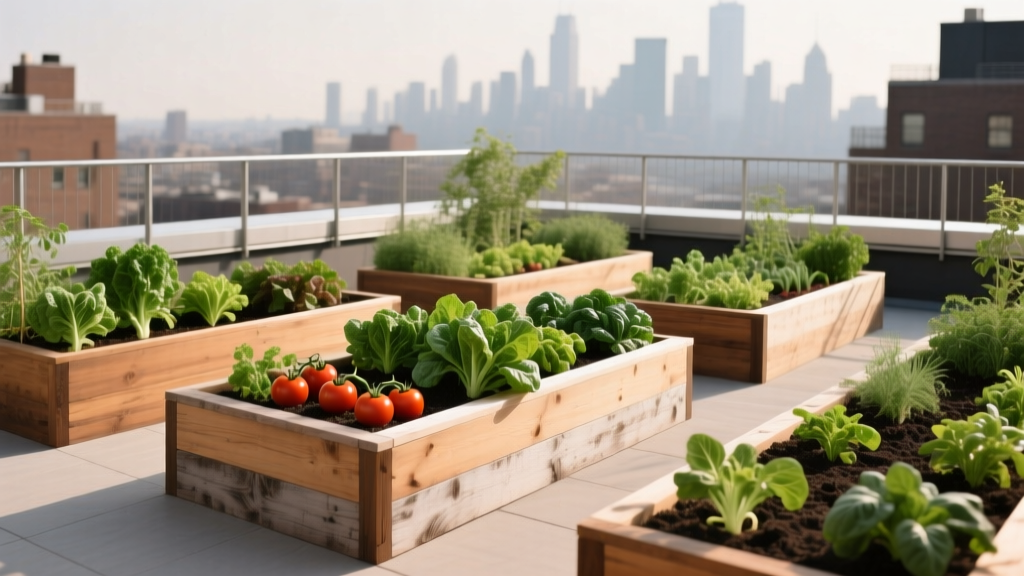
Rooftop Vegetable Garden Setup Guide
The elevator doors open, and you step out with a tray of seedlings in your arms and a coil of hose on your shoulder. The roof is brighter than you remembered—full sun, full wind, full exposure. You can already picture dinner: cherry tomatoes still warm from the day, basil you can smell before you touch it, crisp lettuces that never saw a truck. Then the practical questions land: How much weight can this roof take? Where will the water go? What survives wind up here? And how do you make it feel like a garden instead of a scattering of pots?
Think like a landscape designer: we’ll start with the constraints (structure, sun, wind, water), then we’ll lay out clear “rooms” for growing, moving, and storing. The goal is a rooftop vegetable garden that’s productive, safe for the building, and pleasant enough that you’ll actually step outside and use it.
Start with the rooftop realities: load, sun, wind, and water
Rooftop gardens succeed when the “boring” stuff is handled early. Before you buy soil or build beds, confirm what the roof can handle and how water behaves up there. You don’t need to be an engineer, but you do need a plan.
Weight and safety: design with limits, not hopes
First call: your building manager, landlord, or a structural engineer if you own the building. Ask for the roof’s live load rating (often expressed in pounds per square foot). Intensive green roofs can be heavy, and saturated soil weighs far more than dry soil. If you can’t get a rating, keep your system modular and light: fabric grow bags, shallow planters, and soilless mixes instead of deep in-ground-style beds.
As a reference point for scale, many urban gardeners keep containers in the 8–12 inch soil depth range to reduce weight while still growing fruiting crops with attentive feeding. Plan to place the heaviest items (full water barrels, large planters) close to structural supports, not at the center of long spans.
Sunlight: map it before you place a single pot
Vegetables are honest about light. Most fruiting crops (tomatoes, peppers, eggplant) want 6–8 hours of direct sun. Leafy greens tolerate less, but even lettuce is happier with a bright half-day. Spend one clear day checking sun at three times—morning, midday, late afternoon—and sketch the shade lines from walls, elevator housings, or adjacent buildings.
Quick rule: put tall crops and trellises on the north side of your growing area (in the Northern Hemisphere) so they don’t shade everything else.
Wind: the rooftop factor that changes everything
Wind dries soil fast, snaps tender stems, and can topple lightweight containers. A wind plan isn’t optional—it’s part of your layout. Create a protected growing zone using lattice panels, open slat fencing, or strategically placed tall planters. Avoid solid walls that create turbulence; perforated screens reduce wind speed without creating a “gust tunnel.”
“Wind can reduce plant growth by increasing transpiration and causing mechanical stress; windbreaks are most effective when they are semi-permeable rather than solid.” — Food and Agriculture Organization (FAO), Windbreaks and Shelterbelts (2015)
Water management: protect the roof, protect your downstairs neighbor
Rooftops punish sloppy watering. Use saucers or contained planters, keep drainage clear, and never allow runoff to carry soil to drains. If you have access to a spigot, test water pressure and hose reach. If not, plan for a small storage system: a 20–30 gallon covered container can bridge dry weeks, but remember it’s heavy when full (water weighs about 8.3 lb per gallon).
For irrigation efficiency, drip kits are worth it. University of California Agriculture and Natural Resources notes that drip irrigation can reduce water use compared with other methods by applying water directly to the root zone (UC ANR, 2017).
Layout strategies: turn a blank roof into a productive “garden room”
Design is how you make your rooftop garden feel inevitable—like it belongs there. The best layouts create clear circulation, a defined growing zone, and a small service zone so tools and supplies don’t sprawl.
Step 1: measure and sketch a simple plan
Measure the usable area and draw it to scale. Even a rough plan helps you avoid the classic mistake: buying containers that block the door or crowd the only sunny corner.
Use these practical dimensions:
- Walkway width: aim for 24–30 inches so you can carry a watering can without brushing plants.
- Access gap behind planters: keep 6–12 inches between pots and parapet walls for airflow and cleaning.
- Trellis height: 5–6 feet works for cucumbers and indeterminate tomatoes (with pruning).
Step 2: place your “fixed points” first
Fixed points are the things you won’t move often: a storage bench, a small potting surface, the compost bin (if allowed), and the biggest planters. Place these near the door for convenience—because convenience is what keeps a garden alive in August.
Step 3: create three zones—Grow, Move, and Work
Grow zone: the sunniest, most sheltered area. Keep it rectangular if you can; rectangles are easier for spacing and irrigation lines.
Move zone: your main walkway loop. Avoid dead ends; you want to circulate without stepping over pots.
Work zone: a 2-foot-wide strip or corner with a small table for mixing potting soil, storing ties, and staging harvest baskets.
Step 4: design vertical space (it’s your rooftop superpower)
When floor space is limited, walls and rails become real estate. A trellis panel on the north side can hold cucumbers, pole beans, and even small melons in slings. A railing-mounted herb trough keeps basil and thyme within arm’s reach of the door.
Use vertical growing for lighter loads too: fabric pocket planters for greens, or a simple A-frame trellis that can be disassembled at the end of the season.
Choosing containers and beds: match the system to your roof and your schedule
Containers are the backbone of most rooftop vegetable gardens. The right choice depends on budget, weight limits, how long you’ll stay in the space, and how much time you want to spend watering.
| Setup Type | Best For | Typical Soil Depth | Watering Needs | Approx. Cost (USD) |
|---|---|---|---|---|
| Fabric grow bags | Renters, lightweight rooftop rules | 10–14 in | High (dries fast in wind) | $6–$15 each (5–10 gal) |
| Self-watering planters | Busy schedules, heat-prone roofs | 10–12 in + reservoir | Moderate (weekly fill) | $35–$120 each |
| Wood raised bed (lined) | Owners, long-term gardens | 12–18 in | Moderate | $120–$300 per 4x4 ft bed |
| Modular plastic raised bed | Easy assembly, clean look | 11–17 in | Moderate | $90–$250 per kit |
For most rooftops, a hybrid works beautifully: one or two larger beds for high-yield crops, plus smaller containers for herbs, greens, and experiments. Keep containers grouped—clusters reduce wind exposure and make drip irrigation simpler.
Plant selection: varieties that earn their spot on a roof
Rooftop vegetables need three traits: wind tolerance, heat resilience, and productivity in containers. Choose varieties bred for compact growth and short seasons, and you’ll get more harvest per square foot.
Tomatoes: choose compact or trained varieties
Best rooftop picks:
- ‘Sungold’ cherry tomato: wildly productive, forgiving in containers, excellent flavor. Train to a trellis and prune to 1–2 leaders.
- ‘Roma’: sturdy plant, great for sauces, handles heat well with consistent watering.
- ‘Celebrity’ (determinate/semi-determinate): reliable yields without endless vine growth.
Spacing: one tomato per 10–15 gallon container; keep plants 24 inches apart for airflow.
Peppers and eggplant: rooftop heat lovers
- ‘Shishito’ pepper: high yield, early harvest, great for container culture.
- ‘Jalapeño’: compact, productive, handles rooftop sun.
- ‘Ichiban’ eggplant: slender fruit, earlier than many globe types.
Spacing: one plant per 5–7 gallon pot, about 18 inches between pots. Give peppers at least 6 hours of direct sun.
Leafy greens: fast, flexible, and perfect for partial shade
- ‘Buttercrunch’ lettuce: heat-tolerant for a lettuce, reliable heads.
- ‘Lacinato’ kale: wind-tough leaves, harvestable for months.
- ‘Red Russian’ kale: tender, quick regrowth.
- Arugula ‘Astro’: fast crop for shoulder seasons.
Spacing: leaf lettuce at 8–10 inches, kale at 12–18 inches. Greens can thrive with 4–6 hours of sun, especially with afternoon shade in hot climates.
Climbers: use vertical space for big returns
- ‘Diva’ cucumber: parthenocarpic (sets fruit without pollination), excellent for rooftops where pollinators may be scarce.
- ‘Blue Lake’ pole bean: strong producer on a trellis, improves soil biology in mixed plantings.
Spacing: cucumbers at 12 inches along a trellis; pole beans at 6 inches. Add soft ties and check weekly—wind can torque stems.
Herbs: the high-value edge planting
- Genovese basil: thrives in heat, pairs with tomatoes, harvest weekly for bushiness.
- Thyme and oregano: drought-tolerant, good for windy edges.
- Chives: cold-hardy, comes back early in spring.
Plant herbs in troughs or smaller pots near the door. You’ll use them more, and frequent snipping keeps them productive.
Three rooftop scenarios (and how I’d lay each one out)
Rooftops vary wildly. Here are three real-world patterns I see, with layouts that make them work.
Scenario 1: The renter’s 6 ft x 10 ft sunny corner (portable, no drilling)
You’ve got a bright patch and a lease that may end next year. Keep everything movable. Place a 6-foot trellis panel against the north edge using weighted planters as anchors (no roof penetration). Cluster 6 fabric grow bags (10-gallon for tomatoes, 5-gallon for peppers) in two rows, leaving a 30-inch center path.
Suggested plant mix: 1 ‘Sungold’ tomato, 1 ‘Roma’, 2 peppers (‘Shishito’ + ‘Jalapeño’), 1 cucumber ‘Diva’ on the trellis, and one long herb trough. Budget: roughly $180–$350 depending on planter choice and whether you add a small drip kit.
Scenario 2: The windy high-rise roof with 8 hours of sun (heat + wind management)
This is where gardens fail if you treat them like balconies. Build a wind buffer first: a line of tall, heavy planters with tough herbs (thyme, oregano) and maybe dwarf blueberries if your climate allows. Behind that buffer, set your vegetables in the “lee” zone (the calmer pocket).
Use self-watering planters for at least the thirstiest crops. On a windy roof, you may otherwise water daily in midsummer. Plan for shading cloth (30–40% shade) to protect greens from heat scorch. Cost: a wind screen plus self-watering containers can land around $400–$900, but it’s the difference between constant struggle and steady harvest.
Scenario 3: The family roof with a 12 ft x 16 ft area (semi-permanent, high yield)
Here, a clean layout pays off. Install two 4 ft x 4 ft raised beds with a 30-inch path between them, plus a narrow work corner: a small outdoor table and a sealed bin for soil and amendments. Place beds so you can reach the center from either side; you never want to step into a bed on a roof.
Suggested planting: one bed for tomatoes/peppers with basil interplanted; the second bed for greens, beans on a trellis, and succession sowings. With drip irrigation on a timer, this setup can feed a household steadily from late spring through fall.
Step-by-step setup: from bare roof to planted containers
- Confirm permissions and load limits. Get approval from your landlord/HOA/building manager, and ask where drainage must go.
- Measure and mark the layout. Use painter’s tape to outline beds and paths. Make sure doors and roof access panels open fully.
- Add protective layers. Place planters on pot feet or risers so water can flow underneath; use a durable barrier mat if required by the building.
- Set wind management. Install semi-permeable screens or place tall planters to create a sheltered pocket.
- Position irrigation. Run a hose or set up a drip line. If using drip, do a 10-minute test run to check for leaks and even coverage.
- Fill containers with a lightweight mix. Use high-quality potting mix (not garden soil). For many containers, plan on 1.5–2 cubic feet per 10-gallon pot equivalent.
- Plant with correct spacing. Follow the spacing notes above; overcrowding on rooftops invites mildew and stress.
- Mulch the surface. Add 1–2 inches of straw or fine bark to slow evaporation and reduce soil splash.
- Add supports immediately. Install cages and trellises at planting time to avoid damaging roots later.
- Track sun and adjust. Over the first two weeks, watch where shade falls and slide pots as needed.
Budget planning and smart DIY swaps
Rooftop gardens can be sleek and expensive—or scrappy and brilliant. The trick is spending where it saves time and crop loss: soil quality, irrigation efficiency, and sturdy supports.
A practical starter budget for a small rooftop setup (6–10 containers) often lands between $200 and $600. Here’s how to control costs without cutting performance:
- DIY trellis: Use EMT conduit or reclaimed wood in an A-frame. Add nylon netting instead of buying a specialty system.
- Grow bags over ceramic pots: They’re lighter, cheaper, and easier to move—especially important for renters.
- Buy fewer, larger containers: Larger soil volume buffers heat and reduces watering frequency. Two 15-gallon planters often outperform four tiny pots.
- Start from seed for greens: A $3–$5 seed packet can replace multiple nursery six-packs over a season.
- Prioritize drip irrigation: A basic kit can cost less than replacing stressed plants midseason, and it protects you from missed watering during heat waves.
Don’t skimp on potting mix. Container vegetables rely on that mix for structure, air, and drainage. As Cornell University notes, container media must balance water-holding and aeration to support healthy roots (Cornell Cooperative Extension, 2020).
Maintenance expectations: what it takes to keep a rooftop garden thriving
A rooftop vegetable garden is not hard, but it is consistent. In peak summer, expect 1.5–3 hours per week for a modest setup: harvesting, tying vines, checking moisture, and doing quick pest scans. If you hand-water instead of using drip, add time—often another 10–20 minutes per watering day, and in hot wind that can be daily.
Your weekly rhythm (10-minute checks that prevent big problems)
- Moisture: check containers at finger depth; rooftops dry from wind even when it’s mild.
- Supports: tighten ties on tomatoes and cucumbers; wind movement can crease stems.
- Feeding: container crops need regular nutrients. Many gardeners feed every 7–14 days during heavy fruiting (follow product label rates).
- Pests: look under leaves for aphids and spider mites; dry rooftop conditions can favor mites.
Seasonal tasks that keep the roof tidy and the garden productive
Spring: harden seedlings gradually (wind is intense up high), refresh potting mix with compost, and check irrigation lines.
Summer: prune tomatoes for airflow, succession sow greens in partial shade, and keep mulch topped up to 1–2 inches.
Fall: pull spent plants, sanitize stakes, and plant cool-season greens if you still have 4+ hours of sun.
Winter: store lightweight items so they don’t become windborne. In cold climates, empty and flip saucers to prevent freeze damage and standing water.
A designer’s finishing touches: make it feel like a garden
Production matters, but so does the experience of stepping onto the roof. Add one small comfort element so you’ll visit: a narrow bench, a simple outdoor rug in the work zone, or a shade umbrella positioned so it doesn’t block sun from the grow zone. Keep the palette cohesive—repeat container colors, group plants in threes, and leave at least one clear “breathing space” so the roof doesn’t feel crowded.
If you do this right, the roof becomes part pantry, part retreat. You’ll learn the microclimate—where the wind curls, where the heat lingers, where the first spring sun hits. And you’ll start timing dinners by what’s ready outside: basil before it flowers, cucumbers before they get seedy, tomatoes picked at the exact moment they smell like summer on the vine.
Sources: Food and Agriculture Organization (FAO), Windbreaks and Shelterbelts (2015). University of California Agriculture and Natural Resources (UC ANR), Drip Irrigation for the Home Garden (2017). Cornell Cooperative Extension, Container Gardening Basics (2020).