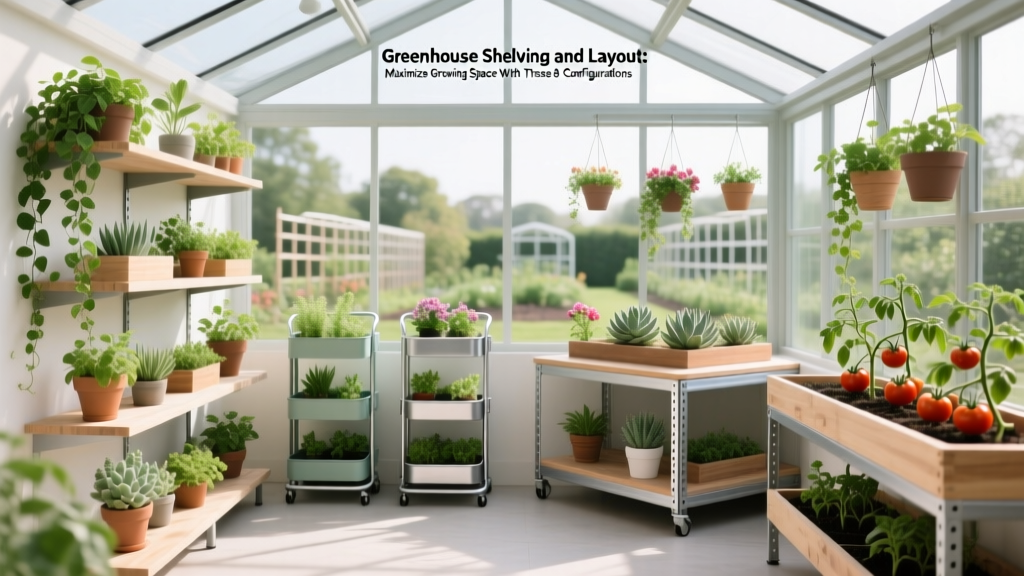
Greenhouse Shelving and Layout: Maximize Growing Space With These 8 Configurations
Why Greenhouse Layout Matters
A poorly organized greenhouse wastes 30-50% of its growing potential. The right shelving configuration doubles or triples your usable growing area while maintaining the airflow, light access, and headroom that plants need. This guide covers 8 configurations that work for greenhouses from 6x8 feet to 20x30 feet.
Configuration 1: A-Frame Center Bench
Best for: Small greenhouses (6x8 to 8x10 feet)
- One central bench running the full length of the greenhouse
- 30 inches wide, 36 inches high (comfortable working height)
- Walkways on both sides (24 inches minimum)
- Lower shelf beneath the bench for pots, soil, and supplies
- Total growing area: approximately 15-20 sq ft of bench top + lower shelf
Configuration 2: Perimeter Benches
Best for: Medium greenhouses (8x12 to 10x16 feet)
- Benches along all walls, leaving center open
- 30 inches wide, 30-36 inches high
- Central workspace for potting and maintenance
- South-facing benches get maximum light — place sun-loving plants here
- North-facing benches ideal for shade-tolerant plants and seedlings
Configuration 3: Tiered Staging
Best for: Seed starting and propagation
- 3-4 shelves, each 12-15 inches apart vertically
- Back shelf highest (catches most light), front shelf lowest
- Each shelf 12-18 inches deep
- Install grow lights under each shelf for the shelf below
- Capacity: 100+ seedling trays in a 4-foot wide unit
Configuration 4: Hanging + Bench Combo
Best for: Maximizing vertical space
- Standard bench at 36 inches height
- Hanging baskets or shelves at 6-foot height
- Upper level: trailing plants, herbs, lightweight seedlings
- Lower level: larger pots, propagation trays, vegetables
- Use pulley systems for hanging baskets (lower for maintenance)
Configuration 5: Rolling Bench System
Best for: Commercial or serious hobby greenhouses
- Bench sections on rails — slide together to eliminate walkways
- When working on a section, slide others aside to create a temporary aisle
- Increases growing area by 40-60% compared to fixed benches with walkways
- Requires flat floor and track installation ($200-500 for DIY)
Configuration 6: Vertical Tower + Bench Hybrid
Best for: Small footprint, maximum production
- Standard perimeter benches for larger plants
- Vertical growing towers (PVC or commercial) in corners and between benches
- Towers grow leafy greens and herbs using NFT or aeroponics
- One tower produces the equivalent of 20 sq ft of garden bed
Shelving Material Comparison
| Material | Weight Capacity | Durability | Cost | Best For |
|---|---|---|---|---|
| Galvanized steel | 100+ lbs per shelf | 20+ years | $$$ | Heavy pots, permanent setups |
| Pressure-treated wood | 50-80 lbs per shelf | 10-15 years | $$ | DIY benches, rustic look |
| Plastic/Resin | 30-50 lbs per shelf | 5-10 years | $ | Lightweight, easy to clean |
| Wire shelving | 40-60 lbs per shelf | 10+ years | $$ | Airflow, drainage, adjustable |
Airflow and Light Planning
- Never block vents or fans with shelving — maintain 12-inch clearance
- Leave 18 inches between shelves vertically for air circulation
- South-facing shelves: tomatoes, peppers, herbs
- Center/interior shelves: leafy greens, seedlings, shade lovers
- Install oscillating fans at bench height to prevent fungal diseases
Weight Distribution
Water is heavy — a saturated 10-inch pot weighs 15-20 pounds. Calculate total shelf load:
- 10 pots per 4-foot shelf = 150-200 lbs
- Add soil, water, and plant weight
- Always build shelves to handle 2x your estimated load (safety factor)
- Anchoring shelves to greenhouse frame prevents tipping in wind
Final Thoughts
The best greenhouse layout depends on what you grow. For seed starting, choose tiered staging. For year-round vegetable production, perimeter benches with hanging systems maximize every inch. Start with one configuration and adapt as you learn which plants thrive in which positions within your greenhouse's unique microclimate.