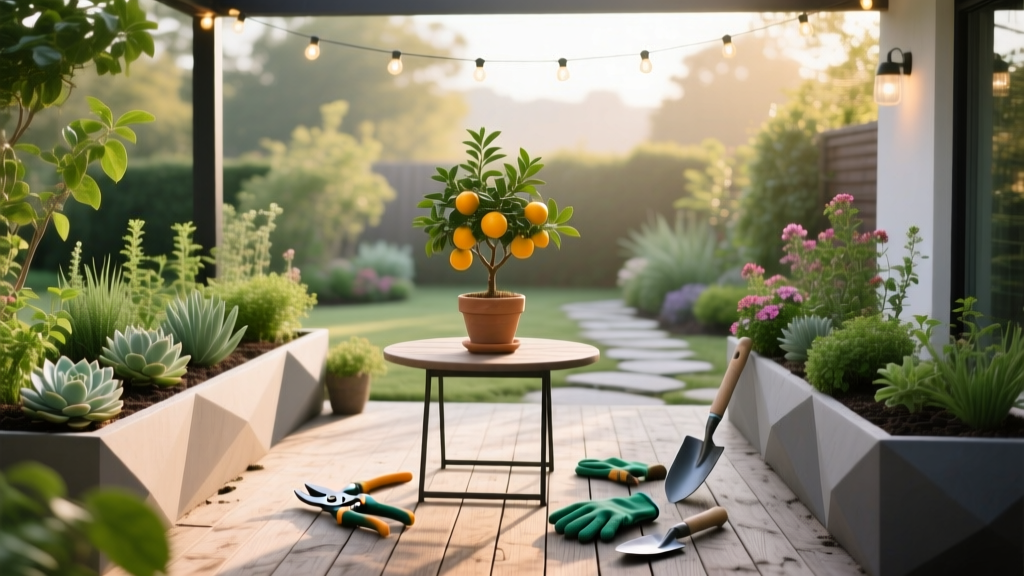
How to Create a Patio Garden from Scratch
It starts the same way for a lot of people: you step outside with a mug of coffee, hopeful, and the patio greets you with… glare. Hot paving, two wobble-chair legs, a view of the bins, and a lonely pot that always looks thirsty. The space isn’t “bad”—it’s just undecided. A patio garden works when you give it a plan: a layout that makes room for living, growing, and the small daily rituals that make home feel generous.
I’ll walk you through how I’d design a patio garden from scratch—like a compact landscape project—using practical dimensions, plant choices that behave well in containers, and a setup you can build over a weekend (then refine over a season).
Start With a Quick Site Read (10 Minutes, No Guessing)
Before you buy a single plant, measure and observe. Patio gardens fail most often because the container sizes don’t match the plants, or the sun exposure is misread.
Measure the “usable rectangle”
Ignore the awkward corners for a moment and find the main rectangle you can actually use. Common patio sizes I see are around 2.4 m x 3 m (8 ft x 10 ft) for apartments and 3 m x 4.5 m (10 ft x 15 ft) for small back patios. Write your numbers down.
Track sunlight hours
Watch where sun lands at three times: morning, mid-day, late afternoon. A patio can be “sunny” for only 3 hours and still feel bright. For most edible crops, aim for 6+ hours of direct sun; for herbs and many ornamentals, 4–6 hours works; for shade patios, you’ll lean into foliage and flowering shade plants with 2–4 hours or bright indirect light.
Also note wind: if you’re on a balcony or an exposed corner lot, plan for wind-tolerant plants and heavier pots (or add weight at the base with gravel).
Design Principles That Make Small Patio Gardens Feel Bigger
Patio design is less about cramming in plants and more about building a comfortable, layered “room” that happens to be alive.
1) Keep a clear path: 60–90 cm is your sanity margin
If you want the space to be usable daily, protect a circulation route. Aim for a main walkway of 60 cm (24 in) minimum; 90 cm (36 in) feels luxurious if you have it. This one decision stops the patio from becoming an obstacle course.
2) Use the “thriller, filler, spiller” rule—then repeat it vertically
In containers, visual balance matters because everything sits at eye level. Pick:
- Thriller: one taller anchor plant (an olive, a dwarf conifer, a trellised jasmine).
- Filler: a mid-height mounding plant (lavender, heuchera, compact hydrangea).
- Spiller: something that softens pot edges (creeping thyme, bacopa, trailing rosemary).
Now take the same idea and apply it to height: ground level (pots), mid level (stands, shelves), and vertical (trellis, railing planters, wall grid).
3) Limit your hardscape palette to 2–3 materials
For cohesion, choose two main materials and one accent. Example: black metal + terracotta + one warm wood element (a small bench or a slatted screen). Your plants can be diverse; your containers should look like they belong together.
4) Design for water—before you design for beauty
Containers dry quickly, especially in sun and wind. Group thirsty pots together so watering is efficient, and place drought-tolerant planters where the hose or watering can will be least convenient. The RHS notes that containers can need frequent watering in warm weather, often daily in peak summer conditions (Royal Horticultural Society, 2023).
“The success of container planting is as much about consistent moisture management as it is about plant choice.” — Royal Horticultural Society (RHS), 2023
Layout Strategies You Can Copy (With Real Dimensions)
Below are three layout “skeletons” I use depending on how people actually live in the space.
Layout A: The Bistro Patio (best for tight spaces)
Use when: you have a small rectangle (around 2.4 m x 3 m) and want seating plus plants.
- Place a bistro set (about 60–70 cm round table) slightly off-center.
- Run a line of planters along the back edge: 3 pots at 35–45 cm diameter each, spaced 15–20 cm apart.
- Add a vertical trellis panel (60 cm x 180 cm) behind the center pot for height.
This creates a backdrop, leaving the middle open for feet and chairs.
Layout B: The Outdoor Living Room (best for entertaining)
Use when: you have a wider patio (around 3 m x 4.5 m) and want lounging.
- Anchor one corner with a large container (at least 50–60 cm diameter) holding a small tree or tall shrub.
- Float a small outdoor sofa or loveseat opposite, leaving a 90 cm walkway behind it.
- Frame the “room” with two medium pots (35–45 cm) and two low trough planters (60–80 cm long).
Think of plants as walls, not ornaments. Your seating goes “inside” the plant-defined room.
Layout C: The Edible Wall + Workbench (best for cooks)
Use when: you want herbs and salad greens in easy reach.
- Install a narrow potting bench or shelf, about 120 cm wide and 45–50 cm deep.
- Add railing planters or wall pockets for herbs; keep the main floor space open.
- Use one or two deep containers (minimum 30 cm soil depth) for tomatoes or peppers.
Place edibles within 2–3 steps of the kitchen door if possible. Convenience is the real yield booster.
Step-by-Step: Building Your Patio Garden From Scratch
This is the sequence I’d use on a real job—because it prevents expensive do-overs.
- Measure and sketch to scale. On paper, use 1 square = 10 cm or 1 inch. Include doors that swing outward and any drains you must keep clear.
- Decide your primary use. Dining for two? Lounging? A kids’ play corner? Pick one primary purpose and one secondary purpose.
- Choose a layout skeleton (A, B, or C). Put seating in first; plants come second.
- Plan vertical structure. Add a trellis, screen, or shelf before buying plants. It’s easier to plant around it than retrofit later.
- Select container sizes based on plant needs. As a baseline: herbs 20–25 cm pots, medium shrubs 35–45 cm, small trees 50–60 cm.
- Buy (or mix) the right potting medium. Use a high-quality container mix; avoid garden soil in pots. The University of Maryland Extension recommends using soilless potting mixes for containers because they drain well and are lighter than garden soil (University of Maryland Extension, 2020).
- Add irrigation simplicity. If you can, install a basic drip kit. If not, group plants by water needs so hand watering is quick.
- Plant in layers and repeat materials. Repeat 2–3 plants (or pot styles) across the patio for cohesion.
- Finish with lighting and one “comfort” upgrade. A solar lantern, string lights, or a small outdoor rug can make the garden feel intentional on day one.
Plant Selection: Specific Varieties That Thrive on Patios
Patio plants must do three things well: tolerate container life, look good for a long season, and match your light. Below are designer-favorite picks that perform reliably.
Sunny patios (6+ hours of sun)
Structure and scent
- Lavandula angustifolia ‘Hidcote’ (English lavender): compact, fragrant, drought-tolerant once established; great in 30–40 cm pots.
- Rosmarinus officinalis ‘Arp’ (rosemary): upright, hardy for many regions; use a 30–40 cm pot and let it become a small shrub.
- Olea europaea ‘Arbequina’ (dwarf olive): a clean, modern “tree” look; choose a 50–60 cm pot for stability and root room.
Color that keeps going
- Salvia nemorosa ‘Caradonna’: purple spires, pollinator magnet, doesn’t flop easily; space 30–40 cm if planting in troughs.
- Pelargonium ‘Calliope Dark Red’ (geranium): long flowering and heat-tolerant; excellent for renters who want instant impact.
- Calibrachoa ‘Superbells’ series: trailing blooms that don’t need much deadheading; perfect spillers.
Edibles that actually earn their footprint
- Tomato ‘Sungold’ (cherry): high yield in containers; needs a pot at least 35–45 cm wide and a sturdy cage.
- Pepper ‘Jalapeño M’ or ‘Lunchbox Red’: compact and productive; 25–30 cm pot minimum.
- Basil ‘Genovese’: thrives in warmth; pinch weekly for bushiness and steady harvest.
Part-sun patios (4–6 hours)
- Hydrangea macrophylla ‘Cityline Paris’: compact hydrangea suited to containers; morning sun/afternoon shade is ideal.
- Heuchera ‘Caramel’ (coral bells): dependable foliage color that reads from a distance; great filler.
- Begonia ‘Dragon Wing Red’: strong performer with fewer light hours; reliable flowering.
- Mint (Mentha spicata): keep it in its own pot (always) and enjoy the payoff in drinks and cooking.
Shade or bright indirect light (2–4 hours)
- Hosta ‘June’: elegant foliage and a designer look in a single pot; protect from slugs if needed.
- Fatsia japonica: bold, architectural leaves; makes a small patio feel lush fast.
- Dryopteris erythrosora (autumn fern): coppery new fronds; excellent texture contrast.
- Impatiens (New Guinea types): color in shade without fuss.
Container Choices Compared (Cost, Weight, and Durability)
Choosing containers is a design decision and a budget decision. Here’s a practical comparison.
| Container Type | Typical Cost (35–45 cm pot) | Weight | Best For | Watch Outs |
|---|---|---|---|---|
| Terracotta | $25–$60 | Medium | Mediterranean herbs, classic looks | Dries faster; can crack in freeze/thaw |
| Glazed ceramic | $40–$120 | Heavy | Statement pots, stable in wind | Can be pricey; ensure drainage holes |
| Resin/plastic composite | $20–$80 | Light | Balconies, renters, moving often | Can look cheap—choose matte finishes |
| Fabric grow bags | $6–$20 | Very light | Vegetables, temporary setups | Dries quickly; aesthetics are casual |
| Wood planter box (cedar) | $60–$200 | Medium | Edibles, long trough planting | Needs liner; lifespan varies with exposure |
Three Real-World Patio Garden Scenarios (and What I’d Do)
Design is personal; these are common situations with specific, workable solutions.
Scenario 1: A rental balcony with strict rules (no drilling, weight limits)
Challenge: You can’t attach heavy trellises, and you may need lightweight containers.
Design move: Create a “green screen” using a freestanding shelf and lightweight resin planters. Use railing planters if allowed, but keep them modest and secured.
Plant palette: Calibrachoa ‘Superbells’, herbs (basil, parsley), heuchera for foliage, and a compact evergreen like Buxus microphylla ‘Winter Gem’ in a lightweight pot.
Numbers to plan by: Keep the main walking strip at 60 cm. Use 20–25 cm pots for herbs to reduce weight and simplify moving day.
Scenario 2: A blazing-hot, south-facing patio with reflective heat
Challenge: Heat stress and rapid drying; plants “cook” against walls and paving.
Design move: Introduce shade and thermal relief first: a cantilever umbrella or shade sail, plus larger containers that buffer roots from temperature swings. Mulch the pot surface with fine bark to slow evaporation.
Plant palette: Lavender ‘Hidcote’, rosemary ‘Arp’, pelargoniums, salvia ‘Caradonna’, and sedum ‘Autumn Joy’. For edibles, go for peppers and cherry tomatoes in deeper pots.
Numbers to plan by: Choose pots at least 45 cm wide for sun-exposed shrubs; expect watering 5–10 minutes daily in peak summer if hand watering.
Scenario 3: A shaded courtyard patio that feels dim and enclosed
Challenge: Limited sun (2–3 hours) and a cramped feeling.
Design move: Brighten with leaf contrast and reflective surfaces: pale pots, a mirror-like wall panel (out of harsh sun), and plants with bold foliage. Add warm lighting so the patio reads as welcoming at night.
Plant palette: Fatsia japonica as the “thriller,” hosta ‘June’ as filler, trailing ivy or bacopa as spiller, plus autumn fern for texture. Use white-flowering plants like Hydrangea arborescens ‘Incrediball’ if you get a few hours of sun.
Numbers to plan by: Two or three larger pots (35–50 cm) often look better than ten tiny ones in shade because they read as intentional masses.
Budget Planning (and Smart DIY Swaps)
A patio garden can be a $150 refresh or a $1,500 transformation. The trick is to spend on what changes the experience: structure, containers you’ll keep, and good soil.
A realistic starter budget (example)
- Containers: 6 planters at ~$25 each = $150
- Potting mix: 6–8 bags at ~$10 each = $60–$80
- Plants: 10–14 plants averaging $8–$15 = $120–$200
- Trellis/screen: $40–$120
- Optional drip kit: $35–$90
That puts many patio builds in the $370–$740 range, depending on how many “instant impact” plants you buy.
DIY alternatives that still look designed
- Use grow bags for edibles and reserve nicer pots for high-visibility spots near seating.
- Build a simple screen from a $25 sheet of lattice plus two freestanding posts in planters (no drilling required).
- Upcycle matching buckets or bins (with drainage holes) for a cohesive look—spray them all one matte color.
- Make a self-watering reservoir with a tote lid or inverted nursery pot inside a larger container; it’s not as sleek as commercial systems, but it buys you time between waterings.
Spacing and Planting Details That Prevent Crowding
Patio gardens look best when plants can mature without immediately colliding. A few practical spacing rules:
- Herbs: one basil or parsley per 20–25 cm pot; rosemary wants 30–40 cm.
- Perennials in troughs: space salvias and lavender about 30–40 cm apart.
- Tomatoes: one plant per pot, minimum 35–45 cm wide; don’t “double up” unless you enjoy fungus problems.
- Root depth: aim for 30 cm soil depth for productive vegetables; shallow bowls are for succulents or annuals.
Maintenance Expectations (So Your Patio Garden Stays a Pleasure)
The best patio garden is the one you can keep up with. Here’s a realistic rhythm.
Weekly time commitment
Plan on 30–60 minutes per week in mild seasons, plus watering. In summer, watering can be 5–10 minutes per day for sun patios unless you add drip irrigation or self-watering containers.
Seasonal task checklist
- Spring (1–2 hours once): top-dress pots with fresh compost, refresh mulch, cut back perennials, replace tired annuals.
- Summer (10 minutes weekly): deadhead flowering plants, pinch basil, check for pests, feed containers every 2 weeks with a liquid fertilizer if plants are hungry.
- Autumn (1 hour once): remove spent annuals, plant bulbs in deep pots if you want spring pop, reduce feeding.
- Winter (15 minutes occasionally): water evergreens lightly during dry spells, group pots to shelter from wind, protect terracotta if freeze/thaw is common.
For container edibles, regular feeding matters because nutrients leach from pots when you water. If you want a science-backed reason to use potting mixes and manage fertility carefully, container media is designed for drainage and aeration rather than holding nutrients like garden soil (University of Maryland Extension, 2020).
Small Design Tweaks That Make It Feel Finished
When everything is planted, step back and look for these finishing moves:
- Repeat one plant three times. Three pots with the same lavender or heuchera instantly reads as “designed.”
- Add one tall element. A slim tree, a trellis vine, or ornamental grass gives the patio a ceiling line.
- Hide utilities with greenery. A screen of tall planters can disguise bins or meters while keeping access clear.
- Light the plants, not the floor. A small spotlight aimed at a focal pot makes the garden feel intentional after dark.
If you’re standing on your patio at dusk and the space invites you to sit—even for five minutes—you’ve done the real work. From there, you can swap seasonal color, adjust pot groupings, and refine the layout as you learn how the sun and wind move across your particular slab of outdoors. A patio garden doesn’t have to be huge; it just has to be designed to be used.
Sources: Royal Horticultural Society (RHS), 2023. University of Maryland Extension, 2020.