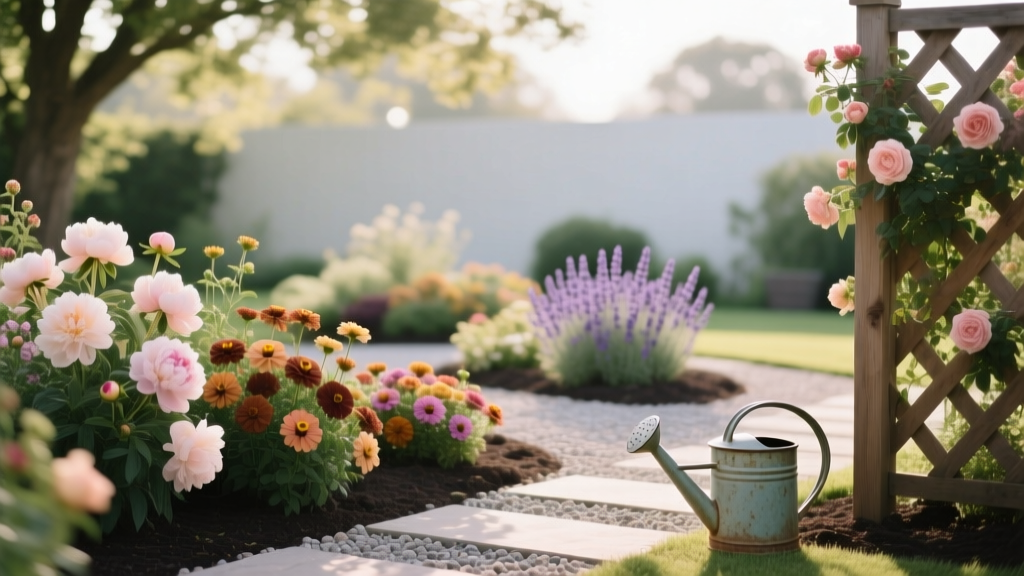
Backyard Cut Flower Garden Design
You step outside with a mug of coffee, scissors in hand, and the same thought you had last summer: “Why do my bouquets always look a little… scrappy?” The roses are beautiful but sparse, the zinnias are buried in the veggie patch, and the few stems you can spare feel like you’re stealing from your own landscape. A cut flower garden fixes that tension. It’s not a random collection of blooms—it’s a working garden laid out for steady harvests, long stems, and repeat flowering, all while fitting the reality of your yard, your rental limits, and your weekly schedule.
Let’s design one the way a landscape designer would: start with constraints, build a layout that makes harvesting easy, then choose plants that earn their square footage. You’ll end up with a garden that looks good from the patio and performs like a small flower farm.
Start With a “Bouquet Brief” (Before You Touch the Soil)
Every good design begins with intent. For cut flowers, your intent is measurable: stems per week, vase life, colors, and bloom windows. Write a quick bouquet brief before planning beds.
Ask yourself three practical questions
- How many bouquets do you want weekly? A realistic home goal is 1–3 bouquets/week from June to October in many climates.
- Where will you cut and condition stems? Ideally within 30–50 feet of a hose and a shaded spot (garage, porch, mudroom).
- What’s your sunlight? Most cut flowers want 6–8 hours of direct sun. If you only have 4–5 hours, we’ll shift toward part-sun performers.
Also decide your “non-negotiables.” Maybe it’s scented sweet peas in spring, dinner-plate dahlias in late summer, or a pollinator-friendly palette. The non-negotiables become anchor plants; everything else supports them.
Layout Strategies That Make Cutting Easy (And Keep the Garden Tidy)
Cut flower beds are working beds. The layout should prioritize access, straight rows (for replanting and succession sowing), and a simple irrigation plan—without looking like a farm field dropped into a suburban yard.
Design principle: Reach everything without stepping in beds
Keep beds narrow. The sweet spot is 3–4 feet wide so you can reach the center from either side. If you’re planting against a fence with access from one side only, cap the bed at 2.5–3 feet wide.
Design principle: Build paths you’ll actually use
Paths are where the “designer” part shows up. Give yourself comfortable footing so harvesting doesn’t feel like an obstacle course.
- Main path width: 36 inches (wheelbarrow-friendly).
- Secondary paths: 18–24 inches (good for foot traffic and buckets).
- Path materials: arborist wood chips (often inexpensive), compacted gravel, or stepping stones set in mulch.
Design principle: Put tall plants where they won’t shade the rest
Place tall growers (sunflowers, larkspur, cosmos, snapdragons, climbing sweet peas) on the north or west side of your cut garden so they don’t block sun from shorter crops. If your garden is viewed from a patio, consider a “stage” effect: tall plants in back, medium in the middle, low edging at the front.
Design principle: Plan for water from day one
Hand watering works—until August. A basic drip system keeps blooms coming with less stress on you and the plants. According to the U.S. EPA, drip irrigation can reduce water use compared with conventional sprinklers by delivering water directly to the root zone (U.S. Environmental Protection Agency, 2023).
Budget note: a DIY drip kit for a small cut garden often runs around $60–$120 depending on size and whether you add a timer.
Three Layout Templates You Can Copy (And Adjust)
Below are three real-world templates sized for common backyard constraints. Use them as starting points, then tweak bed lengths to suit your yard.
Template A: The 10' × 12' “Starter Patch” (Great for renters)
Total footprint: 120 sq ft. Use two 3' × 10' beds with a 24" path between them and a narrow perimeter for access. This fits in many side yards, near a patio, or even as a sunny corner conversion.
Why it works: manageable scale, quick to weed, and enough space for succession sowing. It’s also easy to do with grow bags or stock-tank planters if digging isn’t allowed.
Template B: The 12' × 20' “Weekly Bouquet Garden”
Total footprint: 240 sq ft. Use three 4' × 16' beds with 24" paths. Add a 3' × 6' work area at one end for a small potting bench and bucket staging.
Why it works: supports a dependable rotation—spring annuals, summer producers, fall fillers—without cramming.
Template C: The 8' × 16' “Fence-Line Cut Border” (One-sided access)
Total footprint: 128 sq ft. Make a single bed 3' wide × 16' along the fence plus a parallel 2' path. Use vertical supports (cattle panel or trellis) for sweet peas, climbing nasturtiums, or even espaliered berries if you want dual-purpose harvests.
Why it works: turns an underused strip into a production zone without disrupting the rest of the yard.
Bed Construction Options (From Quick DIY to “Permanent”)
The best bed is the one you’ll maintain. Choose based on whether you rent, how long you’ll stay, and how much you want to lift heavy materials.
| Bed Style | Best For | Typical Cost (per 4'×8') | Pros | Watch Outs |
|---|---|---|---|---|
| In-ground, no-dig (cardboard + compost) | Fast setup, low cost | $40–$120 | Improves soil over time; easy expansion | Needs compost volume; edges can creep |
| Wood raised bed (10–12" tall) | Neat look, easier weeding | $120–$250 | Defined layout; warms earlier in spring | Wood lifespan varies; soil fill cost adds up |
| Grow bags / containers | Renters, patios, poor soil | $10–$25 each (15–20 gal) | Movable; minimal commitment | Dries fast; needs consistent feeding |
DIY alternative: if you can get free arborist chips, you can outline beds with chips and do a no-dig build. For renters, a cluster of 6–10 grow bags can produce a surprising amount of flowers if you choose productive varieties.
Step-by-Step Setup (A Practical Build Order)
- Map the sun. Spend one day checking sunlight at 9am, 12pm, and 3pm. Mark areas that consistently hit 6+ hours.
- Mark beds and paths. Use a tape measure and string. Commit to bed widths of 3–4 feet and paths of 24–36 inches.
- Smother grass (no-dig) or loosen soil (dig). No-dig: overlap cardboard by 6 inches, wet thoroughly, top with 3–4 inches compost.
- Install supports now. Add trellis netting, stakes, or cattle panels before planting so you don’t spear roots later.
- Run irrigation. Lay drip lines or soaker hoses, then cover with mulch.
- Plant in blocks. Group by height and harvest window (spring, summer, fall) so you can replant sections efficiently.
- Label everything. Use weatherproof tags—especially for dahlias, snapdragons, and specialty zinnias.
Plant Selection: Varieties That Perform in Bouquets (And in the Bed)
Cut flowers should be chosen for stem length, vase life, and “repeat.” You want plants that bounce back after cutting. The mix below is designed for continuous harvests, with a few focal stars and plenty of hardworking fillers.
Reliable focal flowers (the “headline” stems)
- Dahlias (tubers): Try ‘Café au Lait’ for soft neutrals and ‘Linda’s Baby’ for blush tones. They produce heavily once established and give long stems when cut deeply. Space at 12–18 inches. Add sturdy staking early.
- Zinnias (seed): ‘Benary’s Giant’ series is a workhorse for long stems and strong color. Space 9–12 inches. Great for hot summers and frequent cutting.
- Snapdragons (seed/starts): ‘Rocket’ series for tall, straight stems. Space 6–9 inches with support netting. Excellent in cooler shoulder seasons.
- Sunflowers (seed): Pollenless types like ‘ProCut Orange’ or ‘Sunrich Gold’ keep arrangements cleaner indoors. Succession sow every 10–14 days for steady harvest.
Essential supporting flowers (the “bridge” stems)
- Cosmos: ‘Apricotta’ for warm blush tones or ‘Sensation Mix’ for classic cottage color. Tall, airy, and generous with stems. Space 12 inches.
- Scabiosa (pincushion flower): ‘Black Knight’ adds dramatic accents; long vase life and constant bloom with deadheading. Space 9–12 inches.
- Lisianthus (starts): More expensive but luxury-level bouquet value. If you buy plugs, give them prime real estate. Space 6–8 inches.
Fillers and foliage (what makes bouquets look “designed”)
- Basil (yes, basil): ‘Cinnamon’ and ‘Mrs. Burns’ Lemon’ add scent and soft structure. Pinch often for branching. Space 8–12 inches.
- Ammi (Queen Anne’s lace types): ‘Green Mist’ is a florist favorite for lacy umbels. Best direct-sown; stake if windy. Space 12 inches.
- Buplerum: Light, chartreuse filler that elevates any bouquet. Space 6–9 inches.
- Eucalyptus (warm climates/containers): Great foliage, but consider it a longer-term plant; check your climate hardiness.
Part-sun options (if you only have 4–5 hours)
If your “best” spot is bright but not blazing, lean into flowers that tolerate less sun:
- Astrantia (perennial): delicate, long-lasting in arrangements.
- Heuchera foliage: excellent leafy stems in shade/part shade.
- Hydrangea (some varieties): best as a landscape anchor with occasional cutting, rather than a heavy-harvest crop.
A Note on Cutting: Harvesting Makes More Flowers
Cutting isn’t theft—it’s training. Many annuals respond to cutting by branching and reblooming. The University of Vermont Extension notes that harvesting cut flowers at the right stage improves vase life and quality (University of Vermont Extension, 2020). Build that into your routine: cut deep, condition stems promptly, and keep plants producing.
“The right plant in the right place is only half the design; the right access is what makes you use the garden.” — Drew Swainston, garden writer and former professional gardener (interviewed guidance summarized from his garden planning advice, 2022)
Three Real-World Design Scenarios (With Solutions That Actually Fit)
Here are three situations I see all the time—each with a layout and plant approach that keeps the garden productive and realistic.
Scenario 1: The renter’s sunny patio edge (containers only)
Space: a 6' × 10' paved area with strong afternoon sun (6 hours). Goal: one bouquet per week in summer.
Design: line up 8 grow bags (15–20 gallon) in two rows with a narrow walkway. Use a simple hose-end timer and drip lines.
Plant plan: 2 bags of zinnias (‘Benary’s Giant’), 2 bags cosmos (‘Apricotta’), 2 bags basil + buplerum, 1 bag scabiosa, 1 bag dwarf sunflower succession (choose branching sunflower if you want multiple stems per plant).
Budget: grow bags $80–$160, potting mix $120–$200 (this is the big cost), seeds $20–$40. DIY tip: blend potting mix with compost to reduce cost, and reuse mix next season by top-dressing with 2 inches compost.
Scenario 2: The family backyard with a dog path (needs durability)
Space: a lawn with a worn loop where the dog runs. Goal: steady bouquets without fencing the entire yard.
Design: install two 4' × 12' raised beds inside the dog loop, with a 36" main path between them. Add a low decorative fence or dense edging (like dwarf boxwood substitutes in your climate) only around the beds.
Plant plan: focus on tough, fast regrowers: zinnias, cosmos, calendula, basil, and sunflowers at the back. Skip fragile, easily snapped plants right on the bed edges.
Maintenance reality: raised beds cut weeding time. Expect 45–60 minutes/week for deadheading, harvesting, and a quick weed pass, plus 20 minutes every few days in peak heat to check irrigation.
Scenario 3: The narrow side yard (bright, awkward, underused)
Space: 4 feet wide × 25 feet long, full sun but visually tight. Goal: a cutting strip that still looks intentional from the driveway.
Design: a one-sided bed: 2.5' × 25' planting bed against the fence plus an 18" mulch path. Install a trellis panel every 6–8 feet for vertical interest.
Plant plan: climbing sweet peas in spring (on trellis), then swap to climbing nasturtiums or a quick annual vine in summer; front row of snapdragons and buplerum; pockets of zinnias and cosmos in the middle.
Designer move: repeat one color family (for example, apricot/blush) down the length so the space reads cohesive rather than chaotic.
Budget Planning (Where the Money Actually Goes)
Most cut flower gardens are “soil projects” disguised as “plant projects.” If you budget for soil and irrigation first, the rest is flexible.
- Low-budget build ($150–$300): no-dig bed, seeds, DIY stakes, mulch from free/cheap sources. Focus on zinnias, cosmos, calendula, sunflowers, basil.
- Mid-range build ($350–$700): add drip irrigation, a few premium starts (lisianthus), and sturdier supports (horticultural netting, T-posts).
- Higher investment ($800–$1,500): multiple raised beds, bulk soil delivery, timer-controlled drip zones, and specialty tubers (dahlias in multiple varieties).
Cost-saving swaps: use bamboo and jute instead of metal stakes; request free arborist chips; start annuals from seed indoors under a basic LED shop light rather than buying starts. If you splurge anywhere, splurge on irrigation and soil—healthy, consistently watered plants produce longer stems and more cuts.
Seasonal Rhythm: What to Plant When (So You Always Have Something to Cut)
A designer’s trick is to plan bloom windows like a relay race—each group hands off to the next.
Spring (cool season)
Direct sow or transplant: snapdragons, sweet peas, larkspur, calendula, buplerum. These thrive before summer heat. In many regions, they carry you from April into early June.
Summer (heat lovers)
Zinnias, cosmos, basil, sunflowers, amaranth, celosia. Plan successions: sow a new patch of sunflowers every 2 weeks for a rolling harvest rather than one big flush.
Late summer into fall
Dahlias peak, zinnias keep going, cosmos gets airy and prolific again as nights cool. Leave space for a late sowing of quick fillers if your frost date allows.
Maintenance Expectations (So the Garden Stays a Joy, Not a Chore)
A cut flower garden is interactive—you’re in it a lot. The good news is that harvesting replaces some maintenance because cut-and-come-again plants stay tidier when used.
- Weekly time: plan for 60–90 minutes/week in peak season for harvesting, deadheading, and weeding. A smaller container garden may be 30–45 minutes/week but needs more frequent watering checks.
- Watering: with drip, expect 10 minutes/week to inspect lines and adjust timing; without drip, hand watering can be 15–30 minutes several times a week in hot weather.
- Staking and support: a 30-minute check-in after storms keeps stems upright and vase-quality.
Seasonal tasks that matter
- Early spring: top-dress beds with 1–2 inches compost; install supports before plants flop.
- Mid-summer: succession sowing; cut back tired patches and replant fast growers.
- Fall: pull spent annuals, mulch beds, and label dahlia tubers if you lift and store them.
If you want the lowest-maintenance version, lean heavier on a few dependable producers (zinnias, cosmos, basil, sunflowers) rather than trying to grow one of everything. If you want florist-level variety, keep the layout simple so the complexity lives in the planting, not in awkward bed shapes.
The moment it clicks is usually the first time you walk out with a bucket and come back with enough stems to play—focal blooms, airy bits, scent, and foliage—without stripping your landscape beds. With a clear layout, the right bed widths, and a plant list built for repeat cutting, your backyard becomes the kind of place where bouquets aren’t a special occasion. They’re just what you do on a Tuesday.
Sources: U.S. Environmental Protection Agency (EPA), WaterSense—drip irrigation efficiency guidance (2023). University of Vermont Extension, cut flower harvesting and postharvest handling recommendations (2020).