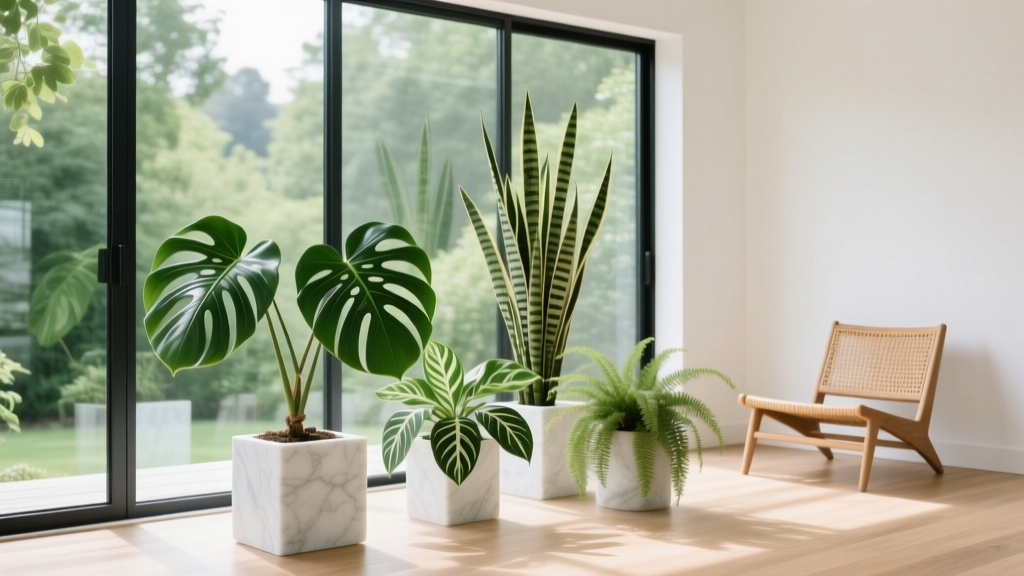
Sunroom Exotic Houseplant Collection
The first thing you notice when you step into a sunroom in late winter is the light—bright, slanted, and generous compared with the rest of the house. The second thing you notice (if you’re a plant person) is the panic: crispy leaf tips, lanky stems reaching for the glass, a pot of soggy soil that never seems to dry, and a row of “exotics” that looked dazzling at the garden center but now feel like a mismatched cast on a too-small stage. The goal here isn’t to cram in more plants. It’s to design a collection that looks intentional, grows well, and fits how you actually live in the space—coffee mug, reading chair, dog bed and all.
I’m going to walk you through a designer’s approach to turning a sunroom into a cohesive exotic houseplant collection: a layout that manages sunlight, temperature swings, watering logistics, and sightlines—while giving you the fun of bold foliage and unusual forms.
Start with the room you have: light map, circulation, and microclimates
A sunroom is rarely “even.” Light and heat fall in bands. The glass wall bakes at midday; the corner near the interior door stays cooler; the floor by the vent dries faster. Treat it like a tiny landscape with distinct zones.
Make a 15-minute light map (and save yourself months of guesswork)
On a clear day, note how many hours of direct sun each zone gets. For most sunrooms, you’ll find three practical categories:
- High sun: 4–6+ hours of direct sun near the brightest windows.
- Medium sun: 2–4 hours of direct sun or strong all-day indirect light.
- Low sun: bright shade—mostly indirect light, often 0–2 hours direct.
Why this matters: the American Horticultural Society notes that “full sun” generally means 6 or more hours of direct sunlight (AHS, 2017). Indoors, glass, roof overhangs, and seasonal sun angles change the picture—so your own map is more reliable than any plant tag.
Design for circulation: the “two-step rule”
In small spaces, plants die when they’re annoying. Aim for at least 24 inches of clear walkway where you routinely pass, and never place a thorny or brittle plant where shoulders brush it. A good rule: if you can’t reach a pot in two steps with a watering can, it’s going to get skipped.
Plan for temperature swings and humidity dips
Sunrooms swing harder than living rooms. Days can spike hot; nights can drop cool, especially near glass. Many “exotics” tolerate brief swings if their roots aren’t sitting cold and wet. The practical fix is to match plant groups to microclimates and control the root zone with pot choice, shelves, and spacing.
“Designing with plants indoors is less about decorating and more about creating stable microclimates—light, airflow, and root conditions are the real architecture.” —Dr. Linda Chalker-Scott, horticulturist and author (paraphrased from her extension-based guidance on container culture and plant performance; Washington State University Extension, 2019).
Layout strategies that make a collection feel curated (not crowded)
A strong sunroom collection has structure. Think: canopy, mid-layer, and understory—just like a garden border. We’ll borrow those principles and translate them to pots and shelves.
Use the “canopy-mid-understory” framework
Canopy plants (tall, architectural) anchor the room. Mid-layer plants provide mass and color. Understory plants soften edges and fill shelves. This prevents the “every plant on the floor” problem and opens sightlines.
For a typical 10 ft x 12 ft sunroom, a balanced starting point is:
- 2 canopy plants (5–7 ft mature indoor height)
- 6–8 mid-layer plants (1.5–3 ft)
- 10–14 understory/shelf plants (trailing or compact)
Build a focal point you can see from the doorway
Pick one “hero” plant and give it space: a large bird of paradise, a sculptural euphorbia, or a well-grown monstera. Place it where you see it first—usually diagonal from the entry. Leave a 12–18 inch buffer around its pot so the silhouette reads cleanly.
Keep pots off the cold floor (especially by glass)
If your sunroom has tile or concrete, lift sensitive tropicals. A 2–4 inch plant stand reduces cold transfer and improves airflow. It also makes watering less messy, because saucers are easier to access.
Create “watering zones” to simplify maintenance
Group plants by how fast they dry. Put thirsty plants together so you’re not hunting for the one calathea hidden behind a cactus. If you’re using a humidifier, keep the humidity-lovers within 6–8 feet of the unit for noticeable effect.
Step-by-step setup: from empty sunroom to finished collection
Here’s the workflow I use when designing a plant-heavy sunroom that still functions as a room.
- Measure the room and sketch the perimeter. Mark doors, vents, and where furniture must stay. Note the brightest window wall.
- Choose your walkway first: keep 24 inches clear (minimum) from entry to seating/door.
- Place the canopy anchors in their intended long-term spots (usually corners or beside a large window). Use 12–14 inch pots for most canopy starters.
- Add a tiered shelf along the brightest wall for medium/low plants. Aim for shelves 10–12 inches deep so pots don’t crowd.
- Assign zones by light (high/medium/low) based on your map. Put your sun-lovers closest to glass.
- Standardize saucers and cachepots to reduce visual clutter. Repetition is what makes a collection feel designed.
- Fine-tune spacing: leave 3–6 inches between pots for airflow; give big-leaf plants more clearance to avoid constant leaf damage.
- Add one humidity strategy (humidifier, pebble trays for small groupings, or clustering). Don’t try to fix humidity plant-by-plant.
Plant selection: exotic varieties that actually perform in sunrooms
The best exotic houseplants for a sunroom are not necessarily the rarest—they’re the ones that tolerate bright light, some heat, and the occasional dry spell. Below are specific, designer-friendly choices and where they shine.
High-sun zone (4–6+ hours direct sun)
1) Bird of paradise (Strelitzia nicolai)
Big, architectural leaves read like outdoor tropical landscaping. It loves bright light and looks expensive even in a basic pot. Give it a footprint of about 30–36 inches wide as it matures indoors.
2) Elephant ear (Alocasia ‘Portodora’ or A. odora)
Dramatic and fast in warm, bright conditions. Place where it won’t get brushed—leaves tear easily. Works best if you can keep consistent moisture (not soggy).
3) Ponytail palm (Beaucarnea recurvata)
A sunroom MVP for busy households: drought-tolerant, sculptural, slow-growing. Great near glass where it gets high light and dries quickly.
4) Euphorbia trigona (African milk tree)
A vertical accent that handles sun well. Keep out of traffic (sap is irritating). It’s a strong “canopy” substitute when you want height without broad leaves.
Medium-sun zone (2–4 hours direct, or strong indirect)
1) Monstera deliciosa
The classic “jungle” leaf, but it’s also a layout tool: it bridges modern furniture and lush planting. In stronger light, it grows sturdier with better fenestrations. Provide a moss pole or trellis and a clearance of 24 inches around it as it broadens.
2) Philodendron ‘Rojo Congo’ or ‘Imperial Red’
These read as exotic without being fragile. They hold color well in bright indirect light and form a clean mound that’s easy to design with.
3) Ficus elastica ‘Burgundy’ (rubber plant)
Shiny leaves, upright habit, and excellent tolerance of indoor conditions. A great “canopy” plant for corners that are bright but not scorching.
4) Anthurium andraeanum (flowering anthurium)
If you want flowers without fuss, anthuriums handle sunroom brightness (avoid harsh midday direct sun on leaves). Their glossy spathes look intentional and tidy.
Low-sun / bright-shade zone (0–2 hours direct)
1) Calathea (Goeppertia) orbifolia
Bold striping, very “collector” energy, but it needs steadier moisture and warmth. Place away from hot glass and vents. Keep it in your watering zone where you’ll notice it.
2) ZZ plant (Zamioculcas zamiifolia ‘Raven’)
Nearly indestructible, and the dark foliage adds depth to a sunroom that can look washed out in bright light.
3) Phalaenopsis orchids
A sunroom can be ideal if you keep them out of direct midday sun. They bring “exotic greenhouse” vibes without taking floor space.
4) Fern option: Asplenium nidus (bird’s nest fern)
Strappy, tropical, and compact. It appreciates humidity and bright shade—perfect for the interior edge of your plant grouping.
Quick comparison table: choose your anchors
| Plant (Common name) | Best sunroom light | Watering rhythm | Typical indoor size | Design role |
|---|---|---|---|---|
| Strelitzia nicolai (Bird of paradise) | High (4–6+ hrs direct) | Moderate; let top 2–3 in dry | 5–7 ft tall indoors | Hero canopy, focal point |
| Ficus elastica (Rubber plant) | Medium–High | Moderate; drought-tolerant once established | 4–6 ft tall | Corner anchor, vertical mass |
| Monstera deliciosa | Medium | Moderate; even moisture | 3–6 ft wide with support | Mid-layer drama, texture |
| Beaucarnea recurvata (Ponytail palm) | High | Low; dries between waterings | 3–6 ft tall (slow) | Low-maintenance sculpture |
| Goeppertia orbifolia (Calathea) | Low–Medium indirect | Higher; dislikes drying out | 2–3 ft tall | Understory lushness |
Three real-world layout scenarios (with numbers you can borrow)
Let’s apply the principles to spaces people actually have—rentals, multipurpose rooms, and small sunrooms with big ambitions.
Scenario 1: The renter’s sunroom (8 ft x 10 ft) with strict “no holes” rules
You want the lush look, but you can’t mount shelves or drill into frames. Design with freestanding pieces and make every item earn its footprint.
- Layout: One 36-inch-wide metal shelving unit along the brightest wall; one tall plant in the far corner; a narrow bench under a window for orchids and small pots.
- Plant plan: Ponytail palm (corner), Monstera deliciosa (mid), Philodendron ‘Rojo Congo’ (mid), 3–4 Phalaenopsis orchids (bench), ZZ ‘Raven’ (interior edge).
- Spacing: Keep 3–4 inches between pots on shelves for airflow and easy rotation.
- Budget: Shelf unit $70–$120; humidifier optional $40–$90; 8–10 plants at $15–$45 each depending on size. You can build a strong collection around $250–$450 if you start with smaller pots.
DIY alternative: Use a tension-rod shower caddy system (no drilling) as a vertical plant station, or stack sturdy wooden crates as a temporary tiered shelf.
Scenario 2: A family sunroom (10 ft x 12 ft) that doubles as a breakfast nook
Here, the design challenge is traffic: backpacks, chairs sliding, pets. Choose plants that tolerate a little neglect and place fragile showpieces out of reach.
- Layout: Maintain a 30-inch clear path to the table. Put two canopy anchors in opposite corners (visual balance). Use one 10–12 inch deep console table behind seating for mid-layer plants.
- Plant plan: Bird of paradise (hero corner), rubber plant (opposite corner), 2 philodendrons on the console, anthurium near seating (color without bulk), snake plant (Sansevieria/Dracaena trifasciata) near the door for durability.
- Cost reality: A 6-ft bird of paradise can run $120–$250 depending on region and pot size; a rubber plant typically $30–$80.
Design trick: Choose one pot finish and repeat it. For example, five matching matte white cachepots at $12 each instantly makes mixed plants look curated for about $60.
Scenario 3: The plant-collector sunroom (12 ft x 14 ft) with intense afternoon sun
This is the space where people scorch calatheas and bleach monsteras. Your tool here is not fewer plants—it’s a smarter gradient and a little light control.
- Layout: Create a high-sun strip within 2 feet of the glass for sun-tough plants. Set a second “buffer” row behind them for medium-light plants. Place humidity-lovers deepest in the room.
- Light control: Add a sheer curtain or shade cloth that cuts glare without turning the room dim; even a simple solution can protect leaves during peak hours.
- Plant plan: Euphorbia trigona and ponytail palm in the front strip; bird of paradise as the hero; monstera and philodendrons in the buffer; calathea orbifolia and bird’s nest fern in the interior zone near a humidifier.
Maintenance design: Put your thirstiest plants on a waterproof tray group so you can water thoroughly without stressing about runoff. A tray that’s 24 inches x 36 inches can hold 6–8 small pots and keeps the floor clean.
Soil, pots, and spacing: the invisible design decisions that keep plants alive
Indoors, the potting mix is your irrigation system. Most exotic houseplants fail from root stress: too wet, too compacted, too cold.
Pot sizing and spacing targets
- Repot “one size up” (typically 1–2 inches wider in diameter). Jumping from an 8-inch pot to a 14-inch pot often creates soggy soil for months.
- Air gap: keep 3–6 inches between pots and between leaves when possible—this reduces fungal issues and makes pest checks faster.
- Floor protection: budget $8–$15 per quality saucer or waterproof tray. It’s cheaper than repairing swollen baseboards.
Humidity: one good tool beats five small hacks
Many tropicals prefer higher humidity; winter heating often drops indoor humidity dramatically. The U.S. Environmental Protection Agency notes that a typical recommended indoor relative humidity range is 30–50% to help reduce mold and maintain comfort (EPA, 2023). For plants like calatheas and some ferns, aiming closer to the upper end of that band tends to reduce crispy edges—without pushing the room into condensation territory.
Cost note: A reliable small-room humidifier is commonly $40–$90. If that’s not in the budget, cluster plants tightly (but not touching) and use larger water trays near—not under—plants to gently raise local humidity.
Maintenance expectations: what this collection asks of you
A well-designed sunroom collection should feel like a ritual, not a chore. Plan on 30–60 minutes per week for a collection of 15–25 plants, plus a slightly longer monthly reset.
Weekly (30–60 minutes)
- Watering: check the fastest-drying zone first (near glass/vents). Water thoroughly, then empty saucers.
- Leaf care: wipe dust from 3–5 large-leaf plants (dust reduces light capture and dulls the look).
- Quick pest scan: undersides of leaves, stems, and soil line—especially for spider mites in bright, dry rooms.
Monthly (45–90 minutes)
- Rotate plants a quarter turn to balance growth in strong directional light.
- Prune and stake vining or top-heavy plants before they sprawl into walkways.
- Flush salts by watering a bit extra to let water run through (only if drainage is safe and you can discard runoff).
Seasonal tasks
- Spring: repot the fastest growers; start fertilizing lightly as days lengthen.
- Summer: watch for heat spikes; move sensitive plants 12–24 inches back from glass if leaves scorch.
- Fall: reduce feeding; tighten your watering schedule as growth slows.
- Winter: protect plants from cold glass at night; keep humidity stable; expect slower growth and water less.
Budget planning and DIY swaps (so the design doesn’t stall)
The most common sunroom mistake is spending everything on plants and leaving no budget for the infrastructure that keeps them thriving. I like to split a first-year budget roughly like this: 60% plants, 40% supports (shelves, trays, pots, humidifier, quality soil).
Example starter budget for a visually full, functional collection:
- $180: 6–8 mid-size plants (4–6 inch pots and a couple 8–10 inch pots)
- $120: shelving + trays/saucers
- $60: matching cachepots (5 at $12 each) or thrifted ceramics
- $40: potting mix amendments (bark, perlite) and a bag of quality mix
- $0–$90: humidifier (optional, but helpful for ferns/calatheas)
DIY alternatives that still look designed: paint thrift-store pots one consistent color; use a secondhand baker’s rack as a plant stand; repurpose a narrow bookcase as a tiered plant wall (line shelves with waterproof matting). If you’re short on funds, buy smaller plants and let them grow into the design—sunrooms can size things up quickly when the light is right.
Finishing touches: make it feel like a room, not a greenhouse aisle
Once the plants are placed, add two human-scale elements: a small side table and one lamp (yes, even in a sunroom). The table gives you a place to set a mister, pruners, or coffee. The lamp makes the space welcoming in the evening and visually balances all the daylight-driven energy.
Finally, edit. If two plants compete, keep the one that’s thriving and fits your routine. A sunroom exotic collection isn’t a static display—it’s a living layout. When the light shifts with the seasons, you’ll slide a pot 18 inches to the left, swap two shelves, and suddenly everything looks right again. That’s not failure; that’s design working the way a good garden always does.
Sources: American Horticultural Society, AHS Encyclopedia of Gardening (light definitions and garden light terminology), 2017. U.S. Environmental Protection Agency (EPA), “Indoor Air Quality: Relative Humidity,” guidance on indoor humidity ranges, 2023. Washington State University Extension (container/plant performance principles referenced in indoor container culture guidance), 2019.