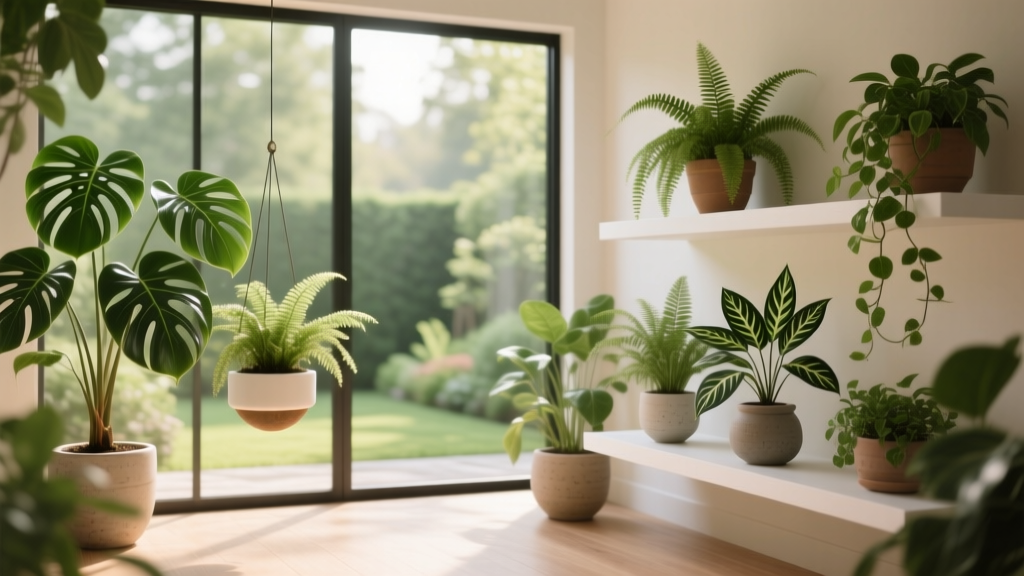
Sunroom Humidity-Loving Plant Collection
The first time you notice it, it’s subtle: a foggy ribbon of condensation along the sunroom glass at 7 a.m., a faint earthy smell in the air, and a chair cushion that never quite feels crisp. Then you try a few houseplants—and half of them sulk. The succulents wrinkle, the fiddle leaf drops leaves, and the corners feel oddly empty even though the room is bright. This is the moment a sunroom tells you what it actually wants: a planting plan that treats humidity as a feature, not a flaw.
Let’s design a humidity-loving plant collection that looks intentional, fits real furniture, and thrives with the light you actually get—without turning your sunroom into a greenhouse you can’t relax in.
Start With the Room You Have: Light, Heat, and Moisture Mapping
Before you buy a single plant, take one day to map three forces: sun, temperature swings, and where moisture naturally collects. Sunrooms often have strong winter sun, intense summer heat near glass, and cool nighttime dips—microclimates within a single room.
Measure and sketch (quickly, but accurately)
Use a tape measure and mark the footprint on paper. Even a small sunroom benefits from a scaled sketch. As a reference layout, I’ll use a common footprint: 10 ft x 12 ft (120 sq ft). Note door swings, vents, and where you need walking paths.
- Minimum comfortable pathway: 30–36 inches wide
- Plant shelf depth: 10–14 inches for small pots; 16–20 inches for larger planters
- Keep plants off glass: 6–12 inches back to reduce leaf scorch and condensation damage
Count your sunlight hours in zones
Track direct sun on a weekend: morning, noon, and late afternoon. Most sunrooms fall into one of these patterns:
- Bright indirect all day (filtered by overhangs/trees): ideal for ferns, aroids, orchids.
- 4–6 hours of direct sun (often winter, shoulder seasons): great for many tropicals if humidity stays up.
- 6–8 hours of intense direct sun (south/west exposure, summer): you’ll need sheer curtains or to pull plants back from the glass.
As a baseline, many humidity-lovers prefer bright, indirect light—think “sunlit room, no harsh beam on leaves for hours.” When you do have direct sun, use it strategically for a few tougher plants and keep the rest slightly recessed.
Design Principles: Make Humidity Look Like a Collection, Not a Cluster
Humidity-friendly plants tend to have lush foliage, arching fronds, or broad leaves. That’s good news for design: they read as sculptural and layered. The goal is a room that feels composed from every seat—especially the chair you actually use.
Principle 1: Layer height like a woodland edge
Build three tiers so your collection looks curated:
- Floor layer (24–72 inches tall): statement plants in heavier pots; anchor corners.
- Mid layer (12–36 inches): tabletop or bench plants; densest foliage lives here.
- Air layer (hanging or wall-mounted): trailing plants to soften glass and frames.
Principle 2: Group by water needs, not by “pretty”
Humidity-loving plants often want evenly moist soil, but not soggy roots. Grouping similar needs reduces maintenance and prevents the classic problem: one plant’s “weekly drink” is another plant’s root rot.
Principle 3: Contain the mess with “wet zones”
Designate one or two wet zones where dripping, misting, and watering are expected. A simple approach:
- Wet zone A: a 48-inch wide plant bench with a waterproof tray.
- Wet zone B: a clustered corner on a washable mat for the thirstiest plants.
Keeping moisture contained also helps manage indoor air quality. The U.S. Environmental Protection Agency notes that indoor relative humidity is commonly recommended in the 30–50% range to reduce mold and dust mites (EPA, 2023). In a plant-heavy sunroom, you’ll often sit a bit higher than that—so you’ll want airflow and smart watering habits.
Layout Strategies That Work in Real Sunrooms
The “Bench + Two Anchors” layout (best for 8x10 to 12x14)
This is my go-to because it’s visually balanced and easy to maintain. For a 10 ft x 12 ft sunroom:
- Place a 48–60 inch bench along the brightest wall with indirect light.
- Add two anchor plants on the floor: one in each far corner, each pot 12–16 inches wide.
- Keep a 36-inch walkway from door to seating area.
The “Humidity Nook” layout (best for renters or mixed-use rooms)
If you only want one concentrated plant area (and you want the rest of the sunroom for living), build a nook:
- Allocate a 4 ft x 4 ft corner near the brightest indirect light.
- Use a 3-tier shelf (about 48 inches tall) plus one hanging hook.
- Add a small, quiet humidifier to keep moisture localized.
The “Island Cluster” layout (best when glass walls make corners too hot/cold)
When perimeter conditions are extreme, float plants inward:
- Create a central cluster on a 30 in x 60 in low table.
- Pull the table 18–24 inches from glass to avoid scorch and chilling.
- Use smaller pots (6–8 inch) so you can rotate plants weekly.
Step-by-Step Setup: A Practical Build You Can Do in a Weekend
- Protect surfaces: Lay a waterproof boot tray, rubber mat, or vinyl tablecloth under plant groupings (budget: $12–$35).
- Add a bench or shelf: Choose a 48–60 inch bench, ideally slatted or metal for airflow (typical cost: $60–$180).
- Create humidity without soaking: Use a 1–2 gallon cool-mist humidifier near (not under) leaves (often $30–$80), or run a pebble tray system for smaller clusters.
- Upgrade potting mix: For most humidity-lovers, use a mix that holds moisture but drains: coco coir + fine bark + perlite. If you buy pre-mix, plan on $18–$28 for a 6–8 quart bag.
- Install drip control: Use saucers under every pot; for larger containers, use rolling plant caddies (around $10–$25 each).
- Place anchors first: Set the tallest plants in corners or beside furniture, then fill mid-layer, then hang trailing plants.
- Dial in airflow: Add a small oscillating fan on low for 2–4 hours/day if condensation is persistent (often $20–$45).
Plant Selection: Specific Varieties That Love Humidity (and Behave Indoors)
High humidity is helpful, but stable moisture in the root zone matters more. Many of these plants come from understory rainforest conditions—bright shade, consistent moisture, moving air. The American Orchid Society emphasizes that many orchids prefer humidity around 40–60% with good air movement to prevent disease (American Orchid Society, 2022). That same pairing—humidity + airflow—applies to most of the plants below.
Anchor plants (floor level statements)
1) Monstera deliciosa (Swiss cheese plant) — Big-leaf drama, tolerant of average indoor humidity but noticeably happier with more. Great for a sunroom because it can handle brighter conditions if eased in. Spacing: give it a 24–36 inch radius so leaves don’t snag walkways.
2) Rhapis excelsa (Lady palm) — One of the most forgiving palms indoors; loves moisture and looks tailored, not wild. Good for corners with bright indirect light. Pot: a 12–14 inch pot suits many nursery specimens.
3) Ficus elastica ‘Burgundy’ (Rubber plant) — Not strictly “humidity dependent,” but it blends beautifully with tropical collections and tolerates brighter sunroom light. Use it where you need structure. Placement: keep 12 inches from glass in strong sun.
Mid-layer lushness (benches, stools, low tables)
4) Calathea (Goeppertia) ‘Medallion’ — A humidity-lover that telegraphs its needs: crisping edges mean dry air or inconsistent watering. In a sunroom with a humidifier, it becomes a showpiece. Light: bright indirect; avoid hot sun.
5) Anthurium andraeanum (Flamingo flower) — Waxy blooms, glossy leaves, and a tidy upright habit. Handles humidity well and looks “designed.” Spacing: 12–18 inches between pots for airflow.
6) Spathiphyllum ‘Sensation’ (Giant peace lily) — Big, architectural leaves that thrive with even moisture; dramatic on the floor or a low stand. Note: will wilt theatrically when thirsty, then rebound—handy feedback for beginners.
7) Begonia rex-cultorum (Rex begonia hybrids, like ‘Escargot’)
Ideal for a humidity-leaning room if you keep leaves dry and provide airflow. Color and pattern bring a designer’s touch—especially in winter. Tip: water the soil, not the foliage.
Ferns and fine texture (the humidity specialists)
8) Nephrolepis exaltata ‘Bostoniensis’ (Boston fern) — Classic humidity plant with real payoff in sunrooms. Place it where it can spill without blocking traffic. Hanging spacing: allow a 24-inch diameter for mature fronds.
9) Adiantum raddianum (Maidenhair fern) — Gorgeous and picky: it wants steady moisture and consistent humidity. Put it near the humidifier in bright, filtered light. Treat it as your “indicator plant”—if it’s happy, the rest will be too.
Trailing plants (soften edges and frames)
10) Epipremnum aureum ‘Pearls and Jade’ (Pothos) — Not demanding, but it thrives in humidity and gives you easy trailing lines. Great for shelves where you want movement. Pruning: pinch back monthly for fullness.
11) Philodendron hederaceum ‘Brasil’ — A warm-toned trailing plant that looks upscale paired with ferns and calatheas. Tolerates variable light better than many.
Orchids for bright windows (controlled drama)
12) Phalaenopsis hybrids (Moth orchids) — Perfect for sunrooms with bright indirect light. They appreciate humidity but hate stagnant air. Placement: set 2–3 feet back from hot glass in summer afternoons.
Quick Comparison: Pick Plants That Match Your Light and Attention Span
| Plant | Humidity Preference | Light Sweet Spot | Water Rhythm | Best Role in Layout |
|---|---|---|---|---|
| Monstera deliciosa | Medium–High | Bright indirect; tolerates some sun | When top 2 inches dry | Floor anchor, corner statement |
| Calathea ‘Medallion’ | High | Bright indirect only | Evenly moist, not soggy | Mid-layer color focal point |
| Boston fern | High | Bright filtered light | Consistently moist | Hanging/ledge, soft texture |
| Lady palm (Rhapis) | Medium | Bright indirect to medium | Regular, allow slight dry-down | Architectural corner anchor |
| Phalaenopsis orchid | Medium–High | Bright indirect near window | Soak then drain; weekly-ish | Tabletop “jewelry” plant |
A Designer’s Note on Humidity: Comfort and Plant Health Can Coexist
“Higher humidity levels can lead to condensation on windows and other surfaces. Persistent condensation is a sign you should reduce moisture or increase ventilation.” — U.S. Environmental Protection Agency, Indoor Air Quality guidance (EPA, 2023)
Translation for plant people: you can keep your collection happy without turning the room clammy. Aim to localize humidity near plants, keep air moving, and avoid wetting leaves late in the day.
Three Real-World Sunroom Scenarios (and What I’d Do)
Scenario 1: The renter’s sunroom corner (low commitment, high impact)
Space: A 4 ft x 6 ft nook in a rental sunroom, with a sliding door and limited drilling permissions.
Plan: Use a freestanding shelf and a single anchor plant in a decorative cachepot.
- Layout: 48-inch tall shelf + one floor plant; keep 30 inches clear for door access.
- Plant picks: Pothos ‘Pearls and Jade’ (top shelf), Boston fern (middle shelf), Anthurium (middle), Lady palm (floor).
- DIY humidity: Pebble trays under the fern and anthurium; a small 1 gallon humidifier if winter air is dry.
- Estimated spend: $120–$220 (shelf + 4 plants + trays), depending on plant size.
Scenario 2: The family sunroom that doubles as a playroom (durable + contained)
Space: 12 ft x 14 ft sunroom with heavy foot traffic and occasional toy chaos.
Plan: Put plants behind a visual boundary—like a bench against one wall—and keep the floor mostly clear.
- Layout: 60-inch bench with waterproof tray inserts; two large anchors in weighted pots.
- Plant picks: Monstera (corner), Rubber plant (corner), Peace lily ‘Sensation’ (bench end), Pothos trailing from high shelf out of reach.
- Design detail: Use identical 10–12 inch pots on the bench for a clean, “built-in” look.
- Kid/pet note: Many common tropicals are toxic if chewed. If that’s a concern, keep plants elevated or choose pet-safer options (like some palms) and confirm plant safety with a trusted veterinary source.
Scenario 3: The plant-lover’s bright, steamy sunroom (controlled abundance)
Space: 10 ft x 12 ft with 6+ hours of sun in summer, noticeable condensation in winter mornings.
Plan: Use an island cluster pulled back from glass, plus sheers to diffuse sun.
- Layout: 30 in x 60 in central table; plants kept 18–24 inches from windows; a small fan on low.
- Plant picks: Calathea ‘Medallion’ and Rex begonias on the table (bright but not scorching), orchids 2–3 feet back from the hottest window, maidenhair fern placed closest to humidifier.
- Cost range: $250–$600 depending on furniture, humidifier, and plant sizes.
Budget Planning and DIY Alternatives (Without Sacrificing the Look)
A sunroom collection can be assembled slowly, but it helps to know where money actually changes outcomes.
- Spend on: stable shelves/benches, saucers, and a decent potting mix. These prevent the most common failures (water damage, root issues).
- Save on: pots (use simple nursery pots inside thrifted cachepots), humidity trays (DIY with baking trays + river stones), and plant stands (sealed wooden stools work well).
DIY bench tray insert: If you love a wooden bench but fear water, line the top with a cut-to-size vinyl remnant ($10–$20) and set plants on boot trays. It reads clean and protects the bench.
DIY light diffusion: If your sun is intense, hang inexpensive sheer curtain panels. Even a $15–$30 set can reduce leaf scorch and widen your plant choices.
Maintenance Expectations: What It Actually Takes
For a collection of 10–18 plants in a sunroom, plan on 30–60 minutes per week for routine care, plus a slightly longer monthly reset. Humidity-loving plants reward consistency.
Weekly rhythm (30–60 minutes)
- Water: Check soil moisture with a finger test; water thoroughly and let pots drain.
- Leaf care: Wipe large leaves (monstera, rubber plant) with a damp cloth—dust reduces photosynthesis and can invite pests.
- Rotate: Turn plants a quarter-turn to keep growth even, especially those near windows.
- Humidity check: If you use a hygrometer, aim for plant comfort while avoiding constant window condensation. Adjust fan/humidifier accordingly.
Monthly tasks (30–45 minutes)
- Prune and shape: Pinch pothos/philodendron tips; remove yellowing leaves.
- Inspect for pests: Look under leaves for spider mites and thrips—dry winter air and stressed plants invite them.
- Flush salts: Water heavily until it drains to reduce mineral buildup, especially if using fertilizer.
Seasonal adjustments
- Winter: Move sensitive plants 12–24 inches away from cold glass at night; reduce fertilizer.
- Summer: Add sheers or pull plants back from harsh sun; check soil more often as pots dry faster.
- Shoulder seasons: Watch for temperature swings—sunrooms can heat up fast mid-day, then cool sharply at night.
Putting It All Together: A Collection That Feels Like a Room
When this is done well, you don’t notice “humidity plants.” You notice how the room feels: softer acoustics from foliage, a living green frame around your morning coffee, and a layout that guides you through without dodging pots. Start with a bench and two anchors, keep a clear 36-inch path, and choose plants that match your sunroom’s light reality.
On your first afternoon, sit in the chair you actually use. If you can see one statement leaf, one fine-textured fern, and one trailing line from that seat, the design will read intentional. Then the care becomes a pleasant routine—30 minutes a week to keep a little pocket of the tropics thriving behind the glass.
Sources: U.S. Environmental Protection Agency (EPA), indoor humidity and condensation guidance (2023). American Orchid Society, culture and humidity recommendations for orchids (2022).