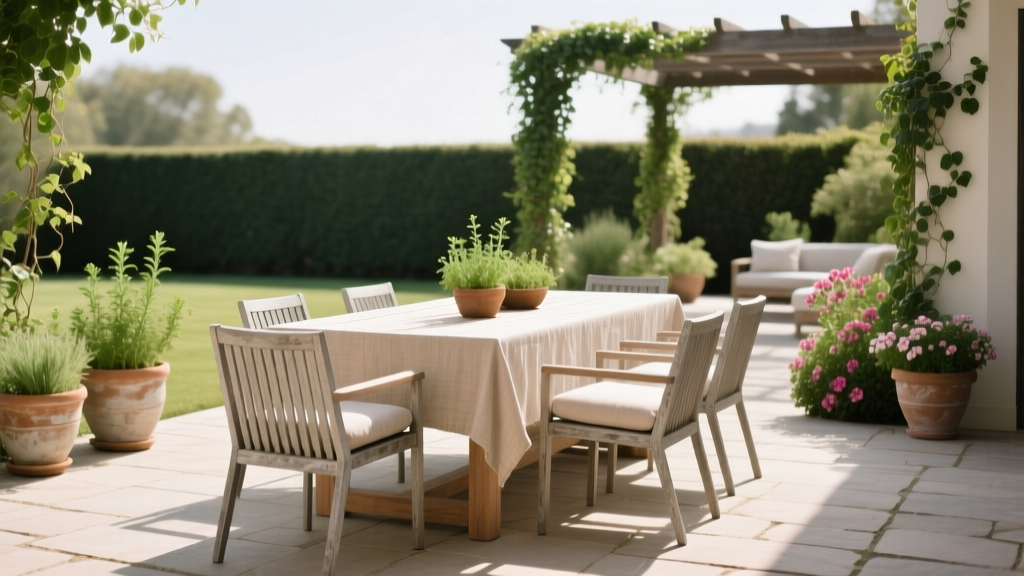
Patio Dining Garden Ambiance Tips
The food is hot, the chairs are set, and the timing is perfect—until you step outside and realize the “dining area” is really a windy concrete pad with a glaring porch light and nowhere pleasant to rest your eyes. A patio can feed people; a patio dining garden can host them. The difference is usually not square footage—it’s layout, comfort, and the way plants and lighting shape the space after 6:00 p.m.
Think of this as a designer walk-through: we’ll keep the table functional, protect the conversation from wind and street views, and layer fragrance, texture, and light so the patio feels intentional. Along the way you’ll see real dimensions, spacing, costs, plant varieties that earn their keep, and a few scenario-based layouts you can steal for your own yard or rental.
Start with the “dining triangle”: circulation, service, comfort
Before shopping for string lights, measure the patio and sketch a simple plan. The dining triangle is the relationship between (1) the table, (2) the door to the kitchen, and (3) the main path through the yard. If any leg of that triangle is cramped, your guests feel it immediately.
Clearances that make dining feel effortless
Use these practical numbers as your baseline:
- 36 inches (91 cm) minimum clearance behind pushed-in chairs for a light-traffic patio.
- 42–48 inches (107–122 cm) behind chairs where people will frequently pass (server path, grill access, side gate).
- 24 inches (61 cm) per seated diner along the table edge (30 inches is more comfortable for elbows and shared platters).
- Table-to-grill: aim for 48 inches (122 cm) so heat and traffic don’t collide.
- Umbrella clearance: choose a canopy at least 24 inches wider than the table (a 60-inch round table pairs well with an 9-foot umbrella).
If you’re renting, painter’s tape is your best design tool: tape the table footprint plus the chair “pull-out zone” on the ground. Walk it with a tray. You’ll know in two minutes if the layout works.
Pick a focal direction (so guests know where to look)
Great patios have a “resting view.” That can be a planter wall, a trellis with vines, a small tree in a pot, or even a candle cluster on a console. Place the focal element opposite the door whenever possible—when people step out, they see a composed scene instead of chair backs and storage bins.
Make a patio feel like an outdoor room
Ambiance comes from enclosure—not walls, but edges. When diners feel lightly protected, they relax. The trick is to build those edges without shrinking the usable floor area.
Use three layers: low, mid, and overhead
Design like you’re shaping a room:
- Low layer (0–18 inches): herbs, low flowers, edging grasses to soften hard paving.
- Mid layer (18–60 inches): the privacy and wind-filter zone—shrubs, tall perennials, large pots.
- Overhead layer (7–12 feet): a small tree canopy, pergola slats, or a trellis plane for intimacy and better light placement.
Even one strong “mid layer” move—like two tall planters flanking the table—can change the entire mood.
Wind and privacy: filter, don’t bunker
Solid screens can create turbulence and feel harsh. Plant-based filtering is usually more comfortable. A line of tall grasses in trough planters or a trellis with a vine breaks wind and sightlines without turning the patio into a box.
“People prefer spaces with a sense of refuge and a view out—prospect and refuge—because it supports comfort and attention restoration.” — Stephen Kaplan, environmental psychologist (Kaplan & Kaplan, 1989)
That “refuge” can be as simple as a 5-foot-tall planted screen at the patio’s exposed edge, leaving the other sides open.
Lighting that flatters faces and food (not just the hardscape)
If you only change one thing for ambiance, change the lighting. Overhead porch lights tend to be too bright and too high-contrast. Your goal is layered, warm light at human height.
Light layers and placement
- Task light for serving: a downlight near the grill or a battery lantern on a console.
- Ambient light for mood: string lights under a pergola or along a trellis.
- Accent light on plants: small uplights aimed at a tree trunk or tall grass clump.
Choose warm color temperatures. The U.S. Department of Energy notes that LEDs are highly efficient and long-lasting compared to traditional bulbs (U.S. DOE, 2022). For dining, look for LED strings labeled 2200K–2700K and dimmable when possible.
Budget guide: a quality outdoor string-light set (48 feet with shatter-resistant bulbs) often runs $35–$70, while a basic solar path light pack can be $20–$40 (but tends to be dimmer). A single low-voltage spotlight is commonly $25–$60 plus transformer if you’re expanding a system.
Plant choices that perform beside a dining table
Plants around dining need manners: minimal litter, manageable fragrance, no thorns at elbow height, and predictable growth in containers. I also like plants that “read” well at dusk—silver foliage, glossy leaves, upright forms that catch low light.
Fragrance you can control (and keep out of the food)
Use fragrance at the perimeter, not directly at the table center. A pot of intensely scented flowers right on the tabletop can compete with dinner.
- Lavandula angustifolia ‘Hidcote’ (English lavender): compact, fragrant, drought-tolerant once established; ideal in a 16–20 inch pot. Needs 6+ hours of sun.
- Jasminum officinale (common jasmine): evening fragrance, trains beautifully on a trellis; best with 6 hours sun and regular water in pots.
- Nicotiana alata ‘Fragrant Cloud’ (flowering tobacco): releases scent in the evening; great near seating but not on the table. Space plants 12–18 inches apart in beds.
Low-litter greens for clean patios
Mess is the fastest way to make a patio feel neglected. Favor evergreen structure and plants with tidy habits.
- Buxus microphylla ‘Winter Gem’ (boxwood): classic structure for pots; responds well to light clipping. Use a 18–24 inch container for long-term growth.
- Podocarpus macrophyllus (Buddhist pine): elegant, low-litter screening in mild climates; great as a pair in tall planters.
- Carex oshimensis ‘Evergold’ (variegated sedge): soft movement, clean edges, tolerates part shade; space 12 inches apart in beds or use in troughs.
Color and texture that reads at night
- Stachys byzantina (lamb’s ear): silver leaves glow at dusk; drought tolerant; keep it toward the edge so it doesn’t sprawl into traffic.
- Heuchera ‘Obsidian’ (coral bells): dark foliage creates contrast under warm lights; thrives in part shade.
- Hydrangea paniculata ‘Bobo’: compact blooms that catch evening light; prefers consistent moisture and 4–6 hours sun.
Edibles that behave in containers
Edibles near dining feel generous and sensory, but choose ones that won’t drop fruit onto chairs.
- Rosmarinus officinalis ‘Arp’ (rosemary): upright, aromatic, drought tolerant; excellent in a 14–18 inch pot with fast-draining mix.
- Thymus vulgaris (thyme): low, tidy, fragrant groundcover for pot edges; needs sun and sharp drainage.
- Allium schoenoprasum (chives): neat clumps; edible blooms; tolerates part sun.
A quick comparison: screens, shade, and “room-making” options
| Option | Best for | Typical size | Estimated cost (DIY) | Notes |
|---|---|---|---|---|
| 9-ft patio umbrella | Fast shade over table | 9 ft canopy; base 50–100 lb | $80–$250 | Choose a vented canopy for wind; keep 24 in wider than table. |
| Planter screen (2–3 tall pots) | Privacy + greenery | 24 in wide pots; plants 4–6 ft tall | $120–$450 | Use drip saucers or pot feet to protect pavers. |
| Trellis panel + vine | Vertical enclosure without bulk | 2 ft x 6 ft panel | $60–$200 | Great for renters if freestanding; vines need sun and water. |
| Pergola (kit or DIY) | Room feel + lighting anchor | 10 ft x 10 ft | $600–$2,500 | Check landlord/HOA rules; adds strong structure for string lights. |
Step-by-step: set up a patio dining garden in a weekend
This sequence avoids the common mistake of buying plants before you know where people will walk.
- Measure and tape the footprint. Mark the table and chair pull-out zone. Confirm 36–48 inches clearance on main paths.
- Decide your focal edge. Pick one “view wall” (fence line, railing, or the edge opposite the door).
- Add structure first. Place two large planters or a trellis on the focal edge. If you have a pergola, install or position it now.
- Set shade. Position an umbrella so it shades diners from 4–7 p.m. sun if that’s your peak use time. Tilt umbrellas work well for low-angle light.
- Install lighting. Hang string lights at 8–10 feet high if possible, or zigzag under a pergola. Add one candle/lantern cluster at table height.
- Fill in plants by layer. Mid-layer screens first, then low layer softeners, then one overhead element (small tree in pot, vine overhead line, or tall shrub).
- Finish with textiles. Outdoor rug to define the “room,” plus chair cushions. This is not fluff—soft materials absorb sound and make the space feel calmer.
Scenario 1: Small rental balcony (6 ft x 10 ft) with strict rules
A 6x10 balcony can absolutely host dinner for two to four—if you stop fighting the space and plan for slim depth. The key is to keep the center open and build ambiance on the rail and corners.
Layout move: Use a 24–30 inch round café table, pushed slightly off-center so one side has a clearer walkway. Add a bench along the wall side to save chair clearance.
Screening: One freestanding trellis in a trough planter (36 inches long) creates a green backdrop without drilling into walls. Try Trachelospermum jasminoides (star jasmine) in warm climates, or Clematis ‘Etoile Violette’ where winters allow. If your balcony is windy, use Carex and heuchera in the trough to reduce sail effect.
Budget: A simple setup can land around $200–$450: café set ($120–$250), trough + trellis ($60–$120), two plant gallons ($20–$40 each), and string lights ($35–$70).
Scenario 2: Narrow side-yard patio (8 ft x 20 ft) that feels like a hallway
Side yards often feel like service corridors—bright at midday, echoey, and exposed. The best fix is to break the run into two zones so you’re not dining “in the aisle.”
Layout move: Place the dining table in the wider or more private half, and create a slim service run (42 inches) along one side for passing through. A rectangular table (30 x 60 inches) usually fits better than a round one here because it aligns with the long axis.
Room-making: Build a planted “pause” at the far end: two tall pots (each 18–20 inches diameter) with Podocarpus or upright rosemary. Underplant with thyme to soften the soil line.
Light trick: Add one spotlight aimed across the foliage (not straight up). Cross-lighting makes leaves glow and reduces harsh shadows on faces.
Scenario 3: Open suburban patio (12 ft x 14 ft) with afternoon sun and neighbors
This is the classic: plenty of room, but it feels exposed—like you’re eating in the middle of a parking lot. Here we use a “U” of planting and one overhead element to create a comfortable enclosure.
Layout move: Center a 36 x 72 inch table, then keep 48 inches behind the primary chairs for easy circulation. Put a console or potting bench against the house wall as a serving station.
Privacy + softness: Create a U-shape with three planters: two at the corners and one as a “center anchor” opposite the door. Use Hydrangea paniculata ‘Bobo’ in the center planter (if you have 4–6 hours sun), flanked by boxwood or podocarpus. Add Nicotiana ‘Fragrant Cloud’ in a bed or long planter just outside the chair zone for evening scent.
Cost planning: Three large planters can range from $180 (DIY stained wood boxes) to $600+ (large ceramic). Plants for those pots often total $120–$300 depending on starting size.
Shade and microclimate: comfort is the real ambiance
People linger when they’re not squinting or sweating. If your patio gets strong sun, plan around the hours you actually dine. If you usually eat outside after work, you care about 4–8 p.m. comfort more than noon.
Use shade strategically:
- Umbrella: fast, flexible, renter-friendly. Choose a sturdy base (50–100 lb) to prevent tipping in wind.
- Pergola + vine: slower payoff, best long-term ambiance and lighting structure.
- Small tree in a pot: a living parasol. Consider Acer palmatum ‘Bloodgood’ (Japanese maple) for part shade settings, or Olea europaea (olive) in sunny, mild climates where it’s appropriate.
For hot patios, swapping dark pavers for a light outdoor rug can noticeably reduce heat radiating at ankle level. If replacement isn’t an option, use containers and foliage to shade hard surfaces—plants cool their immediate surroundings through transpiration.
DIY alternatives that still look designed
Ambiance doesn’t require custom masonry. It requires repetition, scale, and restraint.
- DIY planter “wall”: Build two to three identical wood planters (about 18 x 18 x 22 inches) and stain them the same color. Uniform containers look intentional even with inexpensive plants.
- Gravel + paver pad: For a yard without a patio, a simple 10 x 10 ft pad using gravel and spaced pavers can define a dining room. Add edging so gravel stays put.
- Cable trellis: A few stainless cables on posts can support jasmine or clematis and feels lighter than lattice—great for narrow spaces.
Tip from the field: buy fewer, larger pots rather than many small ones. Two 20-inch planters read calmer and more upscale than six 10-inch pots scattered around.
Maintenance expectations (so the patio stays inviting)
A dining garden is only as good as it looks on a Tuesday. Plan for steady, light upkeep rather than occasional marathons.
Weekly time: expect about 20–40 minutes per week in peak growing season for container watering checks, deadheading, and a quick sweep. If you add drip irrigation to pots, you can drop that to 10–20 minutes most weeks.
Seasonal tasks to schedule
- Spring (1–2 hours): refresh potting mix top layer, slow-release fertilizer, check trellis ties, replace any winter losses.
- Summer (weekly): water deeply; clip herbs to keep them bushy; monitor for aphids on nicotiana and jasmine.
- Fall (1–2 hours): cut back perennials, clean leaves from pots and corners, store textiles dry.
- Winter (30–60 minutes): protect tender pots near walls, elevate containers on pot feet, and reduce watering (most container plants fail from soggy winter roots).
If mosquitoes are a concern, remove standing water from saucers and consider a small fan near the seating zone—moving air makes a noticeable difference.
Two small details that make the whole scene feel finished
1) A serving surface: Even a narrow console (12–16 inches deep) changes the flow of dinner—no more balancing platters on laps. If space is tight, use a foldable bar cart.
2) One repeated material: Repeat the same finish three times—black metal in the chairs + lantern + trellis, or warm wood in the table + planters + serving board. Repetition is how small patios look coherent.
When you step back, the goal is simple: the table sits in a comfortable pocket of space, the perimeter is green and softly lit, and the “view wall” gives everyone something pleasant to look toward between bites. Once those bones are right, you’ll find yourself eating outside more often—because the garden is doing what good design always does: making the everyday feel easy.
Sources: Kaplan, R. & Kaplan, S. (1989). The Experience of Nature: A Psychological Perspective. Cambridge University Press. U.S. Department of Energy (2022). “LED Lighting.” energy.gov.