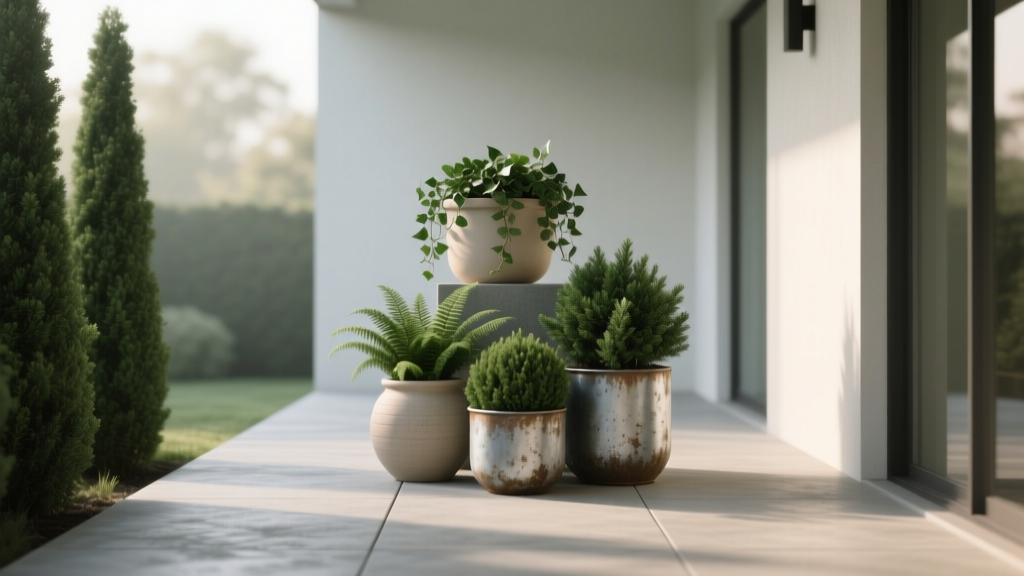
Porch Evergreen Container Display
The porch looks fine in June. Then November arrives, the flower pots slump, and suddenly your front door feels like it’s floating in a sea of brown stems and empty soil. You still walk past it every day—carrying groceries, juggling keys, greeting neighbors—and the entry has zero energy. That’s the problem an evergreen container display solves: a porch that holds its shape and color when everything else goes to sleep.
Think of this as a small landscape design project with a big payoff. We’ll build a layout that frames the door, respects the walkway, and uses hardy evergreens that stay handsome with minimal fuss. I’ll walk you through sizes, spacing, light requirements, a few proven plant palettes, and three real-life scenarios (including renter-friendly options) so you can copy the parts that fit your porch exactly.
Design principles that make porch containers look intentional
Start with the “doorway frame” and protect the path
The simplest professional trick is to treat your front door like a picture you’re framing. Use two “anchor” containers to create a visual gateway. On most porches, the anchors live on either side of the door or at the top of the steps—wherever they won’t snag coats or block door swing.
Practical clearance targets:
- Keep 36 inches of clear walking space on steps and along the main path (a common comfortable minimum for one person carrying bags).
- Keep containers at least 12 inches away from the door swing zone so the door can open fully without hitting foliage.
- If your porch is narrow (under 48 inches deep), use taller, slimmer containers rather than wide bowls.
Use the “thriller, filler, spiller” idea—then winterize it
For evergreen containers, the structure is your thriller: a conifer or broadleaf evergreen that keeps its silhouette. The filler can be a compact shrub, sedge, or heuchera in milder climates. The spiller can be trailing ivy or wintercreeper where it won’t freeze solid.
A key distinction: winter containers must look good from above (top-down) and from the street (side profile). That means you want at least one upright form and one mounding form in each pot.
Scale: pick the right pot size first
Most porch containers fail because the pot is too small. Small pots dry out too fast in summer and freeze-thaw more dramatically in winter.
Use these sizing rules as a quick draft plan:
- Anchors: 18–22 inch diameter pots, or 20–24 inch tall planters for height near the door.
- Secondary pots: 14–16 inch diameter.
- Mini accents: 10–12 inch diameter for side tables, rail corners, or step landings.
Cost reality: a sturdy, frost-rated 20-inch resin planter often runs $35–$70, while glazed ceramic can be $80–$200+. If you’re designing for longevity and fewer cracked pots, it’s usually better to spend on fewer, larger, weatherproof containers.
Light and wind: the porch microclimate matters
Before you buy a single plant, stand on your porch and note sun hours. A south- or west-facing porch can bake, while a north-facing entry can be bright but cold.
- Full sun: 6+ hours of direct light.
- Part sun/part shade: 3–6 hours.
- Shade: under 3 hours.
Also note wind exposure. Containers on open steps can desiccate evergreens in winter. If you’re in a windy spot, pick tougher conifers (junipers, mugo pines) and use heavier pots that won’t tip.
“Plants in containers are more exposed than those in the ground to temperature extremes and drying winds.” — University of Illinois Extension, Container Gardening guidance (2020)
Layout strategies (with measurements you can copy)
Strategy A: Classic symmetrical entry (most versatile)
Best for: standard front doors, townhomes, rental entries, and anyone who wants “instant polish.”
Layout:
- Two matching anchor planters: 20 inches wide × 22 inches tall, placed 10–14 inches from the door trim.
- Optional third container (secondary) on the porch corner: 14–16 inches wide.
Visual ratio: keep anchor plant height about 2/3 the height of your door sidelight area, or roughly 36–48 inches of plant height above the rim for most entries. Too tall feels like a hedge; too short looks like you forgot to finish.
Strategy B: Asymmetrical “one big, two small” (for tight porches)
Best for: narrow stoops, doors that open onto a tight landing, or porches with a single usable corner.
Layout:
- One tall anchor planter (24 inches tall) near the hinge side of the door (the side that feels visually heavier).
- Two smaller pots (12–14 inches) staggered on steps or along the railing line.
Spacing tip: keep the small pots at least 18 inches apart on steps so feet don’t catch them. If you have just one step, place small pots on the upper landing rather than the tread.
Strategy C: Rail-and-corner composition (when floor space is limited)
Best for: renters, apartment porches, or anyone with a narrow balcony-style porch.
Layout:
- One floor anchor pot in the best corner: 18 inches diameter.
- Two rail planters (aim for 24–30 inches long) planted with compact evergreens and winter-interest accents.
Safety note: check railing weight limits and secure rail planters. If wind is strong, rail planters can become hazards.
Plant selection: evergreen stars and the varieties that behave in containers
For porch containers, you want plants that stay dense, tolerate root restriction, and don’t throw tantrums when watered imperfectly. Also, pick varieties that fit your light. Below are reliable options that designers lean on because they hold shape and color.
Evergreens for sunny porches (6+ hours)
- Juniperus conferta ‘Blue Pacific’ (shore juniper): low, wide, drought-tolerant; great for windy porches and as a spiller-like mound.
- Pinus mugo ‘Mops’ (dwarf mugo pine): rounded form, tough in cold; slow growth makes it container-friendly.
- Buxus microphylla ‘Winter Gem’ (boxwood): tidy structure; works well in symmetrical entries where you want a tailored look.
- Ilex crenata ‘Sky Pencil’ (Japanese holly): narrow, upright; a smart substitute for boxwood in slim spaces.
Evergreens for part shade (3–6 hours)
- Chamaecyparis pisifera ‘Golden Mop’ (threadleaf false cypress): soft texture and bright color; place where it gets some sun to stay golden.
- Skimmia japonica ‘Rubella’: glossy leaves and red buds; excellent for sheltered, part-shade entries.
- Taxus x media ‘Tauntonii’ (spreading yew): classic, durable, responds well to light shaping.
Evergreens for shade (under 3 hours)
- Mahonia eurybracteata ‘Soft Caress’: refined, ferny evergreen foliage; looks high-end in a pot.
- Sarcococca confusa (sweet box): evergreen leaves and fragrant winter blooms; best in mild-winter regions or very protected porches.
- Hedera helix (English ivy): reliable trailing green for sheltered shade; keep it trimmed and contained.
Hardiness and placement matter. The USDA Plant Hardiness Zone Map emphasizes that zones are based on average annual minimum winter temperatures (USDA, 2023). Containers expose roots more than in-ground planting, so if you’re on the edge of a plant’s hardiness, treat your porch as “one zone colder” unless it’s very sheltered.
Citations: USDA Agricultural Research Service, USDA Plant Hardiness Zone Map (2023); University of Illinois Extension container gardening guidance (2020).
A quick comparison: best evergreen choices by porch conditions
| Plant | Best Sun | Mature Size (in pot) | Why it works on a porch | Typical Cost (1–3 gal) |
|---|---|---|---|---|
| Juniperus conferta ‘Blue Pacific’ | Full sun | 12–18 in. tall, 24–36 in. wide | Wind-tough, drought-tolerant, dense blue-green texture | $25–$55 |
| Pinus mugo ‘Mops’ | Full sun | 18–36 in. tall and wide | Strong winter structure; slow growth; low maintenance | $35–$90 |
| Ilex crenata ‘Sky Pencil’ | Part sun | 48–72 in. tall, 18–24 in. wide | Vertical accent for tight entries; clean silhouette | $40–$120 |
| Skimmia japonica ‘Rubella’ | Part shade | 24–36 in. tall and wide | Evergreen shine + winter buds; refined look near doors | $35–$80 |
| Mahonia ‘Soft Caress’ | Shade/part shade | 24–36 in. tall, 24–36 in. wide | Elegant texture; looks “designed” with minimal extras | $40–$85 |
Step-by-step: building a porch evergreen container display that lasts
This setup is designed for long-term planting (not just seasonal cut greens). Plan for a half-day project the first time.
- Measure your porch. Note porch depth, door swing, and walking path. Mark a 36-inch clear route with painter’s tape if the space is tight.
- Choose containers with drainage. Aim for at least one drainage hole of 3/4 inch diameter (or multiple smaller holes). Elevate pots slightly on pot feet to prevent waterlogging and winter cracking.
- Add a stable base. For tall planters, add 2–3 inches of gravel or use lightweight packing material in the bottom third (empty nursery pots turned upside down) to reduce soil volume without blocking drainage.
- Use a quality potting mix. Fill with a container mix (not garden soil). Leave 1–2 inches of space at the top to water without overflow.
- Place the evergreen “thriller” first. Set it slightly off-center for a natural look, or centered for formal symmetry.
- Add mounding companions. Space companion plants so root balls are 3–6 inches apart, depending on pot size.
- Top-dress for finish and function. Add 1 inch of fine bark or pine fines to reduce splash and slow drying.
- Water deeply. Water until it runs out the bottom. In the first two weeks, check moisture every 2–3 days.
- Anchor against wind. If your porch is exposed, position tall pots close to a wall or corner, or choose heavier containers. For very windy sites, tie tall evergreens loosely to a discreet stake for the first season.
Three real-world scenarios (and how to design for each)
Scenario 1: The sunny, windy stoop (townhome steps facing west)
You’ve got 6–8 hours of strong afternoon sun, plus wind tunneling between buildings. This is where fragile broadleaf evergreens can scorch or dry out midwinter.
Design solution: Go conifer-forward for resilience and use blue/green contrast for depth.
Planting plan (two anchor pots, 20-inch diameter):
- Center: Pinus mugo ‘Mops’ (one per pot)
- Mound: Juniperus ‘Blue Pacific’ (one per pot, tucked to the front)
- Optional accent: a ring of hardy sedge (in mild climates) or keep it evergreen-only for cleaner winter lines
Budget range: 2 conifers ($70–$180) + 2 junipers ($50–$110) + two planters ($70–$140) = roughly $190–$430, depending on plant size and container choice.
Scenario 2: The shaded, sheltered porch (north-facing with roof cover)
This is the porch where summer annuals struggle, but evergreen foliage can look lush and calm. Because it’s sheltered, you can use finer textures and glossy leaves without worrying as much about winter burn.
Design solution: Layer texture: something upright, something mounding, and a trailing edge.
Planting plan (one big pot + two small accents):
- Big pot (18–20 inch): Mahonia ‘Soft Caress’ + Sarcococca confusa (if climate allows) + trailing Hedera helix
- Two small pots (12–14 inch): single-specimen Skimmia japonica ‘Rubella’ (or one skimmia + one ivy-only pot for repetition)
Cost note: Shade evergreens can be pricier. Expect $40–$85 per plant for premium varieties, but you’ll use fewer “extras” because foliage does the decorating.
Scenario 3: The renter’s porch (strict rules, you can’t leave heavy pots behind)
You want year-round structure, but you need a setup you can move. The trick is to use lightweight containers, smaller root balls, and a layout that still reads intentional.
Design solution: One statement pot + repeat a small motif, and choose plants that tolerate occasional missed watering.
Planting plan:
- One tall lightweight resin planter (about 24 inches tall): Ilex crenata ‘Sky Pencil’
- Two matching 12-inch pots: Juniperus ‘Blue Pacific’ or compact boxwood (depending on sun)
DIY alternative: If you can’t invest in shrubs, create a seasonal “evergreen look” using a single empty pot filled with soil and sturdy branches plus cut greens. Many homeowners do this with dogwood stems and conifer boughs; it’s not living planting, but it’s portable and costs less upfront (often $25–$60 in materials if you buy bundles, less if you source from your own yard).
Budget planning (with smart places to save)
Evergreen container displays can be done on a range of budgets, and you don’t have to buy everything at maximum size.
- Good “starter” investment: buy the right containers first. A frost-rated pot you keep for 10 years is cheaper than replacing cracked ceramics every other winter.
- Buy smaller shrubs and let them grow. A 1-gallon shrub often establishes faster in a container than a stressed, root-bound 5-gallon. You can save $30–$80 per plant this way.
- Use fewer plants per pot. One strong evergreen + one mounding companion can look more modern and intentional than cramming in five plants.
- Skip rocks on top. They look neat but add weight and can trap heat. Bark fines or pine fines are cheaper and easier.
Typical project totals:
- Lean budget: $120–$220 (two mid-size resin pots + two 1-gallon evergreens)
- Mid-range: $250–$500 (two quality planters + 2–4 shrubs in 2–3 gallon sizes)
- Premium: $600–$1,200 (large designer containers + specimen conifers/holly, upgraded soil, and matching secondary pots)
Maintenance: what it actually takes week to week
Evergreen containers are lower maintenance than seasonal flowers, but they’re not zero-maintenance. The big watch-outs are water and winter wind.
Weekly time expectations
- Spring through fall: about 10–20 minutes per week to check moisture, remove debris, and rotate pots if one side leans toward light.
- Summer heat waves: moisture checks can jump to 5 minutes every 1–2 days, especially for sunny porches.
- Winter: 10 minutes every 2 weeks in milder climates; in freezing climates, water only during warm spells when soil is workable and not frozen.
Seasonal tasks that keep containers looking designed
- Early spring: top-dress with fresh mix (about 1–2 inches) and apply a slow-release fertilizer if needed.
- Late spring: light pruning to maintain silhouette—especially for boxwood, holly, and yew.
- Mid-summer: check for spider mites on stressed evergreens (fine webbing, stippling). Rinse foliage if needed.
- Late fall: move pots closer to the house for wind protection, and water deeply before hard freezes.
If you live where winters are harsh, consider wrapping pots with burlap or using insulating pot sleeves. Remember: roots in containers experience colder extremes than roots in the ground, so protection is about keeping temperatures steadier, not “keeping plants warm.”
Finishing touches that make it look like a designer did it
Once your evergreens are placed, add just one or two finishing elements. Too many accessories can make a porch feel cluttered.
- Lighting: a warm-white, outdoor-rated string light woven discreetly through a conifer can add evening presence without looking seasonal-only.
- Color repetition: if your door is black, echo that with matte black pots; if your house has warm brick, choose terra-cotta tones or bronze planters.
- One accent material: a natural doormat, a wood bench, or a metal lantern—pick one, not all three.
The final check is simple: step to the sidewalk and look at the entry as one picture. You should see a clear path, a framed doorway, and evergreen shapes that hold their own even on the grayest day. When the porch has structure, every season feels more welcoming—and you won’t be scrambling to “fix it” every time the weather changes.