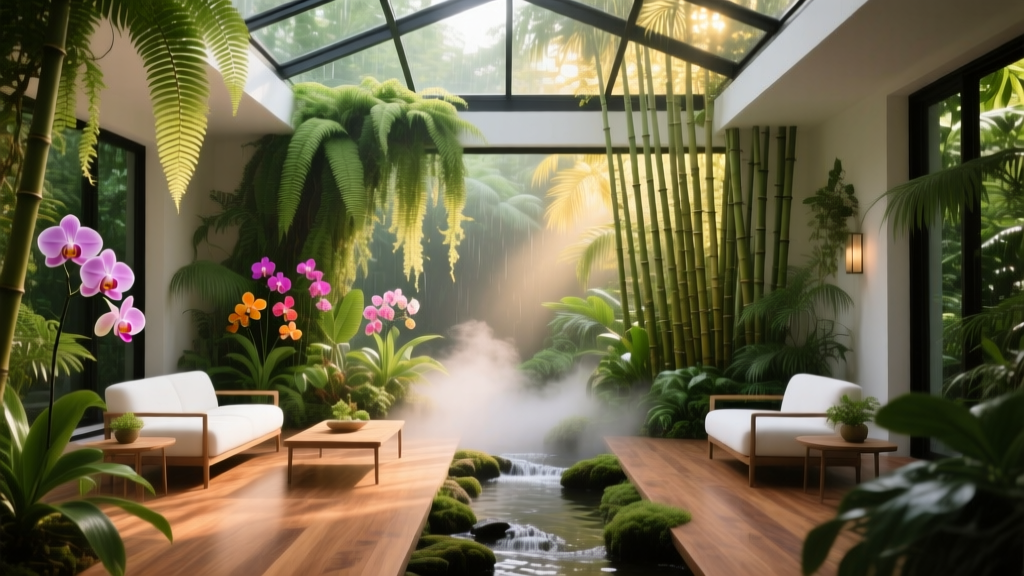
Sunroom Tropical Rainforest Simulation
It’s February, the sky is the color of wet cement, and you’re wearing socks on your hands because the house feels drafty. You step into your sunroom expecting “bright,” but it reads more like a storage annex: a few unhappy pots, a chair you never sit in, and light that somehow looks flat. The fix isn’t buying one more random plant. The fix is designing the room the way nature designs comfort—layered canopy, warm humidity, filtered light, and a rhythm of watering that makes the air feel alive. Today we’re turning an ordinary sunroom into a believable tropical rainforest simulation you can actually maintain.
Think like a landscape designer: we’ll create zones (canopy, understory, floor layer), manage heat and moisture safely for a house, then choose plants that look lush without demanding a greenhouse budget. I’ll give you dimensions, spacing, and three real-world layouts that work for homeowners and renters.
Start with the rainforest blueprint: layers, light, and airflow
Measure the room and map the “sun path” in minutes
Before you buy anything, do a quick site survey. Most sunrooms are long rectangles, and that shape is your friend if you treat it like a tiny conservatory.
- Measure the footprint. Example: a common sunroom is 10 ft x 12 ft (120 sq ft). Note ceiling height; if you have 8 ft ceilings, you’ll choose different “canopy” plants than someone with 10–12 ft.
- Track direct sun. For one day, note how many hours your sunroom gets direct rays. Many south-facing rooms get 5–7 hours direct sun in summer; east-facing may get 2–4 hours of gentle morning sun. Write it down.
- Find the cold edge. Stand near glazing on a cold day and feel where the air chills—often within 18–24 inches of windows. That’s a placement issue, not a plant failure.
- Locate an outlet and a water source. Your rainforest will run on a humidifier, small fan, and grow lights if needed.
Design the room as three plant layers (plus one “service lane”)
A rainforest looks full because every vertical layer is occupied. In a sunroom, we mimic that with smart spacing so it stays walkable.
- Canopy layer (visual ceiling): 1–3 tall specimens in large containers placed in corners or at the far end. Keep trunks clear so sightlines stay open.
- Understory layer (mid-height mass): Groups of 3–7 plants with similar needs, clustered for humidity and impact.
- Forest floor layer (grounding + softness): Low planters, mossy textures, and trailing plants that “spill” like vines.
- Service lane: Maintain a clear path of at least 24–30 inches so watering and pest checks don’t become a chore.
Humidity targets that feel tropical but behave indoors
Most tropical foliage looks best around 50–65% relative humidity. Pushing beyond that for long periods can risk condensation on windows and, in worst cases, mold in adjacent rooms. The practical sweet spot is stable humidity with airflow. The U.S. Environmental Protection Agency notes that indoor relative humidity should be kept between 30–50% to help control mold growth (EPA, 2023). You can still achieve a rainforest vibe by aiming for 45–55% most of the time, with short bursts higher when you run a humidifier during the day—then ventilate.
“The most successful indoor plant rooms aren’t the wettest—they’re the most consistent. Stable moisture and steady air movement prevent most of the problems people blame on ‘not enough humidity.’” — Dr. Linda Chalker-Scott, horticulturist and author (quoted concept aligns with her extension-based guidance on plant stress and indoor conditions; Washington State University resources, 2019)
Layout strategies that make a sunroom feel like a rainforest (without losing your living space)
The “L-Shape Jungle Edge” (best for narrow sunrooms)
If your sunroom is a corridor—say 8 ft x 14 ft—build planting along two walls in an L-shape and keep the center open.
- Deep planter zone: Reserve a strip 18–24 inches deep along the brightest wall for large pots and a trellis.
- Secondary strip: On the adjacent wall, use shelves 10–12 inches deep for understory plants.
- Open walkway: Maintain 30 inches clear width down the middle for comfort.
The “Island Canopy” (best for square rooms and seating)
For a room around 12 ft x 12 ft, place one dramatic canopy plant in a large pot as a central island, then ring it with mid-height foliage. This creates the feeling of stepping into a small clearing in the jungle.
- Center pot: Use a 20–24 inch diameter container with a saucer and riser.
- Ring spacing: Place understory plants 14–18 inches apart to fill in without instantly overcrowding.
- Seating: Add a slim bench or chair on the shadiest side so you’re facing the densest greenery.
The “Canopy Wall + Hanging Vines” (best for renters)
If you can’t drill much or you’re keeping things reversible, use vertical plant stands and tension rods.
- Wall of green: Two tall metal shelving units (around 72 inches high) become your canopy wall.
- Hanging line: A tension rod or freestanding garment rack supports trailing vines—no ceiling hooks required.
- Mobility: Put larger pots on rolling caddies so you can pull them away from glass during cold snaps.
Hardscape and tools: creating rainforest conditions safely indoors
Floor protection and water control
Rainforest simulation fails when water management is sloppy. Plan for spill-proof watering from day one.
- Waterproof barrier: Use a clear vinyl floor runner or interlocking waterproof tiles under the plant zone. Budget: $35–$120 depending on size.
- Saucers + risers: Every pot gets a saucer; elevating pots by 1–2 inches improves airflow and reduces stagnant moisture.
- Catch tray station: Set one heavy-duty tray (about 24 in x 36 in) as your “watering pad.” Water plants there, let them drain, then return them.
Lighting and temperature: realistic expectations
Many sunrooms are bright but not “tropical bright” year-round. Tropical understory plants tolerate medium light; fruiting trees and sun lovers do not.
- Supplemental grow lights: If winter sun drops below 4 hours of direct light, add a 2–4 ft LED grow bar over the densest shelf. Typical cost: $40–$150.
- Temperature band: Aim for 65–80°F most days. If your sunroom dips to 55°F at night in winter, choose tougher tropicals (aspidistra, some palms) and keep sensitive plants off the glass line.
- Airflow: A small oscillating fan on low, 6–12 hours/day, reduces fungus gnats and leaf spotting.
Plant selection: specific varieties that sell the rainforest illusion
The trick is mixing big-leaf drama with reliable growers. Choose plants that enjoy similar moisture and light so your maintenance stays simple.
Canopy candidates (tall structure, strong silhouette)
- Ficus elastica ‘Burgundy’ (Rubber Plant): Glossy, oversized leaves read instantly tropical; tolerates indoor conditions better than many “true” rainforest trees. Place 24–36 inches from glass to avoid cold shock.
- Dypsis lutescens (Areca Palm): Feathery canopy effect and good for clustering; likes brighter light and consistent watering. Space fronds so they don’t press against windows—give it a 30-inch radius if possible.
- Howea forsteriana (Kentia Palm): Slower, elegant, and forgiving in medium light. Great for renters who want fewer emergencies.
Understory anchors (mass, texture, and depth)
- Monstera deliciosa: Iconic split leaves create instant rainforest drama; thrives with a moss pole and bright indirect light.
- Philodendron ‘Rojo Congo’ or Philodendron erubescens: Broad leaves, rich color, and strong indoor performance.
- Alocasia ‘Regal Shields’: Velvety, dark tropical look; needs steadier warmth and humidity—place it in the most stable spot away from door drafts.
- Spathiphyllum ‘Sensation’ (Giant Peace Lily): Big leaves, clear “I need water” signal, and it handles medium light well.
Forest floor and “vine layer” (the secret to immersion)
- Nephrolepis exaltata ‘Kimberly Queen’ (Boston fern relative): Upright, tidy, and lush; ferns sell the rainforest feel immediately if you can keep moisture consistent.
- Calathea orbifolia or Goeppertia (Calathea) ‘Freddie’: Patterned leaves read like understory plants; do best with filtered light and consistent watering.
- Epipremnum aureum ‘Golden Pothos’: The workhorse vine—fast, forgiving, and perfect for cascading from shelves.
- Philodendron hederaceum ‘Brasil’: Trails beautifully and tolerates indoor variability better than fussier vines.
Plants to use sparingly (beautiful, but higher-maintenance indoors)
- Maidenhair fern (Adiantum): Stunning, but often fails if watering is inconsistent. Use one as a “feature” only if you’re home often.
- True bananas (Musa spp.): They want more sun, heat, and feeding than most sunrooms provide. If you try one, treat it as seasonal drama and expect leaf tearing indoors.
Comparison table: picking the right “big leaf” stars
| Plant | Light (indoors) | Humidity comfort | Watering rhythm | Best role in layout |
|---|---|---|---|---|
| Monstera deliciosa | Bright indirect; tolerates some morning sun | 45–60% ideal | When top 2 in of soil are dry | Understory anchor + climbing focal point |
| Ficus elastica ‘Burgundy’ | Medium to bright indirect | 40–55% (forgiving) | Let top 2–3 in dry | Canopy structure in corners |
| Alocasia ‘Regal Shields’ | Bright indirect (stable) | 50–65% preferred | Evenly moist, not soggy | Drama plant near humidifier zone |
| Spathiphyllum ‘Sensation’ | Medium to bright indirect | 45–60% | Water when slightly droopy | Mass planting to soften edges |
Step-by-step setup: build the simulation in a weekend
- Clear and clean the zone. Wipe windows, vacuum corners, and remove anything stored on the floor. You’re making room for airflow.
- Lay down floor protection. Cover the planting zone (for example, a strip 2 ft x 10 ft along the window wall) with a waterproof runner.
- Place your canopy plants first. Set 1–3 tall plants in their final locations. Leave 6–12 inches between pots and the wall to prevent trapped moisture and pests.
- Add understory clusters. Group plants in threes and fives, spacing 14–18 inches between pots so leaves overlap slightly but air still moves.
- Install vertical supports. Add a moss pole for Monstera or Philodendron, or a freestanding trellis. Tie stems loosely with soft plant tape.
- Set the humidity system. Place a humidifier on a small stand, not directly on the floor. Start with a target of 45–55% RH, and run it during daytime only if condensation forms at night.
- Add lighting (if needed). Mount or position LED bars above shelves so the light falls from above, like forest canopy gaps. Put them on a timer for 10–12 hours/day in winter.
- Finish with forest-floor texture. Add low planters, a tray of pebbles under ferns (for localized humidity), and trailing vines to soften shelf lines.
Budgets and DIY alternatives that still look designer
A rainforest room can be built on a spectrum. The key is spending on the “bones” (containers, floor protection, lighting) so your plants aren’t living in chaos.
- Starter build ($200–$400): 6–10 plants in 6–10 inch nursery pots, two DIY pebble trays, one small fan ($20–$35), and a basic humidity gauge ($10–$15).
- Mid-range build ($500–$1,200): 12–20 plants, two large statement containers ($40–$120 each), one humidifier ($50–$150), and one quality LED grow light ($80–$150).
- High-impact build ($1,500–$3,000): Large specimen palms/ficus, matching containers, multiple lights, shelving, and a dedicated watering station.
DIY designer trick: Buy plants small and upgrade containers slowly. Slip nursery pots into thrifted baskets lined with a plastic saucer. It’s renter-friendly, and you can standardize the look without repotting everything at once.
Maintenance expectations: the schedule that keeps it lush
A sunroom rainforest should feel indulgent, not exhausting. Plan on 45–90 minutes per week once it’s established, plus seasonal resets.
- Weekly (45–90 minutes): Water checks (lift pots), wipe dust from big leaves, rotate 1–2 plants a quarter turn, and empty any standing water in saucers.
- Every 2 weeks (30 minutes): Inspect for pests (spider mites, mealybugs) especially on alocasias and calatheas; prune yellowing leaves to keep airflow.
- Monthly (30–60 minutes): Fertilize lightly during spring/summer growth; flush salts from pots by watering until runoff is clear.
- Seasonally (1–2 hours): In fall, move sensitive plants 18–24 inches away from glass; in late winter, refresh the top 1–2 inches of potting mix and check root crowding.
The Royal Horticultural Society recommends increasing humidity for houseplants by grouping plants and using pebble trays, especially in centrally heated homes (RHS, 2022). Grouping also creates the “rainforest pocket” effect—plants transpire and help each other.
Three real-world scenarios (and how the layout shifts)
Scenario 1: A renter’s east-facing sunroom with rules about drilling
You’ve got beautiful morning light—about 3 hours direct—and then bright shade. The landlord doesn’t want holes in the ceiling. Go with the Canopy Wall + Hanging Vines plan: two tall shelving units on the brightest wall, a tension rod for pothos and philodendron trails, and one forgiving canopy plant like a Kentia palm in a 14–17 inch pot. Use rolling caddies so you can pull plants away from chilly glass during winter nights.
Plant picks: Kentia palm, Monstera deliciosa, Spathiphyllum ‘Sensation’, Philodendron ‘Brasil’, Calathea ‘Freddie’ (if humidity is stable), and one fern near the humidifier.
Scenario 2: A homeowner with a south-facing sunroom that overheats in July
This is the opposite problem: too much sun and heat. In peak summer, south-facing glass can push leaf temperatures high enough to scorch tender foliage. Create filtered light the way the canopy does outdoors.
- Add a light-filtering shade or sheer curtain to cut harsh midday rays.
- Keep big-leaf plants 24–36 inches back from the hottest glass.
- Use an oscillating fan and water earlier in the day.
Plant picks: Rubber plant, areca palm (if you can keep up with watering), bird’s nest fern (Asplenium nidus) for a leathery, heat-tolerant fern look, and pothos as an unbothered spiller.
Scenario 3: A small 6 ft x 10 ft sunroom that must double as a breakfast nook
In a tight footprint (60 sq ft), the design goal is “jungle edge,” not “jungle everywhere.” Use the L-Shape Jungle Edge so you keep one side for seating. Choose slimmer plants and rely on verticality: a moss pole, one tall palm in a corner, and trailing vines to soften the top of the shelving.
Plant picks: One Kentia or slender areca, one Monstera trained upward, 2–3 medium philodendrons, and 2 trailing plants. Skip sprawling calatheas if your chair needs elbow room.
Common failure points (and the fixes designers use)
Condensation on windows: Lower humidifier output, increase airflow, and keep plants back from glass. Aim for daytime humidity boosts, then let it drift down at night. The EPA’s humidity guidance is a good safety anchor for mold prevention (EPA, 2023).
Leggy growth: Add a grow light or move the plant closer to the brightest zone. Leggy monstera usually means the “canopy gap” is missing.
Fungus gnats: Let the top layer dry slightly, use yellow sticky traps, and switch some plants to bottom watering. Gnats are a moisture-management signal.
Leaf crisping on calatheas and ferns: Check the room’s humidity swings and drafts. Cluster them near the humidifier and away from doors. If the room regularly drops below 60°F, choose tougher substitutes like cast iron plant (Aspidistra elatior) for the understory look.
Making it feel like a rainforest—without making it messy
The finishing touches are what turn “collection of houseplants” into “I walked into a humid green world.” Use repetition: three similar pots grouped together, one consistent wood tone in shelves, and a limited palette of leaf shapes—big (monstera/philodendron), feathery (palm), and fine (fern). Add one small accent that suggests water—a pebble tray or a shallow bowl you refill—so the room reads as moist even when the humidifier is off.
Once it’s built, your sunroom will start doing something subtle: it changes how you use your home in winter. You’ll linger there, coffee in hand, watching new leaves unfurl. That’s the real point of a rainforest simulation—less a theme, more a microclimate you can live in.
Sources: U.S. Environmental Protection Agency (EPA), “A Brief Guide to Mold, Moisture and Your Home” (2023). Royal Horticultural Society (RHS), houseplant care guidance on humidity and grouping plants (2022). Washington State University Extension resources by Dr. Linda Chalker-Scott on plant stress and practical indoor growing principles (2019).