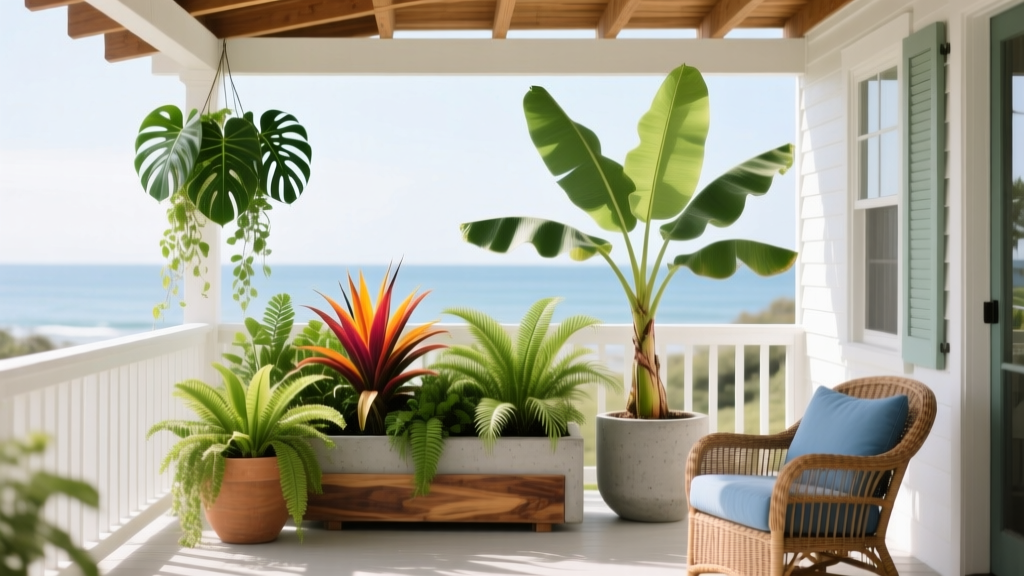
Porch Summer Tropical Container Display
The porch is fine—technically. There’s a chair, a doormat, and maybe a lonely pot that looks like it’s been waiting for you to “have time.” But in summer, a porch can feel exposed: hot boards, glare off the concrete, and a blank edge where the house meets the street. The fix isn’t complicated. You don’t need a full landscape renovation; you need a short, immersive moment—leafy, layered, and a little theatrical—that greets you every time you come home. A tropical container display does that fast, with color and bold foliage that reads from the sidewalk.
I’m going to walk you through a designer-style layout you can adapt to almost any porch: a tight apartment stoop, a wide suburban wraparound, even a shaded rental entry where you can’t hang anything or drill holes. The goal is a “container vignette” that looks intentional, not like you bought plants and parked them where there was space.
Start with a simple layout plan (before you buy plants)
Most porch plantings fail for one reason: the plants were chosen first, and the layout was improvised later. Tropical displays succeed when you decide on structure first—height, rhythm, and walkway clearance—and then fill in with foliage and flowers.
Measure three things that decide the whole design
Grab a tape measure and take 3 numbers. You’ll use these to choose pot sizes and how many containers your porch can actually handle.
- Clear walking lane: keep at least 36 inches of open path from steps to door for comfortable entry (and for carrying groceries).
- Depth of your porch: many porches are 48–72 inches deep. If yours is under 48 inches, you’ll design “flat to the wall” with tall, narrow pots.
- Sunlight hours: track direct sun on the porch floor. Tropical containers typically perform best with 4–6 hours of sun; many foliage tropicals tolerate bright shade.
If you want a quick rule: if you have 60 inches of porch depth, design with a 18–22 inch “plant zone” along the railing or wall, leaving the rest open for movement and seating.
Choose a focal point so the display looks intentional
Every good container grouping has one “anchor” plant with height and attitude. On a porch, the anchor is usually placed:
- At the top of steps (framing the entry)
- Beside the door hinge side (so the door swing doesn’t crush leaves)
- At the outer corner where it’s visible from the street
Then you build a supporting cast—mid-height color, then spillers that soften pot edges.
Design principles that make tropical containers read “lush,” not messy
Use the “thriller, filler, spiller” model—then refine it
The classic container formula works, but tropicals need one extra step: repeat a leaf shape at least twice to unify the scene. For example, echo banana-like leaves (canna + coleus with broad leaves) or echo strap leaves (cordyline + dracaena spike).
Also, tropicals can get big quickly. The spacing that looks sparse at planting time becomes full in 3–5 weeks once nights stay above 60°F.
Scale pots to the porch (bigger reads calmer)
On a porch, too many small pots look like clutter. Fewer, larger containers look designed. A useful scale guideline:
- Small stoop: 2–3 pots in the 12–16 inch diameter range
- Medium porch: 3–5 pots in the 16–22 inch range
- Large porch: 5–7 pots, including one statement planter 22–26 inches
Budget note: large pots cost more upfront, but you buy fewer plants and get a cleaner look.
Think in layers: street view, approach view, and sitting view
Designers check plantings from multiple angles. You should too:
- Street view: bold shapes and high contrast (dark leaves + chartreuse, big leaves + fine leaves)
- Approach view: fragrance or flowers near hand height (lantana, angelonia)
- Sitting view: texture close-up (begonia, caladium, ferns)
“Large leaves make small spaces feel more cohesive and less busy because they create broad, readable forms.” — Jennifer Jewell, garden writer and host, Cultivating Place (2019)
Plant palette: tropical look, porch-proof performance
True tropicals are happiest with warmth and steady moisture, but you can create a tropical feel using a mix of tropicals and heat-loving annuals. Below are specific varieties that are widely available and perform well in containers.
Anchor (“thriller”) plants for height
- Canna lily (Canna ‘Tropicanna’): dramatic orange blooms and striped foliage; thrives in heat and sun. Use 1 per large pot (20–24 inches). Great for 6+ sun hours.
- Elephant ear (Colocasia ‘Black Magic’): near-black leaves that make chartreuse companions glow. Prefers consistent moisture; best in morning sun/afternoon shade (4–6 hours).
- Banana (Musa ‘Basjoo’ or Musa ‘Dwarf Cavendish’): instant “vacation” energy; needs a heavy pot so it doesn’t tip in wind. Place where it gets shelter from gusts.
- Cordyline (Cordyline australis ‘Red Star’): spiky, architectural, and drought-tolerant once established; excellent for hot, reflective porches.
Mid-layer (“filler”) plants for color and bulk
- Coleus (Plectranthus scutellarioides ‘ColorBlaze Wicked Witch’ or ‘Rediculous’): fast, bold foliage; handles shade to sun (best color with 3–5 hours sun). Pinch tips weekly for bushiness.
- Caladium (Caladium ‘White Queen’ or ‘Heart to Heart “Scarlet Flame”’): luminous leaves for shady porches; excellent with ferns.
- Begonia (Begonia ‘Dragon Wing Red’): flowers nonstop in heat; tolerates shade; dependable “always looks good” plant.
- Lantana (Lantana camara ‘Bandana Cherry Sunrise’): sun-lover, drought-tolerant, brings butterflies; ideal for the outer edge where it can spill slightly.
- Angelonia (Angelonia angustifolia ‘Angelface Blue’): upright bloom spikes, thrives in heat; great substitute for salvia in containers.
Edge-softeners (“spillers”) that finish the design
- Sweet potato vine (Ipomoea batatas ‘Marguerite’ or ‘Blackie’): fast trailing color; one plant can cover 18–24 inches of pot edge in a month.
- Dichondra (Dichondra argentea ‘Silver Falls’): elegant silver cascade; looks expensive; tolerates heat and sun with regular water.
- Boston fern (Nephrolepis exaltata): classic porch drape in shade; wants evenly moist soil and humidity.
Container and soil choices (the practical side that keeps it alive)
Porch containers face extra stress: reflected heat, wind tunnels between houses, and rain shadows under roof overhangs. Your materials matter.
Pot materials compared
| Pot Type | Best For | Weight | Water Needs | Typical Cost (per 18–22" pot) |
|---|---|---|---|---|
| Resin / plastic (faux ceramic) | Rentals, easy moving, big tropicals | Light | Moderate (slower drying than terracotta) | $25–$60 |
| Terracotta | Classic look, breathable roots | Medium | High (dries fast in heat) | $30–$80 |
| Glazed ceramic | Statement pieces, stable in wind | Heavy | Moderate | $60–$180 |
| Fabric grow bag (decorative cover) | Budget builds, excellent drainage | Light | Higher (air-pruning dries edges) | $8–$20 |
Soil recipe and drainage details
Use a high-quality potting mix (not garden soil). For tropicals, I like a mix that holds moisture but drains well:
- 80% premium potting mix
- 20% pine bark fines or perlite for extra air space
Skip “rocks in the bottom.” Research and extension guidance note that adding gravel can create a perched water table, keeping roots wetter instead of improving drainage. Use a pot with drainage holes and the right soil instead. (See Washington State University Extension, 2020; University of Illinois Extension, 2017.)
Layout strategies for three porch shapes
Here are three real-world layouts you can copy. Each is designed to look lush without blocking movement.
Scenario 1: Apartment stoop (3 feet deep, bright shade)
Space: a small stoop roughly 36 inches deep with a door that swings outward. You need plants, but you can’t sacrifice clearance.
Design move: go vertical and tight to the wall. Use tall, narrow pots and one wall-side cluster rather than pots on both sides.
- 1 tall pot (12–14" wide, 18–22" tall): Cordyline ‘Red Star’ + coleus ‘Rediculous’ + dichondra ‘Silver Falls’
- 1 medium pot (14–16"): Caladium ‘White Queen’ + begonia ‘Dragon Wing Red’
- Optional 1 railing box: trailing sweet potato vine ‘Marguerite’ (only if allowed)
Why it works: the cordyline gives height without bulk, caladium lights up shade, and dichondra drapes without sticking out into the walkway.
Scenario 2: Suburban front porch (6–8 feet deep, 5–7 hours sun)
Space: a generous porch where you want an entry “frame” plus a sitting area. This is where tropical containers can look like a resort.
Design move: symmetrical anchors at the steps, then a relaxed cluster near seating.
- 2 large planters (22–26"): Canna ‘Tropicanna’ + lantana ‘Bandana’ + sweet potato vine ‘Blackie’
- 2 medium pots (18–20") near seating: coleus mix (dark + chartreuse) + angelonia ‘Angelface Blue’
- 1 accent pot (14–16"): ‘Black Magic’ elephant ear + dichondra ‘Silver Falls’
Why it works: cannas read from the street, lantana handles heat and draws pollinators, and coleus provides that designer-level foliage contrast up close.
Scenario 3: Covered porch with morning sun only (2–4 hours sun, wind exposure)
Space: you get a little sun, but roof cover blocks rain. Wind can desiccate leaves fast.
Design move: choose tough foliage plants, reduce bloom-heavy selections, and use heavier pots or add ballast.
- 1 heavy pot (glazed ceramic 20–22"): Banana ‘Dwarf Cavendish’ (or canna if banana feels too fussy) underplanted with begonia ‘Dragon Wing’
- 2 medium pots (16–18"): ferns + caladiums (shade-forward lushness)
- 1 low trough near wall: coleus + trailing dichondra
Why it works: the banana gives a tropical silhouette even without full sun, and begonias keep flowering with less light than many sun annuals.
Step-by-step setup (a designer’s order of operations)
Do this in order. It prevents the common mistake of buying too many plants and too few pots.
- Mark your walking lane with painter’s tape: keep 36 inches clear from steps to door.
- Place empty pots first and adjust until the grouping looks balanced from the street and from inside the doorway.
- Stabilize tall containers if wind is an issue: set the pot on a rubber mat, or add 1–2 inches of gravel inside a sealed plastic bag at the bottom (so you add weight without compromising drainage).
- Add soil to within 2 inches of the rim (leave space for watering).
- Arrange plants on top of the soil before planting. Step back at 10 feet to check the silhouette.
- Plant tightly but not crowded: in a 22-inch pot, aim for 1 thriller + 3 fillers + 2 spillers (adjust based on plant vigor).
- Water deeply until water runs out the drainage holes. Then water again in 10 minutes to fully hydrate dry potting mix.
- Mulch lightly with fine bark or coco chips (a 1/2-inch layer) to slow drying and give a finished look.
Budget planning and DIY alternatives
A tropical porch display can be surprisingly affordable if you spend on the right things.
Three budget tiers (realistic numbers)
- Budget build ($90–$160): 3 resin pots + 8–12 plants in 4" pots. Use coleus, begonias, sweet potato vine, and one cordyline.
- Mid-range ($180–$350): 4–5 mixed pots (including one 22" statement pot) + a canna or elephant ear + higher-quality potting mix.
- Splurge ($400–$700): 5–7 containers including glazed ceramic, a banana, premium annuals, and drip irrigation kit.
DIY pot hack for renters: buy inexpensive black nursery pots, then slip them into thrifted baskets, galvanized tubs (drill drainage holes), or lightweight resin cachepots. This gives you the upscale look without the weight or cost of ceramic.
Plant cost saver: buy 1–2 “hero” tropicals in larger sizes, then fill with smaller annuals. A single canna in a 1–2 gallon size gives immediate height; coleus and sweet potato vine fill in quickly.
Sun, water, and feeding: what to expect week to week
Porch containers don’t run on rainfall. Covered porches are essentially indoor-adjacent microclimates, and that means you become the irrigation system.
Watering rhythm (adjust to heat)
- First 2 weeks: check daily; water when the top 1 inch is dry.
- Hot spells (90°F+): many tropical containers need water once per day, especially terracotta.
- Normal summer weather: expect watering 3–5 times per week.
If you want the display to look “always fresh,” plan on 30–45 minutes per week total for watering, grooming, and feeding—less if you install a simple drip line.
Fertilizer: keep it steady, not intense
Fast-growing tropical looks require nutrients. Use one of these approaches:
- Slow-release granular fertilizer: apply once, following label rates, typically lasting 8–12 weeks.
- Liquid feed: a half-strength balanced fertilizer every 7–14 days for heavy feeders like canna and banana.
According to the Royal Horticultural Society, container plants need regular watering and feeding because nutrients leach faster from pots than from ground soil (RHS, 2022).
Seasonal tasks: keep the porch display sharp all summer
This is where the “designer look” comes from—small edits, done regularly.
- Weekly (10–15 minutes): pinch coleus tips, remove yellowing leaves, rotate pots a quarter turn for even growth.
- Every 2 weeks (10 minutes): deadhead lantana and angelonia (if needed), trim sweet potato vines so they don’t trip anyone.
- Mid-summer refresh (late July): replace any tired bloomers; top-dress with fresh potting mix if soil has settled 1–2 inches.
- Early fall plan: decide what you’ll keep. Some tropicals can be overwintered indoors (cordyline, some begonias) with bright light.
Small design upgrades that make it feel custom
If your display looks “good but not quite magazine,” it’s usually missing one of these finishing touches:
- Repeat one pot color at least twice (two black pots, two white pots, etc.) so the grouping feels cohesive.
- Add a lighting layer: a warm solar lantern or low-voltage uplight behind a banana or canna makes leaves glow at night.
- Use a doormat-to-pot relationship: place your nearest pot about 12–18 inches from the mat edge so the entry feels framed, not cramped.
Citations (for the practical details)
Drainage guidance and container soil principles referenced from:
- Washington State University Extension (2020), container drainage and perched water table discussion in container media education materials.
- University of Illinois Extension (2017), container gardening recommendations emphasizing drainage holes and potting mix over adding rocks.
- Royal Horticultural Society (2022), container care guidance noting increased watering/feeding needs due to limited soil volume and nutrient leaching.
Once your porch has a tropical container vignette, the space changes function. It stops being just a pass-through and becomes a threshold—an entry that signals “summer lives here.” Build the structure first (pots, height, clearance), then let the plants do what they do best: grow fast, drape generously, and make even a small porch feel like a lush room outdoors.