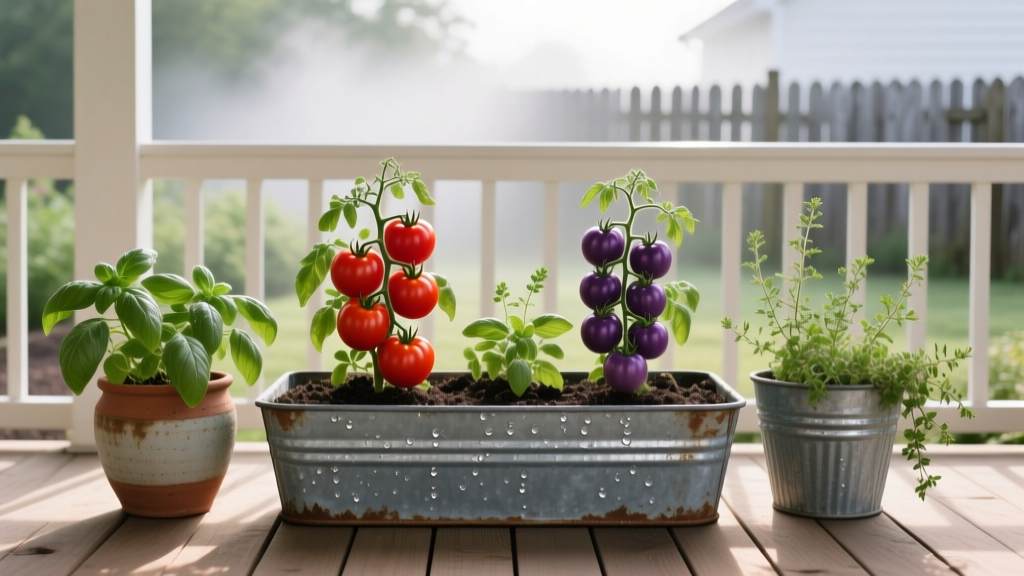
Porch Heirloom Tomato Container Garden
The first warm weekend of summer hits, and your porch becomes the best room in the house—until you notice the problem: that bright, inviting patch of sun is also a dead zone for greenery. Maybe your steps are too narrow for a traditional bed, maybe the landlord won’t allow digging, or maybe the only “yard” you have is a concrete rectangle that bakes by noon. You still want the taste of a real tomato—sweet, aromatic, messy—instead of the watery grocery kind. The good news is that a porch is exactly the kind of space where heirloom tomatoes can shine, if you design the layout like a small outdoor room and treat every inch as intentional.
This project walks you through a porch container garden plan that looks designed (not improvised), yields heavily, and stays manageable. Think of it as arranging furniture: you’re creating circulation, balancing weight and height, and placing your “stars” (the heirloom tomatoes) where they’ll get the best light and airflow.
Start With the Site: Measure Light, Wind, and Walking Space
Before you buy a single plant, do three quick checks. These decisions determine which heirlooms will thrive, how many plants you can realistically support, and how comfortable your porch will feel once the vines take off.
1) Sunlight hours (the tomato deal-breaker)
Heirloom tomatoes perform best with 6–8+ hours of direct sun. If you’re closer to 5–6 hours, choose smaller-fruited heirlooms and keep expectations realistic. A simple way to measure: note when the sun hits your porch and when it leaves, over two days (one weekday, one weekend) so you don’t miss shading patterns.
For reference, University of Minnesota Extension notes that tomatoes “need full sun,” generally interpreted as at least 6 hours for good production (University of Minnesota Extension, 2021).
2) Wind and heat reflections
Porches can be wind tunnels. Wind snaps stems, dries containers fast, and can make tall cages wobble. Also notice reflected heat: brick walls and light-colored siding can bump temperatures around pots, especially on south- and west-facing porches. Plan for sturdier staking and more frequent watering if your porch is hot and breezy.
3) The “comfortable walkway” rule
Designers think in circulation. Keep a minimum clear path of 30 inches so you can carry a watering can, turn sideways with a harvest basket, and open doors safely. On very small porches, you can squeeze to 24 inches, but it will feel tight once foliage fills out.
Design Principles: Make Containers Look Like a Garden, Not a Storage Area
A porch tomato garden can look either charmingly abundant or like a cluster of random buckets. The difference is layout strategy.
Anchor, frame, and repeat
Anchor the design with two larger pots at key “corners” of the porch—near steps or outer edges. Frame the entry and seating area by keeping the tallest plants (indeterminate tomatoes on trellises) away from the door swing. Then repeat pot materials or colors (all terracotta, all black nursery pots inside matching baskets, etc.) to make it cohesive.
Use height intentionally
Tomatoes are naturally tall; make that part of the design. Put indeterminate heirlooms on the back line (against railing or wall), and keep compact companions near the front where you’ll brush by them. If your porch has a railing, it can act like a “green backdrop” with trellis netting or a cattle panel cut to fit.
Plan for airflow to prevent disease
Tomato leaves packed too closely stay wet longer after rain or watering. Good airflow reduces disease pressure. Aim for 18–24 inches between tomato containers (rim to rim) if possible. And keep foliage from pressing against walls.
“Design is not just what it looks like and feels like. Design is how it works.” — Steve Jobs (often cited in design education; relevant here because a porch garden must function as a walkway, a seating zone, and a production space)
Three Layout Strategies That Work on Real Porches
Choose the layout that matches how you actually use the space. Tomatoes are generous, but they don’t forgive being shoved into a corner with poor light.
Layout A: The “Rail-to-Rail” Sun Strip (best for long, narrow porches)
Best for: a porch around 4 ft x 12 ft with sun along the outer edge. Place a line of tall tomatoes along the railing, leaving the house side open for walking. Use railing ties or a freestanding trellis so plants don’t lean into the path.
Spacing plan: three indeterminate tomatoes in 20–25 gallon containers, each separated by 24 inches, plus two compact companion pots tucked between for basil or marigolds.
Layout B: The “Doorway Frame” (best when you need the center clear)
Best for: porches where the door is used constantly or opens outward. Place two “anchor” tomato pots on either side of the steps (or porch corners), then add one or two more along the sunniest side wall.
Design trick: keep anything taller than 5 feet at least 18 inches away from the door swing to avoid daily irritation.
Layout C: The “Micro-Patio” (best for renters with a chair + small table)
Best for: a compact porch, roughly 6 ft x 8 ft, where you still want a seat. Put one indeterminate heirloom on a sturdy trellis in the brightest corner, and choose two container-friendly heirlooms (dwarf or determinate) for the opposite side. The center stays open for a chair.
Reality check: three tomatoes is a lot of foliage for an 6x8 space; choose varieties bred for containers and prune consistently.
Container and Support Choices (with Costs You Can Actually Budget)
Tomatoes are heavy feeders and heavy drinkers. A small pot can look fine in May and become a daily emergency in July. These numbers keep the project stable.
Container sizes that won’t punish you later
- Indeterminate heirlooms: minimum 20 gallons (a 24-inch diameter pot is common).
- Determinate or dwarf heirlooms: 10–15 gallons can work well.
- Grow bags: choose 15–25 gallon with handles; they drain well and are renter-friendly.
Typical costs (U.S.): a sturdy 20–25 gallon resin pot often runs $25–$45; fabric grow bags $6–$12 each; a heavy-duty tomato cage $8–$15; and a bagged potting mix setup per large container can land around $18–$30 depending on brand and whether you add compost.
Supports that look good and stay upright
On a porch, support isn’t optional—it’s safety. A top-heavy tomato cage that tips can break branches and spill soil. For indeterminate heirlooms, consider:
- 7-foot trellis (metal or wood) zip-tied to the railing
- Florida weave on two sturdy stakes per pot cluster
- String trellis from an overhead beam (if your porch structure allows and you have permission)
Heirloom Tomato Variety Picks (and What Each One Is Good At)
Pick varieties the way a designer picks materials: based on performance in the conditions you actually have. On porches, heat swings, wind, and container limits favor certain heirlooms.
Best indeterminate heirlooms for a sunny porch (big flavor, big vines)
- Brandywine (Sudduth’s strain): legendary flavor; slower and heavier-feeding, so it’s best when you can give it 8 hours of sun and a 25-gallon container. Worth it for slicing.
- Cherokee Purple: rich, smoky-sweet; tends to perform well in heat if watered consistently. Great “centerpiece” tomato for a designer porch garden because the fruit color looks dramatic against foliage.
- Black Krim: strong flavor; does well in warm summers but benefits from consistent moisture to avoid cracking.
Container-friendly heirlooms (smaller plant, reliable yield)
- Principe Borghese: small, prolific, excellent for drying; can be grown in a 10–15 gallon pot and still look tidy.
- Green Zebra: medium-sized fruit, eye-catching stripes, good for salads; productive with good sun, and visually adds “designer color” to the harvest.
- Rose de Berne: productive, smooth pink fruits; a nice choice when you want fewer cracks and a more polished look in the bowl.
Two “balcony-friendly” alternatives (technically not classic heirlooms, but practical)
If your porch gets only 5–6 hours of sun, consider slipping in one high-performing compact plant to keep morale high:
- ‘Sungold’ (hybrid): famously productive cherry tomato.
- ‘Bush Early Girl’ (hybrid): compact and earlier than many heirlooms.
If you want to stay strictly heirloom/open-pollinated, keep your “backup” plant as an open-pollinated cherry like Gardener’s Delight (not always labeled heirloom, but widely grown and reliable).
Comparison Table: Match Variety Type to Your Porch Reality
| Tomato type | Typical container size | Support height | Sun needs | Best for |
|---|---|---|---|---|
| Indeterminate heirloom slicer (e.g., Brandywine) | 20–25 gallons | 6–7 ft trellis/cage | 7–9 hours | Maximum flavor, fewer plants with bigger payoff |
| Indeterminate heirloom “dark” types (e.g., Cherokee Purple) | 20 gallons | 6–7 ft support | 6–8 hours | Heat-tolerant feel, showpiece harvest |
| Compact/determinate (e.g., Principe Borghese) | 10–15 gallons | 3–5 ft cage | 6–8 hours | Small spaces, tidy look, easy maintenance |
| Cherry tomatoes (open-pollinated or hybrid) | 10–20 gallons | 5–7 ft support | 6–8 hours | High yields, best “success insurance” |
Step-by-Step Setup: Build the Porch Tomato Garden Like a Project
Do this in a weekend, and you’ll avoid the midseason “why is this collapsing?” moment.
- Sketch the porch to scale. A simple drawing with measurements is enough. Mark the door swing and the 30-inch walkway zone.
- Mark the sunniest line. That’s where your indeterminate heirlooms go. Place the tallest supports first, before pots, so you’re not wrestling cages over plants.
- Choose containers and add saucers only if needed. On wood porches, use saucers or pot feet to protect boards—but don’t let pots sit in standing water.
- Fill with potting mix, not garden soil. For each 20-gallon pot, plan on roughly 2.5–3 cubic feet of mix. Blend in compost (about 20–30% by volume) for fertility and water-holding.
- Plant deep and sturdy. Bury tomatoes so at least 6–10 inches of stem is underground (remove lower leaves). This encourages stronger rooting.
- Water thoroughly and mulch the surface. A 1–2 inch layer of straw or shredded bark reduces evaporation and keeps soil splash (disease risk) down.
- Add labels and a feeding calendar. It sounds fussy, but it prevents overfeeding and helps you learn which heirlooms earn a permanent spot.
Colorado State University Extension emphasizes consistent watering for tomatoes to help prevent problems like blossom-end rot (Colorado State University Extension, 2023). Container gardens exaggerate inconsistency, so this is one place where precision pays off.
Plant Pairings That Help (and Keep the Design Beautiful)
Tomatoes are the headline, but companions are the stage lighting. They fill gaps, soften the look of cages, and can reduce pest pressure or improve harvest convenience.
- Basil (‘Genovese’ or ‘Prospera’): place one basil pot near each tomato cluster. You’ll actually use it because it’s within arm’s reach of your harvest bowl.
- French marigold (‘Tangerine Gem’): small, tidy, and cheerful. Tuck into the front edge to visually “finish” the planting.
- Trailing nasturtium (‘Alaska’ mix): use one pot at the edge of the porch so it can spill; it adds a designed softness and is edible.
- Chives or green onions: compact and useful, especially if you’re tight on space.
Avoid overcrowding the tomato pot itself. One tomato per container is the clean, designer choice for health and yield.
Real-World Scenarios: How This Design Adapts
Scenario 1: The renter with a strict “no stains, no mess” porch rule
You can still grow heirlooms without wrecking the deck. Use fabric grow bags on boot trays or large saucers, and set them on pot feet for airflow. Choose two 20-gallon grow bags for indeterminates plus two 10-gallon companions. Keep mulch neat and sweep weekly. If your landlord worries about water runoff, switch to a watering can instead of a hose to control spills.
Scenario 2: The windy second-floor porch that dries out fast
Design for stability first: heavier containers or double-bagging grow bags inside decorative outer pots. Use a trellis tied to the railing at two points (top and mid-rail). Choose varieties with slightly smaller fruit load per cluster (or be ready to prune). Add a windbreak: a row of tall grasses in narrow planters can reduce gusts without shading tomatoes too much.
Scenario 3: The porch with only 6 hours of sun and a family that wants tomatoes for sandwiches
Use one “statement” heirloom slicer in the sunniest corner (Cherokee Purple or Black Krim), and then dedicate the other main pot to a productive cherry (open-pollinated if you prefer) for volume. You’ll harvest enough for snacking and salads even when the slicer is slower. Keep the layout clean and airy, and don’t overplant extras that steal light.
Scenario 4: The homeowner who wants a designed look from the street
Match containers (three identical pots reads intentional). Use a repeated vertical element (three matching trellises). Underplant the front edge with a consistent band—marigolds or basil in identical smaller pots. This creates a “rhythm” that looks like a real installation rather than a temporary summer project.
Budget Options and Smart DIY Alternatives
You can build this garden at different price points without sacrificing plant health.
Lean budget (practical, not precious)
- Use 15–20 gallon grow bags instead of ceramic.
- DIY trellis from 7-foot furring strips and garden twine.
- Buy smaller transplants (3–4 inch pots) to save money.
A workable lean setup for 3 tomato plants might land around $80–$140, depending on how many materials you already have (trays, ties, leftover potting mix).
Mid-range (designed and durable)
- Three matching 20–25 gallon resin pots
- Metal trellises or heavy cages
- Quality potting mix + compost + slow-release organic fertilizer
Expect roughly $180–$350 for a cohesive, long-lasting porch installation.
DIY upgrades that look high-end
- Slip nursery pots into matching woven baskets (with a hidden saucer).
- Paint simple wood trellises matte black for a modern look.
- Add a narrow “utility strip” behind pots: a slim shelf for pruners, ties, and a watering wand.
Maintenance Expectations: What You’re Signing Up For
Container heirloom tomatoes reward attention. They don’t require constant fussing, but they do require consistency.
Weekly time commitment
Plan on 45–90 minutes per week total for a 3–4 plant porch garden, not counting daily watering during hot spells. In peak summer heat, you may water once daily, and during heat waves sometimes twice (morning + late afternoon) depending on pot size and wind.
Simple weekly routine
- Check moisture by finger test 2 inches down.
- Train vines to supports and remove rubbing stems.
- Prune lightly (especially indeterminates): remove suckers below the first flower cluster if you want fewer, larger fruit and better airflow.
- Fertilize every 7–14 days once flowering begins, using a tomato-friendly fertilizer (follow label rates; more is not better).
- Inspect for pests (aphids, hornworms). Hand-pick early; porch plants are easy to scout.
Seasonal tasks that keep the porch looking sharp
- Early season (planting to first flowers): focus on root growth—steady water, no overfeeding nitrogen.
- Midseason (heavy fruit set): increase watering consistency and add support ties so branches don’t snap.
- Late season (cool nights): top indeterminate vines about 4 weeks before your expected first frost so the plant ripens existing fruit instead of making new flowers.
If you’re curious about container specifics, Penn State Extension discusses how container gardens dry quickly and need more frequent watering than in-ground beds (Penn State Extension, 2020). That’s the main “porch tax”—but it’s also why porch gardens are so controllable.
Small Design Details That Make the Whole Thing Feel Intentional
Once the plants hit their stride, your porch will look lush no matter what. These finishing moves make it feel designed from day one.
Hide utilities. Keep fertilizer, gloves, and ties in a small deck box or a lidded galvanized bin. Visual clutter is what makes container gardens feel messy.
Light the harvest zone. A simple solar string light overhead makes evening watering pleasant and highlights the plants as living décor.
Keep a harvest bowl near the door. This changes behavior: you pick more often, which keeps plants producing and reduces pest issues from overripe fruit.
By the time the first Cherokee Purple blushes and your basil is thick enough to pinch, the porch stops being a leftover space and becomes a small edible room—one that smells like tomato leaves when you brush past, gives you shade from the foliage, and hands you dinner on the way inside. That’s the real win of a porch heirloom tomato container garden: it’s productive, yes, but it’s also a daily experience you designed on purpose.