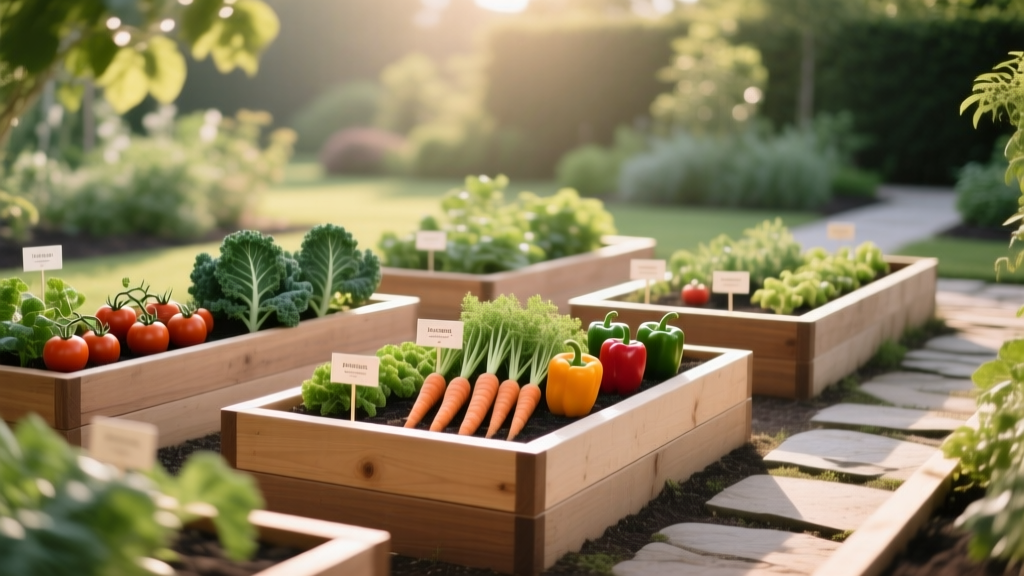
Raised Bed Vegetable Garden Layout: Zones 3–9 (2026)
Why Layout Matters in Raised Bed Gardens
A well-planned raised bed layout can increase your yield by 30-50% compared to random planting. The key factors are bed dimensions, plant spacing, sunlight orientation, and accessibility.
Ideal Raised Bed Dimensions
For most vegetable gardens, beds that are 4 feet wide by 8 feet long and 12-18 inches deep work best. The 4-foot width lets you reach the center from either side without stepping on soil. Length can vary, but 8 feet keeps lumber waste minimal.
North-South Orientation
Align your beds north to south for maximum sun exposure. Tall plants like tomatoes and corn go on the north end so they don't shade shorter crops. Place low-growing herbs and lettuce on the south end.
Spacing Guidelines by Crop
- Tomatoes: 24-36 inches apart, 1 per square foot in intensive planting
- Peppers: 18-24 inches apart
- Carrots: 2-3 inches apart, 12-16 per square foot
- Lettuce: 6-8 inches apart
- Beans (bush): 4-6 inches apart
- Zucchini: 24-36 inches apart, 1 plant per 4 square feet
Companion Planting Layout Tips
Pair tomatoes with basil and marigolds to repel pests. Plant beans near corn (the Three Sisters method). Keep onions and garlic away from beans and peas. Use nasturtiums as trap crops around bed edges.
Crop Rotation in Small Spaces
Divide each bed into 4 sections and rotate crop families yearly: nightshades (tomatoes, peppers), brassicas (broccoli, kale), legumes (beans, peas), and root vegetables (carrots, beets). This prevents soil-borne disease buildup.
Path and Access Planning
Leave 2-3 foot paths between beds for wheelbarrow access. Use wood chips, gravel, or stepping stones. If space is tight, 18-inch paths work for foot traffic only.
Zone-Specific Adjustments
- Zones 3-4: Use shorter beds (10-12 inches) that warm faster in spring. Focus on cold-hardy crops.
- Zones 5-7: Standard 12-18 inch beds work well. Add mulch in summer to retain moisture.
- Zones 8-9: Deeper beds (18-24 inches) help with water retention in hot summers. Add shade cloth structures.