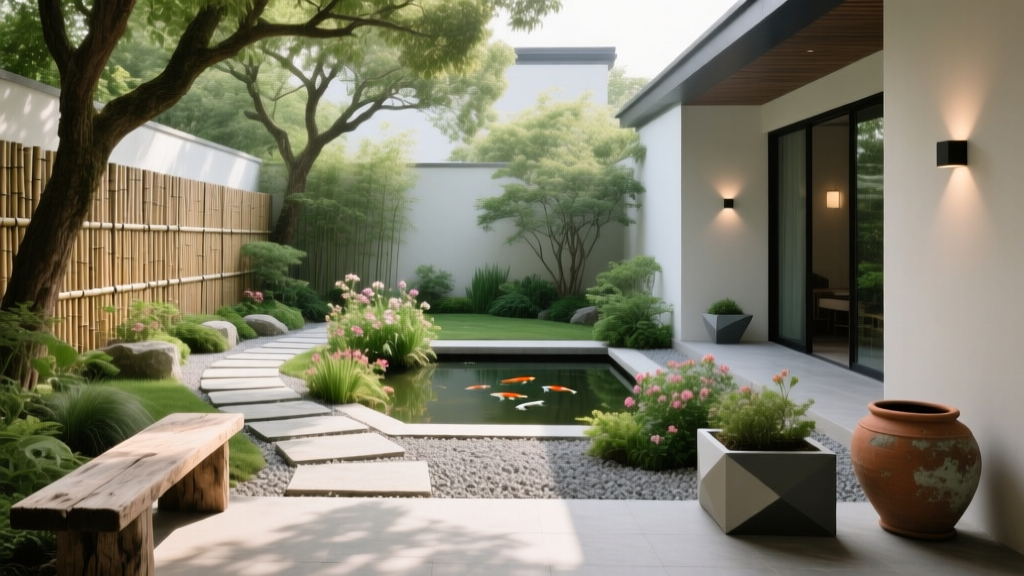
Courtyard Secret Garden Transformation
The first time I stepped into this courtyard, the potential was hiding in plain sight. It measured just 12 ft x 18 ft, boxed in by warm brick walls on three sides and a sliding door on the fourth. The problem wasn’t a lack of space—it was the feeling of exposure. Neighbors’ windows looked straight down. The existing paving baked in afternoon heat, and every chair felt like it was placed in a hallway rather than a retreat. The brief was simple: “Make it feel like a secret garden, but we still need a dining spot and somewhere to read.”
If you’re working with a small courtyard—rental or owned—this is where thoughtful layout does the heavy lifting. You don’t need more square footage. You need layers, a few carefully chosen plants, and a plan for how people move through the space.
Start with the feeling: privacy, shade, and a path that slows you down
A “secret garden” is less about cramming in plants and more about controlling sightlines. In a courtyard, walls amplify sound and light, so small choices read bigger. I design these spaces with three goals: (1) break direct views, (2) create a cool microclimate, and (3) add a sense of discovery—one step at a time.
Measure the microclimate before you design
Courtyards can swing from shade to glare depending on orientation and wall height. Spend one day taking notes: morning, midday, late afternoon. Most courtyards I see get 4–6 hours of sun in summer, but only 2–3 hours in winter if surrounding structures are tall. That difference determines whether you choose lavender and roses or ferns and hydrangeas.
Also check wind. Courtyards funnel gusts; a single trellis panel can turn that into a gentle breeze. And if you can, note runoff after rain—puddles telegraph where you’ll want drainage gaps or containers on feet.
Layout strategy: a “room within a room”
In 12 ft x 18 ft, you can still fit two experiences: a social zone and a retreat zone. The trick is to avoid splitting the courtyard down the middle (which feels like a corridor). Instead, nest the quiet seat behind a green screen so it’s partially hidden from the door.
- Dining zone: 6 ft x 8 ft near the house for easy serving and lighting access.
- Garden lounge nook: 5 ft x 6 ft in the far corner, screened with tall planting.
- Circulation: keep a clear path of 36 inches minimum for comfortable movement (especially with a tray or watering can).
Use vertical planes to create secrecy (without losing floor space)
Vertical gardening is the courtyard designer’s best friend. A slim structure makes privacy and supports plants, while leaving the paving open.
Plan for these vertical elements:
- Trellis panel: 6 ft tall x 3 ft wide, mounted 2–3 inches off the wall for airflow.
- Evergreen screen in containers: 18–24 inch wide planters holding narrow shrubs or clumping bamboo.
- Overhead hint: a single sail shade or pergola slat section to soften the “box” feeling.
“The most successful small gardens don’t try to show everything at once; they use partial screening and borrowed views to create a sense of depth.” — Royal Horticultural Society design guidance (RHS, 2020)
Hardscape that stays cool and flexible
Hardscape is where budgets can spiral, so I treat it like a capsule wardrobe: a few pieces that work with everything. If your courtyard already has paving, you don’t always need to rip it out—often you just need to interrupt it.
Option A: Keep existing paving and “green it up”
If you have concrete or pavers in decent condition, keep them and add:
- Large outdoor rug: defines a room instantly; expect $80–$200.
- Planter clusters: use 3–5 containers of varying heights to create a living edge.
- Gravel strip: a 12-inch border of gravel along one wall can improve drainage and provide a planting zone for pots.
Option B: Add a small deck tile “platform”
Interlocking deck tiles are renter-friendly and visually warm. A 6 ft x 8 ft dining platform (48 sq ft) usually needs about 48 tiles (12" x 12"). Costs range from $2.50–$6 per sq ft, or roughly $120–$288 plus edging. It also solves the “chair legs wobble on pavers” problem.
Lighting: make it feel like a hideaway after dark
A courtyard can feel like a stage if overhead light is harsh. Use low, layered lighting:
- String lights: warm-white, dimmable if possible ($25–$60).
- 2 uplights aimed at foliage to create shadows on the walls ($30–$90 each).
- Solar step/path lights: subtle markers along your 36" path ($20–$50 set).
Warm lighting also supports nighttime use without attracting as many insects as cooler blue-white bulbs. For outdoor safety and placement, follow guidance for exterior lighting and electrical protection (U.S. Department of Energy, 2023).
Planting design: layers that read lush in a tight footprint
For a secret garden look, think in layers: evergreen structure, flowering mid-layer, and soft edges. In a courtyard, plant choice should prioritize: (1) narrow habits, (2) tolerance of reflected heat or shade, and (3) long season interest.
Structure plants (the bones)
These provide year-round privacy and shape. I like using containers so you can reposition while you learn the sunlight pattern.
- Fargesia robusta ‘Campbell’ (clumping bamboo): upright, non-invasive, great for screening in containers. Use a 20–24 inch wide planter; space multiple planters 24–30 inches apart for a continuous screen. Works well in part shade.
- Ilex crenata ‘Sky Pencil’ (Japanese holly): slim, architectural, and more forgiving than boxwood in some regions. One plant per 16–18 inch pot creates vertical rhythm.
- Trachelospermum jasminoides (star jasmine): evergreen climber with fragrance. Train on a trellis; plant one per 18–24 inch container with a support grid.
Flowering and fragrance (the “secret garden” cue)
Fragrance is what makes a courtyard feel personal—walls hold scent. Choose plants that bloom at different times.
- Rosa ‘The Generous Gardener’ (English rose): repeat flowering, soft pink, excellent scent. Best with 6+ sun hours but can manage with 4–5 if airflow is good. Give it a trellis and prune to keep it narrow.
- Hydrangea macrophylla ‘Endless Summer’: for courtyards with 3–5 sun hours (morning sun ideal). Big impact in a container; keep evenly moist.
- Lavandula angustifolia ‘Hidcote’: compact, fragrant, drought-tolerant. Needs sun; plant in a gritty mix and a pot with drainage.
- Sarcococca confusa (sweet box): shade-tolerant evergreen with winter fragrance—excellent near the door where you’ll notice it most.
Soft edge and ground layer (to erase hard lines)
Courtyards can feel hard-edged. The ground layer is your softener—spilling, mounding, and threading between pots.
- Heuchera ‘Caramel’: warm foliage that glows in shade; great in containers and edges.
- Hakonechloa macra ‘Aureola’ (Japanese forest grass): movement and softness in part shade; place near seating so it brushes the path.
- Thymus serpyllum (creeping thyme): for sunny courtyards; tuck into joints or shallow bowls for scent when brushed.
- Fern mix (Dryopteris and Polystichum varieties): lush texture for low-light courtyards; pairs beautifully with brick.
Pick the right containers and soil—this is where courtyards succeed or fail
Container planting is the backbone of a flexible courtyard. Go bigger than you think; small pots dry too fast and look fussy. For most shrubs and climbers, I start at 18–24 inch diameter pots.
Cost planning helps here:
- Quality large planter: $40–$120 each (resin/composite is lighter for renters).
- Pot feet: $8–$15 per set to improve drainage and prevent stains.
- Premium potting mix: $12–$25 per 2 cu ft bag; a 24" pot may take 2–3 bags depending on filler.
To reduce soil costs and weight, use a “false bottom”: upside-down nursery pots or a lightweight filler layer in the bottom third. Keep at least the top 12–14 inches as quality mix for roots.
Comparison table: three layout approaches for different courtyards
| Layout approach | Best for | Key elements | Typical cost range | Trade-offs |
|---|---|---|---|---|
| Green screen + nook | Courtyards overlooked by neighbors | Trellis, tall containers, hidden bench | $350–$1,200 | Needs consistent watering for containers |
| Dining platform focus | Entertaining-first households | 6x8 deck tile zone, herb wall, movable pots | $250–$900 | Less “wild” planting density |
| Shade sanctuary | Low-sun courtyards (2–4 hrs) | Ferns, hydrangea, sweet box, water bowl | $300–$1,000 | Flowering options more limited; watch mildew |
Three real-world scenarios (and how I’d solve them)
Different courtyards ask for different solutions. Here are three common ones I’ve designed around—each with practical moves you can borrow.
Scenario 1: Rental courtyard with strict rules (no drilling, no digging)
Design goal: privacy and lushness without altering walls or paving.
Solution: build a freestanding “green spine” using a row of three 24-inch planters. Plant Fargesia ‘Campbell’ in two for height and star jasmine on a freestanding trellis in the middle. Add a slim bistro set on an outdoor rug to define the dining zone. Total spend can stay around $450–$800 depending on planter choice.
DIY alternative: use galvanized stock tanks or food-safe barrels cut in half (line with drainage holes). They often cost $35–$90 each and look intentionally “garden-y.”
Scenario 2: South-facing heat trap (bright sun, reflected heat, pots dry fast)
Design goal: cooler seating and plants that don’t fry.
Solution: add a shade sail (triangular works well in tight rectangles) and shift to heat-tolerant planting. Use lavender ‘Hidcote’, rosemary ‘Arp’, and a compact olive like Olea europaea ‘Little Ollie’ in a large container. Mulch pots with gravel to slow evaporation. Plan watering: in peak summer, containers may need water 3–5 times per week.
Budget note: a good shade sail setup (sail, posts or anchors, hardware) often runs $120–$350 depending on whether you need freestanding posts.
Scenario 3: North-facing courtyard (low light, mossy corners, damp winters)
Design goal: lush and inviting without relying on sun-loving blooms.
Solution: lean into texture and shine. Use Sarcococca confusa near the entrance for winter fragrance, Hydrangea ‘Endless Summer’ where it gets the brightest slice of sky, and a mix of ferns with Heuchera ‘Caramel’ for warm foliage. Add a shallow water bowl (even 16–18 inches wide) to reflect light and create gentle sound when rain hits—instant atmosphere.
Maintenance tip: prioritize airflow—space pots so leaves aren’t pressed against walls. Mildew is more common in still, shaded courtyards (RHS, 2020).
Step-by-step setup: transform a courtyard over a weekend
This sequence keeps decision-making clean and prevents the classic mistake of buying plants before you know where seating goes.
- Clear and measure. Confirm courtyard dimensions and mark a 36-inch path with painter’s tape.
- Place furniture first. Set the dining table/chairs and test walking clearance. Aim for at least 24 inches behind chairs when pulled out.
- Create the screen line. Position tall planters to block direct views from the most overlooked angle (often from upstairs windows). Stand inside and outside to verify.
- Add a trellis element. If you can’t drill, use a freestanding trellis base set inside a heavy planter.
- Group mid-layer plants. Place flowering shrubs and grasses in clusters of 2–3 to look intentional.
- Fill gaps with soft-edge plants. Add heuchera, thyme, or forest grass at the edges of the path and around seating.
- Mulch and water deeply. Water each container until it runs freely, then top with mulch (bark in shade, gravel in sun).
- Light it. Install string lights and two uplights aimed into foliage—not at seating.
Spacing and placement rules that keep it from feeling cramped
In small courtyards, the wrong spacing turns “secret garden” into “clutter corner.” These are my go-to rules:
- Keep a 6–8 inch gap between pots so you can water and rotate plants for even growth.
- One statement plant per zone. Example: an olive (sun) or hydrangea (part shade) as the anchor, then supporting plants around it.
- Repeat materials. If you use black planters, repeat that color at least three times. Repetition reads calm.
- Limit the palette. Choose 2–3 foliage tones (deep green, lime, burgundy) and 1–2 flower colors.
Budget planning and smart DIY swaps
Most courtyard transformations land in one of three budget tiers:
- Lean refresh ($200–$400): rug, 3–4 medium pots, herbs, string lights, a trellis in a container.
- Balanced makeover ($500–$1,200): 6–10 containers (including 2 large), 1–2 shrubs, climber, uplights, upgraded seating.
- High-impact build ($1,500–$3,000): deck tile platform, custom planters, irrigation timer, mature screening plants.
DIY swaps that look professional:
- Use cedar fence pickets to build a simple screen panel—stained dark it disappears behind greenery.
- Self-watering reservoirs: convert large pots using a perforated bucket insert to reduce watering frequency.
- Gravel mulch instead of decorative stone slabs—lighter, cheaper, and easier to adjust.
Maintenance expectations: what it really takes to keep the secret garden lush
A courtyard garden rewards consistency more than brute force. Plan on 30–60 minutes per week from spring through early fall, mostly watering, deadheading, and quick checks for pests.
Seasonal rhythm:
- Spring (1–2 hours/month): refresh compost top-dress, slow-release fertilizer for containers, prune jasmine and roses lightly to shape.
- Summer (30–60 min/week): water deeply; deadhead roses; trim fast growers to keep the path at 36 inches clear.
- Fall (1–2 hours total): remove tired annuals, cut back grasses, check drainage before winter rains.
- Winter (15 min/week): water evergreens during dry spells, brush leaves off the soil surface, protect tender pots from freeze-thaw with feet and insulation if needed.
If you want to reduce watering effort, consider adding a simple drip line with a battery timer. Basic kits often cost $35–$90 and can cut container stress dramatically during heat waves.
Two sample plant palettes you can copy
Palette A: Part-sun “fragrant retreat” (4–6 sun hours)
Use this if you get solid morning or midday light.
- 1x Rosa ‘The Generous Gardener’ on a trellis
- 2x Lavandula ‘Hidcote’ in 12–14" pots
- 1x Ilex crenata ‘Sky Pencil’ for vertical structure
- 3x Heuchera (mixed varieties) for foliage color
- 1x Thymus serpyllum to soften edges
Palette B: Shade “green room” (2–4 sun hours)
Use this if sunlight is limited and you want lush texture.
- 1x Sarcococca confusa near seating/door
- 1x Hydrangea ‘Endless Summer’ in a 20–24" pot
- 3–5x Ferns (Dryopteris/Polystichum mix)
- 2x Hakonechloa ‘Aureola’ for movement
- 2–3x Heuchera ‘Caramel’ for warm contrast
As the planting fills in, the courtyard changes character: walls soften, sound becomes quieter, and the space feels deeper than its measurements. The final step is the simplest—place the chair in the nook, sit down, and look back toward the door. If you can’t see everything at once, you’ve done it right. Your courtyard doesn’t need to be bigger to feel like a secret garden; it just needs a plan that turns passing-through into staying-awhile.
Sources: Royal Horticultural Society (RHS), 2020. U.S. Department of Energy, 2023.