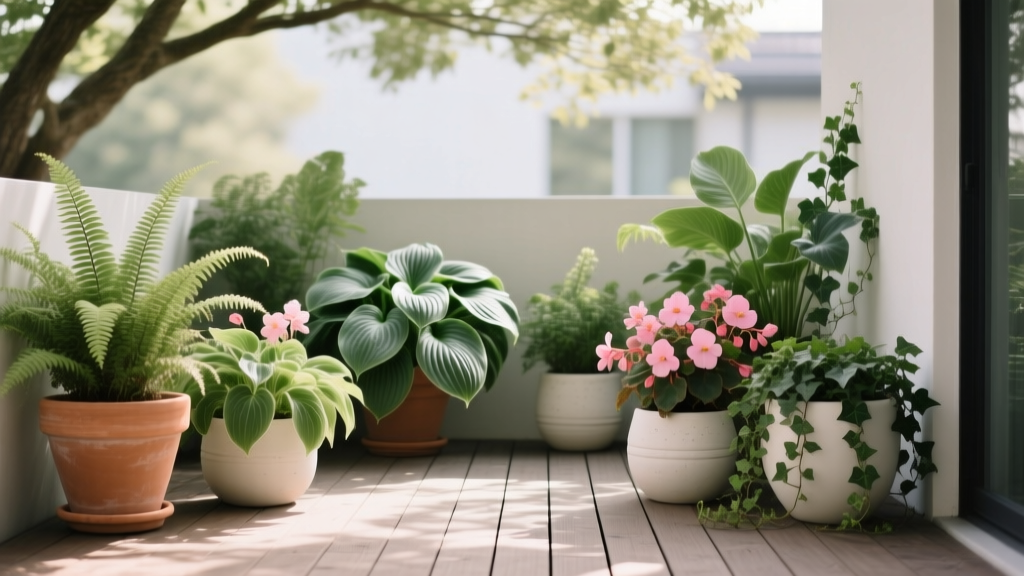
Shady Terrace Plant Combinations
The terrace looks perfect on paper: a private outdoor room with enough space for a bistro set, a few pots, and your morning coffee. Then reality shows up at 9 a.m.—the neighboring building throws a long shadow, the rail blocks light, and your “sun-loving” herbs sulk in slow motion. If your terrace gets that cool, dim light for most of the day, you’re not out of options. You just need plant combinations designed for shade, plus a layout that makes the most of every bright edge and reflected surface.
I’m going to walk you through a practical design approach I use for shady terraces—how to map the light, choose containers, and build plant groupings that look intentional (not like a rescue mission). Along the way, you’ll get specific varieties that perform in low light, spacing and pot dimensions, and a few real-world layouts you can adapt even if you’re renting.
Design principles for a terrace that doesn’t get much sun
Start with a light map (and be honest about the hours)
“Shade” can mean many things. Before you buy a single plant, spend one weekday and one weekend day doing a quick light check. Note where direct sun hits (if at all), and for how long.
Use these categories as your baseline:
- Deep shade: 0–1 hour of direct sun, mostly ambient sky light.
- Partial shade: 2–4 hours of sun, often as a short burst in morning or late afternoon.
- Bright shade: little direct sun, but open sky exposure and reflective light from walls.
Most shade-tolerant ornamentals prefer bright shade and will tolerate partial shade. Deep shade is doable too, but your palette narrows and growth slows. The good news: containers let you chase the best light pockets by shifting pots seasonally or even weekly.
Build height in layers so the terrace reads like a “room”
Shade terraces can look flat if everything is low. I like a simple three-layer structure:
- Anchor layer (tall): one or two vertical plants (or a narrow trellis) that create privacy and a focal point.
- Body layer (mid): mounded foliage and flowering shade plants that fill visual space.
- Edge layer (low/trailing): spillers that soften container rims and rail planters.
Even on a small terrace—say 1.5 m x 3 m (about 5 ft x 10 ft)—this structure makes the planting feel designed rather than random.
Choose containers that protect roots and make watering predictable
In shade, the biggest container mistake is going too small. Plants in low light still need consistent moisture, and small pots swing between “too wet” and “bone dry” quickly. For most combinations below, aim for:
- Minimum 35–45 cm (14–18 in) diameter for mixed plant bowls.
- Minimum 30 cm (12 in) depth for ferns, hellebores, and small shrubs.
- 60–80 cm (24–32 in) long troughs for layered mixes along a wall or railing.
Cost guide (typical retail ranges): a quality resin or lightweight fiberglass pot in the 45 cm size is often $40–$120, while a basic plastic nursery pot may be $8–$18. If you’re renting, you can “dress up” nursery pots by slipping them into inexpensive baskets or lightweight cachepots—just make sure water can drain.
Use reflectors, not miracles
Shade-friendly plants don’t need blazing sun, but they do respond to increased brightness. You can brighten a shady terrace without changing the architecture:
- Paint a wall or privacy screen a light color (even a removable outdoor fabric panel helps).
- Add a mirror or reflective metal panel where it won’t create glare for neighbors.
- Choose pale containers (cream, stone, light gray) to bounce light upward.
One small upgrade I’ve seen make a noticeable difference: a 1 m x 2 m light-colored outdoor rug near your containers. It reflects light into the lower foliage and makes the space feel brighter.
Layout strategies that make shade look lush (not sparse)
The “L-shape” layout for corners and privacy
If your terrace has one corner that feels exposed, place your tallest anchor plant in that corner, then run two medium containers outward in an L. This creates a planted “backrest” for your seating area and hides awkward rail geometry.
Ideal spacing: keep 10–15 cm (4–6 in) between pots so you can water comfortably and reduce mildew from overcrowding.
The “gallery wall” layout for narrow terraces
On a long, skinny terrace (common in apartments), think like a gallery: plants line one side in a rhythm of heights. Use repeated container shapes, then vary leaf texture and color. You’ll get a designed look without needing sun-dependent blooms.
Plan a walking clearance of at least 75 cm (30 in) so the terrace still functions as a passageway.
Rail planters: use them as the edge layer, not the whole garden
Rail planters dry out fast and can get windy. They’re excellent for trailing plants and small accents, but I rarely rely on them for the main planting mass. If you do use them, aim for boxes at least 20 cm (8 in) deep and line them with coconut coir or a reservoir insert for steadier moisture.
Plant selection: shade combinations that actually work in containers
Before we get specific, here’s the key principle: in shade, foliage is the show. Flowers are a bonus, not the main event. You’re choosing plants for leaf size, sheen, variegation, and how they layer in a pot.
Also note: many “shade” plants still want some brightness. The Royal Horticultural Society notes that most plants grow best with at least some light, and shade can range from dappled to deep conditions (RHS, 2023). Use that as your reminder to place the most light-hungry shade plants (like heucheras with bold color) at the brightest terrace edge.
Combination 1: Evergreen calm (hosta + fern + sweet woodruff)
Best for: bright shade to partial shade (about 2–4 hours gentle sun, ideally morning).
Container: one 45 cm (18 in) bowl or a 70 cm (28 in) trough.
- Hosta ‘Halcyon’ (blue-green, thick leaves resist slug damage better than thin-leaf types). Plant 1 in the center/back.
- Japanese painted fern (Athyrium niponicum var. pictum) for silver and burgundy tones that glow in shade. Plant 1–2 around the hosta.
- Sweet woodruff (Galium odoratum) as a fragrant, low edging/spiller. Plant 2–3 small starts near the rim.
Spacing: hosta needs about 40–60 cm of room long-term; in a container, allow at least 25–30 cm around it and be ready to divide every 2–3 years.
Why it works: the hosta gives mass, the fern gives movement and reflective color, and sweet woodruff softens the edge and covers soil to reduce evaporation.
Combination 2: Moody color (heuchera + hellebore + ivy)
Best for: bright shade (ideally 1–3 hours of sun, or strong reflected light).
Container: 40–50 cm diameter pot, 35 cm deep if possible.
- Heuchera ‘Obsidian’ or ‘Caramel’ (choose one for strong foliage color). Plant 2.
- Helleborus x hybridus (Lenten rose) for winter-to-spring flowers and leathery evergreen leaves. Plant 1 as the anchor.
- Hedera helix ‘Glacier’ (variegated ivy) as a controlled spiller—keep it trimmed so it doesn’t dominate. Plant 1 near the rim.
Why it works: hellebores give structure and seasonal flowers when the terrace needs life most, heuchera provides long-season color, and ivy adds a trailing line that makes the container feel full.
Important note: hellebores prefer consistent moisture but not soggy soil. Use a chunky potting mix and ensure the container has a clear drainage hole.
Combination 3: Soft and bright (hydrangea + brunnera + lamium)
Best for: partial shade (around 3–4 hours sun, preferably morning).
Container: a larger pot, at least 50–60 cm (20–24 in) wide and 40 cm deep.
- Hydrangea macrophylla ‘Endless Summer’ (compact habit; flowers on old and new wood in many climates). Plant 1.
- Brunnera macrophylla ‘Jack Frost’ (silver leaves brighten shade dramatically). Plant 2 around the hydrangea.
- Lamium maculatum ‘White Nancy’ as a trailing brightener. Plant 2–3 plugs near the edge.
Why it works: hydrangea becomes your living privacy screen, brunnera reads like “light” in leaf form, and lamium spills to hide pot edges. This combination is also forgiving if you miss a watering—more forgiving than ferns in hot weather, at least.
Quick comparison: anchor plant options for shady terraces
| Anchor plant | Best light | Container size (minimum) | Visual role | Notes |
|---|---|---|---|---|
| Helleborus x hybridus | Bright shade | 40 cm wide x 35 cm deep | Evergreen structure + winter blooms | Slow-growing; hates waterlogging |
| Hydrangea macrophylla (compact varieties) | Partial shade (3–4 hrs sun) | 55 cm wide x 40 cm deep | Privacy + summer flowers | Needs regular water; protect from harsh afternoon sun |
| Fatsia japonica | Shade to partial shade | 50 cm wide x 40 cm deep | Bold tropical look | Excellent in shade; can get large over time |
| Hosta (large varieties) | Bright shade to partial shade | 45 cm wide x 35 cm deep | Full foliage mound | Watch for slugs; thicker leaves help |
Step-by-step: setting up a shady terrace planting (designer workflow)
This is the order that prevents the two most common problems: overbuying plants and ending up with pots that are too small.
- Measure your usable footprint. Sketch the terrace to scale. Mark doors and a clear path of 75–90 cm (30–36 in).
- Track sunlight for two days. Write down direct sun windows (even 30 minutes counts). Note the brightest wall (reflected light matters).
- Pick an anchor point. Choose one corner or wall section where your tallest pot will live (usually opposite the door for the best reveal).
- Choose 2–4 container sizes max. Repetition looks intentional. Example: two 50 cm pots + three 45 cm bowls + two rail boxes.
- Buy potting mix with structure. For most shade containers, mix in about 20–30% pine bark fines or perlite for airflow (especially important in shade where soil stays moist longer).
- Arrange empty pots first. Move them around until the layout feels balanced from inside your living room (that’s where you’ll see it most).
- Plant in layers. Anchor plant goes in first, then mounders, then spillers near the rim.
- Mulch lightly. A 2–3 cm layer of fine bark reduces evaporation and keeps soil from splashing onto leaves.
- Water deeply once. Then let the top 2–3 cm of soil dry slightly before the next watering to avoid fungus gnats.
Three real-world terrace scenarios (and how I’d plant them)
Scenario 1: Rental balcony, deep shade, strict weight limits
Space: 1.2 m x 2.4 m (4 ft x 8 ft), north-facing, 0–1 hour sun.
Challenge: You need greenery without hauling heavy ceramic pots up stairs, and you can’t install permanent trellises.
Layout move: One tall lightweight pot in the far corner, plus two mid pots staggered along the rail. Add a freestanding tension rod or a removable screen panel for vertical support.
Plant combination:
- Fatsia japonica as the anchor (big leaves read well in shade).
- Asplenium scolopendrium (hart’s tongue fern) for glossy, architectural foliage.
- Carex oshimensis ‘Evergold’ for bright striping that lifts the whole scene.
Budget tip: Use nursery pots inside lightweight cachepots. Expect about $120–$220 total for plants and mix if you buy 1-gallon sizes rather than mature specimens.
Scenario 2: Urban terrace with morning sun and wind tunnels
Space: 2 m x 4 m (6.5 ft x 13 ft), east-facing, 3 hours morning sun, breezy.
Challenge: Wind dries containers, and tall plants can look ragged.
Layout move: Create a low “wind buffer” using a row of troughs along the rail and keep the tallest anchor closer to a wall where it’s protected.
Plant combination:
- Hydrangea ‘Endless Summer’ in a protected corner (big visual payoff in partial shade).
- Brunnera ‘Jack Frost’ for reflective foliage that doesn’t mind cool morning sun.
- Lamium ‘White Nancy’ in rail boxes as a resilient spiller.
Watering expectation: In summer, plan on 2–3 waterings per week in windy conditions, even in shade. A simple watering can plus a moisture meter (often $10–$15) helps prevent overwatering when the surface looks dry but lower soil is wet.
Scenario 3: Shady terrace that needs to feel like an outdoor dining room
Space: 3 m x 3 m (10 ft x 10 ft), bright shade most of the day.
Challenge: You want atmosphere—softness, fragrance, and a sense of enclosure—without blocking airflow.
Layout move: Use two tall anchors to “frame” the dining zone (like green pillars), then fill with medium pots that emphasize texture rather than height.
Plant combination:
- Two hellebores (one on each side of the seating area) for evergreen structure.
- Japanese painted fern repeated in at least two containers to create visual rhythm.
- Sweet woodruff near the seating area for gentle fragrance when brushed.
Design note: Repetition is what makes this feel intentional. When a plant performs in shade, echo it in a second pot rather than collecting ten different “maybes.”
What the research (and pros) say about shade planting
“Right plant, right place is the simplest path to a healthy garden; most problems begin when plants are asked to grow outside their preferred conditions.” — Royal Horticultural Society (RHS), 2023
That principle matters even more on terraces because containers amplify stress: roots heat up, moisture fluctuates, and wind is stronger. Selecting plants that naturally tolerate shade reduces your workload and increases the odds that your terrace looks good from week one through late fall.
For watering and container performance, university extension guidance consistently emphasizes thorough watering and proper drainage in pots to avoid root problems (University of Maryland Extension, 2021). Shade doesn’t eliminate the need for drainage—it increases it, because soil stays damp longer.
Budget planning (and DIY alternatives that still look designed)
A shady terrace can be done on a tight budget if you prioritize structure first and fill in over time.
- Starter budget ($150–$300): 3–4 medium containers (nursery pots in cachepots), potting mix, and a repeatable foliage palette (carex + fern + one anchor plant).
- Mid-range ($350–$700): upgraded containers, one larger anchor shrub (hydrangea or fatsia), and rail planters with spillers.
- Higher investment ($800+): fiberglass pots, larger specimen plants, and a simple drip kit.
DIY upgrade ideas:
- Build a simple slatted screen from wood strips to increase privacy and create a backdrop for plants (often cheaper than buying a premade panel).
- Turn a basic 60–80 cm plastic trough into a “designer” planter by wrapping it in bamboo fencing or reed screening.
- Use divisions: buy a mature hosta or heuchera once, then divide it in year two to populate a second container.
Maintenance expectations (so the terrace stays relaxing)
A well-designed shade terrace should not demand daily attention. Here’s a realistic rhythm:
- Weekly time: plan on 20–40 minutes per week during the growing season for watering checks, dead-leaf cleanup, and quick pruning of spillers.
- Spring: top-dress containers with fresh compost or mix (about 2–3 cm), divide crowded perennials if needed, and apply slow-release fertilizer once.
- Summer: monitor moisture—shade can still dry out in wind; remove yellowing leaves to keep airflow.
- Fall: cut back tired foliage, refresh mulch, and group pots closer to the building for winter protection.
- Winter: evergreens (hellebores, fatsia, ivy) carry the look; water lightly during dry spells when soil isn’t frozen.
If you’re battling fungus gnats (common in shady, moist containers), let the top layer dry slightly between waterings and use a thin layer of horticultural grit on the soil surface to discourage egg-laying.
Putting it all together: a designer’s planting recipe you can copy
If you want one reliable “starter combination” that looks good in almost any bright-shade terrace, do this: a 45–50 cm pot with 1 hellebore, 2 heucheras, and 1 trailing lamium. Repeat it in a second pot across the terrace. Then add one larger anchor (hydrangea for partial shade or fatsia for deeper shade) when budget allows.
The magic in shady terrace design is restraint: repeat strong foliage plants, give them enough soil volume, and place them where the light is best—usually closer to the terrace edge or the brightest wall. Once your containers are doing the heavy lifting, you can add small seasonal accents (a pot of cyclamen in fall, a few spring bulbs tucked into a trough) without rebuilding the whole space.
Your terrace doesn’t need more sun to feel lush. It needs a clear layout, generous containers, and plant combinations that treat shade as a feature—cool, calm, and quietly abundant.
Sources: Royal Horticultural Society (RHS), 2023; University of Maryland Extension, 2021.