Vertical Garden DIY: Build a Living Wall for Under $100 With These 7 Simple Methods
Why Build a Vertical Garden?
Vertical gardens solve the #1 problem urban gardeners face: not enough space. By growing upward instead of outward, you can produce the same yield as a traditional garden in a fraction of the footprint. Plus, living walls improve air quality, insulate buildings, and look stunning.
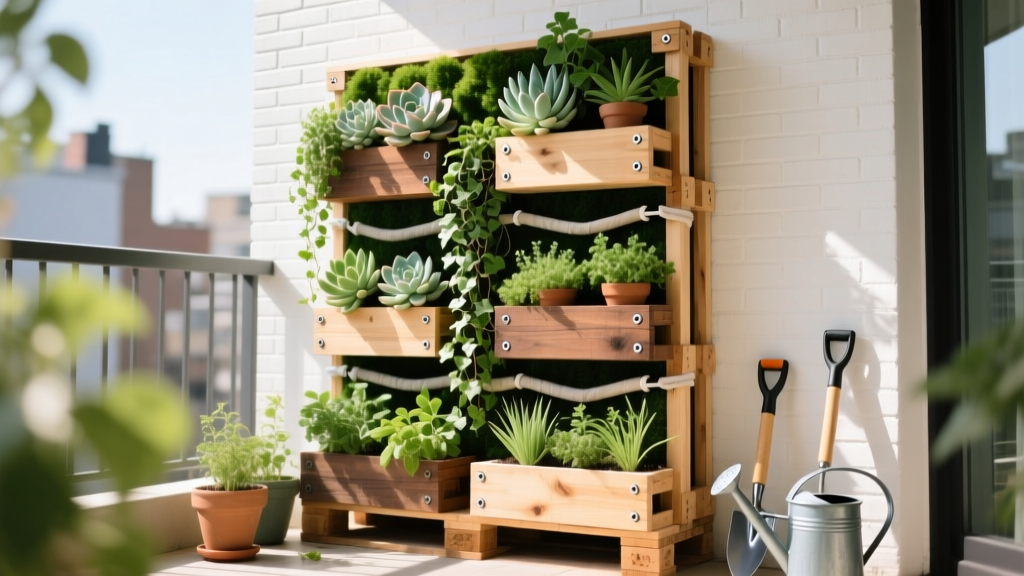
Method 1: Pallet Garden ($15-30)
The classic upcycled vertical garden. Free pallets are everywhere — ask local businesses or check online marketplaces.
Materials Needed:
- 1 heat-treated pallet (look for "HT" stamp, avoid "MB" methyl bromide)
- Landscape fabric ($5)
- Staple gun + staples
- Potting soil (2 cubic feet)
- Plants or seeds
Steps:
- Sand rough edges and remove protruding nails
- Staple landscape fabric across back, bottom, and inside of each slat opening
- Stand upright and fill each pocket with potting soil
- Plant from bottom up — herbs and trailing plants on bottom, compact growers on top
- Water thoroughly and lean against wall at slight angle for 2 weeks until roots establish
Best plants: Lettuce, strawberries, herbs, trailing nasturtiums
Method 2: Gutter Garden ($25-40)
PVC or aluminum gutters mounted on a fence or wall create perfect linear planters.
Materials Needed:
- 3-4 sections of gutter (10ft each, $5-8/section)
- End caps ($2/pair)
- Mounting brackets ($10 for a set)
- Drill + screws
Steps:
- Cut gutters to desired length (3-4 feet works well)
- Attach end caps with silicone sealant
- Drill drainage holes every 8 inches along the bottom
- Mount on fence/wall using brackets, staggering heights 12 inches apart
- Fill with lightweight potting mix and plant
Best plants: Leafy greens, herbs, small strawberries, bush beans
Method 3: Shoe Organizer Garden ($20-35)
An over-the-door shoe organizer becomes an instant 24-pocket vertical garden.
Steps:
- Buy a canvas (not plastic) shoe organizer
- Poke 2-3 drainage holes in each pocket bottom
- Hang on a sunny fence, wall hook, or railing
- Fill each pocket with potting soil
- Plant one plant per pocket
Best plants: Herbs (one type per row), succulents, lettuce mixes
Method 4: Trellis Panel Garden ($30-50)
Cattle panels or concrete reinforcing wire bent into an arch or mounted flat on a wall.
Steps:
- Mount a 16-foot cattle panel ($20) against a wall using U-brackets, or bend into an arch between two raised beds
- Plant climbing crops at the base
- Train vines upward with soft ties as they grow
- Add drip irrigation along the top for hands-free watering
Best plants: Pole beans, cucumbers, peas, small melons, climbing roses
Method 5: Pocket Planter System ($35-60)
Commercial felt pocket planters (like WallyGro or FloraFelt) offer the cleanest look.
Steps:
- Mount the pocket planter on a wall using included hardware (ensure wall can handle wet weight)
- Place a waterproof backing between planter and wall to prevent moisture damage
- Fill pockets with lightweight soil mix (perlite + compost + peat)
- Plant densely — pockets look best when fully covered with foliage
- Install drip line at top row — gravity distributes water downward
Best plants: Ferns, pothos, herbs, compact flowers, edible greens
Method 6: PVC Pipe Tower ($20-40)
A freestanding vertical tower made from a single large PVC pipe with holes cut in the sides.
Steps:
- Get a 4-inch diameter PVC pipe, 4-6 feet tall
- Cut 2-inch holes every 6 inches, alternating sides
- Cap the bottom, add drainage holes
- Place a 1-inch perforated pipe inside for central watering
- Fill with soil mix and plant through the holes
Best plants: Strawberries, herbs, lettuce, small flowers
Method 7: Hanging Basket Wall ($25-45)
Multiple hanging baskets mounted in a staggered grid on a wall or fence.
Steps:
- Install hooks in a grid pattern (3 columns x 3 rows minimum)
- Space hooks 18 inches apart horizontally, 12 inches vertically
- Hang wire or coconut-lined baskets (10-12 inch diameter)
- Fill with lightweight potting mix
- Plant trailing plants at edges, compact growers in center
Best plants: Trailing petunias, strawberries, cherry tomatoes, trailing herbs
Watering Your Vertical Garden
Vertical gardens dry out faster than ground-level beds. Solutions:
- Drip irrigation: Run a drip line along the top — gravity distributes water downward
- Self-watering pots: Use reservoir-based containers for each pocket
- Timer: Set an automatic timer for 2-3 short waterings per day in summer
- Moisture-retaining soil: Mix in water-retaining crystals or coconut coir
Plant Selection Guide for Vertical Gardens
| Category | Top Picks | Notes |
|---|---|---|
| Herbs | Basil, mint, thyme, parsley, cilantro | Shallow roots, frequent harvest |
| Greens | Lettuce, spinach, arugula, kale | Cool-season, fast growing |
| Fruiting | Strawberries, cherry tomatoes, bush beans | Need more sun and support |
| Trailing | Nasturtiums, sweet potato vine, creeping thyme | Great for bottom pockets |
| Flowers | Petunias, lobelia, alyssum | Pollinator-friendly accents |
Maintenance Tips
- Fertilize every 2 weeks with diluted liquid fertilizer (pockets leach nutrients quickly)
- Rotate crops seasonally — pull spent plants and replant immediately
- Check for root binding every 3 months — divide or repot as needed
- Prune aggressively to keep plants compact and productive
- Inspect wall or fence mounting points monthly for water damage or loosening
Final Thoughts
You don't need a big budget or a big yard to grow a beautiful, productive garden. Any of these seven methods can be completed in a weekend for under $100, and they'll transform an unused wall or fence into a living, growing food source. Start with the simplest method (pallet or shoe organizer), learn what grows best in your vertical setup, and scale up from there.