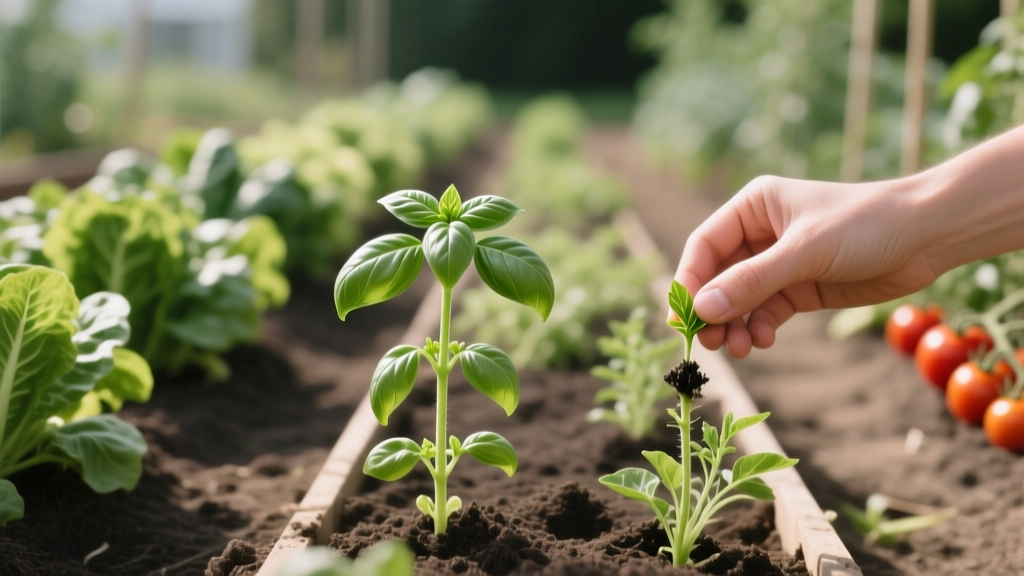
Topping and FIM Techniques for Vegetable Gardens
The first time I topped a pepper plant, I’ll admit it: it felt wrong. I’d babied that seedling for weeks, then I marched out with clean pruners and chopped off its growing tip. Two weeks later, that same plant had turned into a sturdier, wider “V” with more flowering sites—and it stopped flopping over every time we got a gust of wind. If you’ve ever had tomatoes that shoot up fast but set fewer clusters, basil that bolts before you get a decent harvest, or peppers that stay spindly all summer, topping and FIM can be the simplest “one cut” fixes you can make.
These techniques aren’t magic. They’re controlled, intentional stress. Used at the right time, on the right crops, with good watering and nutrition, they can shift a plant from “stretching upward” to “branching outward,” which often means more stems, more flowers, and more harvests in small spaces.
But used carelessly—too late, too early, or on the wrong vegetable—you can stall growth, invite disease, or reduce yields. Let’s get practical and grounded about how to do it well.
What topping and FIM actually do (and when they’re worth it)
Most vegetables show apical dominance: the top growing tip produces hormones (especially auxins) that tell the plant, “Keep growing upward; hold side shoots back.” When you remove or damage that tip, the plant redistributes growth hormones and resources to side buds. More side shoots usually means more flowering sites—if light, water, and nutrients keep up.
Topping vs. FIM: the quick difference
- Topping: You remove the entire growing tip cleanly, usually just above a node. This reliably forces two or more side shoots to take over.
- FIM (“FIMming”): You pinch or cut most of the growing tip, leaving a small portion behind. Done right, it can trigger 3–5 new shoots instead of 2, but it’s less consistent.
These techniques are common in plant training systems and are based on well-understood plant physiology. As a general rule, topping is more predictable; FIM is a bit of a gamble but can be useful when you want extra branching without a full stop in vertical growth.
“Pinching (removing the shoot tip) reduces apical dominance and encourages branching, which can increase the number of flowering stems on many herbaceous plants.” — North Carolina Cooperative Extension publication on pinching and branching (2019)
Vegetables that respond well (and ones to leave alone)
Usually good candidates:
- Basil: Classic example—more cuts = bushier plants and delayed flowering.
- Peppers (sweet and hot): Often benefit from early topping for sturdier branching, especially in windy sites.
- Indeterminate tomatoes: Not typically “topped” early like herbs, but can be topped late-season to push ripening and manage height.
- Eggplant: Can branch more with early tip removal in long seasons.
Usually not worth topping/FIM:
- Root crops: Carrots, beets, radishes—don’t. Leaf removal reduces energy going to the root.
- Most corn and onions: Topping does not help yield and can reduce it.
- Many determinate tomatoes: Heavy pruning or topping often reduces total yield because these set fruit in a more “programmed” flush.
For tomato pruning guidance, University of California Agriculture and Natural Resources (UC ANR) notes that indeterminate types can be trained and pruned for structure, while determinate types are generally pruned minimally to avoid yield loss (UC ANR, 2022).
Comparison analysis: topping vs. FIM (and what to expect)
If you like clear trade-offs, here’s how they stack up in a typical home vegetable garden. The “numbers” here reflect practical ranges you’ll see when plants are healthy and growing strongly (warm soil, adequate light, regular water), not hard guarantees.
| Factor | Topping | FIM |
|---|---|---|
| How much growth tip you remove | ~100% of the tip above a node | ~70–90% of the tip (leave a small tuft) |
| Typical new main shoots | 2 (sometimes 3) | 3–5 (sometimes 2, sometimes messy) |
| Growth pause after cut | Often 5–10 days | Often 3–7 days |
| Reliability | High | Medium |
| Best use cases | Structural shaping, preventing legginess, controlled branching | Trying for extra branching when plants are vigorous and you can tolerate variability |
Practical takeaway: If you’re training peppers for sturdiness or basil for steady harvest, topping is the workhorse. If you’re experimenting on a few plants and want maximum branching, try FIM on the strongest individuals—and don’t do it right before a heat wave.
Timing: the “right moment” is most of the battle
The best time to top or FIM is when the plant is actively growing, not stressed. I’m looking for daytime temperatures around 70–85°F (21–29°C), warm nights (ideally above 55°F / 13°C for peppers), and consistent new leaf growth.
General timing by crop (home garden reality)
- Basil: Start topping when plants are 6–8 inches tall and have 3–4 sets of true leaves. Then repeat every 7–14 days as it regrows.
- Peppers: Consider topping when transplants are 8–12 inches tall and have at least 6–8 true leaves. In short seasons, skip topping so they don’t lose time.
- Indeterminate tomatoes: Early topping is rarely needed; instead, train to 1–2 main leaders. Late-season topping is useful about 4–6 weeks before first expected frost to stop new flowers and push ripening.
- Eggplant: In long, warm seasons, tip plants at 10–14 inches to encourage branching; in cool summers, leave them alone.
Step-by-step: how to top (clean and predictable)
You’ll get the best response with clean tools and decisive cuts. Ragged tears heal slowly and invite disease.
- Choose the right stem: Find the main growing tip (the newest cluster of small leaves at the top).
- Locate a node: Identify the leaf pair or side shoot node just below where you want the plant to branch.
- Sanitize your tool: Wipe blades with 70% isopropyl alcohol or a disinfectant wipe, especially when moving between plants.
- Make the cut: Snip ¼ inch above the node (don’t cut flush into the node).
- Water normally: Don’t “drown it to help it recover.” Keep soil evenly moist.
Tip from the trenches: If a plant is even slightly wilted at midday, wait a day, water in the morning, and top the next morning when it’s turgid. You want the plant full of water and ready to grow.
Step-by-step: how to FIM (less cutting, more branching—sometimes)
FIM is basically a partial removal of the apical meristem. It’s fiddly on small plants, so I prefer using sharp snips rather than fingernails unless it’s basil.
- Identify the newest growth tuft at the top.
- Remove most of it: Cut off about 70–90% of that tuft, leaving a small portion behind.
- Don’t crush the stem: Crushing slows healing. Use a crisp cut.
- Watch the result: Over the next 7–14 days, you may see multiple shoots emerging from that damaged tip zone.
If it looks like a mess for a week, don’t panic. If it turns black or mushy, that’s a different problem (see troubleshooting).
Watering after topping/FIM: keep it steady, not extreme
The biggest mistake I see after a cut is overwatering “to help it recover,” or underwatering because you’re afraid of rot. The plant’s water needs usually stay similar, but the reduced leaf area can slightly lower demand for a few days.
Practical watering targets (containers and raised beds)
- Check depth: Feel soil moisture 2 inches down. If it’s dry at that depth, water.
- Containers: Water until you get a steady trickle from the drainage holes, then stop.
- In-ground/raised beds: Aim for deep watering that wets soil 6–8 inches down.
Hot, windy weather can dehydrate a freshly topped plant faster than you’d think. If a heat spell is forecast above 90°F (32°C), delay pruning or provide temporary afternoon shade for 2–3 days.
Soil: branching only helps if the root zone can support it
Topping and FIM increase the plant’s “demand” for nutrients and water because you’re encouraging more stems and leaves. If your soil is compacted, low in organic matter, or swings between soggy and bone-dry, you’ll get a lot of stressed, thin branching instead of sturdy growth.
Soil texture and structure
- Loosened, oxygenated soil supports faster recovery. Avoid working soil when it’s wet and sticky.
- Compost: Incorporate 1–2 inches of finished compost into the top 6 inches of bed soil before planting (or top-dress midseason).
- Mulch: Apply 2–3 inches of straw, shredded leaves, or bark fines to stabilize moisture and reduce stress.
If you garden in heavy clay, topping can still work—but only if you’re also improving drainage and structure. In tight clay, plants often pause longer after pruning because roots are already struggling for oxygen.
Light: you can’t prune your way out of shade
Topping and FIM create more branches, which can create more shade inside the plant. That’s great when sunlight is abundant; it’s a problem when sunlight is limited.
- Fruit crops (tomatoes, peppers, eggplant): Aim for 8+ hours of direct sun for best results. Less than 6 hours often leads to weak branching and fewer flowers.
- Leafy herbs (basil): Can do well at 6–8 hours, but still prefers strong light for dense growth.
Canopy management tip: After topping a pepper, choose 2–4 strong shoots to keep as main branches. If you let every shoot run, the interior becomes a low-light jungle, and you’ll see more yellow leaves and fewer quality fruits.
Feeding: how to fertilize so new branching doesn’t turn pale
After topping/FIM, plants often push a flush of new growth. That growth needs nitrogen for leaves, but also phosphorus and potassium for flowering and fruiting. The trick is not overdoing nitrogen—especially on tomatoes—because you’ll get huge plants and fewer fruits.
Simple feeding plan (works for most home gardens)
- At planting: Mix in a balanced organic fertilizer (for example, 4-4-4) at label rate, or use compost plus a modest fertilizer boost.
- After topping (7–10 days later): If growth is pale or slow, side-dress lightly with a nitrogen-forward organic source (like blood meal) or apply a half-strength liquid feed.
- Once flowering begins: Shift toward a more balanced or slightly higher potassium feed (examples: 4-6-3, 3-5-4) to support fruiting.
Colorado State University Extension notes that excessive nitrogen can promote lush vegetative growth at the expense of flowers and fruit in some garden crops (Colorado State University Extension, 2023). That’s exactly the trap gardeners fall into after topping: they see new shoots and want to “feed hard.” Go steady instead.
Common problems (and what to do when your plant reacts badly)
Most issues after topping/FIM come down to timing, sanitation, or plant stress. Here are the ones I see most often in vegetable beds.
Troubleshooting: symptoms and fixes
-
Symptom: Plant stops growing for 2+ weeks after topping.
Likely causes: Cool nights, root stress, low fertility, or topping too early.
Fix: Keep soil evenly moist; avoid heavy fertilizer. If nights are below 55°F (13°C) for peppers, give them a week of warmer conditions (row cover or cloche) and wait. -
Symptom: Cut tip turns black or mushy.
Likely causes: Dirty tools, bacterial/fungal infection, or pruning during wet weather.
Fix: Remove affected tissue back to clean green growth; sanitize tools between cuts with 70% alcohol. Avoid overhead watering for 48 hours. -
Symptom: Lots of thin, weak side shoots that flop over.
Likely causes: Low light, excessive nitrogen, or overcrowding.
Fix: Thin to the best 2–4 shoots; stake or cage; reduce nitrogen and increase light exposure if possible. -
Symptom: Flowers drop after topping (especially peppers).
Likely causes: Heat stress, inconsistent moisture, or the plant is redirecting energy to new growth.
Fix: Stabilize watering; mulch 2–3 inches; avoid pruning during heat above 90°F (32°C). Give it time—new flower sets usually follow. -
Symptom: Basil bolts (flowers) quickly even after topping.
Likely causes: Heat, dryness, or letting it grow too tall between harvests.
Fix: Harvest every 7–10 days; don’t let stems get woody. Keep soil consistently moist and consider afternoon shade in extreme heat.
Three real-world garden scenarios (and how I’d handle each)
Technique only matters if it fits your situation. Here are a few common “backyard realities,” with the approach I recommend.
Scenario 1: Balcony containers, basil and peppers getting leggy
What’s happening: Containers dry fast, and light may be strong but directional. Plants stretch toward the sun, especially if the pot is close to a wall.
My approach:
- Basil: Top at 6–8 inches, then harvest weekly. Rotate pots a quarter-turn every 2–3 days so growth stays even.
- Peppers: If you have a long season, top once at 8–12 inches. Then keep the strongest 3 branches and pinch out tiny interior shoots later.
- Watering: In hot spells, expect to water containers daily. Don’t let them wilt repeatedly; repeated wilting makes branching weak.
Scenario 2: Indeterminate tomatoes outgrowing cages by midsummer
What’s happening: Tomatoes keep climbing, especially with rich soil and steady water. By July, you’re wrestling vines and losing fruit to shade and poor airflow.
My approach:
- Train early: Choose 1–2 leaders and remove suckers weekly when they’re under 3 inches long.
- Late-season topping: About 4–6 weeks before first frost, top the leaders to stop new flower clusters and push energy into ripening existing fruit.
- Sanitation: Never prune when foliage is wet; that’s how disease spreads fast.
For tomato disease and cultural management, including avoiding working plants when wet, many extension programs emphasize sanitation and moisture management as key steps (Penn State Extension, 2021).
Scenario 3: Raised bed peppers in a windy yard that keep snapping
What’s happening: Tall, single-stem pepper plants act like little flags. Wind flexes the stem until it kinks or snaps, especially when fruit loads up.
My approach:
- Top once early (at 8–12 inches) to force lower branching and a wider stance.
- Stake immediately after topping. I like a 3–4 foot stake with soft ties that don’t girdle.
- Mulch and consistent moisture so regrowth is sturdy, not brittle.
How to choose between topping and FIM in your garden (quick decision rules)
If you want the simplest, most repeatable method, topping wins. If you enjoy experimenting and your plants are vigorous, FIM can be fun and occasionally impressive.
- Choose topping if: you’re working with peppers for sturdiness, basil for harvest, or you want predictable branching.
- Choose FIM if: you have extra plants, strong growth, and you’re okay with uneven results.
- Skip both if: the plant is stunted, nutrient-starved, pest-riddled, or facing extreme heat/cold within the next week.
Pest and disease considerations after pruning
A fresh cut is a wound, and pests notice tender new growth. Most problems are preventable with two habits: clean cuts and good airflow.
What to watch for
- Aphids: They love soft new tips. Blast them off with water in the morning, or use insecticidal soap if they persist.
- Powdery mildew: More common when plants get bushy and airflow drops. Thin crowded shoots and avoid overhead watering late in the day.
- Leaf spot diseases (tomatoes/peppers): Prune on dry days; remove lower leaves touching soil; mulch 2–3 inches to reduce splash-up.
If you’re pruning several plants, sanitize tools between them. It feels fussy until the day you accidentally spread a problem down the row.
A workable weekly rhythm (so this doesn’t become a chore)
Topping and FIM are most effective when they’re part of a simple routine rather than a one-time dramatic haircut.
- Once a week (10 minutes): Walk the garden, pinch basil tips, remove tomato suckers under 3 inches, and check ties/stakes.
- After rain: Check for crowded growth and leaves sitting on soil; improve airflow on the next dry day.
- Every 2 weeks: Side-dress compost or apply a light feed if plants are pale or growth slows.
Do that, and topping/FIM stops being a “technique” and becomes a normal part of keeping plants productive and manageable—especially in small home gardens where every square foot matters.
One last note from experience: try your first topping or FIM on a plant you can afford to learn on. Do two basil plants—top one and FIM the other—and watch what happens over the next 14 days. Your own garden will teach you faster than any article can, and once you see how quickly healthy plants respond, that first cut won’t feel so scary.