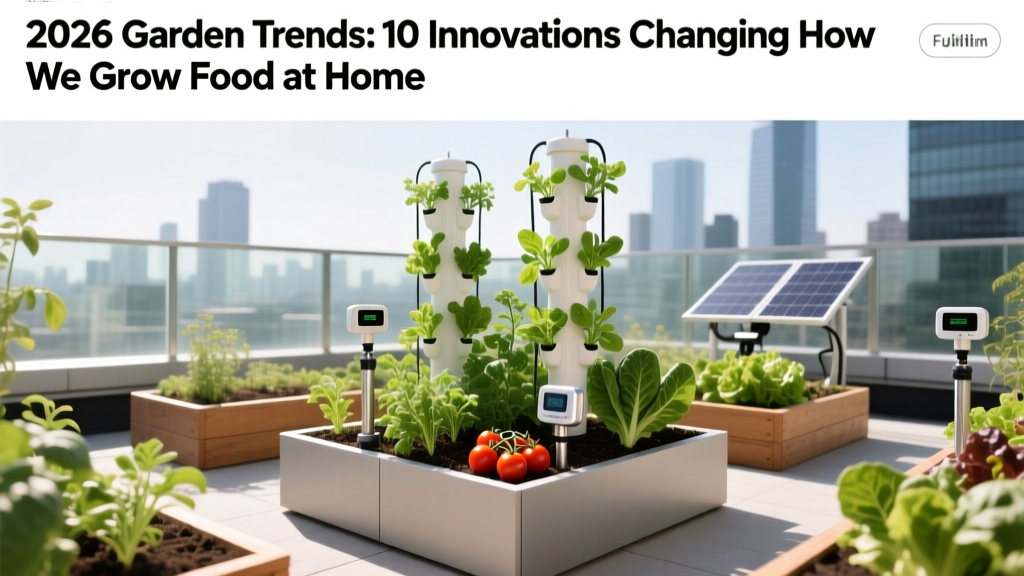
2026 Garden Trends: 10 Innovations Changing How We Grow Food at Home
The State of Gardening in 2026
Gardening has evolved from a hobby into a technology-enhanced, climate-conscious practice. With food prices up 15% since 2024 and drought conditions expanding across the western US, home gardeners are adopting innovations that maximize yield while minimizing water and space.
Trend 1: AI Soil Sensors
Devices like the Xiaomi Flora and Soil Sensor Pro now connect to free AI apps that analyze NPK levels, moisture, pH, and temperature — then tell you exactly what to plant and when to fertilize. Cost: $20-40 per sensor. Worth it for serious growers.
Trend 2: Kratky Method Hydroponics
The simplest form of hydroponics — no pumps, no electricity. Plants sit in a nutrient solution that depletes as they grow, creating an air gap for root oxygenation. A 5-gallon bucket can grow a full head of lettuce in 30 days. Perfect for apartment dwellers.
Trend 3: Ollas (Ancient Clay Pot Irrigation)
Unglazed clay pots buried in garden beds slowly release water through their walls directly to plant roots. Uses 70% less water than surface watering. The 4,000-year-old technique is trending because it solves drought problems with zero technology.
Trend 4: Biochar Soil Amendment
Biochar (charcoal made from organic waste) dramatically improves soil water retention, nutrient holding capacity, and microbial activity. One application lasts decades. Research shows 20-40% yield increases in vegetable gardens.
Trend 5: Chop-and-Drop Mulching
Instead of buying mulch, grow your own. Plants like comfrey, clover, and legumes are cut and dropped directly on garden beds as living mulch. They decompose in place, feeding the soil continuously.
Trend 6: Vertical Tower Gardens
Stackable vertical systems (Tower Garden, Lettuce Grow Farmstand) grow 20-30 plants in 4 square feet. Aeroponic versions use 90% less water than soil. Initial cost ($500-800) pays for itself in 1-2 years of salad greens production.
Trend 7: Companion Planting Apps
Apps like Gardenary and Planter now use companion planting databases to automatically arrange your garden layout — placing basil next to tomatoes, marigolds near beans, and keeping antagonistic pairs apart.
Trend 8: Native Plant Rewilding
The "rewilding" movement replaces manicured lawns with native plant meadows. Cities are changing ordinances to allow it. Benefits: zero mowing, zero fertilizer, 10x more pollinator visits, and deep-root drought resistance.
Trend 9: Microgreen Countertop Gardens
Microgreens contain 4-40x more nutrients than mature plants. LED grow light shelves produce harvestable trays every 7-10 days. A $50 setup provides daily fresh greens year-round.
Trend 10: Mycorrhizal Inoculants
Adding beneficial fungi to planting holes extends root systems by 100-1000x. One $15 bag of mycorrhizal powder treats 50+ transplants and improves drought tolerance, nutrient uptake, and disease resistance.
Which Trends Are Worth Your Investment?
| Trend | Cost | ROI | Difficulty | Verdict |
|---|---|---|---|---|
| AI soil sensors | $20-40 | High | Easy | Recommended |
| Kratky hydroponics | $15-30 | High | Moderate | Recommended |
| Ollas | $20-50 | Very high | Easy | Highly recommended |
| Biochar | $15-30 | High (long-term) | Easy | Recommended |
| Tower gardens | $500-800 | Medium | Easy | If budget allows |
Final Thoughts
The best innovations solve real problems: drought, space, cost, and time. Start with ollas and companion planting apps — they cost almost nothing and deliver immediate benefits. Add AI sensors and biochar as your garden grows.