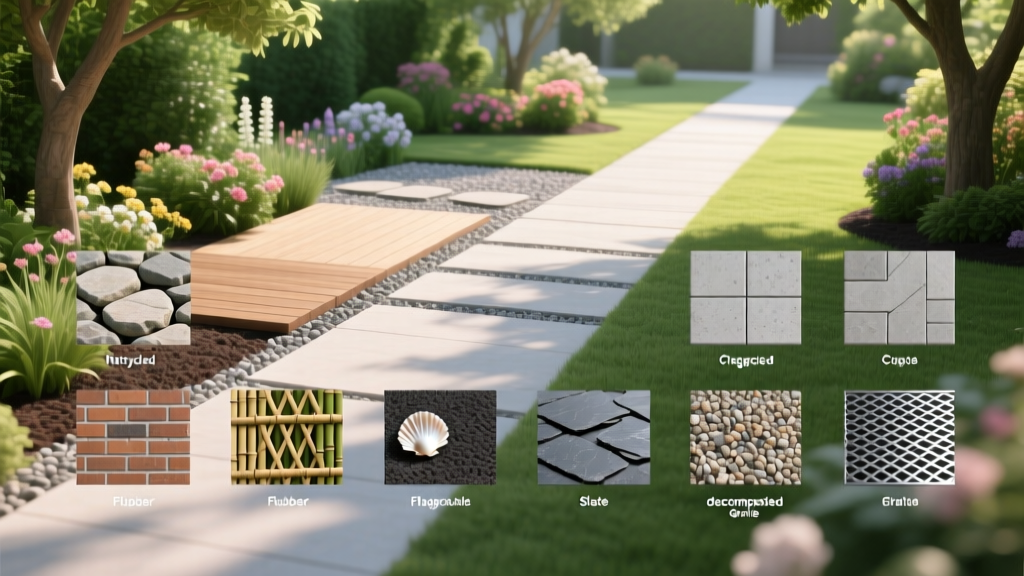
Garden Path Design: 12 Material Options With Cost, Durability, and DIY Difficulty
Why Garden Paths Matter
A well-designed path transforms a garden from a collection of plants into a journey. Paths guide visitors, define garden rooms, protect soil from compaction, and add structure to soft plantings. The material you choose affects cost, maintenance, drainage, and the overall aesthetic for decades.
Material Comparison Chart
| Material | Cost/sq ft | Lifespan | DIY Difficulty | Drainage |
|---|---|---|---|---|
| Gravel (crushed stone) | $1-3 | 10-15 years | Easy | Excellent |
| Wood chips/bark | $0.50-2 | 2-4 years | Easy | Good |
| Stepping stones | $3-8 | 20+ years | Moderate | Good (between) |
| Brick (clay pavers) | $8-15 | 25+ years | Moderate | Good (if sand-set) |
| Flagstone (natural) | $10-25 | 50+ years | Hard | Good (if dry-laid) |
| Concrete pavers | $5-12 | 25+ years | Moderate | Good (if sand-set) |
| Poured concrete | $6-12 | 30+ years | Hard | Poor (solid surface) |
| Cobblestone | $15-30 | 100+ years | Hard | Good |
| Decomposed granite | $2-5 | 5-10 years | Easy | Excellent |
| Recycled glass | $5-10 | 15+ years | Easy | Excellent |
| Rubber mulch | $3-6 | 10+ years | Easy | Good |
| Mosaic tile | $20-50 | 30+ years | Hard | Poor |
Design Principles for Garden Paths
Width
- Main path: 4 feet minimum (two people side by side)
- Secondary path: 2-3 feet (single person)
- Discovery path: 18-24 inches (intimate, winding)
Curves vs Straight Lines
Straight paths feel formal and efficient — they work in structured, symmetrical gardens. Curved paths feel natural and invite exploration — they work in cottage gardens and naturalistic landscapes. Never use a curve without a reason (going around a tree, following a contour).
Edging
Every loose-material path (gravel, wood chips, decomposed granite) needs edging to contain the material. Steel edging ($2-4/linear foot) is invisible and lasts decades. Brick or stone edging adds visual appeal but costs more.
Installation Basics (for DIY Paths)
Base Preparation (Critical for All Materials)
- Mark the path with spray paint or garden hose
- Excavate 6-8 inches deep
- Add 4 inches of compacted gravel base (road base or crushed stone)
- Add 1-2 inches of sand or stone dust for leveling
- Compact each layer with a plate compactor ($50/day rental)
Path + Plant Combinations
- Gravel + lavender/thyme: Plant between and along edges — plants self-seed into gravel
- Flagstone + moss/creeping thyme: Plant in gaps between stones
- Brick + boxwood hedges: Classic formal garden look
- Wood chips + ferns/hostas: Natural woodland feel
- Stepping stones + ornamental grasses: Modern minimalist style
Final Thoughts
For budget-conscious gardeners, gravel paths with steel edging offer the best value — $2-3/sq ft, easy DIY installation, excellent drainage, and a clean look that suits any garden style. For permanent installations, flagstone or brick paths last generations and increase property value.