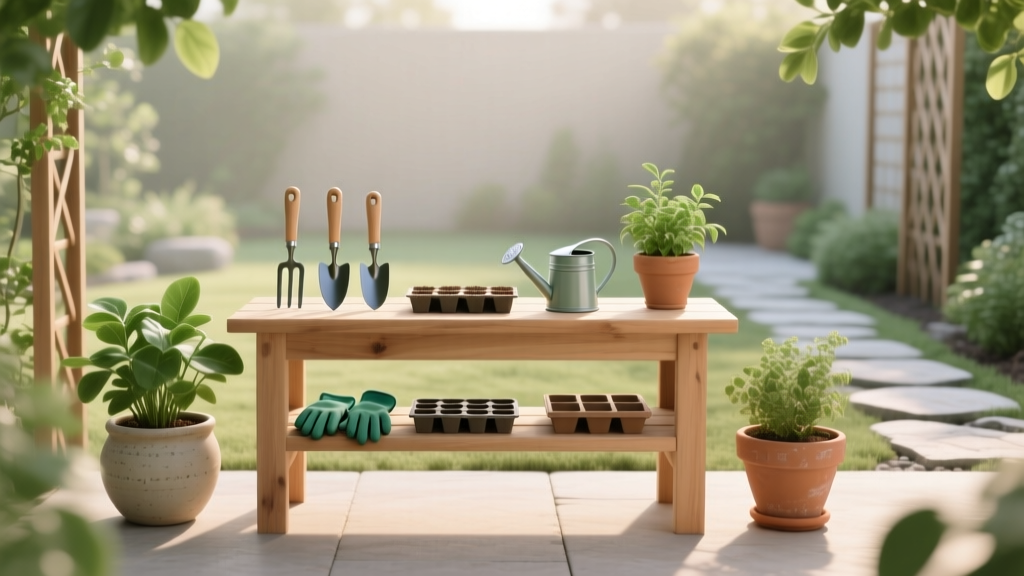
How to Build a Simple Potting Station
The mess most gardeners blame on “potting soil that gets everywhere” is usually self-inflicted: the work surface is too low, the storage is too far away, and there’s nowhere for the dirt to land except your shoes. A simple potting station fixes all three—and you don’t need a fancy shed build to get there. With a couple of smart measurements and a few cheap add-ons, you can make a station that keeps soil contained, tools in reach, and your back from complaining after 10 minutes.
Start With the Non-Negotiables (So You Don’t Rebuild It Later)
Set the work height to save your back (and your patience)
Tip: Build the tabletop at 36–40 inches high. That height range fits most adults for standing work and cuts down on bending, which is where potting sessions go to die. If you’re tall (over 6 feet), bump it closer to 40–42 inches; if you’ll sit, aim 28–30 inches. Real-world example: A 5'6" gardener I helped set up a station at 38" and noticed she stopped hunching over to fill trays—her potting sessions went from “quick chore” to a calm routine.
Make the surface big enough for a tray, not a ballroom
Tip: Aim for a 24" x 48" top (minimum) and reserve a 10" x 18" “mix zone.” A standard 1020 nursery tray is about 10" x 20", so a 24" depth gives you space to set the tray and still work without knocking things off. The 48" length gives you room for a soil bin on one side and tools on the other. Example: If you regularly pot up 4" pots, you can stage 8–12 at a time in a 1020 tray without juggling.
Choose a location based on cleanup, not convenience
Tip: Put your station within 10 feet of a hose and on an easy-sweep surface. Gravel sounds practical until you drop a handful of slow-release fertilizer and spend 10 minutes hunting pellets. A patio, driveway edge, or packed pavers makes cleanup fast: sweep, hose, done. Scenario: If you only have lawn, place the station on a 3' x 5' rubber stall mat ($35–$60) so soil doesn’t disappear into turf.
Build the Frame: Simple, Sturdy, and Cheap
Use the “two-saw-cut” lumber plan for a fast build
Tip: Build the base with (4) 2x4 legs and (6) 2x4 rails—keep cuts repetitive. For a 36" high station with a 1.5" thick top, cut legs to 34.5". Cut the long rails to 45" and the short rails to 21" to support a 48" x 24" top with a little overhang. Money-saving: Buying standard 8' 2x4s often costs less than “project boards,” and you can usually build the base with six 2x4s total (often $18–$30 depending on region).
Skip wobbles with diagonal bracing (one board, huge difference)
Tip: Add a single diagonal brace across the back. A potting station gets lateral force every time you press soil into pots. One 2x4 installed diagonally between the top frame and a lower rail stops the side-to-side wobble that makes stations feel cheap. Example: If your station sits on slightly uneven concrete, the brace keeps it stable even when one leg is shimmed.
Top it with something you can scrub, not baby
Tip: Use 3/4" exterior plywood plus a sacrificial “mess tray.” Plywood is sturdy and affordable; seal it with exterior paint or polyurethane so it doesn’t swell when wet. Then add a removable mixing surface: a mortar mixing tub (often 24" x 36", $12–$18) or a boot tray ($10–$25) to catch soil. Scenario: If you mix your own potting blend, the tub lets you dump, stir, and lift the whole mess away—no scraping soggy peat off wood grain.
Contain the Mess Like a Pro (This Is Where the Station Pays You Back)
Install a 3-inch backsplash to stop soil avalanches
Tip: Add a 1x4 board along the back edge as a 3.5" lip. That little wall prevents scoops, pots, and labels from tumbling off the back. It also gives you a place to screw hooks without splitting the tabletop edge. Example: If your station sits against a fence, the backsplash keeps wet soil from staining the fence boards.
Use a dedicated “dirty drop zone” for tools
Tip: Screw a $3 magnetic tool strip or mount a small bucket on the side. One place for trowels and pruners keeps you from setting tools down in soil where they vanish. A cheap alternative is a cut-down detergent bottle screwed to the side as a holster. Real-world example: When you’re potting 30 seedlings, that holster saves you from washing your hand trowel five separate times because you kept laying it in damp mix.
Keep potting media sealed—humidity is the silent spoiler
Tip: Store open bags in a lidded bin (18–27 gallons) instead of leaving them folded. Moisture and fungus gnat larvae love half-open bags. A bin with a snap lid keeps media consistent and stops it from absorbing water from rain or dew. Example: One 27-gallon tote fits roughly two 2-cubic-foot bags of potting mix, and the lid doubles as a quick “mixing cover” if you get interrupted.
Design Your Storage Around Motion (Fewer Steps = More Gardening)
Put the heavy stuff at knee height, not on the floor
Tip: Add a lower shelf 8–12 inches above ground. Storing soil, compost, and fertilizer on a shelf prevents constant bending and keeps bags dry. Use 1x6 slats spaced 1/2" apart so grit falls through and you can hose it off. Scenario: If you work in a humid area, airflow under bags helps prevent the soggy-bottom mildew that ruins cardboard boxes of amendments.
Label and pre-stage the “most-used five”
Tip: Keep your top five supplies within arm’s reach: potting mix, perlite, fertilizer, labels, and a dibber. This is the stuff you touch in nearly every session, so don’t bury it in a cabinet. A simple hack: use a 5-gallon bucket caddy ($10–$15) to hold small bags, markers, and snips. Example: If you sow every weekend in spring, having labels and a marker on the station stops the “I’ll label it later” problem that leads to mystery seedlings.
Use a vertical pegboard only if you’ll actually use it
Tip: Mount a 16" x 32" pegboard panel and limit it to 8 hooks max. Over-hooking becomes clutter fast. Keep it for lightweight items: scissors, twine, plant ties, small scoop. DIY alternative: Screw in a row of cup hooks under the backsplash—cheaper, less fuss, and surprisingly effective.
Make Your Potting Mix Setup Faster (and More Consistent)
Pre-measure common ratios with a dedicated scoop
Tip: Mark a scoop for 1-cup, 2-cup, and 4-cup levels—or use a 1-quart yogurt container. Consistent mixing matters for water retention and root health. A common DIY container system makes ratios repeatable without thinking. Example: If you mix a seed-starting blend, you might use 2 parts coco coir to 1 part perlite—using the same scoop for “parts” keeps it consistent every time.
Don’t reuse old potting mix without a refresh plan
Tip: If you reuse mix, amend it with 20–30% fresh compost or fresh potting mix by volume. Reused mix can compact and lose structure, which affects drainage. Many extension services recommend refreshing used container media with new organic matter and checking fertility before reuse. Source: University of Minnesota Extension (2019) notes that reusing potting mix is possible if you refresh it and manage disease risks.
Keep fertilizer mistakes out of the “busy season”
Tip: Pre-portion slow-release fertilizer into small jars for your common pot sizes. For example, if your fertilizer label calls for 1 tablespoon per gallon of potting mix, measure it into a jar labeled “1-gal batch” and another “5-gal batch.” Scenario: When you’re potting 20 patio tomatoes, that prevents the classic double-dose mistake made while chatting or rushing before a storm.
“Sanitation and consistent media moisture are two of the biggest factors that influence success in propagation and container growing.”
—North Carolina State University Extension, 2020
Add Water and Wash Features Without Overbuilding
Mount a hose hook and set a 2-minute rinse habit
Tip: Install a hose hanger on the station and rinse the surface at the end of each session. Two minutes prevents caked-on soil that turns into a gritty mess next time. If your station is wood, that quick rinse only works if the top is sealed; otherwise, wipe with a damp rag. Example: If you pot weekly, that tiny habit keeps your station looking “ready” instead of becoming a neglected dirt shelf.
Add a simple wash bin instead of plumbing a sink
Tip: Use a plastic dishpan (about 12" x 16") and a watering can for tool wash-downs. Fill the dishpan with soapy water, scrub pots and tools, then dump it on a non-sensitive area (not near edible beds if you used strong cleaners). DIY alternative: A 5-gallon bucket with a grit guard (the kind used for car washing) makes a great rinse system for muddy hand tools.
Plan for drainage so you don’t create a mosquito tray
Tip: Drill 4–6 drainage holes in any catch tub you leave outdoors. If you keep a mortar tub on the station permanently, it will collect water. A few 1/4" holes prevent standing water while still catching most soil. Example: In rainy climates, this single step saves you from dumping swamp water every time you want to pot up basil.
Use Materials That Match Your Reality (Not Someone Else’s Pinterest Build)
Choose hardware that won’t rust into a headache
Tip: Use exterior screws (2.5") and galvanized brackets if you add supports. Indoor screws will rust and stain wood fast, especially around fertilizer dust and wet soil. A box of exterior screws usually costs $8–$12 and prevents rebuilds. Example: If your station lives in full weather, galvanized corner braces keep the frame tight even when wood expands and contracts.
Protect the legs from ground contact (rot starts there)
Tip: Set each leg on a paver or use plastic furniture feet. Keeping wood off wet ground is one of the biggest lifespan extenders. Four concrete pavers might cost $8–$16 total and can double as leveling shims. Scenario: If your station sits on soil next to raised beds, pavers prevent the legs from wicking moisture after irrigation.
DIY upgrade: turn an old dresser into a potting station
Tip: Use the top as your work surface and the drawers for labels, gloves, and seed packets. Remove one drawer and slide in a mortar tub as a mixing drawer. Seal the top with exterior paint and add a backsplash board. Case example: A gardener in a townhouse patio converted a curbside dresser for under $25 (paint + screws) and gained tool storage without taking up extra floor space.
Fast Add-Ons That Feel Like Cheating
Attach a soil scoop on a retractable leash
Tip: Use a retractable key reel ($6–$12) to keep your scoop from disappearing. Clip it to the backsplash and attach it to a lightweight scoop handle. It’s silly until you realize how often scoops wander off mid-task. Example: When you’re mixing 3 different blends (seed-start, cactus, and container), the scoop stays put instead of migrating into a bag.
Make a “labeling lane” to stop mix-ups
Tip: Tape a 2" wide strip of bright vinyl tape along the front edge as your labeling zone. Put labels and marker there every time before you pot. This creates a visual cue so you don’t walk away with unlabeled seedlings. Scenario: If you start 6 tomato varieties, that tape strip saves you from the classic “I’ll remember which is which” lie.
Install one light for evening potting
Tip: Clamp a $15–$25 LED shop light to the backsplash or a side post. Good light prevents over-watering (you can actually see media color) and helps you spot fungus gnats or mold early. Example: If you pot after work, a 4,000–5,000K daylight LED makes labels readable and reduces eye strain.
Comparison Table: Two Simple Builds (Pick One and Move On)
| Feature | Basic 2x4 + Plywood Station | Upcycled Dresser Station |
|---|---|---|
| Approx. cost | $45–$110 (lumber + screws + sealant) | $0–$40 (free dresser + paint/screws) |
| Build time | 2–4 hours | 1–3 hours |
| Weather durability | High if sealed and raised on pavers | Medium (depends on dresser material) |
| Storage | Optional shelf + hooks | Excellent (drawers) |
| Best for | Outdoor, heavy potting sessions | Small patios, lots of small supplies |
Three Real-World Setups (Steal the Parts That Fit)
Scenario 1: The balcony gardener with no hose
Tip: Build a compact 18" x 36" station and pair it with a 2-gallon pump sprayer. On a balcony, you’re managing weight and mess. Use a shallow boot tray as your mixing tub, and store media in a lidded tote to keep it from spilling in wind. Example: A pump sprayer gives controlled water for settling soil in pots without dumping water through balcony rails.
Scenario 2: The suburban gardener potting up dozens of starts
Tip: Add a tray rail so 1020 trays slide and stack. Screw two 1x2 rails along the tabletop edges, leaving a 1/2" gap so trays don’t bind. This creates a “runway” where you can fill cells, slide the tray to the side, and start the next one. Example: If you pot 6 trays on a Saturday, the rail system keeps them from tipping and spilling as you move them.
Scenario 3: The messy shed corner that always feels chaotic
Tip: Anchor the station to studs and dedicate one bin per category. In a tight shed, wobble and clutter are the enemies. Use two L-brackets to secure the station to the wall, then assign bins: one for irrigation parts, one for fertilizers, one for pots. Example: When you need to up-pot a plant fast, you’re not digging through a “random stuff” tote to find labels and ties.
Sanitation and Safety Shortcuts (Because Potting Stations Get Gross Fast)
Disinfect reused pots in a timed batch
Tip: Soak pots for 10 minutes in a 10% bleach solution (1 part bleach to 9 parts water), then rinse and dry. This is a common extension-recommended approach for killing many pathogens on hard surfaces. Do it in batches in a plastic tote on your station’s lower shelf. Source: Clemson Cooperative Extension (2018) recommends sanitizing containers to reduce disease issues in reused pots.
Keep a dedicated “soil-only” brush at the station
Tip: Use a stiff hand brush to knock soil off tools before you put them away. Soil left on tools holds moisture and accelerates rust. Brushing is faster than rinsing every time and keeps your wash bin from becoming mud soup. Example: A $2 scrub brush stored on a hook can extend the life of pruners and trowels noticeably over a season.
Store fertilizers up high and in sealed containers
Tip: Keep granular fertilizers in screw-top containers and off the floor. Moisture turns them into bricks, and spilled granules are a slip hazard on concrete. Repurpose protein powder tubs or coffee cans and label them with the application rate. Example: If you have pets, storing fertilizers on an upper shelf reduces the chance of curious noses getting into trouble.
A potting station doesn’t have to be pretty—it has to be ready. If you build it at the right height (36–40"), give soil a place to land (a tub + backsplash), and keep your five essentials within arm’s reach, you’ll pot more plants with less mess and less backache. Start simple, use it for two weekends, then add only the upgrades that solve an annoyance you actually felt—because the best station is the one that quietly makes your gardening life easier every single time you use it.